

12 Pickup Trucks That Are More Affordable Than A Toyota Tundra
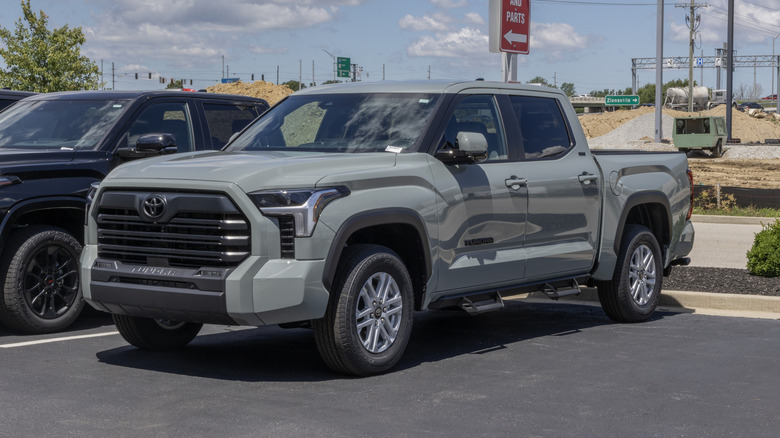
The Toyota Tundra has a lot to offer drivers, making it a popular choice for shoppers looking for a dependable, capable, and high-performing pickup. As a full-size truck, you're getting an impressive max towing capacity of 12,000 pounds and solid engine output. Four-wheel drive is optional in higher-end trims, and the large cab can fit five passengers. Additionally, the Tundra tends to hold its value better than many competing trucks. CarEdge reports that a Toyota Tundra depreciates about 26% after five years, retaining an estimated 74% of its original value under typical ownership conditions. Looking at the specs alone may suggest the Toyota Tundra is a solid choice for pickup enthusiasts, but the picture changes once you start looking at the cost of ownership.
The 2026 Toyota Tundra starts at a Manufacturer's Suggested Retail Price (MSRP) of $43,455, according to Car and Driver. If you want all of the performance and trim upgrades, you're looking at a price tag of $66,575. On top of that, buyers can expect about $41,742 in five-year ownership costs, including depreciation, fuel, insurance, and maintenance, as reported by CarEdge. Even with decent resistance to depreciation, this truck still sheds $15,384 of its value over five years. Furthermore, this model demands about $12,160 at the gas pump over half a decade. Insurance coverage averages $11,810, while maintenance and repair costs hit $2,388.
For perspective, the Toyota Tundra falls somewhere in the middle when ranking trucks for retirees from worst to best. However, budget-conscious buyers may be immediately looking for cheaper alternatives upon seeing this model's costs. To help owners save money without having to leave the truck segment, Money Digest has pulled together more affordable models in the segment. We prioritized full-size trucks before moving on to midsize and compact alternatives.
12. Honda Ridgeline
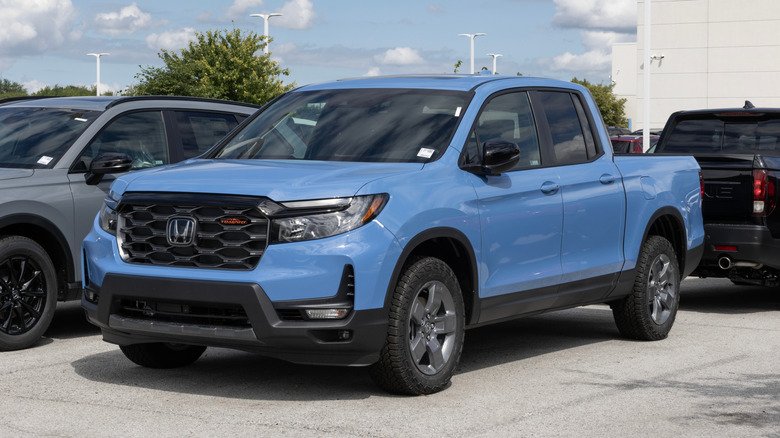
The 2026 Honda Ridgeline comes with an MSRP range between $42,290 and $48,890, representing six different trim varieties, according to Car and Driver. This mid-size pickup is recognized for its balance between comfortable driving experience and truck capabilities. Every trim comes with a four-door, five-passenger crew cab, offering plenty of interior space. Furthermore, Honda has outfitted each trim option with 5.3 feet of bed space and a V6 engine. Unlike larger models, this mid-size truck feels more like driving a car or minivan, offering smooth handling. With so many of the specs remaining consistent between trims, the upgrades mainly affect the truck's appearance and interior materials rather than its performance, making it easier to justify sticking with the least expensive option.
Over the first five years of ownership, the Honda Ridgeline racks up an average long-term ownership bill of $40,661, as reported by CarEdge. Depreciation, or the vehicle's gradual loss of value, eats up $16,656 of these costs, making it the single-costliest category. Over half a decade, tver five years, the Ridgeline is expected to depreciate by about 36%, which leaves this Honda truck with great resale value. Owners can expect to spend about $11,000 at the gas pump. FuelEconomy.gov, the federal government's official database for vehicle fuel efficiency, estimates the 2026 Ridgeline gets 21 mpg combined. For comparison, the average 2026 model gets 28 mpg combined. The insurance coverage on this pickup usually costs $10,195. Maintenance and repair costs add another $2,810 to the total.
11. Jeep Gladiator
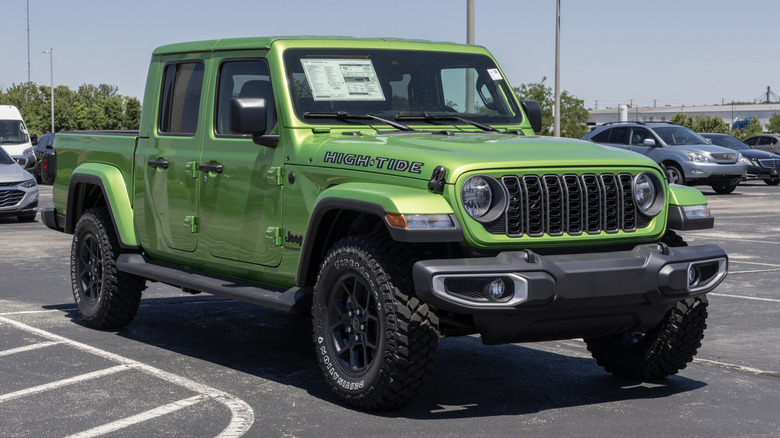
The all-new Jeep Gladiator is one of the cheapest 2026 pickup trucks that doesn't sacrifice size, rivaling the Tundra's footprint without breaking the bank. Car and Driver suggests this truck's MSRP hovers between $41,815 and $63,205, represented by 14 separate trims. You won't have to upgrade for the coveted four-wheel drive, as it comes standard in all Gladiator models. Every Gladiator comes with a four-door crew cab that seats five passengers. In true Jeep fashion, the doors and roof are removable, and the windshield is collapsible for a unique driving experience. The standard specs also include off-pavement tires for improved traction. Paired with a powerful V6 engine, the Gladiator is competent on the road, but really shines when taken on the trail.
The Jeep Gladiator runs up a five-year ownership bill of $46,450, according to CarEdge. epreciation accounts for the largest share of those expenses, totaling $17,312 over half a decade. This pickup tends to drive off 37% of its initial sales price within this period. Insurance coverage on the Gladiator hovers around $13,030. Fuel expenses are right on the heels of insurance, costing $12,160. FuelEconomy.gov reports that the 2026 Gladiator gets 19 mpg combined, which is below average for a new vehicle. General maintenance and repairs are the most affordable of these prolonged ownership expenses, totaling $3,948.
10. GMC Canyon
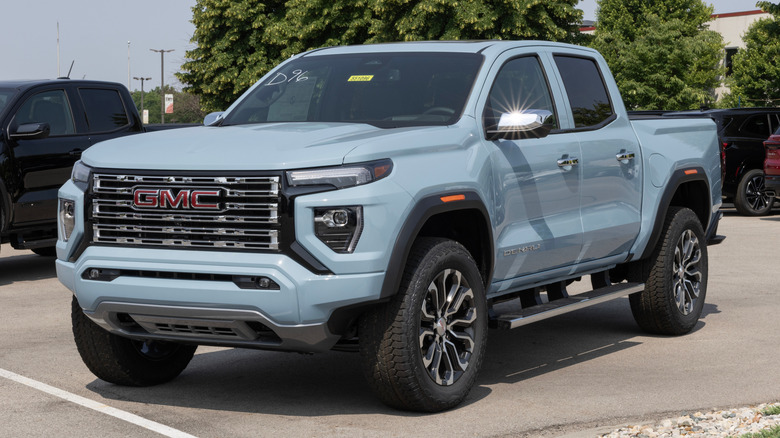
Car and Driver lists the 2026 GMC Canyon's MSRP between $40,995 and $67,995 across five trims. This mid-size pickup is the smallest truck in GMC's lineup, yet it still offers a 5-foot bed and a standard crew cab that comfortably seats five. Despite having only a four-cylinder engine, the all-new Canyon still outperforms some pricier models in raw power. This nameplate comes with a well-designed, tech-rich interior, although drivers can appreciate its smooth handling and comfortable ride. Rear-wheel drive is the standard, but all-wheel drive is available in higher trims. If you're thinking twice about buying a new vehicle, the long-running GMC Canyon offers plenty of pre-owned models.
Over the first five years of ownership, the GMC Canyon racks up an estimated $43,469 in ownership costs, according to CarEdge. As is the case with most trucks, depreciation ranks as the priciest category, amounting to $17,590. For reference, the Canyon is expected to depreciate by about 37% of its initial sales price within five years. With a subpar fuel efficiency of 20 miles per gallon combined, as reported by FuelEconomy.gov, the Canyon's fuel costs can reach $11,550 over this period. Insurance follows closely behind at $11,300. Maintenance and repairs amount to $3,029.
9. GMC Sierra 1500
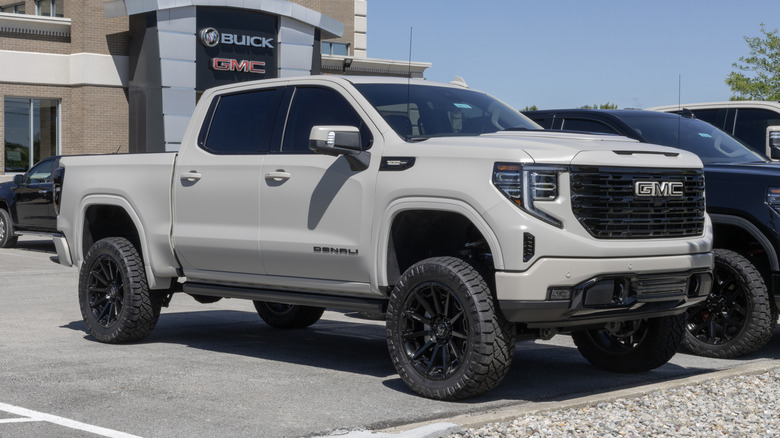
The GMC Sierra 1500 is the larger, full-size counterpart to the Canyon, but it still comes in with a lower starting MSRP of $40,140, according to Car and Driver. However, the Sierra 1500's eight trims push the top-end MSRP to $87,690. While other trucks have standard cabin and bed-size specs across trims, with differences mainly in interior upgrades, the all-new Sierra 1500 spreads key features across various tiers. Many option packages add different cab configurations that seat between two and five passengers.
Where the GMC Sierra 1500 stands out is in towing and payload capacity, earning its full-size name. The baseline trims come with rear-wheel drive and a turbo in-line four-cylinder engine, although upgrades to four-wheel drive and an inline-six or V8 are available. Notably, the GMC Sierra 1500 is one of the trucks that are more reliable than the Tesla Cybertruck.
According to CarEdge, the GMC Sierra 1500 racks up an estimated $55,818 in ownership costs over its first five years. Nearly half of these costs go toward depreciation, which reaches $27,995 over this period. More specifically, the Sierra 1500 exhibits a half-decade depreciation rate of 43%. Insurance rates average around $12,470 to cover this pickup. Owners typically spend $12,160 at the gas pump at the five-year mark. FuelEconomy.gov reports that the 2026 Sierra 1500 averages 20 miles per gallon combined. The remaining $3,193 goes toward maintenance and repairs.
8. Ford F-150
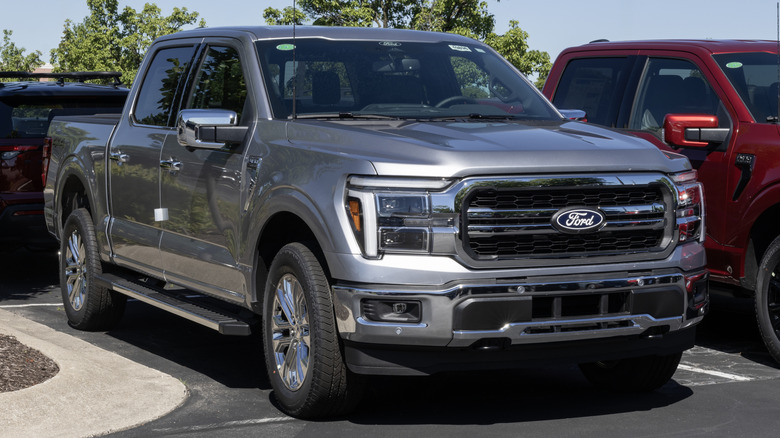
Often called America's favorite truck, the Ford F-150 is consistently the best-selling model in its segment. Despite there being various pickups more reliable than the Ford F-150, a combination of capable performance and relatively modest costs has kept this pickup in high regard. According to Car and Driver, the 2026 Ford F-150 starts at $40,085, well below the Toyota Tundra's starting price. However, its highest-level trim reaches $75,700. While some trucks simplify their offerings into standard packages, this Ford pickup offers various cab configurations, bed sizes, and drivetrains across seven trims. The standard models come with a V6 engine and rear-wheel drive, but you can top out with a V8 with four-wheel drive. The Ford F-150 is recognized for its competent towing and payload capabilities, along with a dynamic and comfortable interior.
Owners of the Ford F-150 typically invest $49,920 over the first half-decade of driving, per CarEdge. More than half of these expenses derive from the pickup's depreciation, which averages about $30,706. Over that period, the average F-150 is expected to depreciate by about 50% of its original value. For insurance coverage, the average owner spends $12,120. Maintenance and repairs hover around $3,594. FuelEconomy.gov reports that the baseline 2026 F-150 gets 21 miles per gallon combined.
7. Chevrolet Silverado 1500
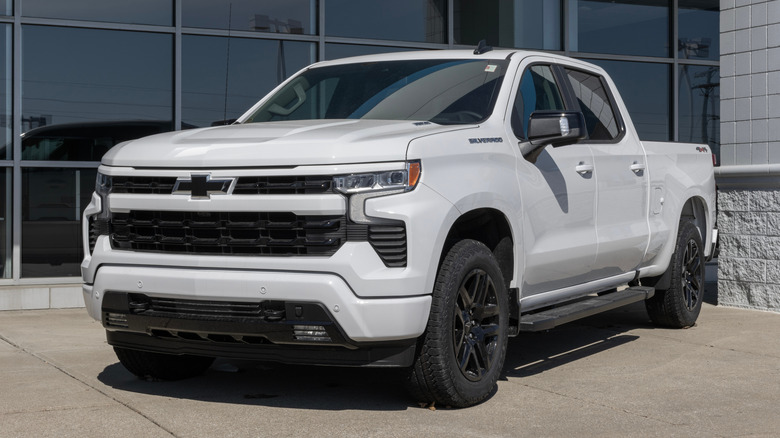
Along with the Toyota Tundra, the Chevrolet Silverado 1500 is a gas-guzzling vehicle retirees will want to avoid. Truck enthusiasts, however, are unlikely to be surprised by the fuel-efficiency trade-offs that come with a full-size pickup. Besides, the 2026 Silverado 1500 displays a starting MSRP far below that of its Tundra competition, falling to $38,345, per Car and Driver. Notably, however, the priciest trim exceeds that of the Toyota truck, reaching $74,595. In line with other marques, Chevrolet spreads out this truck's various configurations across nine individual trims. Base models come with a four-cylinder engine and offer solid towing and payload capacity, although they trail the Ford F-150 slightly in those areas. Trims come in a variety of cabin styles, from the work-oriented two-person cab to the convenience of the crew cab. Bed lengths also vary by trim.
According to CarEdge, the Chevrolet Silverado 1500 racks up an estimated $53,392 in ownership costs over its first five years. Depreciation hits $24,956 at the five-year mark, with this pickup losing 43% of its original sales price over this period. Owners typically spend about $12,785 on insurance and another $12,160 on fuel over five years. FuelEconomy.gov reports that the 2026 Silverado 1500 achieves 20 miles per gallon combined. The remaining $3,491 is dedicated to general maintenance and repairs.
6. Ford Ranger
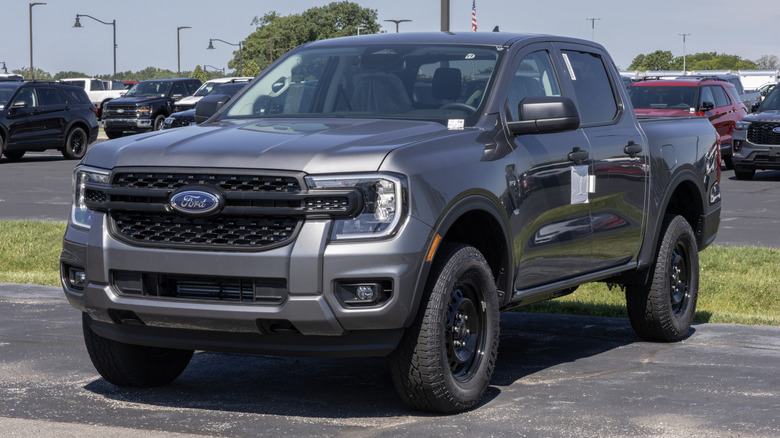
The 2026 Ford Ranger sports a comparatively modest MSRP range between $35,445 and $49,350, according to Car and Driver. This relatively tight cost spectrum is only split between three different trims. This smaller counterpart to the F-150 comes standard with a five-passenger cabin and a four-cylinder engine capable of towing respectable loads. A standard five-foot bed offers sufficient cargo space. Rear-wheel drive is the basic drivetrain, although four-wheel drive is an optional upgrade. Beyond these specs, the Ford Ranger is recognized for its stylish design, quiet ride, and smooth handling. Given these attributes, it's easy to see why the Ranger ranks among the most popular Fords for retirees.
According to CarEdge, Ford Ranger owners can expect to spend about $39,068 in ownership costs over the first five years. Totaling $13,305 over five years, the pickup's gradual loss of value is the costliest category. Within the period, the Ranger is expected to depreciate by about 28% of its original value. An insurance policy for this truck tends to land at $11,820. At the gas station, owners should budget about $10,500. FuelEconomy.gov reports that the 2026 Ranger gets 23 miles per gallon combined. The last $3,443 goes to general maintenance and repair.
5. Chevrolet Colorado
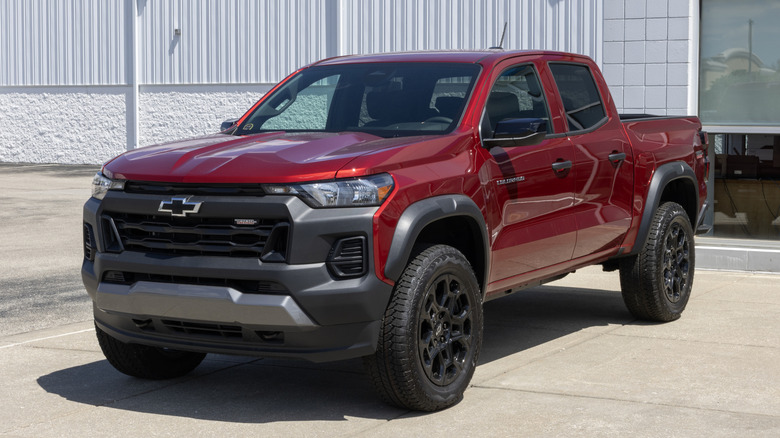
According to Car and Driver, the 2026 Chevrolet Colorado starts at $34,495, well below the Toyota Tundra's starting price. However, the Colorado's high-end price reaches $62,795, although this elevated cost still falls under the Tundra's most expensive trim. Notably, all seven Colorado trims come with a four-cylinder engine that delivers competitive towing and payload capacity. This pickup also comes standard with a five-foot bed and a crew cab capable of accommodating five passengers. Although the Colorado is competent on the road, its off-pavement abilities are a unique highlight.
Over a five-year period, the Chevrolet Colorado tends to run up ownership costs of $46,611, as reported by CarEdge. Depreciation accounts for $20,973 of those costs over five year. Around 48% of the Colorado's initial price tag is wiped away over half a decade. Drivers usually see an insurance policy costing $11,790. If you're looking to cut insurance costs, here's one strategy that 57% of drivers reportedly used to save on car insurance. Meanwhile, fuel expenses reach $10,500. The 2026 Colorado averages 21 miles per gallon combined, per FuelEconomy.gov. Maintenance and repairs often tally up to $3,348.
4. Toyota Tacoma
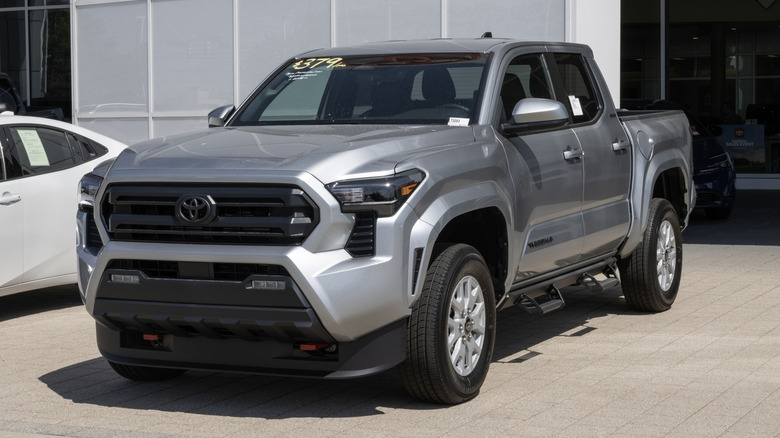
The Toyota Tacoma is the smaller counterpart to the Toyota Tundra, but the downgrade in size comes with immediate savings. According to Car and Driver, the 2026 Tacoma has an MSRP range of $34,190 to $46,060. Although you can find more reliable cars than the Tacoma, finding a more dependable truck is a challenge. With nine trims available, consumers have a wide range of options. The cabin sizes range from a two-door work-focused model to a four-door option capable of seating five people. Rear-wheel drive is standard with four-wheel drive as a possible upgrade. The base model comes with a four-cylinder engine that still offers respectable towing and payload capacity. Unlike many affordable pickup truck options, the Tacoma does come with a hybrid powertrain option for optimized fuel efficiency.
CarEdge places the Toyota Tacoma's long-term ownership costs at a reasonable $33,080. Unlike most trucks on this list, the Tacoma's largest ownership expense is fuel, totaling about $11,000 over five years. FuelEconomy.gov estimates that this pickup gets 23 miles per gallon combined. Insurance is the second-highest line item at $10,250. The average Tacoma only loses 22% of its value over half a decade. Owners tend to see $9,589 worth of depreciation within this timeframe. Maintenance and repair costs total about $2,241.
3. Nissan Frontier
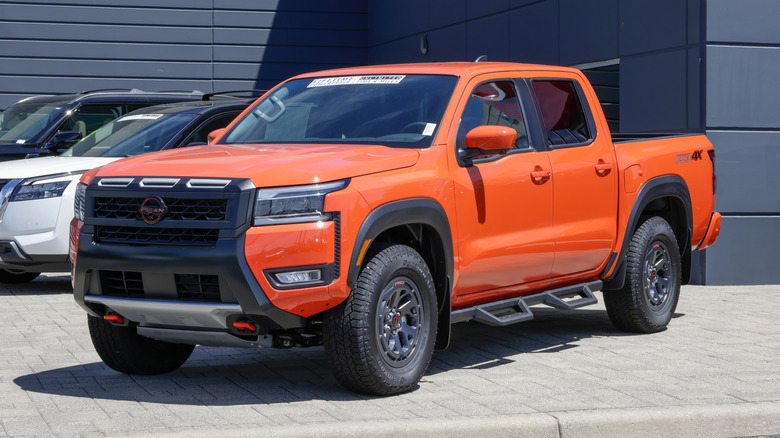
The majority of 2026 Nissan Frontier trims undercut the Toyota Tundra's starting price point. According to Car and Driver, the Nissan Frontier has an MSRP range of $33,895 to $44,115. These costs are spread among five different trim options. The standard V6 engine offers a pinch of power above many rival mid-size pickups. Buyers can choose between two cabin configurations, housing between four and five passengers. Furthermore, the Frontier is available with either rear-wheel drive or four-wheel drive. Finally, the bed length comes in five- or six-foot lengths. While other trucks may focus on the bells and whistles, the Frontier does the basics extremely well. This pickup's payload and towing capacity also keep up with the competition. In addition to being cheaper than the Jeep Gladiator, the Nissan Frontier is also one of the vehicles more reliable than the favorite Jeep Wrangler.
According to CarEdge, the Nissan Frontier racks up an estimated $41,020 in ownership costs over its first five years. This vehicle loses about 37% of its value within five years, making depreciation the single-largest expense. More specifically, depreciation reaches $15,367 over half a decade. Owners often dedicate $11,750 to an insurance policy within this timeframe. Fuel costs average about $11,000. FuelEconomy.gov estimates that the 2026 Nissan Frontier gets 21 mpg combined. The remainder of these ownership costs is comprised of maintenance expenses of roughly $2,903.
2. Hyundai Santa Cruz
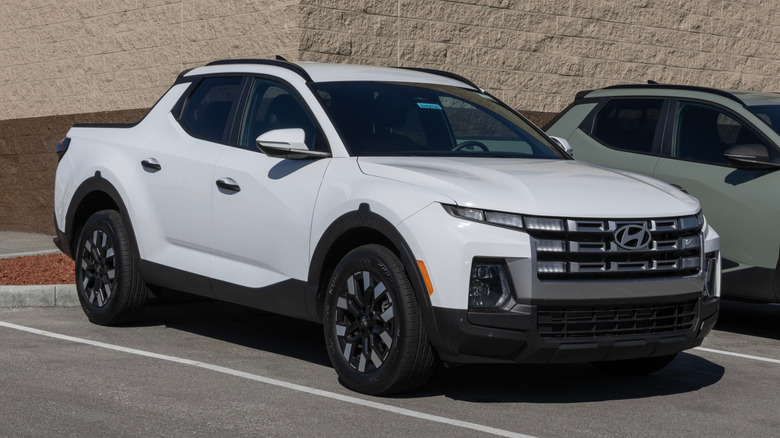
The Hyundai Santa Cruz ranks among the best trucks for retirees, in large part because of its reasonable price point. Car and Driver reports an MSRP range starting at $31,350 and topping out at $45,300, spanning five different trim varieties. Taking inspiration from the Hyundai Tucson, this pickup drives more like a standard passenger car than a truck, offering improved handling and easier steering. The standard four-cylinder engine still provides enough power to tackle typical truck tasks. All models come with five seats and comes with a 4-foot cargo bed. The Santa Cruz comes standard with front-wheel drive, but it can be upgraded to have an all-wheel drivetrain.
Within the first five years of ownership, Hyundai Santa Cruz owners should budget around $39,330 in long-term costs, according to CarEdge. Depreciation accounts for the largest share of those costs, totaling $14,663 over five years. Over this timeframe, the typical Santa Cruz depreciates by 39%. Insurance is another hefty line item, landing at $12,370. Fuel costs average about $9,240 over half a decade. FuelEconomy.gov estimates that the 2026 Santa Cruz gets 25 miles per gallon combined, slightly beneath the market average. The remaining $3,057 goes to general upkeep and maintenance.
1. Ford Maverick
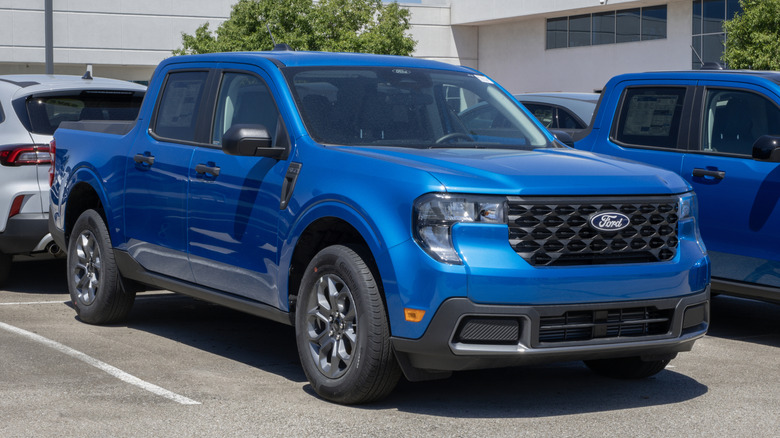
The Ford Maverick is one of the cheapest pickups on the market, exhibiting a reasonable MSRP range from $29,990 to $43,270, according to Car and Driver. Crucially, the most expensive 2026 Maverick trim is still cheaper than the entry-level Toyota Tundra. Buying a Ford for under $30,000 has gotten much harder, but the Maverick shows it's still possible. Every Maverick comes standard with a four-door, five-passenger cab and a 4.5-foot bed. What really sets the Maverick apart, other than its low price tag, is a four-cylinder hybrid engine that packs a fuel-saving punch. Despite its smaller size, this Ford truck still delivers decent towing and payload capabilities. Front-wheel drive comes standard, while all-wheel drive is available on higher trims. In total, this Ford pickup comes in six trim varieties.
According to CarEdge, the Ford Maverick comes with a five-year ownership cost of $40,906. Depreciation accounts for the vast majority of these costs, with the vehicle losing $14,325 of its value within this period. Over five years, the average Ford Maverick is expected to depreciate by about 39% of its original value. Insurance costs land at $12,240, with fuel expenses not far behind at $11,000. The all-new Maverick achieves 26 miles per gallon combined, per FuelEconomy.gov, still shy of the new car standard but higher than most pickups. Meanwhile, maintenance and repairs over half a decade average about $3,341.