

13 Pickup Trucks For A Retiree, Ranked Worst To Best

Over the years, trucks have been outperforming car sales as this body style has become increasingly popular in the United States. The Bureau of Transportation Statistics reports that light truck sales outpaced those of passenger cars by nearly five times. With retirees making up a large portion of the automotive market's sales volume, many are looking for the ideal trucks to suit their unique needs.
According to AAA, seniors should look for a specific characteristics when shopping for a vehicle. Solid fuel economy ensures retirees aren't spending too much at the gas pump, although trucks tend to burn through more fuel than sedans or hatchbacks. Furthermore, it's advisable that seasoned drivers prioritize cabin space for comfort. This becomes important when browsing pickups, as some trims only have space for two people. Safety standards should also be prioritized, ensuring the vehicle performs well in crash simulations and offers robust safety features. Long-term reliability, referring to a vehicle's ability to perform optimally over the years without running up cost-prohibitive maintenance expenses, is another consideration.
With these criteria in mind, Money Digest analyzed a variety of popular pickup trucks from a range of automakers to separate the worst options from the best choices. CarEdge provided 10-year maintenance cost calculations and repair risk profiles. FuelEconomy.gov, an official arm of the U.S. Department of Energy and the Environmental Protection Agency, supplied the trucks' fuel economy averages and spending comparisons. These figures are based on gas prices as of May 2026 and assume 15,000 annual miles. Lastly, the Insurance Institute for Highway Safety (IIHS), an independent safety testing agency, was the source for crashworthiness ratings and safety standards. To make for a straightforward and quick comparison, we ranked the pickups for a retiree from worst to best.
13. Ram 1500
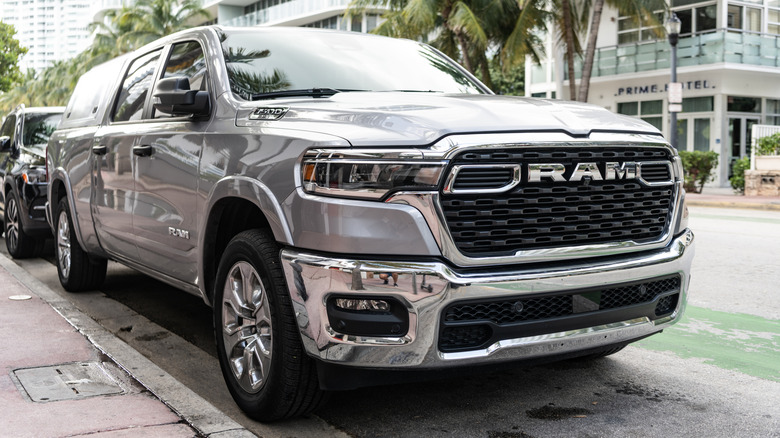
The Dodge Ram 1500 tops off the list as the least desirable truck for retirees. While not quite as large as some of its heavy-duty counterparts, this full-size pickup delivers more than the average retiree would bargain for in both overall costs and raw power. The baseline V6 generates 305 horsepower, while the upgraded V8 Hemi option delivers 395 horsepower. The max towing capacity is 11,610 pounds, and the top payload is 2,360 pounds — far more than the average retiree would need. Testers have noted the Ram 1500's detached steering, which can create a dissonant driving experience. J.D. Power reports that the 2026 model sells for between $42,025 and $88,800, making the entry-level trim one of the most expensive on this list.
CarEdge puts the Ram 1500's maintenance at a staggering $19,201 within the first 10 years of ownership. For context, this overshoots the average for the pickup truck class by $9,576. That figure alone is almost equivalent to the decade-long upkeep expenses of some more affordable options on this list. FuelEconomy.gov reports that the 2026 Ram 1500 has a fuel economy of 22 miles per gallon combined. This means seniors are overspending compared to the average new vehicle by $2,750 over a five-year period. The IIHS included the 2020 model in its leading Top Safety Pick+ category, while years 2021 through 2023 were recognized in the second-highest grouping as Top Safety Pick options.
12. Nissan TITAN
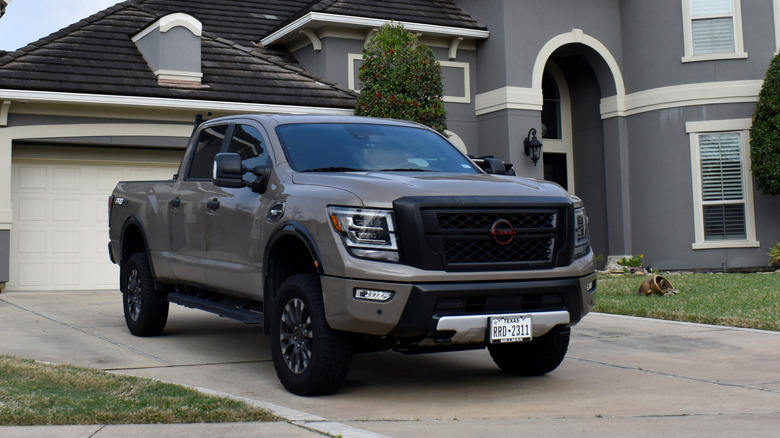
The Nissan Titan was discontinued in 2024, making it challenging for the older model to keep up with fresh releases from competing marques. In its own right, this pickup flexes a powerful standard V8 engine with 400 horsepower. The interior is even noted for its comfort and spaciousness. However, these strengths fail to make up for its aging platform. Furthermore, the Titan is hampered by an abysmal fuel efficiency, falling to the lowest point on this list of pickup trucks for retirees. Per J.D. Power, the 2024 model, which is the latest available, sells for about $33,856 to $56,721.
Within the initial 10 years of owning the Nissan Titan, seniors are looking at a maintenance bill of $9,522, which is actually $103 lower than competing models, according to CarEdge. Proving its bottom-of-the-barrel fuel economy, the 2024 Nissan Titan only achieves 17 miles per gallon combined, according to FuelEconomy.gov. Over half a decade, this costs seniors a $9,500 gas premium, assuming a fuel price as of May 2026 and calculating 15,000 annual miles. The IIHS gave this pickup truck mixed crashworthiness and general safety results from 2020 to 2024, calling its safety into question.
11. Chevrolet Silverado 1500
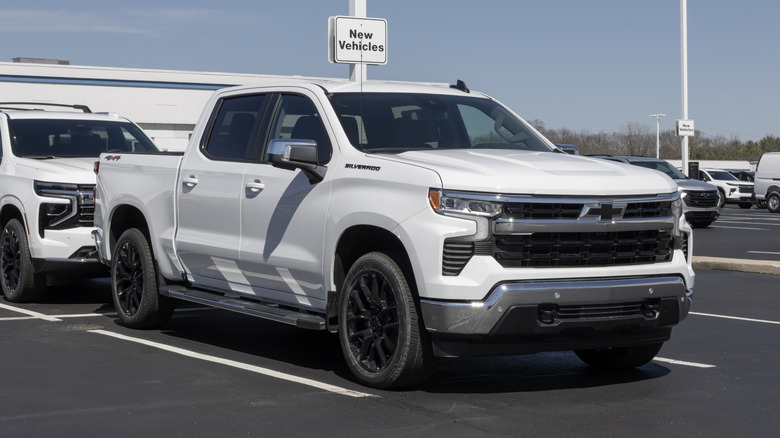
The Chevrolet Silverado 1500 is a work-oriented, full-size pickup that even beats out the monstrous Ram 1500 in towing capacity. The cheapest trim options don't offer much in the way of comfortable interiors, instead focusing on the basics for tradespeople. The engine capacity reaches some impressive capabilities, but nothing that's going to satisfy the requirements of a typical senior, especially at such elevated sales prices. To be sure, the Silverado 1500 has been highlighted as an unreliable pickup truck. J.D. Power reports that the 2026 model can range in price from $34,208 to $76,936.
The Chevrolet Silverado 1500 racks up a general maintenance cost of $10,950 over the course of a decade, outpacing the class standard by $1,325, as reported by CarEdge. Its combined fuel efficiency of 25 miles per gallon is actually one of the highest among these pickup trucks for retirees, yet it still costs seniors $5,500 over a five-year period compared to the new-car average, per FuelEconomy.gov. Unfortunately, the IIHS consistently graded the Silverado 1500's safety standards and crashworthiness subpar from 2020 to 2026.
10. GMC Sierra 1500
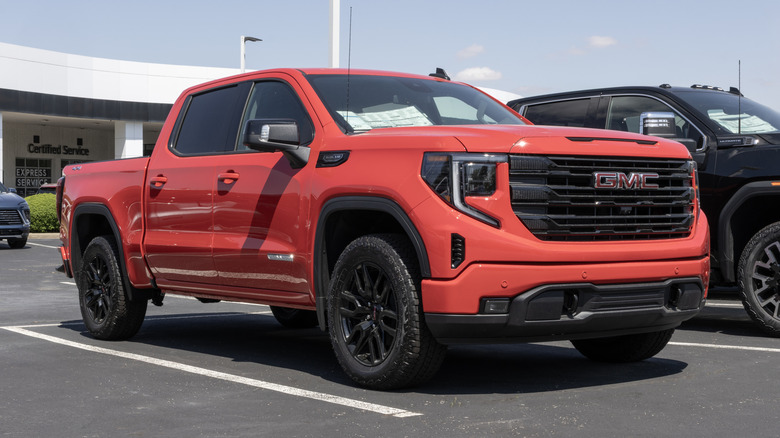
The GMC Sierra 1500 is another full-size truck that literally outstretches the demands of the typical retiree. Not much separates it from the Chevrolet Silverado 1500. The Sierra 1500's price tag is slightly higher, but this difference is made up for by lower long-term upkeep expenses. In a mechanical sense, these two trucks are extremely similar, although the GMC nameplate is slightly more refined. The Sierra 1500 has been criticized for a rough ride, worse than the already stiff driving experience offered by the Ram 1500. At this point, retirees can use the "1500" portion of a model as an immediate disqualifier, as it tends to point to larger trucks with potent engines that simply exceed the expectations of seasoned drivers looking for a more comfortable and uncomplicated option. J.D. Power reports a broad price range for the 2026 Sierra 1500, spanning from $34,530 to $88,563.
The GMC Sierra 1500 costs seniors around $9,861 to keep running smoothly within the first decade of driving. These ownership costs exceed the class norm by $236, according to CarEdge. Similar to the Silverado 1500, the GMC Sierra 1500 exhibits a solid 25 miles per gallon combined fuel economy, per FuelEconomy.gov. This has retirees overspending the average new vehicle by $5,500, based on May 2026 gas prices and presuming 15,000 annual miles. The Sierra 1500 has received varied IIHS results from 2020 to 2026, failing to stand out in the safety category.
9. Ford F-150
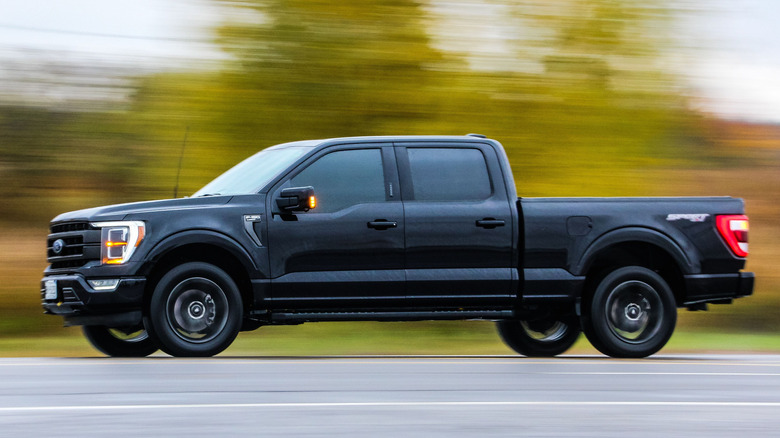
It may be puzzling to see the Ford F-150, which was the top-selling truck of 2025, so high on this list of pickups for retirees that are ranked from the worst to the best. While this uber-successful nameplate checks all the boxes for a workhorse truck, it falls short of meeting the day-to-day needs of seasoned drivers while hitting a comparatively high sales price and maintenance expense. The fuel economy is lacking, too. Ford strategically equips its baseline trims with cheaper materials, forcing buyers up the price ladder into more expensive models. The driving experience has also been derided as stiff, due to a subpar rear suspension design. Plus, there are plenty of trucks that are more reliable than the Ford F-150. The most affordable trim doesn't seem bad at $34,024, but the range of options can reach a staggering $118,020, according to J.D. Power.
CarEdge places the 10-year upkeep expenses of the Ford F-150 at an elevated $11,242, outrunning its peers by $1,617. Meanwhile, its 21 miles per gallon combined fuel economy has retirees paying $3,500 more at the pump than the typical new vehicle, according to FuelEconomy.gov. The F-150, however, excels in crashworthiness and safety standards, receiving an IIHS Top Safety Pick recognition between 2021 and 2025. Mixed results were found for the 2020 and 2026 models.
8. Toyota Tundra
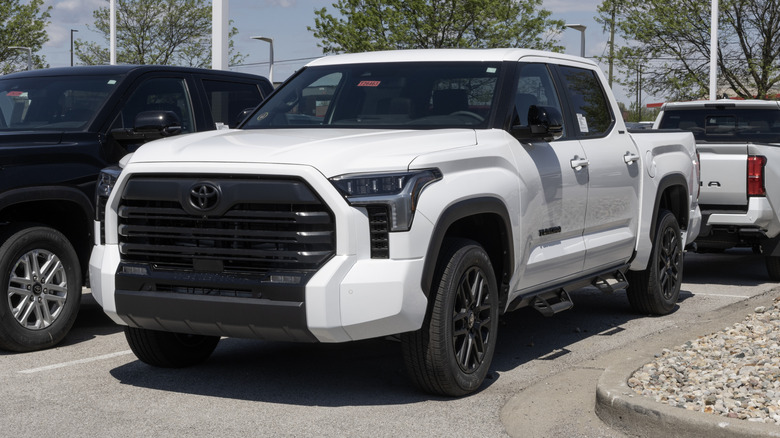
The Toyota Tundra presents a conundrum for senior drivers at first glance. In many ways, this celebrated pickup offers some of the best and the worst of what the class has to offer. The starting price point is on the higher end of the cost spectrum, and the fuel economy is moderate. However, it boasts an impressive safety track record, stellar performance, and one of the best Toyota resale values. Diving a bit beneath the surface reveals an oversized and disappointingly uncomfortable option for seniors. Notably, the rear suspension rests on coil springs, resulting in a feel-the-road ride. On the larger side, this Toyota truck is more than the average senior would likely need. The 2026 Tundra tends to sell for between $35,571 and $70,219, as calculated by J.D. Power.
The Toyota Tundra is relatively inexpensive to maintain, beating out the average truck by $2,399 over 10 years for a full upkeep cost of $7,226, according to CarEdge. FuelEconomy.gov estimates the 2026 model's combined fuel economy is 20 miles per gallon, resulting in an above-average fuel spend of $4,250 when driving 15,000 miles annually. IIHS graded the Tundra as a Top Safety Pick+ option in 2023 and a Top Safety Pick in 2024 and 2024.
7. Chevrolet Colorado
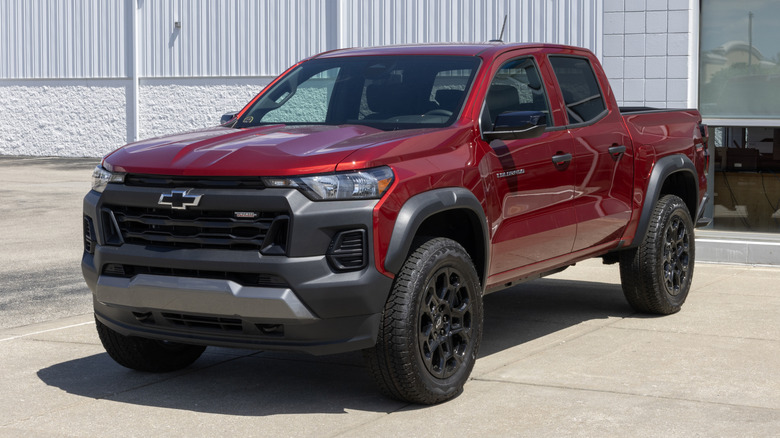
The Chevrolet Colorado drives out of the land of full-size pickups and into the territory of mid-size trucks, which tend to be more retirement-friendly. You don't have to venture beyond the most accessible trim type to unlock a five-person seating capacity, saving significant upgrading costs. The Colorado's smaller footprint translates to easier maneuverability and a more functional design overall. Although the engine output is remarkable given its size, the Colorado falls flat in fuel economy. The seating is comfortable and spacious in the front seat, but taller individuals may find the backseats limited. It's worth noting that Money Digest has found several vehicles to be more reliable than the Chevrolet Colorado, indicating an inferior dependability. Seniors usually spend about $28,535 to $54,785 on the 2026 model, far cheaper than many of the full-size options, according to J.D. Power.
Within the first decade of driving the Colorado, retirees should budget about $10,664 for general repairs and maintenance, which is $1,039 higher than its peers, per CarEdge. Using gas prices as of May 2026, drivers of the 2026 Colorado outspend their counterparts by about $3,500 on fuel. This is due to the Colorado's combined fuel efficiency of 21 miles per gallon, as reported by FuelEconomy.gov. This truck has a checkered safety track record, receiving no recognition and checkered results from the IIHS.
6. Ford Ranger
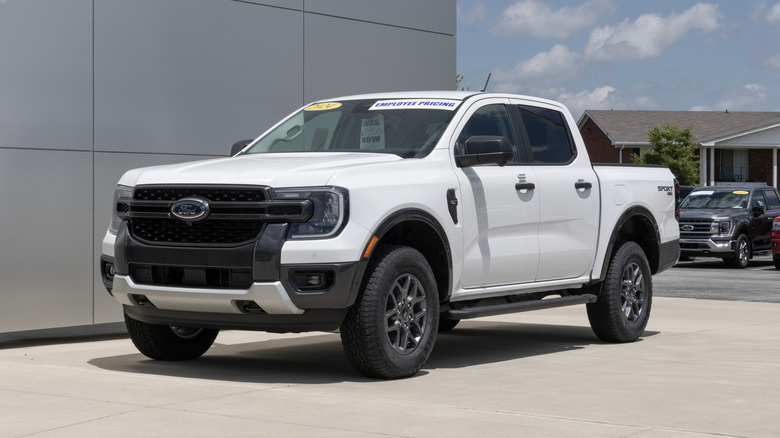
The Ford Ranger is often overshadowed by the larger, more powerful, and better-selling F-150, yet this American marque has been producing it since 1983. Throughout the decades, Ford has improved the Ranger to the point where it's arguably a more desirable option for certain buyers, including retirees. With a smaller stature, this vehicle is easier to maneuver throughout the neighborhood, city, or even the driveway. Five adults can easily fit into the standard trim, with sufficient head and leg room. The towing capacity is more than halved compared to the F-150, but remains at a muscular 3,500 pounds, which is more than enough for routine hauling. J.D. Power puts the average new price for the 2026 Ranger at $31,049 to $59,549, putting the top trims far below those of the F-Series lineup.
The Ford Ranger usually runs up a maintenance cost of $10,939 within the first 10 years of ownership, according to CarEdge. This costs an owner roughly $1,314 compared to competing pickup trucks. According to FuelEconomy.gov, the 2026 Ranger features a decent fuel economy of 23 miles per gallon combined. Assuming seniors drive about 15,000 miles each year, they'll tend to spend $2,250 more at the gas station than a peer driving a typical new car. Unfortunately, the IIHS hasn't performed independent testing for the Ford Ranger, preferring to stick to the top-selling models. Although the baseline trim comes standard with automated emergency braking, retirees will have to upgrade to get lane-keep assist, adaptive cruise control, and blind-spot monitoring.
5. Nissan Frontier
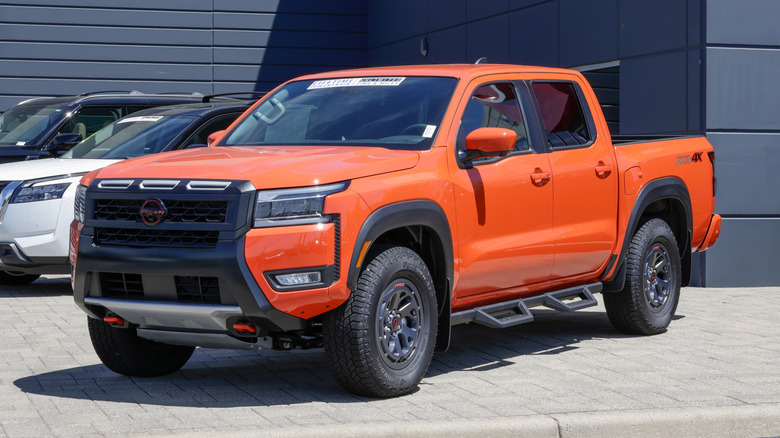
The Nissan Frontier is among the cheapest trucks that don't sacrifice size. Beyond this achievement, this pickup is a middle-of-the-road option for retirees, not really standing out in any way but avoiding the obvious pitfalls of other options. The relatively outdated control panel may feel familiar to retirees who have been driving older models, but the convenience of newer tech is lacking. The crew cab can fit four people, albeit in a tighter space than comparable pickups, with the backseat struggling to accommodate adults. These shortcomings persist because Nissan has failed to update the Frontier in a meaningful way since 2022. Seniors are looking at a price tag between $30,524 and $46,161, per J.D. Power.
CarEdge estimates that the Frontier's prolonged maintenance bill sits at $9,190, undercutting its competitors by $435. FuelEconomy.gov positions the 2026 model's combined fuel economy at 21, meaning seniors end up paying around $3,500 more on fuel than the average new vehicle, if they drive 15,000 miles per year. This nameplate has received no accolades from the IIHS from 2020 to 2026.
4. Honda Ridgeline
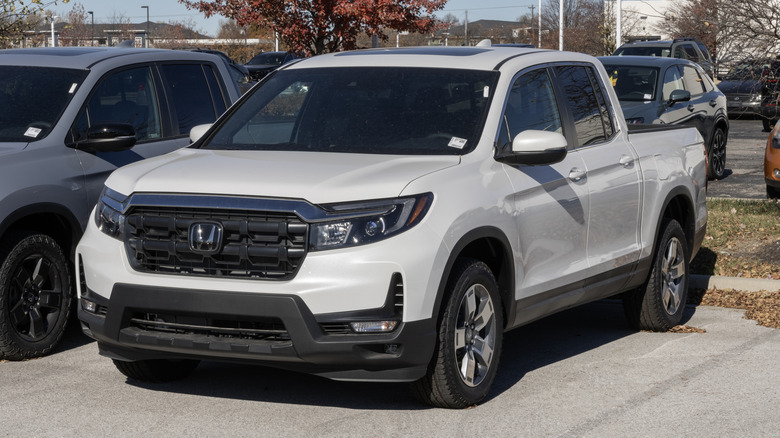
The Honda Ridgeline's exterior won't turn as many heads as more overtly stylish pickups on this list of trucks for retirees, but this nameplate delivers where it counts. Each trim comes with a standard crew cab, which means four adults can comfortably fit in the truck. Beyond spaciousness, the Ridgeline offers a familiar and straightforward driving experience. Instead of riding like a big truck, this vehicle feels more like a passenger van or mid-size SUV. The handling is more responsive than competing models. Still, the Ridgeline maintains the capability of a standard pickup, with a V6, 280-horsepower engine and a bed measuring over five feet in length. Plus, the Ridgeline is a Honda truck with great resale value. J.D. Power estimates that the 2026 release sells for between $36,961 and $49,885.
The Honda Ridgeline enjoys a relatively modest prolonged maintenance cost compared to other trucks, reaching $8,825 over the first 10 years of driving, as calculated by CarEdge. This saves retirees $800 compared to competing models. The 2026 Ridgeline slightly disappoints in fuel economy, with FuelEconomy.gov putting the average at 21 miles per gallon combined. Assuming an annual mileage of 15,000, seniors with this truck spend $3,500 more than the new car average. This pickup achieved a Top Safety Pick status from the IIHS in 2020, but has received modest results since then.
3. Ford Maverick
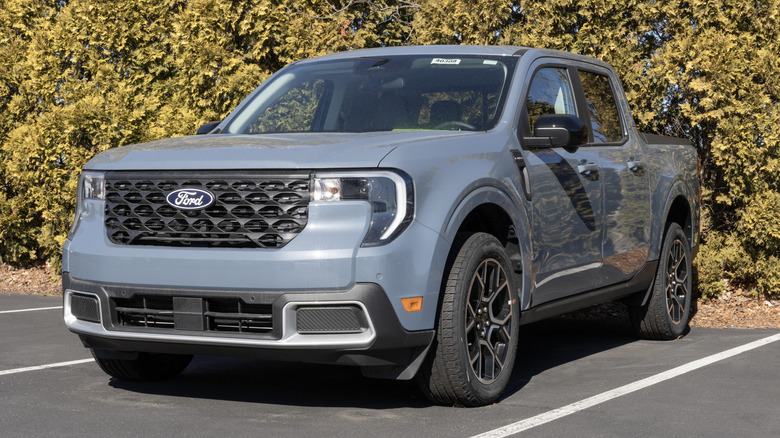
The F-150 may outsell the Maverick by a healthy margin, but retirees can find more to celebrate in this newer nameplate. For starters, the Maverick's comparatively compact design is better suited for daily commutes around the city. This especially simplifies parking around town or at home. The Maverick still easily seats five passengers and features a sizable truck bed. Reasonably, this smaller truck gives up some towing and payload capacity, but still offers plenty of oomph for retirees. The standard hybrid engine also helps to cut down on fuel costs, compared to the gas-powered F-150. According to J.D. Power, retirees can pick up the brand-new Ford Maverick for $25,486 to $46,859.
CarEdge estimates that Ford Maverick owners spend roughly $10,735 to keep this truck operating optimally within the initial decade of driving. Notably, this exceeds the pickup truck average by $1,110. Fuel economy is a standout feature for the 2026 Maverick, stretching to 26 miles per gallon combined, making it among the most fuel-efficient models on this list. FuelEconomy.gov estimates that retirees only spend $750 more on fuel over five years compared to the industry average. The Maverick may not have received official classifications from the IIHS, but its crashworthiness and safety results have been consistent since 2022.
2. Hyundai Santa Cruz
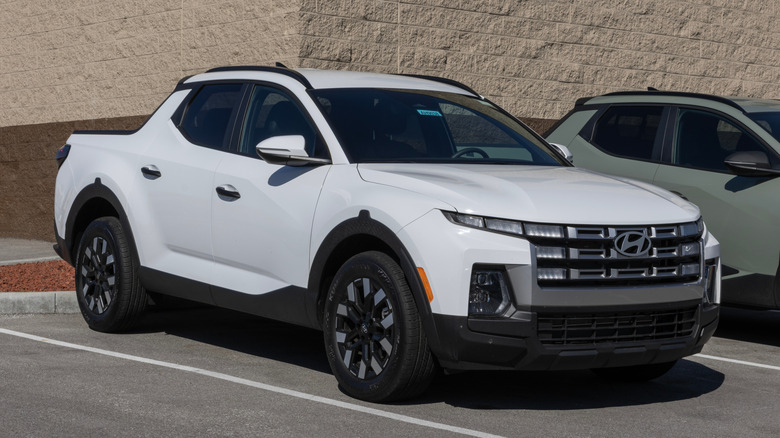
The Hyundai Santa Cruz sports a one-of-a-kind look, reminiscent of the classic El Camino truck, featuring a characteristically sloping bed. Retirees stand to benefit from this truck's extremely manageable handling, which feels more like driving a car than a pickup. The baseline trim puts out 191 horsepower, but some upgrades reach 281 horsepower. Despite its smaller stature, the Santa Cruz doesn't cede any ground to the competition in cabin space. The cabin is roomy enough for four adults and equipped with ergonomic and easy-to-use controls. Seasoned drivers with visibility issues will love the standard 12.3-inch screen. J.D. Power placed the price range of the 2026 model between $27,059 and $45,754, placing it at the lower end of the cost range.
If you're driving the Santa Cruz, you should anticipate routine maintenance and repair costs of around $9,765, according to CarEdge. This means you'll only be spending about $140 more than the average truck. What makes the 2026 Santa Cruz one of the best trucks for retirees is a solid combined fuel economy of 25 miles per gallon. FuelEconomy.gov estimates this only costs seniors $1,250 more in gas over five years than the typical new car, yet lower than most pickups. The Santa Cruz offers superior crashworthiness and safety features, with an IIHS Top Safety Pick recognition for 2022 and from 2024 to 2026.
1. Toyota Tacoma
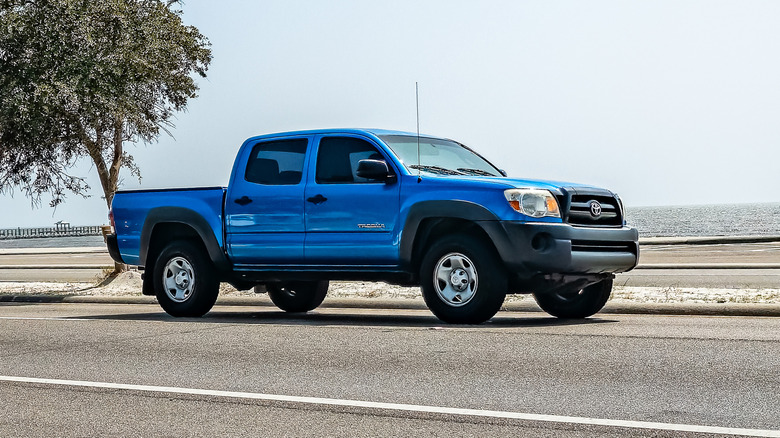
The Toyota Tacoma is consistently considered one of the most holistic trucks, due to its combination of upfront affordability, low long-term maintenance costs, decent fuel efficiency, and prolonged durability. The baseline trim features 228 horsepower, but this can be bumped up to 278. The revamped interior excels in style and comfort. Drivers can appreciate the elevated seat height, making for better visibility. Make sure to opt for the Double Cab option for four passengers, unless two suffice for your needs. J.D. Power estimates that retirees would spend around $28,226 to $42,836 for the all-new Tacoma, varying by trim type.
The Toyota Tacoma earns its spot as the top truck for seniors with the lowest prolonged maintenance cost. According to CarEdge, owners only pay about $6,931 in general upkeep, which results in a net savings of $2,694, compared to the typical pickup truck. While not the absolute most fuel-efficient option here, the 2026 Tacoma still gets a remarkable 23 miles per gallon combined. FuelEconomy.gov suggests drivers still overpay on gas by $2,250 across five years compared to the market benchmark, but the Tacoma still beats out most trucks in fuel costs. Beyond that, the Tacoma offers dependable safety standards, earning an IIHS Top Safety Pick in 2019, 2024, and 2025. Even years without recognition achieved positive results.