

11 Gas-Guzzling Cars Retirees Will Want To Avoid

Retirees have many requirements when purchasing a new vehicle that may differ from their must-haves in earlier life stages. While every individual or couple has unique preferences, seniors generally prioritize comfort, dependability, functionality, and affordability. This final, financially focused part of the equation usually centers on a car's upfront cost. However, initial expenses can easily cloud the consideration of other long-term costs that still factor into a vehicle's overall affordability. For instance, opting for a model from the car brands that cost the least to maintain over time could save you some serious repair expenses down the line.
Fuel costs have, once again, been swept up into the public debate around the cost of living as gasoline prices skyrocket. In April 2026, the cost of gas reached its highest point in four years, according to AAA. As of May 13, 2026, the average gallon of gas in the United States is $4.51. Only one year earlier, the average price hovered around $3.16. Although the average American has no control over fuel prices, retirees can help reduce this financial burden by avoiding gas-guzzling vehicles.
The latest official figures from the Environmental Protection Agency suggest that the average fuel economy in 2024 was 27.2 miles per gallon. The models on this list fall far below that baseline, even in their newest model years. It's crucial to note that the fuel cost estimates are based on May 2026 gas prices and an assumed annual driving distance of 15,000 miles. Similarly, the used price data listed below is current as of this writing, and can shift with the performance of the selling market at large.
11. Toyota Sequoia
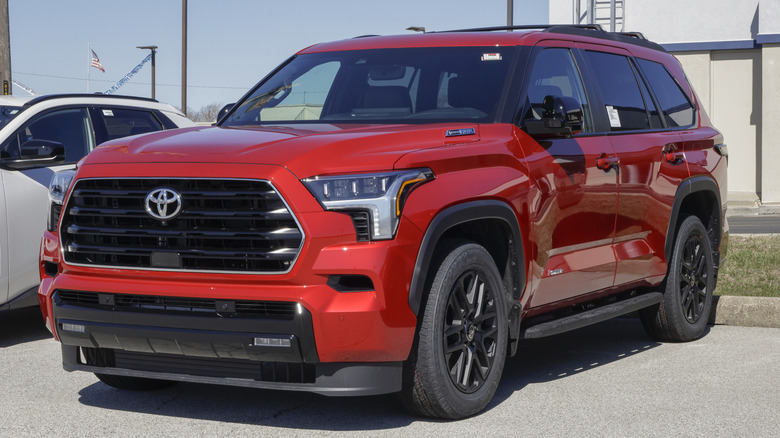
The Toyota Sequoia is one of the marque's largest SUVs. The 2026 model year sports a 3.4-liter, six-cylinder Turbo engine and an MSRP ranging from $64,825 to $70,595, according to FuelEconomy.gov — an official Environmental Protection Agency (EPA) website that tracks fuel economy data and costs for consumers across various new and used vehicles. The Sequoia's fuel economy has improved over the years: The 2026 model year gets up to 21 miles to the gallon in the city and 24 on the highway, demonstrating a combined fuel economy of 22 miles per gallon. Those numbers alone may not seem too bad, but 2026 Sequoia owners still spend more on gas than the average driver by $2,750 over five years and face annual fuel costs of around $2,700, assuming they undergo 15,000 miles of combined driving. The 22.5-gallon tank costs $90 to fill up, and this SUV burns $4.53 every 25 miles. To make matters worse, this is one of the Toyota cars with terrible resale value.
The 2026 Sequoia certainly isn't breaking any records on fuel savings, but older models could take up an even bigger portion of your personal finances. For instance, the 2021 Sequoia only boasts a 15-mile-per-gallon combined fuel economy. This results in five-year gas costs that stand $9,250 above the norm for new cars. Annually, the 2021 version runs through $4,000 worth of fuel, costing drivers roughly $6.65 every 25 miles. Plus, the larger 26.4-gallon tank costs $105 to fill up. CarGurus indicates that the 2021 Sequoia costs around $49,935 as of the present.
10. Toyota Tundra
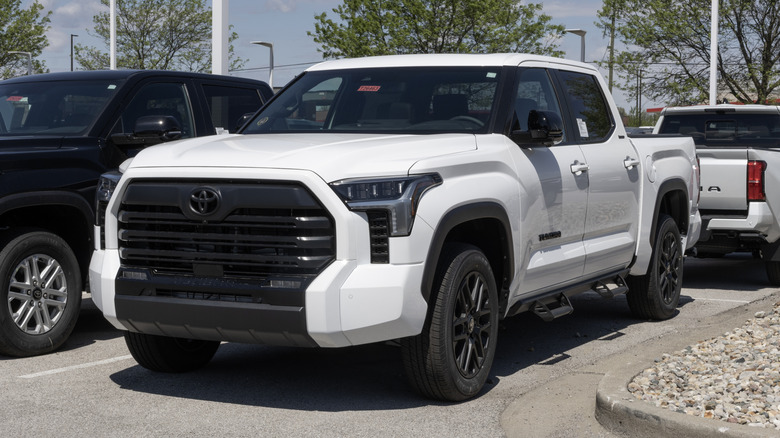
On its face, the Toyota Tundra doesn't seem like the most offensive gas guzzler on the market. The 2026 model offers a combined fuel economy of 20 miles per gallon, which is far below the industry average but not the absolute worst among trucks. More specifically, it gets 18 miles to the gallon in the city and 23 on the highway. It also boasts an impressive range of 644 miles thanks to a sizable 32.2-gallon fuel tank that costs an estimated $128 to fill up. Still, owners spend $4,250 more on gasoline compared to the standard vehicle over the course of five years. Annually, you'll see fuel costs of $3,000, with every 25 miles burning $4.99, assuming an annual driving distance of 15,000 miles. Per FuelEconomy.gov, this model lists in the range of $41,260 to $64,380.
While you might be able to save some money upfront by opting for an older Tundra model, it's important to note that you may see higher fuel costs with earlier model years. For instance, the 2021 Tundra might sell for an appealing $39,235 right now, per CarGurus, but it suffers from a subpar combined fuel economy of 15 miles per gallon. Within half a decade, you can expect to spend $9,250 more on fuel compared to the typical new vehicle. Part of this distinction is due to the 2021 Tundra's more powerful 5.7-liter, eight-cylinder engine, which is less efficient than the 2026's 3.4-liter, six-cylinder engine. However, there are many other reasons drivers should hold off on buying a used 2021 Toyota Tundra beyond its higher fuel costs.
9. Lexus LX
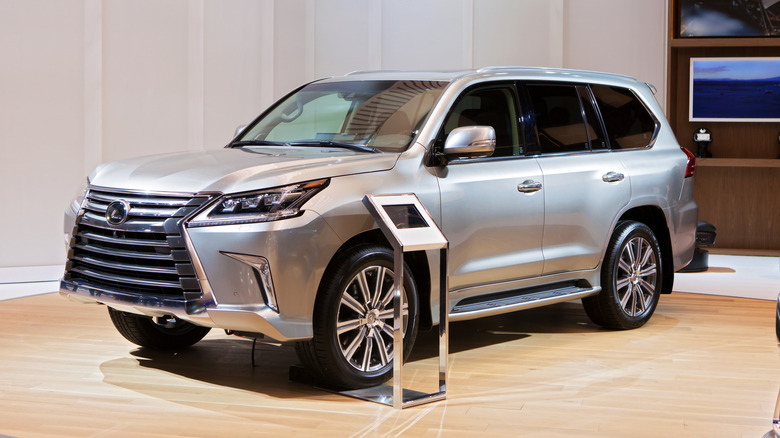
The Lexus LX is among the worst Lexus vehicles for a retiree, primarily due to its sub-optimal fuel economy. According to FuelEconomy.gov, the 2026 Lexus LX 600 has a combined fuel economy of 19 miles per gallon, getting 17 in the city and 22 on the highway. With a fuel tank of 21.1 gallons, owners tend to spend about $97 to fill up, based on gas prices as of May 2026. Every 25 miles runs up a bill of $6.07, resulting in an annual fuel fee of $3,650 if it's driven 15,000 miles per year. Over five years, LX 600 owners spend $7,500 more than the norm for new vehicles. The total range for this model is 401 miles, and an MSRP ranging from $107,000 to $116,000 only adds to these exorbitant costs.
While still far below the market baseline, this Lexus SUV has made some progress in fuel efficiency over the years. The 2021 model only gets a combined 14 miles to the gallon, and its range is limited to 344 miles on a larger, 24.6-gallon fuel tank. This poorer fuel economy results in a 25-mile cost of $8.23 and an annual fuel burden of $4,950. By the five-year mark, owners of the 2021 LX outpace their average new-car owner by $14,000 in gas costs. J.D. Power estimates that people tend to spend anywhere between $67,814 and $74,536 on this older model.
8. Jeep Gladiator
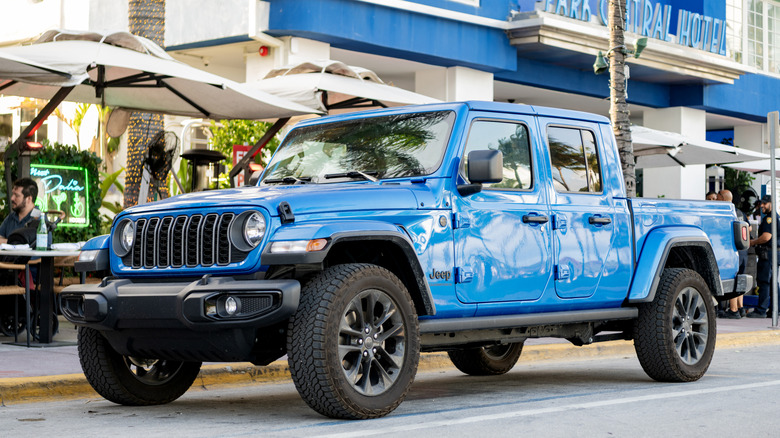
The Jeep Gladiator is the sole pickup offered by the legendary American marque. Whether you're looking to buy a domestic nameplate or you prioritize off-road capability, this model may enter your consideration. Unfortunately, all of the Gladiator's aesthetic appeal and performance cannot make up for its challenged fuel economy. The newest release features a subpar 19-mile-per-gallon combined fuel economy, burning 1 gallon every 17 miles in the city and every 22 miles on the highway. Seniors would spend about $88 every time they fill up the Gladiator's 22-gallon tank before having to fill up again after driving 418 miles. FuelEconomy.gov puts this truck's 25-mile average cost at $5.25. This adds up to a considerable annual fuel cost of $3,150. Within half a decade, retirees would be spending $5,000 more on gas than drivers of the average new car. However, it is worth noting this truck's MSRP hovers between $39,300 and $60,690, which is fairly modest compared to some of the other options on this list.
Money Digest actually highlights Jeep as one of the car brands retirees will instantly regret buying. Most of these complaints stem from long-term maintenance costs, but the Gladiator's exceptional fuel premiums are certainly a drawback in their own right. Looking back at this pickup's prior lineup shows that this high fuel burn rate is systemic, rather than something that's improving. For instance, the 2021 Gladiator bears the same sluggish fuel economy as its newest counterpart. Retirees can save on the initial costs with a 2021 model selling for around $31,842 currently, as reported by CarGurus, but this stubborn fuel burner would quickly wipe away most of those savings.
7. Nissan Armada
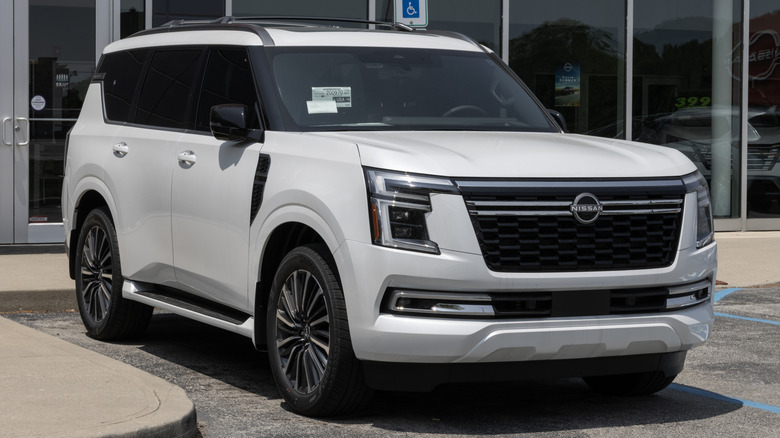
Nissan is one of customers' least favorite car brands, and the Armada's weak fuel economy certainly doesn't help the marque's reputation. Even the newest 2026 release is still hamstrung by its 18-mile-per-gallon combined fuel economy, achieving 16 in the city and 20 on the highway. This monstrous SUV has a 23.6-gallon tank and can drive 425 miles on a single fill-up. FuelEconomy.gov estimates that owners spend upwards of $109 at the gas pump, and lose around $6.40 every 25 miles they drive. These costs result in an annual fuel expense of $3,850 as of Spring 2026. Overall, the 2026 Armada costs $8,500 more in fuel than the average among new cars over the span of five years. The MSRP — ranging from $58,840 to $77,550 — is more reasonable than some of the luxury releases from premium brands, but wouldn't be the best option for any retirees looking to cut down on costs.
The Armada is another example of a vehicle where seniors may have to contend with higher fuel costs if they opt for an older used model. CarGurus estimates that 2021 Armadas sell for around $26,718, based on current used market data. However, the combined fuel economy takes a significant hit, dropping to 16 miles per gallon. The fuel tank is also larger at 26 gallons, causing the estimated cost to fill it up to jump to $120. Furthermore, the annual fuel costs rise to $4,300, with every 25 miles costing $7.20. In total, 2021 Armada owners outspend those driving new vehicles by a staggering $10,750 on average.
6. Cadillac Escalade
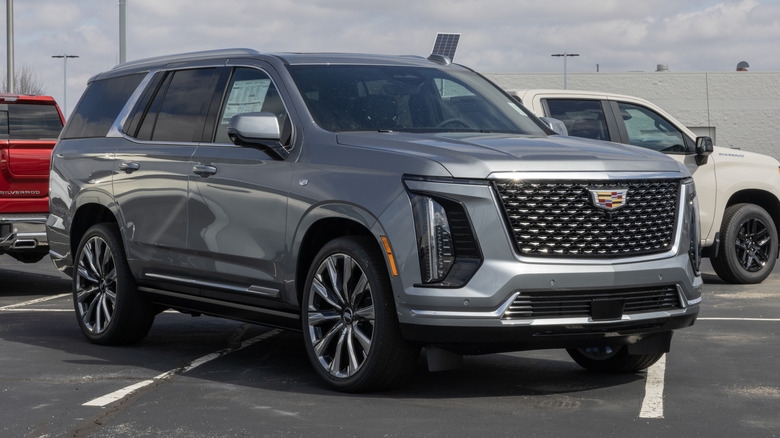
The 2026 Cadillac Escalade is another prime example of a gas guzzler that retirees should avoid at all costs. With a 6.2-liter, eight-cylinder engine, this luxury SUV has a disappointing combined fuel economy of 17 miles per gallon due to the 15 miles per gallon it gets in the city and the 19 it gets on the highway. The 24-gallon tank costs $111 to fill up and can fuel the vehicle for 408 miles. FuelEconomy.gov estimates that owners spend $6.78 every 25 miles, adding up to roughly $4,050 of gas expenses for every 15,000 miles driven. Within five years, you could spend $9,500 more than the average driver assuming fuel costs stay as high as they are in May 2026.
Higher fuel costs are also among the reasons drivers regret buying used luxury cars, and the Escalade fits squarely into this cautionary note: Earlier model years largely hold up the nameplate's track record as a gas hog. For instance, the fuel expenses of the 2021 Escalade largely mirror those of the 2026 model. This used alternative also has a 17-mile-per-gallon combined fuel economy, although it can reportedly reach up to 20 miles per gallon on the highway. However, unless you spend a vast majority of your driving time on highways, you'd likely still wind up overpaying on fuel by $9,500 compared to the market-wide five-year average. That said, used Escalades do offer some significant upfront savings: The 2021 Escalade sells for around $58,469, per CarGurus, while the MSRP on the 2026 model year ranges from $91,100 to $120,400.
5. GMC Yukon
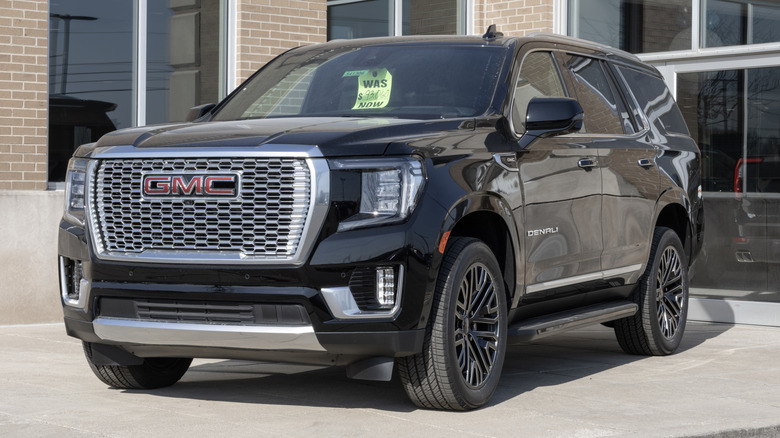
The GMC Yukon is a popular vehicle, but it's also one of the least reliable SUVs and can certainly burn through fuel. Even its 2026 model year only achieves a combined fuel economy of 17 miles per gallon, per FuelEconomy.gov. At its best, this SUV gets 20 miles to the gallon on highways, but only maintains 15 in the city. Retirees would have to spend $111 every time they visit the gas station to fill up the 24-gallon tank, based on Spring 2026 prices, and they'd only get 408 miles of range before needing to refuel. Every time the speedometer clicks past another 25 miles, the 2026 Yukon runs through $6.78 worth of gas. Over a year, a Yukon driver's total gas expenditure could come out to $4,050, assuming they drove 15,000 miles.
Over five years, seniors would be looking at an energy bill of $9,500 beyond that of the average new car. The 2026 Yukon's hefty MSRP ranges from $69,200 to $80,000, which could certainly be enough to turn away seniors looking for a deal. You could save some money by purchasing a used Yukon — CarGurus suggests you can buy a 2021 model for $45,236, based on current pricing — but you'll likely wind up dealing with the same meager 17-mile-per-gallon combined fuel economy and annual costs.
4. Chevrolet Silverado 1500
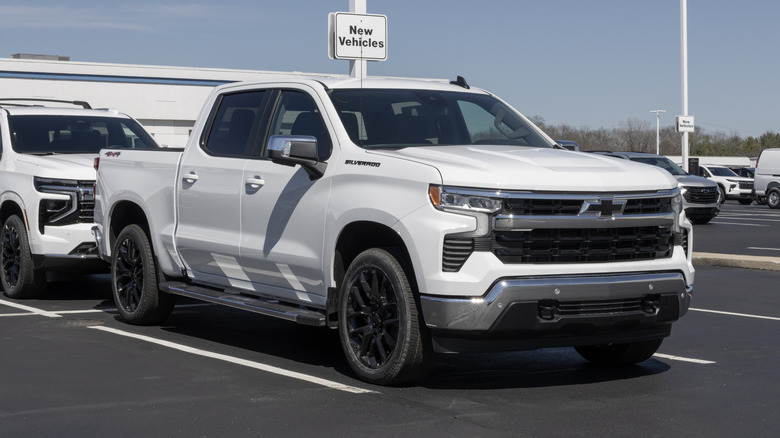
While a Chevrolet Silverado model tops the list of the most reliable pickup trucks, it also carries a financial burden in the long term: FuelEconomy.gov estimates that the 2026 Chevy Silverado 1500 only maintains a combined fuel economy of 16 miles per gallon, maxing out at 15 in the city and 18 on the highway. This truck comes standard with a 5.3-liter, eight-cylinder engine, and owners rack up $6.23 worth of fuel costs for every 25 miles they drive. In a year, they can expect to spend around $3,750 for every 15,000 miles driven, considering fuel prices as of Spring 2026. When zooming out to half a decade, the 2026 Silverado could rack up $8,000 more in fuel costs than the benchmark for new models. According to J.D. Power, the 2026 model year can cost anywhere between $33,414 to $77,233, depending on the trim.
While some vehicle designs may fail to improve much over the years, the Silverado's efficiency has actually gone downhill. For instance, the 2021 model gets 17 miles to the gallon factoring in highway and city driving. This increase is thanks to the fact that it can actually reach 19 miles per gallon on the highway, resulting in owners only needing to spend around $3,500 annually on fuel — or $5.87 every 25 miles. This improved fuel economy is due in part to the 2021 Silverado's smaller 4.3-liter, six-cylinder engine, though it's still estimated to incur $6,750 more in gas expenses than the average new vehicle. According to CarGurus, the 2021 Silverado lists for around $32,279, so opting for an older model year could save you cash on multiple fronts.
3. Chevrolet Suburban
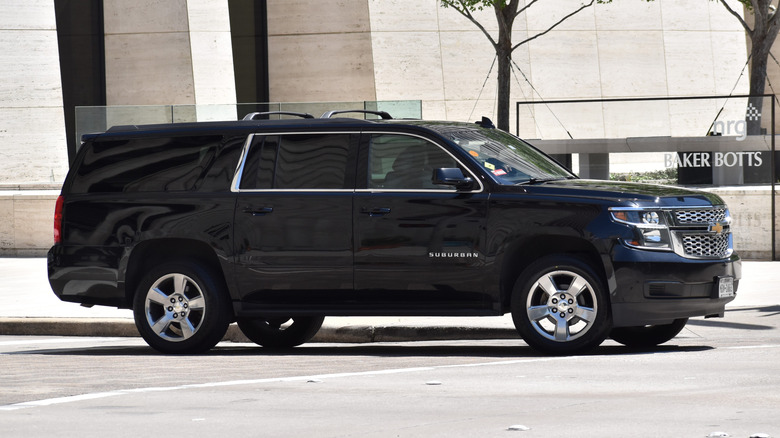
In addition to getting wrapped up in one of the largest General Motors recalls in recent history, the Chevrolet Suburban still struggles with efficiency in 2026. This colossal SUV's combined fuel economy sits at a mere 16 miles per gallon, achieving around 15 in the city and 19 on the highway. The Suburban's total range is 448 miles, with a 28-gallon fuel tank that costs an eye-popping $129 to fill up. FuelEconomy.gov notes that every 25 miles driven in a 2026 Suburban costs drivers $7.20 as of May 2026, racking up annual fuel expenses of around $4,300 for every 15,000 miles on the odometer. Over the course of five years, this SUV burns through $10,750 worth of fuel more than the typical new model. This nameplate has an MSRP between $63,400 and $83,400, making even the initial costs unappealing to many on fixed incomes.
Similar to the Silverado 1500, the Suburban has actually decreased in fuel efficiency over the years. Budget-conscious retirees could be saving some money on annual and long-term fuel costs with older versions of this SUV, yet they would still be greatly overpaying. For instance, the 2021 Suburban's combined fuel economy comes out to 17 miles per gallon; while better than the 2026 model, that's still far below the norm. A pre-owned 2021 Suburban is still estimated to consume $4,050 worth of fuel each year. In five years, drivers will already invest $9,500 more in gas than they would driving the average new vehicle. CarGurus suggests that the 2021 Suburban sells for about $40,468, as of current used market trends.
2. Mercedes-Benz G-Class AMG G63

The Mercedes-Benz G-Class AMG G63 is a luxury SUV with a potent four-liter, eight-cylinder Turbo engine. Unfortunately, this premium car brand fails to lead in customer loyalty, which helps explain why this model falls far below the average for fuel efficiency. FuelEconomy.gov estimates that the newest AMG G63 gets 14 miles per gallon in the city and 16 on the highway, for an abysmal combined fuel economy of 15 miles per gallon. This thirsty SUV runs up an annual gas bill of $4,600 for every 15,000 miles crossed, and costs $7.68 to drive just 25 miles. The tank is 26.4 gallons, running up a bill of $122 to fill. Within five years, owners of this Mercedes-Benz SUV outspend other drivers by $12,250 on average. A hefty MSRP of $195,500 doesn't make it any more appealing to budget-conscious drivers.
If you think buying a used AMG G63 will help save some money, the numbers may be sobering. CarGurus estimates that a 2021 model still runs a whopping $144,143. Plus, the combined fuel economy falls to 14 miles per gallon. The fuel tank size and cost to fill up don't change compared to the newest model. Yet, that single mile-per-gallon drop in fuel economy will cost you $8.23 every 25 miles. These costs add up to $4,950 over a full year. Over half a decade, you'll end up paying $14,000 more than for the fuel costs of a new car.
1. Ram 1500
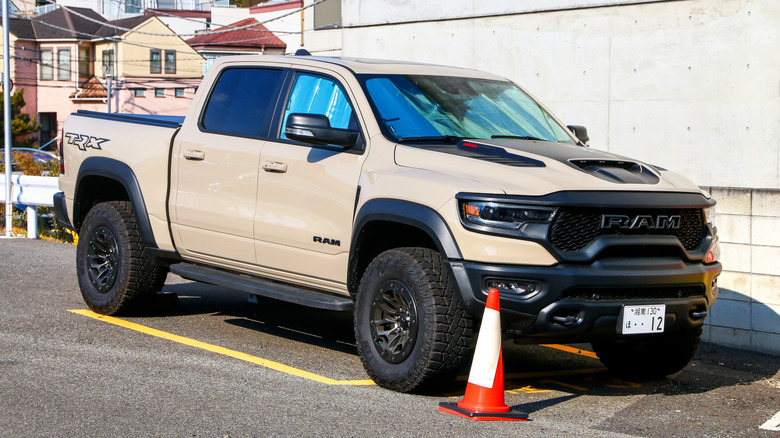
The 2026 Ram 1500 comes in with one of the worst fuel efficiency ratings in the market, only getting 12 miles per gallon combined, according to FuelEconomy.gov. The newest model gets 10 miles per gallon in the city and 14 on the highway. Estimates suggest a full tank, which holds 26 to 33 gallons, can run for between 312 and 396 miles. This tank costs about $120 to $152 to fill up for an annual fuel expense of $5,750, based on current gas prices. Put another way, you're spending $9.60 for every 25 miles. Over the course of five years, the 2026 Ram 1500 eats up $18,000 more in energy costs than the average new vehicle. These figures assume an annual driving distance of 15,000 miles.
Interestingly, the 2021 Ram 1500 has an estimated combined fuel economy of 17 miles per gallon, outperforming its newest production year. More specifically, this model gets 15 in the city and 21 on the highway. While still far from the average fuel efficiency today, seniors looking to buy the Ram used actually stand to benefit from lower fuel expenses. The 2021 version digests $7.32 worth of gasoline every 25 miles, making for an annual fuel cost of $4,400. You would be spending $11,250 more than the average new car, but still much less than for the 2026 Ram 1500. Notably, a real-world estimate places this older model's fuel economy closer to 14 miles per gallon. CarGurus suggests that the 2021 Ram 1500 typically sells for $31,479.