

The 11 Most Popular Ford Cars For Retirees, Ranked Worst To Best
The Ford Motor Company has been based in the United States since 1903, making it among the longest-running domestic marques. Over the years, the company has produced some of the most in-demand models, widely celebrated by independent testing agencies and broadly purchased among American drivers. In fact, the Ford F-Series sold the most units out of any nameplate in 2025, reaching 828,832 sales, according to Kelley Blue Book. For reference, the second best-selling model didn't even scratch 600,000 units. The Ford Explorer, Transit, and the newly introduced Maverick also made it onto the list of the 25 most in-demand models of last year.
With such a prolific output, it's not surprising that Ford has been swept up in some of the largest recalls in recent history that cost a lot of money. However, these massive call-backs aren't the only tripwire retirees should keep an eye out for when buying a Ford vehicle. Seasoned drivers come with a very specific set of needs on the road, including upfront and long-term affordability, fuel efficiency, comfort, and practicality. An impressively robust lineup of 19 nameplates doesn't simplify the math for seniors, either.
To help seniors sift through the litany of Ford models to find the best choice for their needs, Money Digest scoured the lineup to separate the very best vehicles from the absolute worst. We looked at both initial costs in the form of price tags and prolonged maintenance expenses to give retirees a complete financial rundown. We also looked at each nameplate's specifications, such as spaciousness, engine output, and functionality, to assess which vehicles best align with how the average retiree uses a vehicle. Finally, we looked at official government data regarding fuel economy and potential gas savings. These are the 11 most popular Ford cars for retirees, ranked from worst to best.
11. Ford Mustang
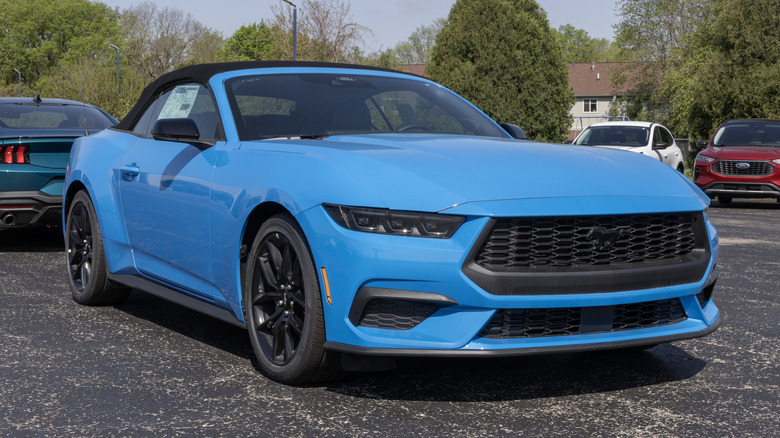
The Ford Mustang is the brand's last passenger car on the road in the U.S., with the famous American automaker ceasing production of all sedans. In 2025 alone, this classic muscle car moved 45,333 units. Unless your heart is set on this piece of American legacy, the Ford Mustang is likely to disappoint in retirement. While the sharp exterior angles and lightning-fast acceleration are head-turners, seasoned drivers won't find much to sing praises about on their daily commutes. The rear seat is virtually non-existent, the 315-horsepower engine is overkill, and the visibility out of the rear-side and far-back windows is limited. Admittedly, the starting price range of $29,500 is decent, but any upgraded trims can quickly launch you closer to the upper-level price of $73,292, per J.D. Power. Ironically, buying used can actually cost you more, with the 2022 version selling for around $33,480, according to CarGurus.
This sports car's maintenance costs are high for its lack of functionality, reaching $7,830 across the initial decade of ownership. CarEdge suggests that these upkeep expenses stretch higher than similar nameplates by $511. Also, the Ford Mustang comes with a 21.47% likelihood of needing a major fix within those 10 years. Perhaps the most egregious performance blind spot of the 2026 Mustang is its 18 miles per gallon fuel economy. This gas-guzzler only reaches 23 miles per gallon on the highway. Over half a decade, this fuel inefficiency can cost retirees $5,750 more than the new-car average, according to FuelEconomy.gov, the U.S. government's official track record of fuel efficiency stats.
10. Ford Mustang Mach-E
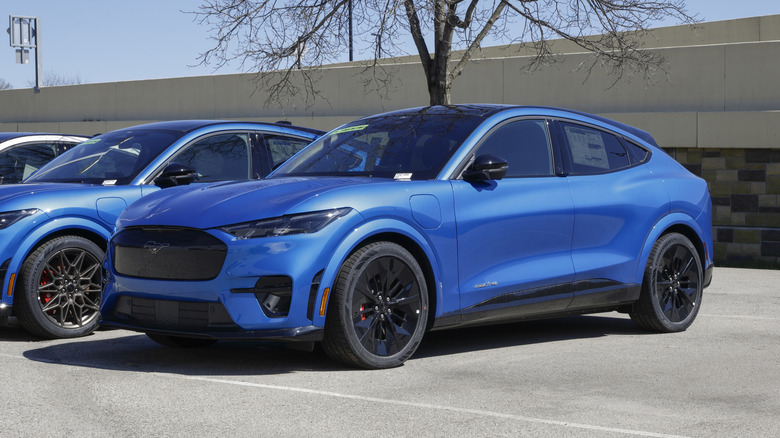
The Ford Mustang Mach-E is more spacious than its two-door counterpart, but struggles to find a place among the mainstream needs of retired drivers. The starting price is nearly $10,000 higher than the standard Mustang, and its all-electric engine is likely to turn away more customers than it attracts. In fact, only 16% of U.S. drivers are interested in purchasing an EV, according to AAA, the lowest rate of interest found since 2019. The potent 480-horsepower engine and rapid acceleration play more to a car enthusiast's taste than someone shopping for their golden years. J.D. Power suggests that the 2026 Mustang Mach-E is sold for roughly $35,008 to $60,062. CarGurus indicates seniors can save by opting for a 2022 model at $27,047, but that doesn't help broaden this EV's niche appeal.
As with many all-electric vehicles, the Mach E is reliably affordable to maintain. CarEdge places the 10-year upkeep costs at $5,280, which is a stellar $2,886 below the standard SUV. Also, this model experiences a 27.48% probability of needing a serious fix within the same period, defined as a repair exceeding $500. These prolonged savings compared to internal combustion engines continue with fuel costs. FuelEconomy.gov estimates that Mach-E owners can save $7,250. For context, these savings are based on vehicles driving 15,000 miles per year and calculated with the gas prices as of Spring 2026.
9. Ford Super Duty F-250
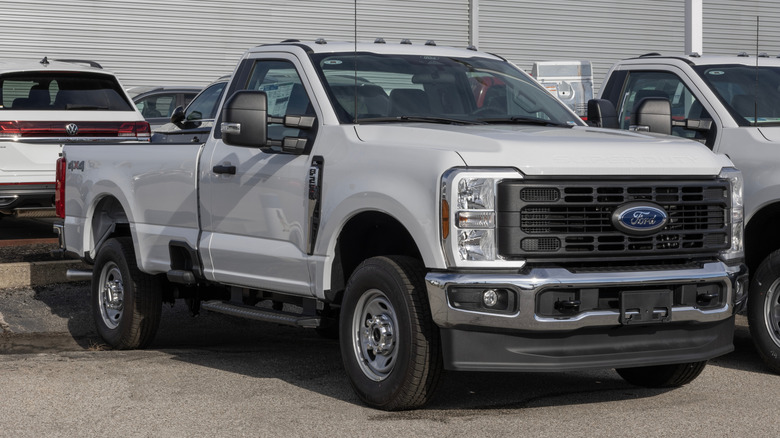
The Ford Super Duty F-250 lives up to its brawny moniker, flexing up to 10 tons of towing power and two tons of payload capacity, all while maintaining a spacious interior, even in the rear seats. Unfortunately, these bragging rights fall on deaf ears for seniors who aren't doing professional outdoor work or hauling an inordinate amount of material. Plus, retirees may find the high ground clearance a safety hazard when entering and exiting the vehicle. In addition to being of no use to the average driver, these perks crank up the F-250's sales price, which sits somewhere between $42,390 on the low end and a whopping $102,083 on the high end, according to J.D. Power. There aren't really any savings to be had in buying used, with CarGurus estimating the price of a 2022 model at $51,375.
The F-250's financial weight only compounds when looking at prolonged upkeep costs. CarEdge recommends seniors budget about $15,697 in maintenance and repairs within the initial decade of ownership. Remarkably, this is $2,099 lower than for similar heavy-duty pickups, illustrating just how costly this class can be. To make matters worse, the F-250 comes with a heightened 45.72% risk of requiring a considerable fix in these first 10 years. FuelEconomy.gov doesn't have estimated fuel costs for this Ford Super Duty, but Fuelly's tests over 50,000 miles of real-world driving indicate that the F-250 averages a meager 14 miles per gallon.
8. Ford Transit
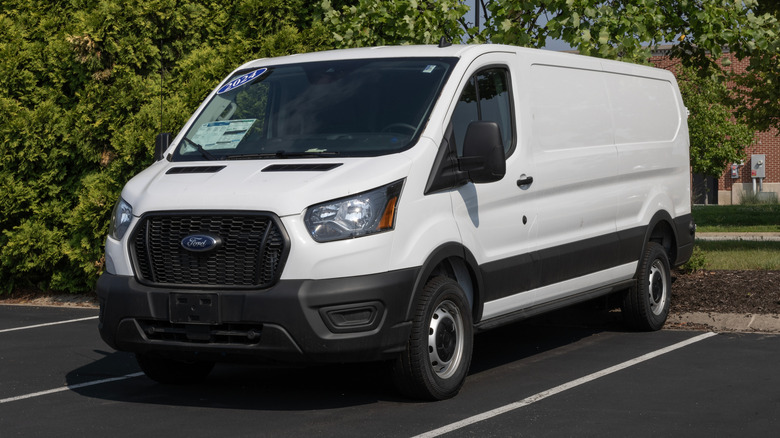
The Ford Transit is another job-specific build that falls flat when measured against the demands of retirees. The interior is massive, yet it far exceeds the routine needs of daily commutes or even extended trips. The sheer size creates an awkward driving experience for those used to standard passenger vehicles. The elevated price range does nothing to distract from the simple lack of practicality inherent in the Transit. Car and Driver suggests people usually spend between $50,795 and $74,060 on the 2026 model. If you're thinking twice about buying new, the 2022 Transit is priced at a discounted $29,803, according to CarGurus.
CarEdge doesn't publish maintenance costs specifically for the Ford Transit, but the brand's average upkeep expenses over 10 years are roughly $10,313. Notably, this rises above the market average by $2,057. Furthermore, Fords tend to carry a 31.85% likelihood of demanding a considerable repair during this period. In place of unavailable FuelEconomy.gov information, Fuelly testing suggests that the Ford Transit has a thirsty fuel economy of 14.3 miles per gallon, resulting from over four million miles of data. The IIHS doesn't publish data on the Ford Transit, but this nameplate comes standard with lane-departure warning, lane-keep assist, and automatic emergency braking.
7. Ford F-150
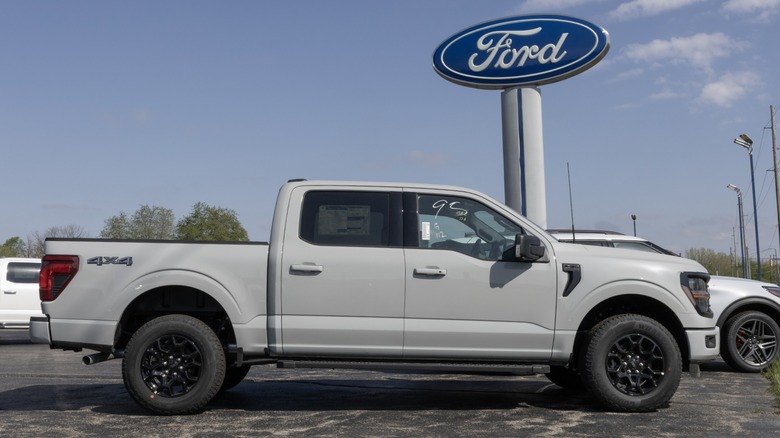
It may come as a surprise to see the flagship Ford F-150 so high on the list of the most popular Ford cars for retirees, ranked from the worst to the best. Despite being the top-selling model in the U.S., this popular pickup comes up short on delivering the optimal driving experience for seniors. A stiff rear suspension makes for a less-than-pleasant ride. Plus, Ford equips the more affordable F-150 trims with cheaper materials. While not quite as muscular as the F-250, this baseline F-Series packs a powerful punch in the hauling and towing departments. Once again, these perks aren't going to have most retirees rushing to sign on the dotted line. The starting price of the 2026 F-150 can be appealing at first, but Ford strategically piecemeals more attractive features across eight different trim types, escalating the price quickly. As J.D. Power highlights, this all-new model jumps from $34,024 to $118,020. The average 2022 F-150 still sells for $39,251, per CarGurus, not offering much in the way of a markdown.
Seniors will need to budget around $11,242 to keep the F-150 operational throughout the first decade of ownership, per CarEdge. These costs eclipse the pickup standard by $1,617. Additionally, drivers see a 31.63% risk of having to pay for a major fix during this period, a 2% higher likelihood than for comparable trucks. FuelEconomy.gov puts the 2026 Ford F-150's fuel economy at a below-average 21 miles per gallon. When considering current gas prices, seniors would pay $3,500 more in fuel than the average driver. These add-on costs will hurt even more if you're living in one of the states with the highest absolute gas prices.
6. Ford Ranger
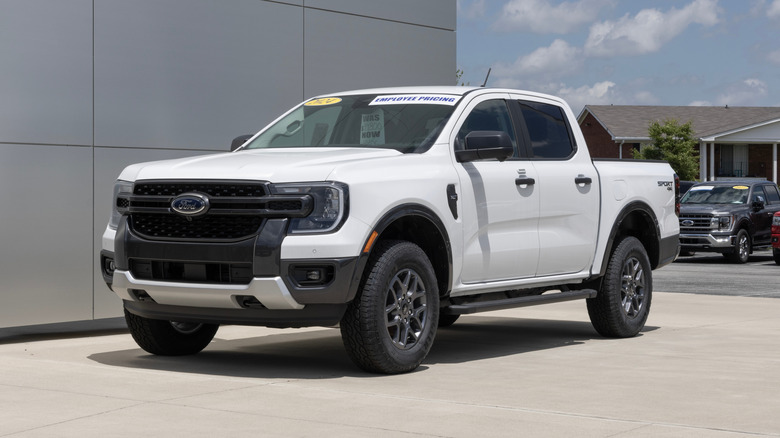
The Ranger is a smaller version of the F-150 that delivers the main advantages of a pickup while hitting lower maintenance costs than its F-Series counterpart and a more accessible price point. The entry-level trim is a five-door crew cab with sufficient seating for four passengers. The driving experience is noiseless and smooth, and the cabin is outfitted with comfortable seats and ergonomic storage space. J.D. Power suggests that consumers often pay from $31,049 to $59,549 for the 2026 Ranger, placing it slightly beneath the cost of the F-150. Buying used definitely offers a better deal than the F-Series competitor, with the 2022 Ranger selling for $29,568, as calculated by CarGurus.
The Ford Ranger also undercuts the F-150 on long-term upkeep costs, usually requiring $10,939 of general maintenance over a decade. This remains above the class average by $1,314. CarEdge indicates that this pickup experiences a 31.63% probability of needing a considerable fix within 10 years of driving. The 2026 Ranger is an upgrade in the fuel economy department, too, getting 23 miles per gallon. Retirees would spend less on gas than the F-150, but would still be saddled with an energy bill $2,250 more than the average vehicle, according to FuelEconomy.gov. This is one of the best new trucks that don't sacrifice size.
5. Ford Bronco
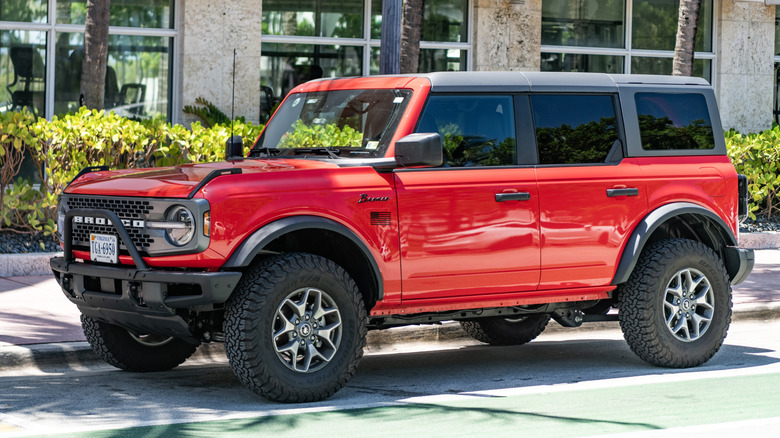
The legendary Ford Bronco generated waves of excitement with its historic relaunch in 2021. Yet, this rugged machine has struggled to make inroads into the older demographic, due to its hyper-specific design. The Bronco is fine-tuned for off-road terrain, but the standard inclusions that make this performance possible, such as four-wheel drive and a potent engine, jack up the costs for capabilities most seniors won't need. The Bronco has been criticized for its noisy highway rides and plastic-laden interior. The rebirth of this infamous nameplate hasn't dampened the price tag, with the all-new model selling for around $40,570 to $82,812, per J.D. Power. Retirees who are set on this off-pavement workhorse can find a used 2022 version for around $38,947, according to CarGurus.
CarEdge projects the Bronco's prolonged maintenance and repair costs at $9,979, exceeding the class average by $1,813. This SUV comes with a 27.48% probability of experiencing a serious repair issue within the first 10 years of ownership. The Bronco's hardy engine comes with lofty fuel costs for retirees, who could end up overspending on gas by $4,250 over half a decade compared to the market benchmark. FuelEconomy.gov clocks this SUV's fuel economy at a meager 20 miles per gallon. It's worth noting that the upgraded Bronco Sport is one of the cheapest vehicles to insure.
4. Ford Expedition
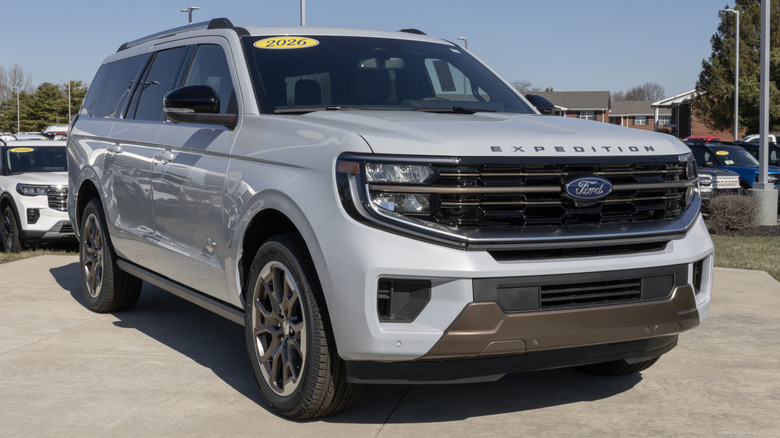
The Ford Expedition is an SUV more befitting of retiree needs than the Bronco, but its upfront and long-term maintenance costs make it a financial consideration. If interior space is a priority, this is a solid option. Retirees can benefit from this SUV's comfortable and spacious interior, with this nameplate fitting seven to eight passengers. In fact, the Expedition has been heralded as one of the best new cars available, in general. The standard V-6, 400-horsepower engine is likely overkill, but delivers the oomph some retirees may desire. Foldable third and second rows make for a dynamic user experience. The interior receives positive feedback for its comfort and style.
J.D. Power places the upfront cost of the Expedition between $53,427 and $88,029, placing it in the middle range of Ford price tags. Seniors looking to cut back a little more can purchase a used 2022 model for $43,963, per CarGurus. CarEdge recommends that seniors budget around $10,226 to keep the Expedition running optimally and smoothly. This 10-year maintenance bill outranks the class average by $2,060. Additionally, this sizable SUV faces a 27.48% likelihood of needing a serious fix within the same period. This is 2.89% higher than competing models. One of the main pain points of the all-new Expedition is the below-average fuel economy of 19 miles per gallon, as reported by FuelEconomy.gov. Over a half-decade period, seniors end up overpaying on gas by $5,000, when measured against the new-car benchmark. Keep in mind this calculation uses fuel prices as of Spring 2026.
3. Ford Maverick
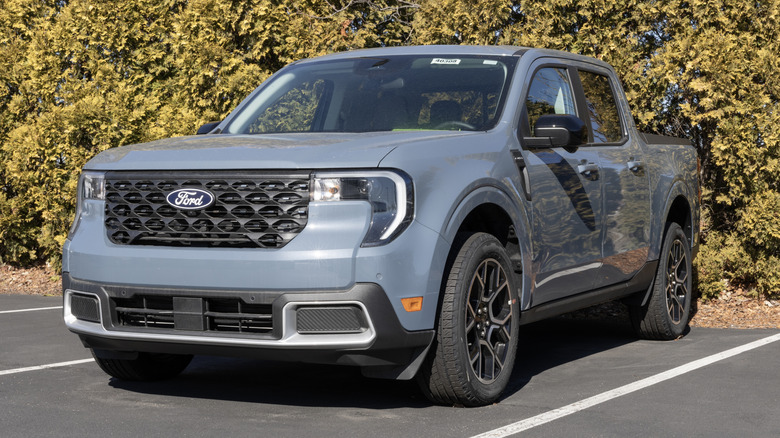
For retirees who are set on the Ford brand and desire a capable yet affordable pickup, the Ford Maverick is the ideal choice. It's the least expensive truck in the lineup, the most affordable to maintain, and offers the best gas mileage. The Maverick is a simplified, modern pickup that prioritizes practicality and driver comfort over raw power. The slightly scaled-back size makes it easier to maneuver and park, even in tight spaces. J.D. Power suggests drivers usually spend around $25,486 to $46,859 for the all-new Maverick, based on the trim type. If you're not convinced by the price, you can shave off a little by purchasing a 2022 model for $24,115, per CarGurus.
Senior drivers also catch a financial break on the prolonged upkeep expenses compared to the F-150 or the Ranger, with the 10-year maintenance costs at $10,735. Still, this is higher than competing pickups from other marques by $1,110. CarEdge further notes that drivers of the Maverick have a 31.63% likelihood of having to foot the bill for a major fix during this period. The baseline trim achieves 26 miles per gallon and up to 32 on the highway, which is exceptional for trucks. Owners still overspend on gas to the tune of $750 over five years, per FuelEconomy.gov, but still save against other Ford trucks. Money Digest highlights the Maverick as one of the most reliable pickup trucks on the market.
2. Ford Explorer
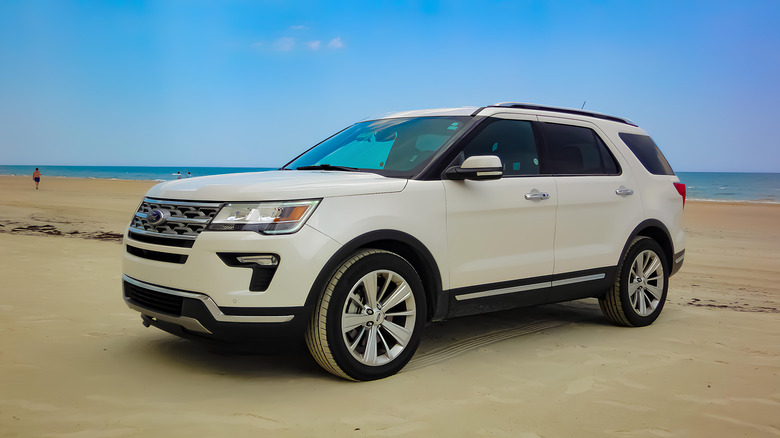
The Ford Explorer strikes a balance between size and affordability, offering three rows for seniors who place a premium on space without the price of the Expedition. The third row is most suitable for children or furry friends, however, as adults may find it slightly cramped. This SUV's stock engine carries more than enough performance, with 300 horsepower of output. Retirees can appreciate the Explorer's smooth and reliable handling. The all-new 2026 model is yours for anywhere between $34,431 and $63,743, per J.D. Power, depending on what trim upgrades you want. For an even larger rebate, the 2022 Explorer tends to sell for $29,821, as reported by CarGurus.
Over the preliminary decade of ownership, the Explorer demands about $9,730 in general upkeep, per CarEdge. This is the second-most affordable maintenance bill among Ford SUVs, yet it still stands above competing models by $1,564. Owners of the Explorer face a 27.48% probability of having to pay for a serious repair in this time frame. Fuel savings are another attractive feature for seniors, with the Explorer enjoying a solid 24 miles per gallon, according to FuelEconomy.gov. Over a five-year period, this fuel efficiency costs seniors compared to the new-vehicle average, when looking at gas prices as of Spring 2026.
1. Ford Escape
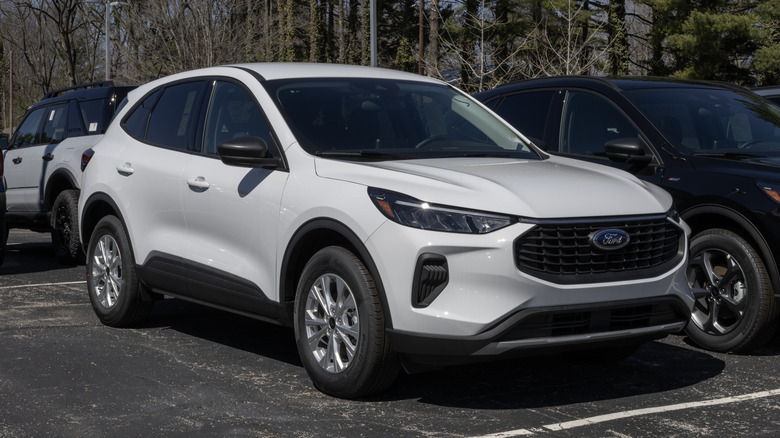
Seniors looking for the right balance of comfort, affordability, functionality, and safety should give a hard look at the Ford Escape. This compact SUV boasts the most accessible sales price of the Ford lineup, a wallet-protecting fuel efficiency, and comparatively modest maintenance costs. Retirees can whisk away with their friends or grandchildren with this roomy five-seater. It gives up a third row but maintains a sizable truck space. Sure, you may be able to find more upscale interior designs among more expensive non-Ford models, but the Escape does the basics exceedingly well, and at a fraction of the cost. J.D. Power reports that buyers typically pay around $26,697 to $44,384 for the 2026 Escape, which is a steal compared to many Ford SUVs. Looking for an even better deal? A 2022 model usually runs about $20,662, according to CarGurus.
In the opening 10 years of driving the Escape, drivers tend to put $9,418 into general upkeep. While this long-term maintenance bill is $1,252 more than the class norm, it's lower than Ford's average. CarEdge further estimates that this compact SUV has a 27.48% likelihood of needing a serious fix within the decade window. The Escape is one of the few Ford models with an above- average fuel economy rating, getting a stellar 30 miles per gallon, as estimated by FuelEconomy.gov. This provides seniors with a $750 discount on gas for five years. Given these stats, it's unsurprising to say that the Ford Escape has been recognized as one of the top-selling SUVs that is perfect for retirees.