

10 Chevrolet Cars That Are Perfect For A Retiree
Chevrolet has been a staple of the American automotive industry since its debut in 1911. Shortly after its establishment, the marque was brought into the ever-expanding General Motors (GM) portfolio in 1918. The company's reputation as a mainstay in the American auto market is reflected in stellar sales figures, with the automotive manufacturer selling 1.83 million models in 2025 alone, according to GM Authority. Speaking of impressive numbers, Chevrolet is known for offering an affordable lineup of vehicles, selling hundreds of thousands of units for under $30,000, per GM. Analysis by Kelley Blue Book (KBB) shows the brand's average transaction price reached $48,884 in May 2026, slightly below the industry average of $49,220 (via Cox Automotive). The 2025 J.D. Power U.S. Sales Satisfaction Index, which measures consumer experience from research to purchase, also ranked Chevrolet in the top three brands for the mass market vehicle segment in terms of customer contentment.
This unique combination of long-term familiarity in the U.S. market, a wide range of affordable models, and high customer satisfaction makes the Chevrolet brand a solid starting point for retirees. To help senior drivers narrow the wide range of available options, Money Digest has highlighted the Chevrolet cars that are perfect for a retiree. We looked at nameplates that were produced between 2020 and 2026, measuring them against financial considerations such as upfront cost, fuel economy, and long-term ownership expenses. We also looked at practical considerations that could be especially relevant to senior drivers, including interior space, comfort, and driver friendliness. Each model's average purchase price and pre-owned estimated values are included to show the range of financial options as of July 2026. We also considered fuel economy and safety ratings when compiling this roundup.
10. Colorado
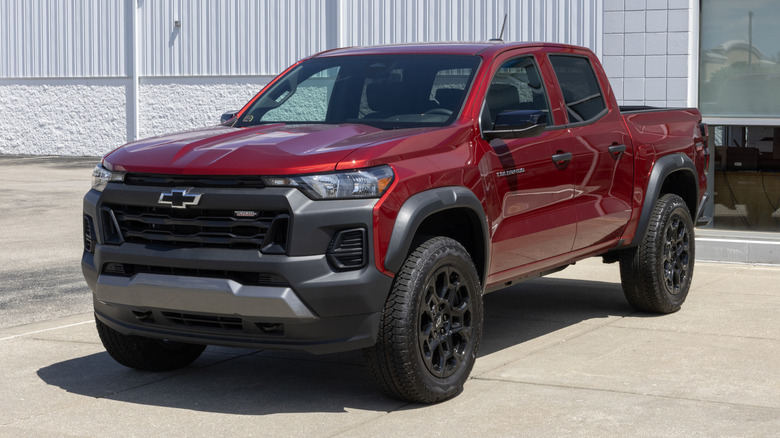
The Chevrolet Colorado isn't going to outperform every model on this list when it comes to fuel economy, but this is by far the most retiree-friendly pickup truck in the marque's lineup. This mid-size truck is more maneuverable and affordable than the full-size Silverado 1500, featuring a price tag ranging from $28,696 to $55,100 for the 2026 model year, per J.D. Power. Notably, buying used doesn't really offer seniors much savings, with the 2022 Colorado showcasing a starting price of about $19,000, per Kelley Blue Book. Combining the behind-the-wheel feel of an SUV and the functionality of a modern pickup, the Colorado is the perfect vehicle for tackling daily commutes, big projects, or even off-pavement adventures. The tighter footprint compared to larger trucks makes city driving and parking a breeze. The interior, which is roomy enough to seat five people, is comfortable and well-designed. If you're a truck enthusiast or require competent hauling and payload capacity, this could be your best Chevrolet pick in retirement.
FuelEconomy.gov, the government's official collection of gas mileage information for the automotive industry, reports that the 2026 Colorado gets 21 miles per gallon when used for combined city and highway driving. On top of upfront costs, this pickup comes with long-term ownership expenses of $46,611 over the initial five years of driving, per CarEdge. Depreciation is the costliest line item, totaling $20,973 within this period. Owners usually spend about $11,790 on insurance coverage. Gas costs over five years add up to $10,500. Maintenance and repairs round out the overall ownership costs at $3,348. The Insurance Institute for Highway Safety (IIHS), an independent vehicle testing organization, judged the 2026 Colorado's crashworthiness above the industry benchmark.
9. Traverse
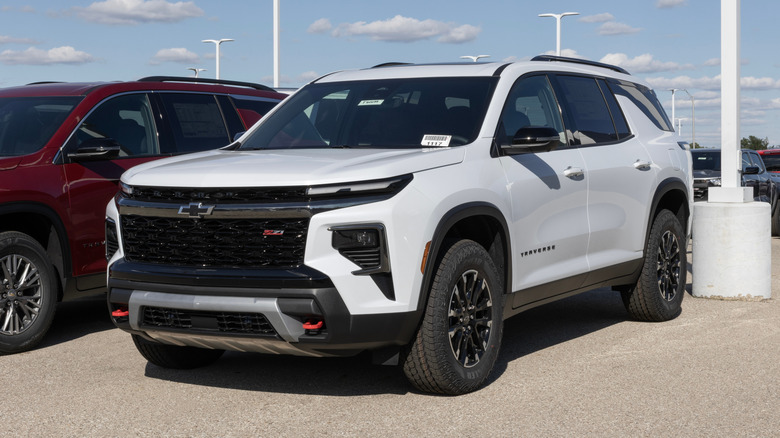
The Chevrolet Traverse is a capable, spacious SUV that J.D. Power ranks as the best model in its class above other SUVs like the Honda Pilot and the Nissan Pathfinder. The 2026 model sells for between $36,869 and $60,002, and for an even better deal, seniors can lock in a 2022 model for around $20,400, according to KBB. However, we recommend avoiding the 2009 Traverse because it's one of the least reliable Chevrolet cars hands down.
If you opt for another model year, though, you'll find this three-row SUV easily houses seven occupants with sufficient room for adults in both rear rows. For retirees who are looking for a roomy, competent SUV reluctant to shell out the extra funds for a Tahoe or Suburban, the Traverse is a great choice. It's significantly more affordable than Chevrolet's other three-row models, without sacrificing comfort. Whether you're driving around friends, grandkids, or furry friends, the Traverse offers the space and smooth ride that other models might not provide at this price point.
The 2026 Chevrolet Traverse gets a combined 22 miles per gallon, as reported by FuelEconomy.gov. CarEdge projects that the retirees spend about $53,830 within the initial five years of owning the Traverse. Over this period, depreciation comes out to around $28,710 on the 2026 model, serving as the highest prolonged cost. Drivers often spend $12,015 on insurance coverage and $10,045 at the gas pump. The final $3,060 gets put toward general upkeep. This SUV earned a Top Safety Pick classification from the IIHS, the independent testing organization's second highest grouping, signaling premier safety standards and crashworthiness.
8. Blazer
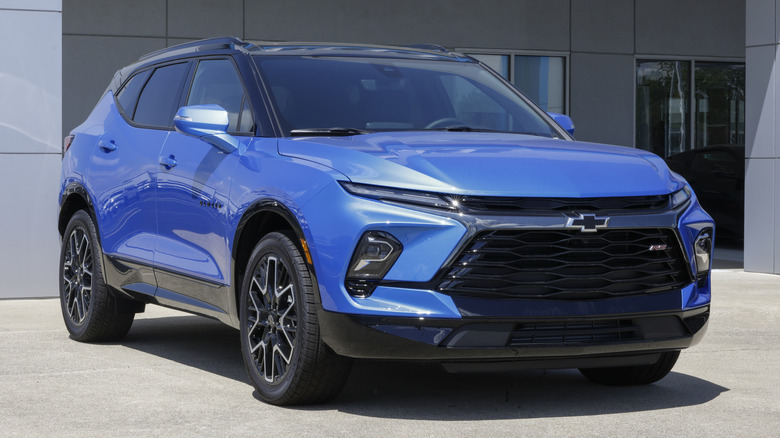
The Chevrolet Blazer, not to be confused with its more compact Trailblazer cousin, is a mid-size SUV, with a price range of $32,452 to $53,318, per J.D. Power. For perspective, KBB reports that the 2022 version tends to sell for about $20,500 as of Summer 2026. Visually, the all-new Blazer looks like a Chevrolet Camaro wearing SUV armor. However, this performance-oriented design gives way to a much more practical and manageable driving experience. This mid-size SUV seats five occupants and boasts agile handling. The second row is sizable enough to seat adult passengers, making it more retiree-friendly than some more compact models. The Blazer handles well on the road and doesn't produce too much noise on the highway. Seniors may also appreciate the easy-to-use 10.2-inch touchscreen, allowing for ergonomic controls. There is an electric vehicle (EV) variant of the Blazer, but it's one of Chevrolet's least-sold SUVs.
The entry-level 2026 Blazer gets about 25 miles per gallon when used for combined city and highway driving, as calculated by FuelEconomy.gov. Over the first five years of routine driving, it racks up an ownership bill of $47,923, as reported by CarEdge. Within this timeframe, the average Blazer loses around $22,807 in value, and you can expect to spend around another $12,905 on insurance coverage. Fuel costs tend to reach $9,240, while maintenance and repairs represent the lowest expense at $2,971. The IIHS only put the 2026 Chevrolet Blazer through its small overlap front collision — a test that simulates impact to the front corner of a vehicle — but the model did receive top scores on it.
7. Sonic
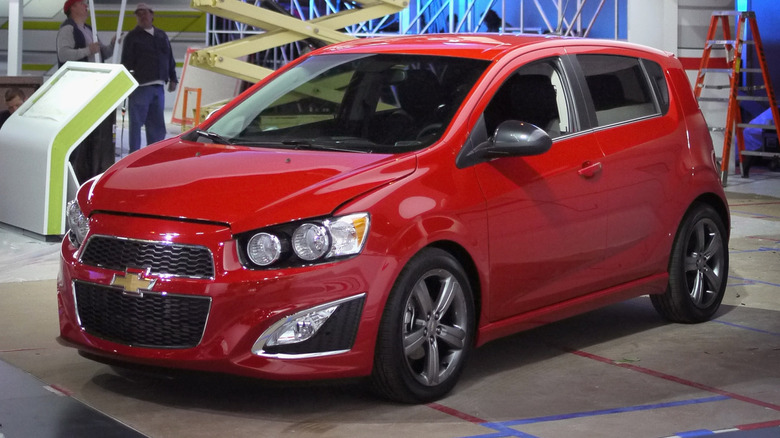
The short-lived Chevrolet Sonic nameplate remains an appealing pick for retirees due to its enduring fuel economy, accessible price point, and practical design. J.D. Power estimates that the latest 2020 release year usually costs consumers between $8,967 and $12,135. If you're eager to further cut back on upfront costs, the 2016 Sonic starts at about $5,200, according to KBB. This nameplate maximizes versatility by coming in both a sedan and hatchback model, offering seniors a dynamic range of options. Both versions seat five people. Due to its small stature, the Sonic's handling is responsive and sharp. It's an excellent cruiser for short distances around town, but still has the fuel efficiency to tackle longer hauls. Despite being discontinued since 2021, the latest Sonic model justifies its position by offering a Wi-Fi hotspot, 7-inch infotainment display, plenty of USB ports, and intuitive controls.
According to FuelEconomy.gov, the 2020 Chevrolet Sonic gets a combined 29 miles per gallon, which is fairly competitive compared even with many newer vehicles. The Sonic's fuel efficiency can save retirees $250 over a five-year period compared to the average 2026 model based on July 2026 gas prices. That makes this model an especially solid choice for seniors in states with the absolute highest gas prices. Assuming you drive 15,000 miles per year, the Sonic uses about $2,150 of fuel annually. Furthermore, RepairPal estimates that seniors will spend $536 on general upkeep. Despite failing to achieve an official IIHS classification, the 2020 Chevrolet Sonic earned top scores in all crash test simulations, reflecting superior crashworthiness.
6. Spark
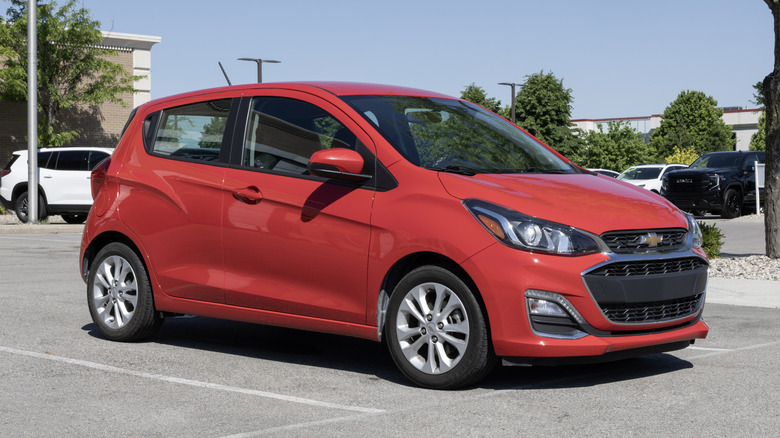
The Chevrolet Spark is another senior-friendly model that's no longer in production. Last released for the 2022 model year, this hatchback can be thought of as a slightly more compact Sonic. J.D. Power indicates that this release year typically sells for $10,371 to $15,581. An even better deal can be found in the 2018 Spark, which starts around $8,300, according to KBB. This hatchback nearly matches the Sonic's fuel efficiency and functionality, just in a smaller package. This ultra-budget option seats four people and provides a more refined interior than is usually associated with its price point. Despite its compact footprint, the Spark is still accessible for retirees due to a raised driver's seat, sizable front doors, and foldable armrests.
FuelEconomy.gov reports that the 2022 Spark averages a combined 33 miles per gallon. Impressively, this time-tested fuel efficiency still outpaces the gas mileage of the average 2026 model, which comes out to 28 miles per gallon. Since this model has been discontinued, CarEdge doesn't offer long-term ownership estimates. However, FuelEconomy.gov estimates that owners typically spend $1,900 annually on fuel, assuming they drive 15,000 miles per year. Those savings could add up to about $1,500 over five years compared to the July 2026 industry standard. Additionally, the Spark usually requires about $434 of spending on general repairs and maintenance, per RepairPal. According to the IIHS, the 2022 Chevrolet Spark enjoys roughly average crashworthiness: While it wasn't tested as extensively as some other models, it landed premier results on all of its crash test simulations.
5. Equinox EV
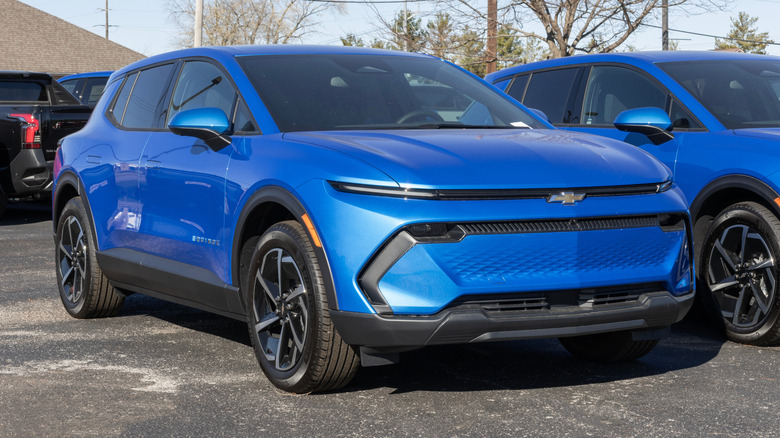
First launched in 2024, the Chevrolet Equinox EV is a fully electric spin on the long-running Equinox SUV. J.D. Power reports that the 2026 model usually costs between $29,783 and $50,985. If you're thinking twice about buying a new car, a pre-owned 2024 release usually starts at $24,300 on average, per KBB. The Bolt may be a more widely known EV among the Chevrolet lineup, but it's been plagued with battery issues. The Equinox EV offers comparable interior space, comfortably seating five occupants, along with an enhanced range of 319 miles on a full charge. The driving experience is smooth and comfortable. With a reasonable price tag for its segment and solid driving mechanics, the fully electric Equinox is a solid choice for retirees looking to cut down on fuel costs and minimize pollutants.
According to FuelEconomy.gov, the 2026 Chevrolet Equinox EV achieves a combined 108 miles per gallon equivalent, which is the standardized metric used to equate EV fuel economy with gas-powered models. CarEdge estimates that this EV racks up $39,030 of additional costs over half a decade. Depreciation accounts for over half these expenses, with the Equinox shedding about $23,082 of its original value. This model's five-year depreciation rate is slightly higher than that of the conventional Equinox. A car insurance plan typically costs around $12,030 over five years, but its battery-powered engine helps keep fuel costs at a modest $2,245. Meanwhile, maintenance and repairs amount to $1,673 over the same time period. The Equinox EV has yet to receive IIHS testing. However, the nameplate comes with a slew of standard safety features, including standard lane-keeping assist and lane-departure warnings along with automated emergency braking.
4. Trailblazer
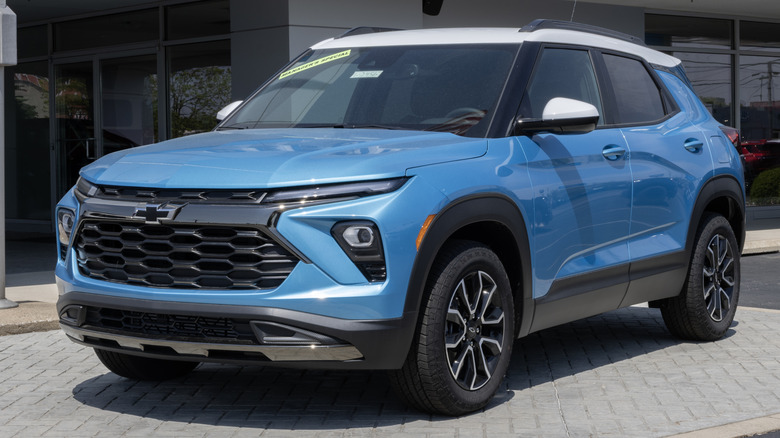
The Chevrolet Trailblazer is a more compact version of the popular Blazer model. Unsurprisingly, this smaller stature comes with a more digestible price point. J.D. Power indicates that retirees can pick up a 2026 Trailblazer for anywhere from $21,602 to $32,246. A pre-owned 2022 model has a fair market value of around $17,900, according to KBB, and also happens to be one of the reliable cars that are cheaper than a Ford Escape. The stylish Trailblazer is the hallmark of a compelling subcompact SUV, complete with wallet-padding fuel efficiency, solid on-the-road performance, a modern exterior appeal, and plenty of room for cargo or up to five people. Additionally, the Trailblazer comes in both front-wheel and all-wheel drive variants, giving seniors plenty of options if they're looking for enhanced performance or tighter handling.
FuelEconomy.gov indicates that the 2026 Chevrolet Trailblazer averages 31 miles per gallon when used for combined highway and city driving. If you're buying a Chevrolet Trailblazer, CarEdge recommends planning for $36,948 of long-term ownership costs within the first five years of driving. This nameplate's half-decade depreciation results in a $15,192 value loss within this timeframe. Insurance coverage makes up the second-largest expense at $11,240. During this period, owners spend $7,700 at the fuel pump on average, while the remaining $2,816 goes toward maintenance and repairs. It's also worth noting that the IIHS conducted two crash tests on the 2026 Trailblazer, and it landed perfect scores on both.
3. Malibu
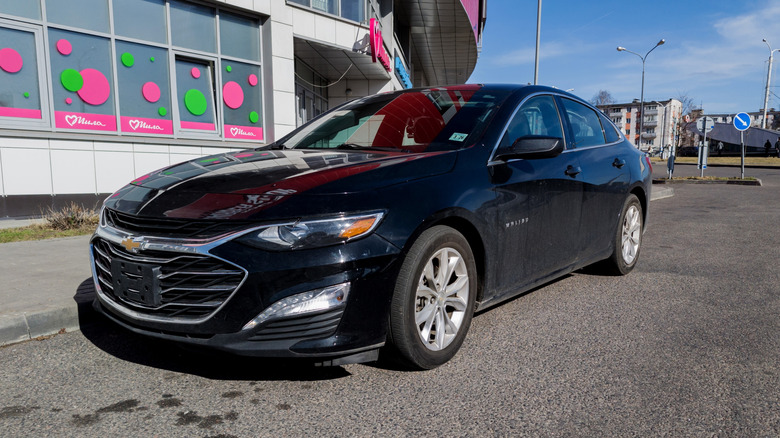
The Chevrolet Malibu was once the automaker's flagship sedan. Discontinued in 2025, it exhibits the quintessential features that make sedans so popular among retirees: Solid fuel economy, an inviting interior, and competent driving mechanics are all present at a reasonable cost. The 2025 Chevrolet Malibu is valued at between $23,362 and $35,551, per J.D. Power, with prices ranging based on different trim types. If you're looking for additional savings, the 2021 Malibu has a fair market value of $13,350, according to KBB. The Malibu is spacious enough to seat five adult passengers, and the front seats are plenty large for a comfortable ride. Plus, this sedan packs sufficient trunk space for everything from daily grocery runs to extended road trips. The user-friendly cabin design features an easy-to-use touchscreen. However, seniors may want to steer clear of the Malibu's hybrid variant, as it's one of the worst hybrid models for retirees.
FuelEconomy.gov reports that the 2025 Malibu boasts a solid 31-mile-per-gallon combined fuel economy, and CarEdge reports it racks up a half-decade ownership bill of $36,895. Much of this expense comes from depreciation, as its value drops around $14,814 within five years. Insurance also contributes to these ownership costs, with Malibu owners spending upwards of $12,465 on coverage in that time period. Fuel costs usually amount to $7,450. Meanwhile, repairs and maintenance hit $2,166. While the 2025 Malibu struggled on IIHS crashworthiness tests, several of its earlier model years were lauded for their safety ratings and may prove even more financially accessible to retirees.
2. Trax
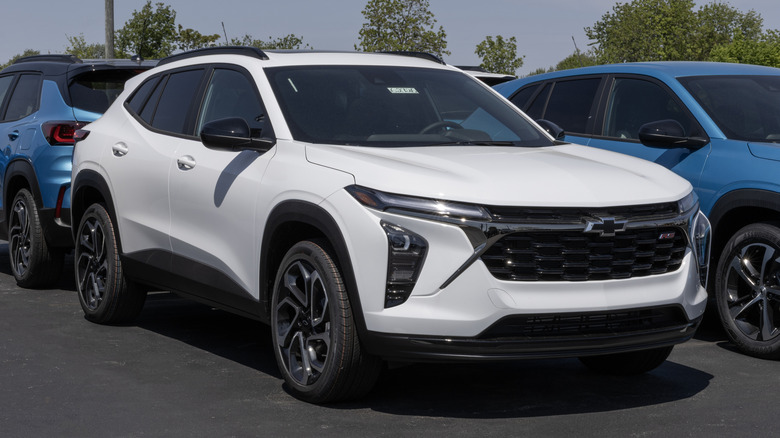
Car and Driver heralds the Chevrolet Trax as the best subcompact SUV on the market — and it's also among the most affordable. According to J.D. Power, the 2026 model year is a zippy ride that usually costs around $19,869 to $28,271. Meanwhile, a used 2022 model runs about $14,650, as reported by KBB. Though Trax models made from 2024 onward only come with front-wheel drive as of 2026, retirees can still benefit from this model's smooth ride, reliable handling, quiet cabin, and comfortable interior. Whether you're bouncing around town or taking the highway, the thoughtfully designed interior remains quiet. You can fit five people into this four-door subcompact SUV, while having enough space in the cargo area for additional belongings. Even the rear seats have enough space for adults to feel comfortable.
The 2026 Trax achieves a combined fuel efficiency of 29 miles per gallon, according to FuelEconomy.gov. CarEdge projects the Trax's five-year ownership costs to reach $33,428. Once again, depreciation eats up the lion's share of these long-term expenses, reaching $12,842 during this period. Five years of car insurance coverage for this model is estimated to reach $10,110, and owners commit around $7,700 at the gas station within this timeframe on average. At the same time, maintenance and repair costs hover around $2,776. These routinely low expenses reinforce the reputation that Chevrolet is one of the car brands that cost the least over time. In terms of safety, the IIHS reports that the 2026 Trax received perfect scores in its crash test simulations, except for the moderate overlap front collision test that assesses potential damages from a nearly head-on crash between two cars.
1. Equinox
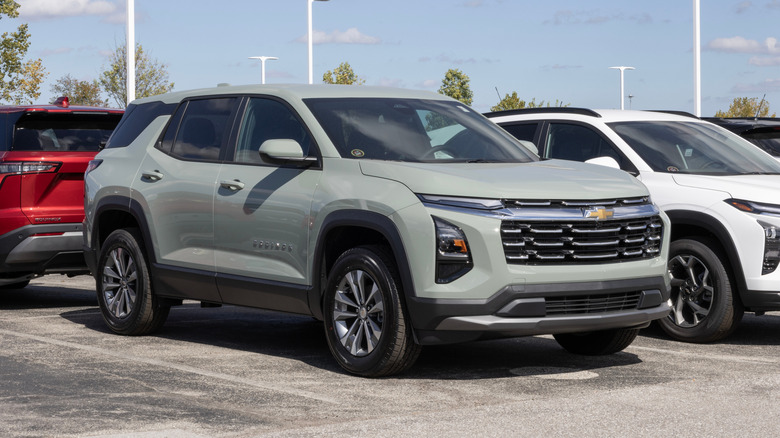
The 2026 Chevrolet Equinox usually sells for between $24,729 and $37,973, varying by trim type, according to J.D. Power. In contrast to its newer EV iteration, the long-running gas-powered Equinox has a wide range of pre-owned options, with CarGurus indicating that a 2022 release tends to sell for right around $20,000 as of July 2026. Beyond a lower upfront cost, the gas-powered Equinox keeps retirees from having to worry about finding charging stations, making it more suitable for long hauls or areas with little EV infrastructure. Unlike its fully electric counterpart, this SUV is available with all-wheel and front-wheel drive, and offers useful features like lane-keeping assist, adaptive cruise control, and an ergonomic 11.3-inch display. Between these features and its easy handling, the Equinox offers drivers of all ages a relaxing daily commute. It's no wonder this model is recognized as one of the top-selling SUVs that are perfect for a retiree.
According to FuelEconomy.gov, the 2026 Chevrolet Equinox gets a combined 27 miles per gallon. Within the first five years of ownership, CarEdge projects drivers will spend an additional $40,176 on long-term expenses. $18,001 of these overall costs are eaten away by gradual value loss, while insurance expenses clock in at $10,745. Over the course of five years, owners stand to spend $8,555 at the fuel pump on average. General upkeep rounds out the total at $2,875, and while the 2026 Equinox failed to secure an IIHS recognition, it did receive above-average results on all its crashworthiness tests.