

The 10 Least Reliable Chevrolet Cars Hands Down (Don't Waste Your Money)
Chevrolet is one of the longest-standing American car brands, and still produces vehicles in the U.S. While this marque held the mantle as a favored domestic brand for decades, its reputation has stumbled somewhat over the years. The brand's sales remain competitive with other automakers, although figures have dipped slightly over the decades: For reference, Chevrolet sold 1.83 million vehicles in 2025, down from 2.13 million in 2015, according to GM Authority. This considerable decline in sales is reflected in the performance and dependability of its models.
CarEdge ranks Chevrolet as the seventh most expensive manufacturer in terms of maintenance costs. Over 10 years, the average model carries an upkeep bill of $9,602. For reference, the average Toyota vehicle costs only $5,470 in maintenance and repair over a decade. Chevrolet also falls short of the leading marques when it comes to depreciation. Within five years, the typical model only retains 51.6% of its original value, per CarEdge, compared to Toyota's average of 64.9%. With figures like these, it's no surprise that Chevrolet models have been wrapped up in the largest General Motors recalls in recent history.
As with any carmaker, Chevrolet's issues aren't equally distributed among its lineup. Some of the biggest problems are inherent in certain production years of individual models. To help consumers avoid the more concerning options out there, we tracked down the least reliable Chevrolet cars. We scoured through the National Highway Traffic Safety Administration's (NHTSA) recall database to determine the most unreliable models that aren't worth your money. Furthermore, we compared the most pressing issues associated with each model with the average repair costs to give buyers a comprehensive perspective of the potential financial burden that comes with owning these cars.
2020 Chevrolet Bolt
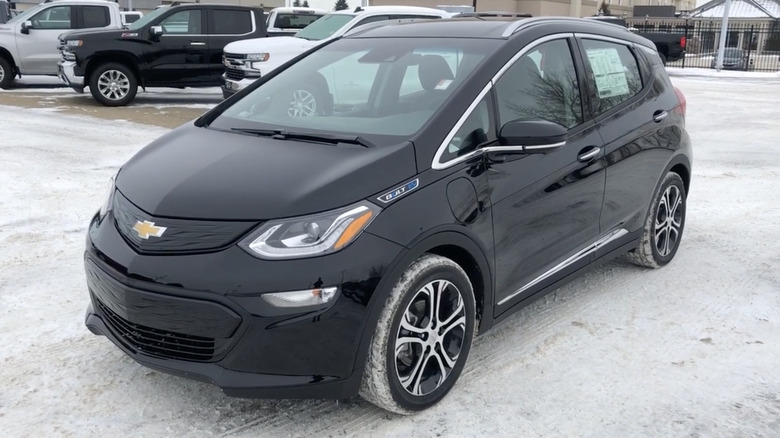
The Chevrolet Bolt has been highlighted as one of the worst vehicles that you can buy, and issues are particularly prevalent in units from the 2020 release year. Proving that even newer models can't escape the clutches of poor design, the 2020 Bolt is stained with eight recalls, two investigations, and nearly 600 manufacturer communications, per the NHTSA. For context, manufacturer communications are a federal requirement from automakers to report any potential issues for a recently released model and are intended to act as an early warning system. This electric vehicle's battery carries so much combustion risk that regulators actively advise owners to avoid parking the Bolt inside or charging it overnight. Another fire risk revolves around the seat belt pretensioner, for which the 2020 model was recalled twice. This EV also struggles with a sensitive front left caliper, which can hamper braking ability when it fractures.
Following a clear breakdown of the 2020 Chevrolet Bolt's most offensive recalls, consumers naturally want to know the cost to fix them. Starting off, swapping out this EV's combustible battery runs a staggering $18,642 to $18,813 off the bat, according to RepairPal. For perspective, Kelley Blue Book (KBB) estimates the purchase price of a used 2020 Chevrolet Bolt at around $14,500, so this repair alone could eclipse the value of the vehicle. RepairPal projects that replacing the brake caliper on the Bolt costs a more manageable $290 to $359, but that lower repair estimate doesn't make the possibility of driving with faulty brakes any more appealing.
2015 Chevrolet Colorado
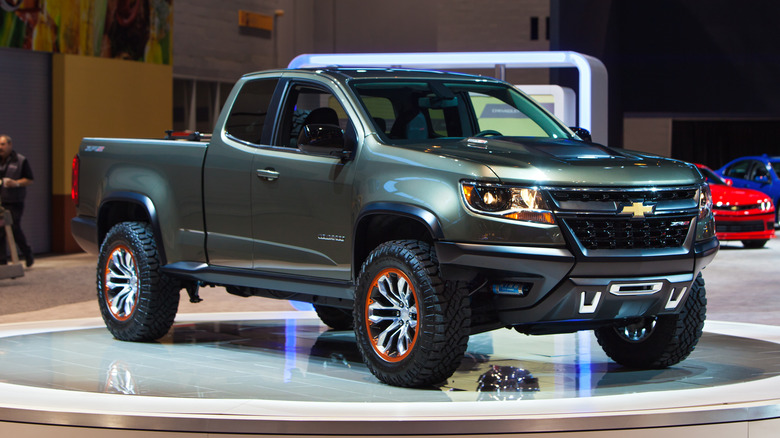
According to the NHTSA, the 2015 Chevrolet Colorado has been the subject of seven recalls, one investigation, 482 driver complaints, and over 1,800 manufacturer communications. This pickup has been swept up in two recalls due to a flawed power steering system, underscoring the breadth of the issue. Some models lose power steering assistance while driving, elevating the risk of a collision. Extensive brake fluid leakage spurred another recall because of its potential to increase stopping distance. Some 2015 Colorado vehicles also experienced issues with poorly mounted seats, which can be dangerous for passengers should the car crash. With this checkered background, it's no surprise that there are so many cars more reliable than a Chevrolet Colorado.
Solving the 2015 Colorado's loss of power steering may demand a replacement of the system's control module. Usually, this service costs around $1,122 to $1,195, according to RepairPal. Consumers who come across a version that's gushing brake fluid might require a new brake caliper. These hydraulic housing units are estimated to cost between $637 and $734 to replace. KBB estimates that the 2015 Chevrolet Colorado is typically sold for between $9,850 and $13,550, meaning even one of these costly issues can meaningfully increase the vehicle's financial weight.
2015 Chevrolet Silverado 1500
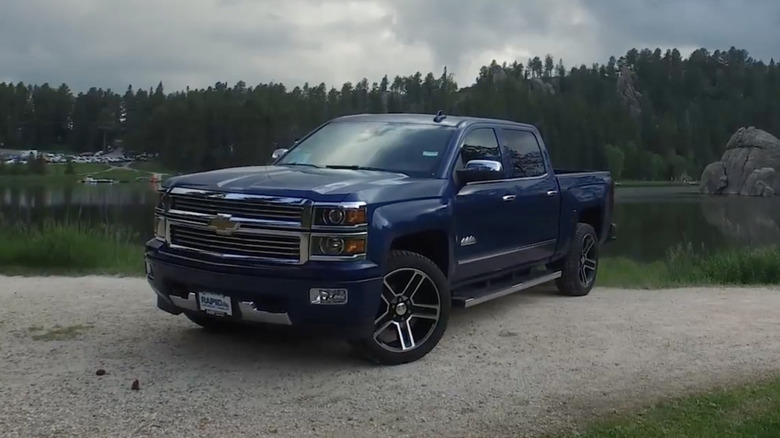
The 2015 Chevrolet Silverado 1500 is not this nameplate's only production year to make this roundup of unreliable Chevrolet cars. However, it is the most flagrantly problematic model of all the vehicles on this list. According to the NHTSA, the 2015 Silverado 1500 has been recalled 23 different times and been the subject of three investigations. On top of that, it's received over 1,000 complaints and nearly 1,500 manufacturer communications. One of this model's most consequential recalls centers on a worn-out vacuum pump, which can minimize braking assistance and require longer stopping distances. Similarly, two other recalls stem from failed power steering due to loss of electrical connection. Both of these issues heighten the risk of a collision, endangering passengers. The 2015 Silverado may even threaten passengers during a crash, with some models experiencing ruptured roof rail airbags and undeployed front passenger airbags.
Bear in mind that these are merely the most serious recalls out of the nearly two dozen. However, it's easy to see how rapidly even a few can rack up extensive servicing bills. Replacing the brake vacuum pump in the Silverado 1500 can set drivers back by $467 to $559, according to RepairPal. Swapping out a power steering control module requires the same investment of roughly $1,122 to $1,195 the Colorado demands. Additionally, the 2015 Silverado can attract another repair bill of $855 to $928 for an airbag control module replacement. Altogether, this handful of recall examples and associated repair costs represents a significant percentage of the 2015 Silverado's average starting price of roughly $9,200, per KBB.
2014 Chevrolet Impala
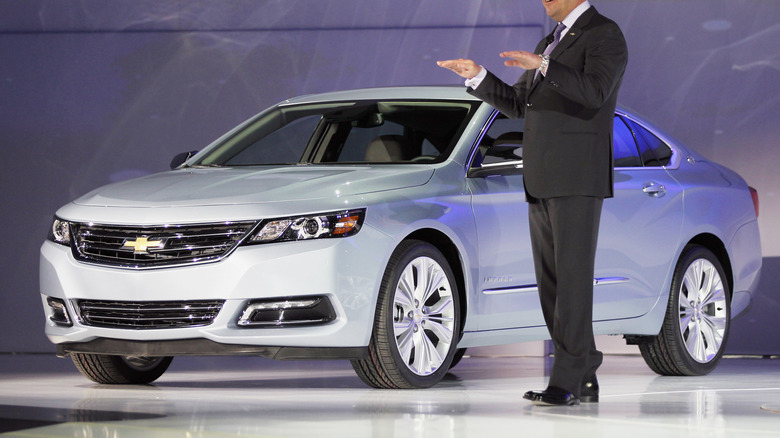
Failing to conduct research is one of the common things people get wrong about buying a car. This is especially risky with popular nameplates such as the Chevrolet Impala. Case in point, the 2014 Chevrolet Impala has attracted 12 recalls, two investigations, and over 2,000 manufacturer communications, per the NHTSA. A defective ignition switch presents one of the most dire issues for drivers, inadvertently shutting down the engine. This prevents brakes, power steering, and airbags from functioning properly. A completely separate recall also involves inoperative power steering, making it harder for drivers to control the car. Furthermore, the 2014 Impala's electronic brake presents a fire risk by running up against rotors.
With a clear idea of the 2014 Chevrolet Impala's most problematic recalls, the focus now centers on the financial side of the equation. RepairPal estimates that the cost of swapping out this model's ignition switch is $136 to $188, with most of the expense going to the technical labor. The nearly $1,200 a steering control module replacement can cost will still prove a hefty investment for this unreliable Chevrolet, and parking brake maintenance can also get pricey: RepairPal projects a new activation switch to cost between $193 and $232, while replacing a parking brake shoe or installing a new cable can cost anywhere from $237 to $424. The true weight of these servicing expenses is best understood when weighed against the 2014 Impala's average valuation, which KBB places at $7,550 as of this writing.
2014 Chevrolet Cruze
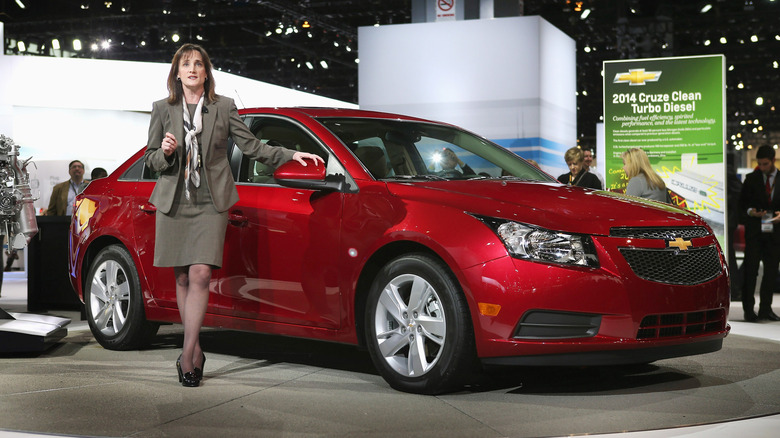
The 2017 Chevrolet Cruze has been identified as one of the worst used cars you can buy, despite having an attractive price tag. However, an earlier version of this model has proved even more problematic. On its NHTSA report card, the 2014 Chevrolet Cruze has racked up 10 recalls, 698 consumer complaints, and nearly 2,000 manufacturer communications. The inflators for the roof rail airbag, designed to protect passengers in the event of a rollover, risk rupturing. If this happens, passengers could be hit with sharp pieces of metal during inflation. This malfunction was widespread enough to require three different recalls, and a similar issue with the driver's side airbag necessitated another. Additionally, the 2014 Cruze is equipped with a fracture-prone front right axle, which can cause the vehicle to come to an unplanned stop when driving or roll away when in park.
RepairPal estimates that exchanging the Chevrolet Cruze's airbag control module can cost owners between $490 and $524, with a large chunk of that bill going to the necessary components. If your 2014 Cruze experiences issues with its axle, the repair expenses are much costlier: Replacing the constant velocity (CV) axle, which carries power from the engine to the wheels, can range from $1,282 to $1,387. Even if you were able to catch these issues early, the 2014 Chevrolet Cruze's average cost of $5,550, as reported by KBB, struggles to justify the comparative price of repairs.
2010 Chevrolet Equinox
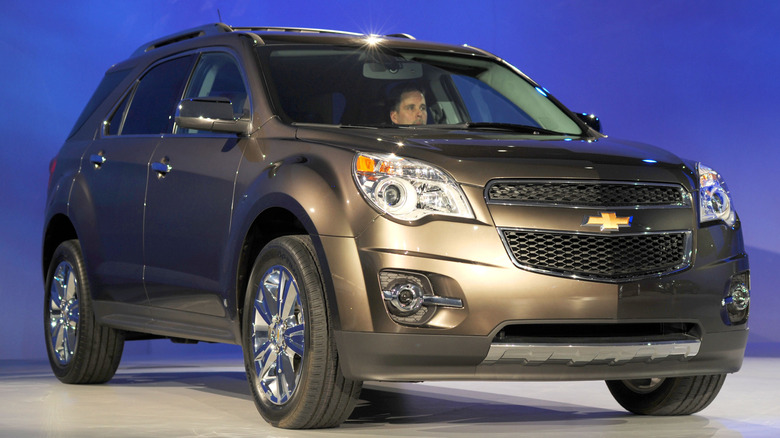
Some people point to the 2026 Chevrolet Equinox as one of the worst cars for a retiree, although the model's downsides don't bode well for any consumers. While the 2026 release has several sticking points, the real disaster zone is the 2010 Equinox: The model has warranted three recalls, three investigations, and 784 driver complaints, according to the NHTSA. Alarmingly, an issue with the key cylinder lock housing may allow drivers to remove the key when the transmission is out of the park gear, introducing a rollaway risk. Additionally, the 2010 Equinox's seat adjustment bolt can cause the driver's seat to suddenly drop. The resulting distraction and unexpected seat movement can make a crash more likely.
RepairPal estimates that replacing the ignition lock cylinder in the Chevrolet Equinox can run drivers $137 to $193. For models with malfunctioning seat positioning, you may have to spend another $224 to $282 for a power seat motor swap. If the issue is relegated to the bolt and not impacting the seat mechanics, you can find a bolt replacement for around $7, according to GMParts. Setting the inherent risks aside, the prospect of a couple hundred dollars worth of servicing might not sound bad, but the 2010 Equinox has an average starting sales price of $3,575, per KBB. This low upfront cost may be attractive in isolation, but the potential repairs quickly compound its long-term financial burden.
2009 Chevrolet Traverse
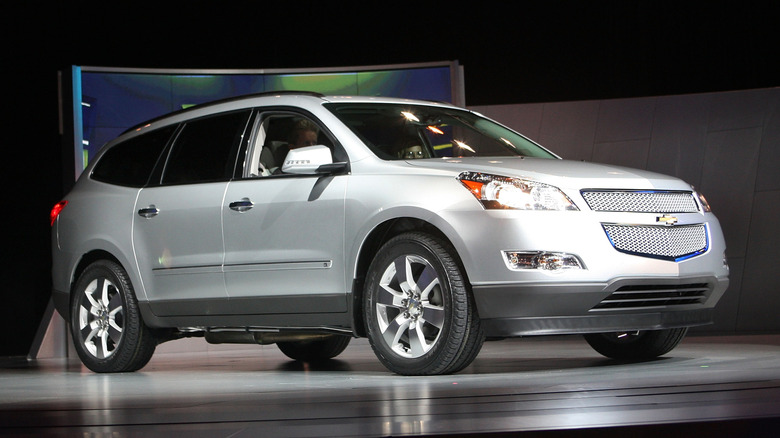
In production since the 2009 model year, the Chevrolet Traverse is a long-running nameplate. However, that first production year came with a wide array of issues. The NHTSA reports eight recalls, three investigations, and 448 driver complaints tied to the 2009 Traverse. Airbags and automatic seatbelts are some of the safety features that can save drivers money on car insurance, but they're also subject to one of the Traverse's worst recalls: Faulty wiring connections in side airbags and seat belt pretensioners sometimes results in a failure of engagement, which can increase the likelihood of damage or passenger injury in a crash. Another restraint-related recall involves a broken cable that can prevent the seatbelt from holding tightly during a crash. The 2009 Traverse also experiences issues with its parking brake cable that can cause a rollaway when the keys are in the ignition and the vehicle is not in park.
To ensure the Chevrolet Traverse's airbags deploy properly, owners might need to replace the control module. This service can set you back between $661 and $775, with costs roughly equally split between labor and component expenses, according to RepairPal. While model-specific figures are challenging to come by, replacing a seat belt generally jumps between $200 and $500 between parts and service costs, according to Good Success Corp. Addressing the 2009 Traverse's parking brake cable can run owners another $191 to $248 for a complete replacement. To add more financial perspective, KBB estimates that the average buyer spends $1,950 on the 2009 Traverse, meaning these repairs can easily comprise half of the car's value.
2007 Chevrolet Silverado 1500
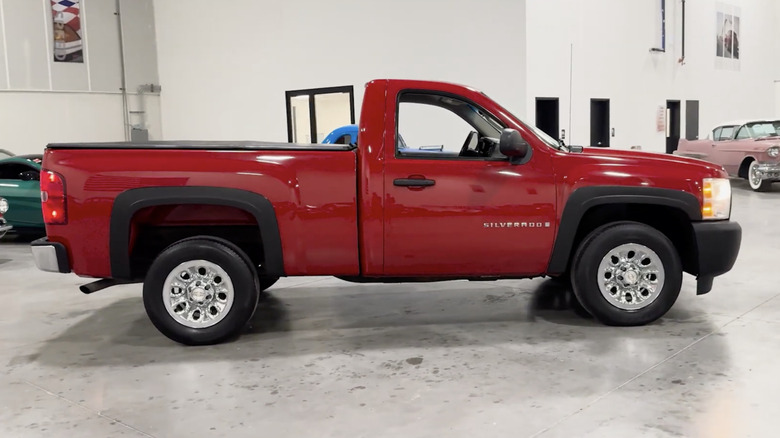
2007 was a challenging year for the Chevrolet Silverado: Units from this model year racked up six recalls, three separate investigations, and over 1,000 consumer complaints, according to the NHTSA. One of the most life-threatening issues in this release year stems from flawed airbags, components which were also the focus of one of the largest recalls in recent history that cost a ton of money. The front passenger airbag's inflator has the potential to explode, sending shrapnel toward occupants. On a separate note, the truck's heated wiper washer system is known to have an electrical issue that can cause smoke and heighten the risk of a fire. While these two issues remain the most critical, the 2007 Silverado 1500 has been recalled for various aftermarket equipment as well.
To remedy the 2007 Silverado 1500's worst defects, an entire airbag module replacement may be necessary. Swapping out this component can cost around $855 to $928, according to RepairPal. The installation of the airbag control module is relatively modest, but the part itself is quite expensive. Identifying the windshield wiper's electrical issues may require an electrical diagnosis, which runs between $122 and $179. To ensure you're covered from various aftermarket defects, a general diagnosis is always a decent strategy and can cost roughly the same as an electrical examination. However, any hidden issues it brings to light will likely command further spending. KBB shows a decently large price range for the 2007 Silverado, with estimates ranging from $3,875 to $6,125 for the regular cab model. Assuming you can strike the best deal, you could still wind up with over $1,000 in possible repair costs on top of the initial price tag.
2006 Chevrolet Cobalt
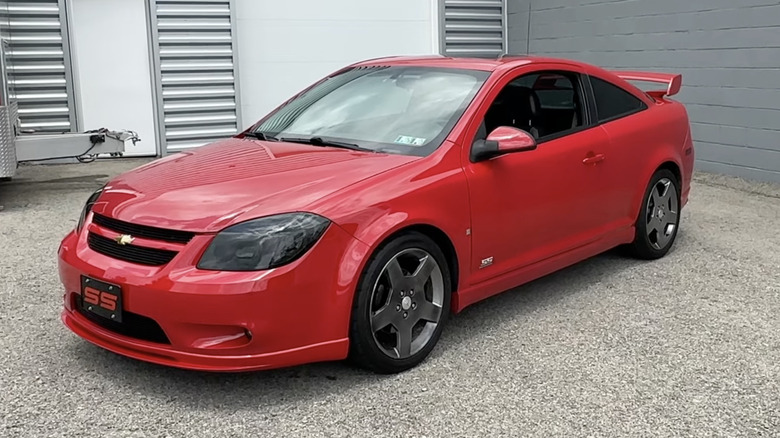
The Chevrolet Cobalt experienced a relatively modest production timeline, spanning the 2005 through 2010 model years. The 2006 model was particularly issue-prone, warranting six recalls, one investigation, and thousands of consumer complaints. The 2006 Cobalt fell victim to GM's mass recall involving a defective ignition switch that could cause a range of problems including unexpected engine shutdowns, per the NHTSA. Additionally, this vehicle may be equipped with cracking fuel pumps, leading to fuel leakage and fire risks. The 2006 Cobalt also comes with the potential of losing electric power steering, demanding more driver engagement and minimizing handling ease. Any one of these issues alone can make a consumer think twice about buying a new car, let alone a 2006 model.
The Chevrolet Cobalt's faulty ignition switch could require a complete replacement, which can cost anywhere from $179 to $240, according to RepairPal. Although the risks stemming from the ignition switch may appear more dire than those caused by leaking fuel, the costs are much higher to install a new fuel pump — a service that can stretch to between $1,336 and $1,538. Meanwhile, replacing an entire steering column can be an even more severe expense, with PartCatolog projecting the job costs $1,000 to $2,500. Whether the 2006 Cobalt ends up requiring a new fuel pump or steering column, simply owning a 2006 car can be enough of a reason for routine maintenance checks as well — another expense that can add up quickly. All these potential ownership costs could quickly eclipse the Cobalt's fair purchase price estimate of $2,100, per KBB.
2004 Chevrolet Malibu
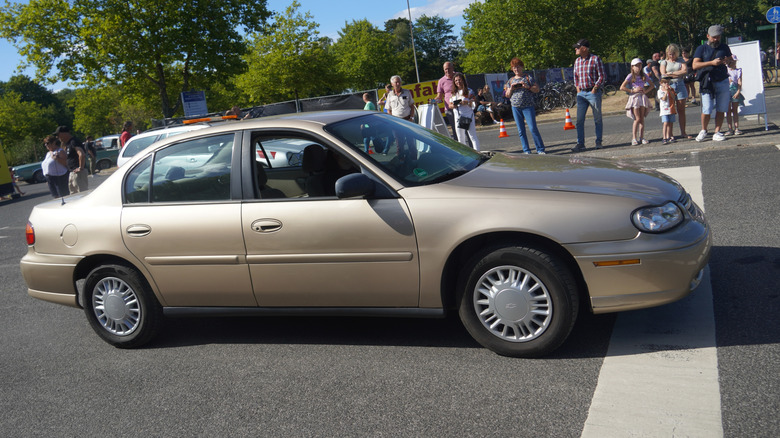
The Chevrolet Malibu left the market after the 2025 model year, and though many versions of the car were produced without much dilemma, the 2004 model attracted 10 recalls and four independent investigations, per the NHTSA. Among this vehicle's litany of issues, a malfunctioning ignition switch may be the most problematic. One of GM's most ignominious recalls, some ignitions turn off inadvertently, which can keep the airbags from deploying in the event of a crash. Another major safety risk in the 2004 Malibu is the sudden loss of electric power steering, significantly increasing handling difficulty. Owners of this model also face the risk of a detached transmission shift cable, which connects the transmission to the internal gear shift. This misalignment can cause rollaways where the vehicle remains in gear despite the driver putting it in park.
RepairPal estimates that swapping out the ignition switch costs between $137 and $180 for the Chevrolet Malibu. Models displaying issues with electric power steering will likely require a general diagnosis to determine the root cause, and simply replacing the power steering pump may be insufficient given the issue's electrical nature. In that case, the entire steering column could need to be replaced, which likely won't be any cheaper than it is on the Cobalt. Finally, if you're stuck with a model experiencing issues with the transmission shift cable, this servicing usually runs around $281 to $380. With a starting price of roughly $2,075, as reported by KBB, the 2004 Malibu is among the cheapest used Chevy models on this list. A simple calculation of the possible repair expenses shows how quickly these costs can approach its upfront price.