

How Much These 9 '80s Budget Cars Would Cost If They Were Made Today
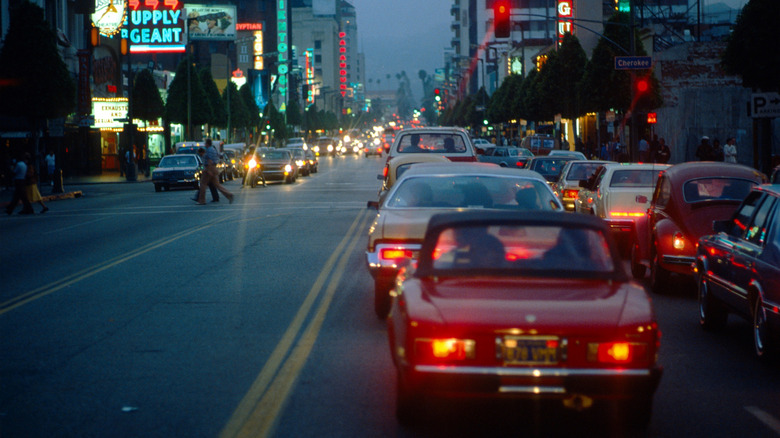
The automotive landscape has changed dramatically throughout the decades. Classic cars remain a fixture in the minds of countless gearheads, and even those who aren't particularly taken aback by motoring history can frequently get behind the aesthetics and craftsmanship of old-school precision engineering. Drivers who were around during the 1980s will likely have personal experience with many of the automobiles that are now considered "classic."
Of course, much about the 1980s was totally different than it is today, including the financial standing of those in the middle class. Buying power was stronger, and one area where this can be seen is in the budget end of the spectrum for buying cars. The average new-car price in 1980 was $7,574. By the end of the decade, that figure had risen to $14,372, according to data from the Bureau of Economic Analysis (via True Driving Cost). In 2026, those inflation-adjusted figures come out to $30,790.52 and $38,825.26, respectively. Comparing these values to the costs you'll find in the modern market illustrates the force inflation has on consumer pricing: Speaking with Investigate TV in March 2026, iSeeCars executive analyst Karl Brauer reported the average new car retails for around $50,000, while even the average used cars sells for over $30,000. We've compiled the pricing information for nine vehicles considered budget options in the 1980s. To indicate how they'd stack up in the modern market, we've also assessed what each model's 1980s MSRP would be worth in 2026. For models that are still in production, we also compared those figures to the MSRPs of their corresponding 2026 model years.
Buick Skylark
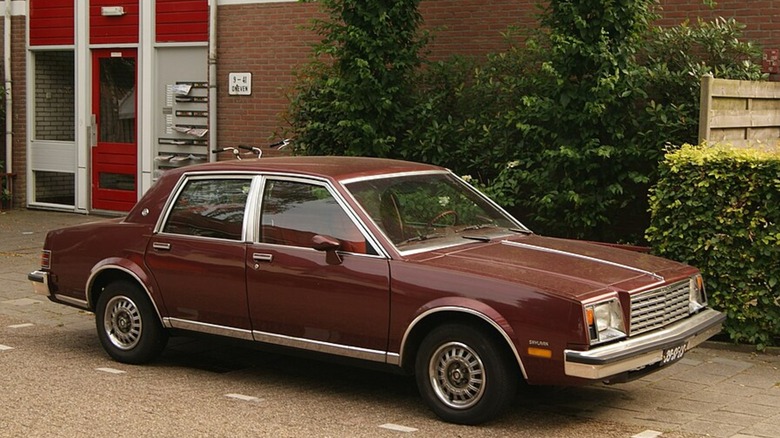
Buick no longer makes sedans, meaning the automaker doesn't offer a Skylark or any replacement option in its modern catalog. The Skylark was originally released in 1953 as a celebratory model to commemorate the brand's 50th anniversary with a starting price of $4,596 — the equivalent of $57,661.73 in 2026. It would continue as a key feature in the Buick range for almost 50 years, and its list price didn't rise much in the first decades it was on the market: In 1980, the base model retailed for around $5,700, which comes out to a 2026 inflation-adjusted equivalent of roughly $23,172.16. Though that's considerably below the value of even the average used car in 2026, the Skylark's MSRP would start to increase faster as the years went by: The 1998 Skylark, the last of the car's production run, started at $16,755, the equivalent of $34,433.07 in 2026.
The Skylark's sedan build and throwback stylistic elements strongly represent the changing marketplace for consumer vehicles. Buick isn't the only brand that has done away with the sedan from its lineup. To match the demand of drivers, Mazda and Ford have pared down their offerings to just one smaller vehicle apiece, while Lincoln, like Buick, no longer makes sedans at all. Larger cars are naturally more expensive, given the amount of raw material involved in crafting them and the fact that they can be more costly to move than smaller vehicles. However, marketing tactics also play a role: Larger cars are often billed as more premium, and feature the price tags to match.
Ford Mustang
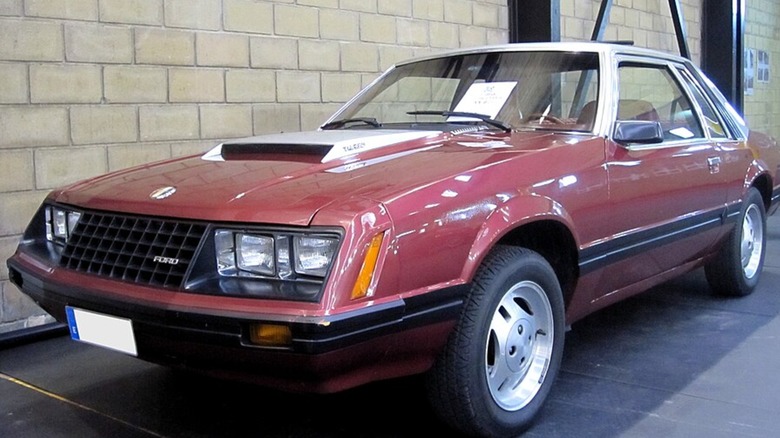
The Mustang is still in production in 2026, and its pricing has changed a lot through the years. First introduced for the 1965 model year, it retailed for an MSRP of $2,368, or $25,181.99 in 2026. In 1980, the basic trim for a new Mustang would run a buyer $5,338, or the equivalent of $21,700.52 in 2026. These figures stand in fairly stark contrast to the $32,995 starting MSRP for a new, 2026 model year — the equivalent of $8,116.27 in 1980.
Mustangs have long been sturdy workhorses that match good mechanical performance with something of a stripped-down experience inside the cabin. These aren't plush, luxury cars, and instead prioritize quick, zippy engine specs over the bells and whistles that round out other muscle cars. However, electronics have become a staple of the driving experience, even in simpler builds that don't fuss around with the most intensive interfaces. Car and Driver reported in 2020 that electronic components make up around 40% of a new car's price tag, and Ford's own marketing information regarding its new Mustangs puts tech like the touchscreen infotainment center as a selling point near the forefront of the vehicle's offerings.
Yugo GV
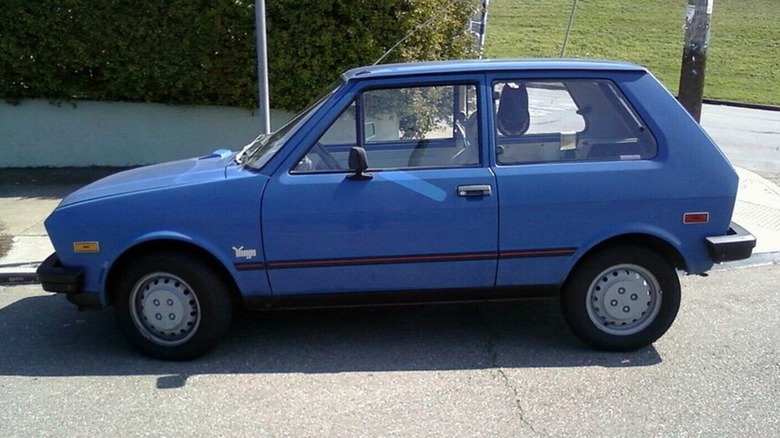
One of the cheapest cars to come out of the 1980s, the Yugo GV was flashy in one, singular area: The vehicle's list price when it was released in 1985 was as low as $3,990, or $12,421.66 in 2026 dollars. However, it's also been named "the Worst Car in History" by some experts (via Car and Driver), which likely informs why the Yugo brand as a whole was gone from the U.S. market by the early '90s.
The Yugo GV was known to fall apart with impressive ease, but the brand's ludicrous price tags fueled over 141,000 buyers in the United States to invest in its models. With virtually no modern amenities for the time beyond the basic mechanical features that qualified it as a car, it's hard to see the vehicle being viewed as roadworthy today. For instance, the Yugo GV had no airbags installed, since they weren't yet mandatory in automobiles. According to Wards Auto, an airbag added around $500 to the cost of a car in 1995, so adding even two into the mix meant buyers from decades past were looking at an additional $1,000. Meanwhile, the raw materials that make up much of the cost to manufacture a vehicle have also seen dramatic increases in price since the 1980s. This increase would likely have driven the price of a contemporary Yugo far above the 1985 model's inflation-adjusted price point, and likely explains why many of the cheapest new cars available in 2026 are also priced at over $8,000 more than that $12,421.66 figure.
Honda Civic
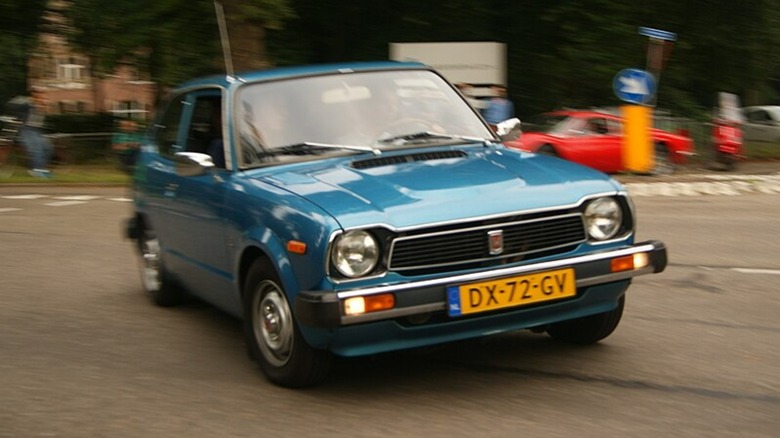
Honda Civics were introduced in 1972 for the following model year, and Car and Driver reports you could buy a base model for less than $2,000 — roughly $8,130.58 in 2026 — at the time. The car has continued to be a mainstay on American roads in the years since, and is frequently a vehicle that owners in the modern marketplace see as reliable enough to keep for 15 years or more.
The Civic has seen a notable price increase through the years, however. By 1980, the vehicle had a starting list price of $3,699 — equal to $15,037.51 in 2026 — with the higher-end Civic 1500GL listing for $4,949, or $20,119.13 in 2026. To this day, the Civic remains a budget-friendly option for retirees, students, and many other drivers looking for value and cost effectiveness. The 2026 model year's base price starts at $25,790, which isn't far from the rock-bottom deal this car once was. In some ways, the Civic's longevity shows the other side of the trends that saw models like the Skylark ousted from the market. As luxury brands shift toward making larger vehicles, this end of the market is being overtaken by larger, mass-market automakers, further underscoring the sedan's value as a workable daily driver that won't empty your bank account. Fewer brands producing sedans also creates something of a stilted competition in this subsection of automotive options, suggesting manufacturers may be under less pressure to upsell their smaller offerings.
Chevrolet Chevette
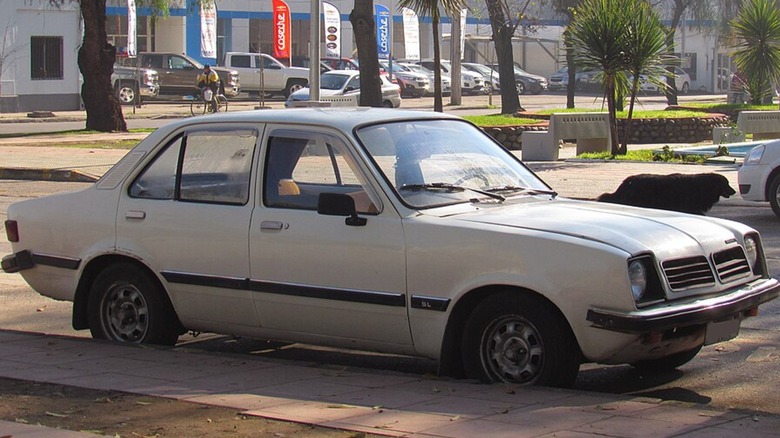
Many drivers will have a firm mental image of the Chevrolet Corvette. This sports car has long been a staple of luxurious living, but the 1976 Chevette was brought to the market as a stripped-down ride that was accessible to just about anyone needing a set of wheels. The Chevette featured far from the cutting edge of vehicle technology when it was conceived, and the barebones ride continued as an interesting budget option on the market until 1987. When it debuted with the 1976 model year, the car was priced at $2,899, or $18,050.32 in 2026. By 1980, the vehicle featured a starting MSRP of roughly $4,600, the equivalent of $18,700.34 in 2026 dollars.
The Chevette was originally designed as an export model that Chevrolet planned to sell in virtually every market it could outside of the United States. However, the energy crisis of the early and mid-70s created a new demand for inexpensive motoring options that didn't gulp down fuel, and the Chevette was viewed in a new light by the brand's executives. It was simple, slow, and uninspiring in its design, but the car was one of the best budget choices in its day. However, given the limited build of the car's feature structure, it would have to be given a fairly substantial overhaul to even sniff the market today. As a result, if Chevette's were still in production, odds are their price tags would be considerably higher than the 1980 model's inflation-adjusted value.
Toyota Corolla
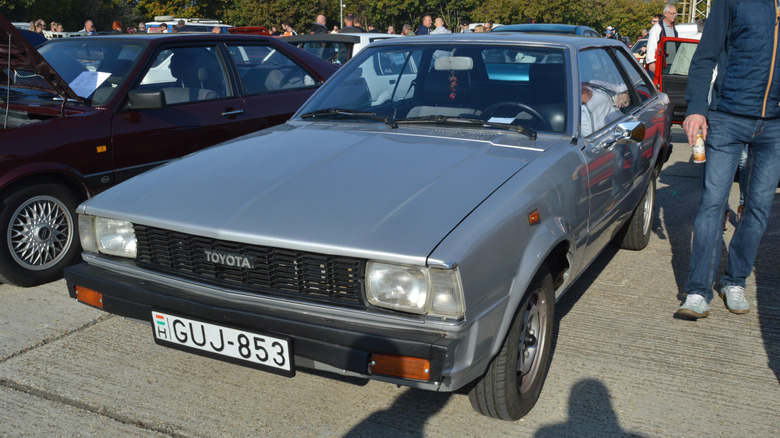
The Corolla has long been a staple of the American roadway, first arriving in the U.S. market in 1968. It went for as little as $4,348 in 1980, per 24/7 Wall Street, or $17,675.89 in 2026. The vehicle is still in production, and 2027 model year Corolla Hatchbacks retail for a starting MSRP of $24,780, a notable increase over the bare inflation adjustment. The model was designed to provide a greater user experience than the basic transportation function its predecessor, the Publica, had served. That commitment to an elevated ride is perhaps a key factor in the Corolla's price expansion.
The Corolla has received repeated facelifts since its inception, with increased power, new infotainment systems, and other quality-of-life enhancements making up many of the tweaks Toyota has performed on it over the years. All of these come with notable price increases. More power demands a larger or more complex engine, and upgraded electronics are fairly standard across the automotive world, even when comparing current model year vehicles to builds just a decade older. Innovations such as these tend to add to a car's manufacturing costs and price tag, informing the disconnect between the Corolla's inflation-adjusted 1980 value compared to the 2027 model's MSRP. Additionally, with fewer people buying new cars, it's natural that even popular models like the Corolla would start approaching less accessible price points.
Chevrolet Malibu
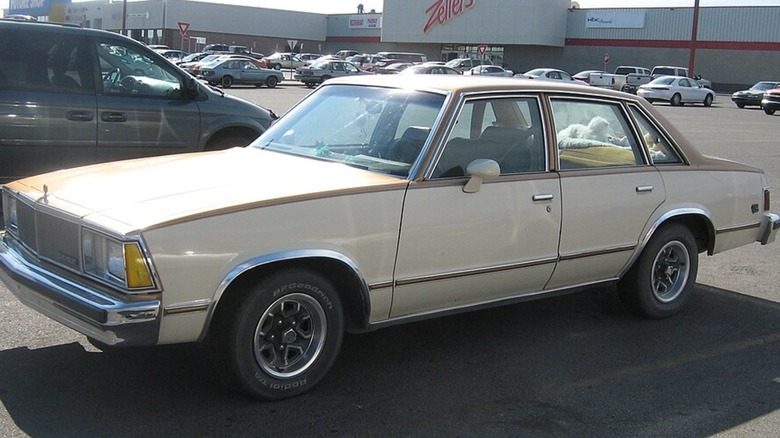
The Chevrolet Malibu was discontinued after the 2025 model year, making it a recent casualty of changing marketplace demands. The 2025 iteration featured a starting MSRP of $26,995, but various versions of the vehicle have been in production since 1964. The fourth generation of the vehicle, running from 1978 to 1983, was part of a portion of the Malibu's history known as the "Malaise Era." These model years are stock standard transportation tools, but weren't as appealing to drivers as older models and ultimately got shelved: Malibu production was actually halted in 1984, and the nameplate didn't return to the Chevrolet lineup until 1997.
The 1980 model year featured an MSRP of $6,031, or $24,517.77 in 2026 inflation-adjusted dollars. This figure is surprisingly close to the actual retail price of the last Chevy Malibus to come across dealership lots, but even the relatively low price tag wasn't enough to hold consumer interest: In the decade leading up to its ousting from the Chevrolet lineup, Good Car Bad Car reports Malibu sales figures peaked at 227,881 in 2016. By 2023, it only sold 130,341 units, and by 2025 that figure was down to less than 10,000. The Malibu had become a fairly uninspiring option that could get you around town with little fuss, but the sedan just didn't satiate consumer appetites.
Honda Accord
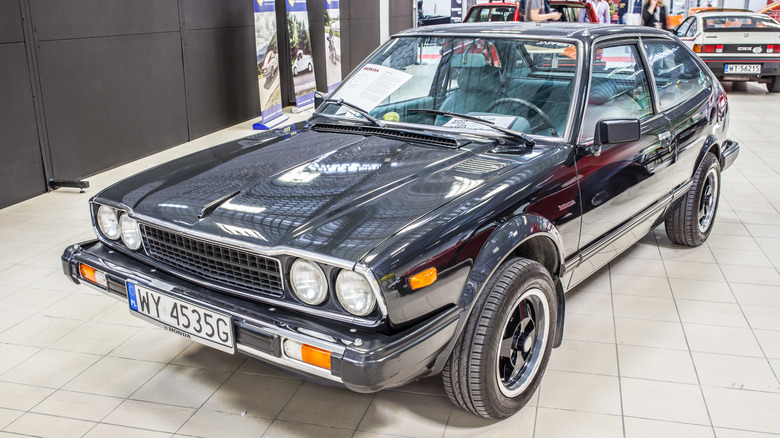
The Honda Accord is a truly non-offensive, budget-friendly sedan. While the 2024 model is noted as one of the best midsize options for retirees, the Accord can be a valuable choice for commuters of all stripes. It's never really been a head-turner, but it excels within its own lane.
The Accord was introduced in 1976 and began its life as an unimpressive-looking workhorse. In 1980, the Accord featured a starting MSRP of $6,515, the equivalent of $26,485.37 in 2026. The vehicle was always a fuel-efficient option, running on a small body and featuring a similarly small engine to provide enough power to get around town without chugging gasoline. More recent versions of the Accord are larger, but still appeal to drivers in some of the same ways earlier generations did. The 2026 model year also features a starting MSRP of $28,395, which is just a slight bump from the 1980 model's inflation-adjusted price. This makes the modern Accord something of an anomaly on this list: Its modern design still houses many of the price-jacking amenities and safety features that older generations lacked, but those offerings have yet to push the model too far out of the budget-friendly zone as of 2026.
Ford F-150
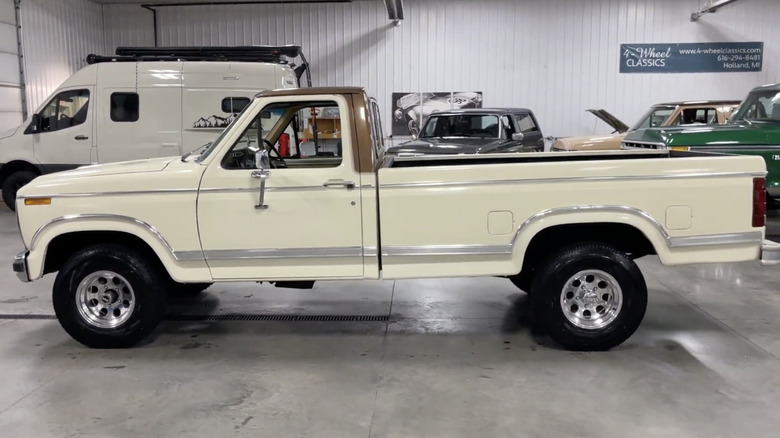
The Ford F-Series has been in production since 1948, and the 2026 model year is part of the series' 14th generation. The first installment was the Ford F1, which featured an original MSRP of $1,279 — the equivalent of $17,777.57 in 2026. Various F-Series trucks have come and gone over the years, but the F-150 model has been a consistent member of the Ford lineup since it was introduced in 1975. The 1980 model retailed with an original MSRP of around $5,782, or $23,505.51 in 2026. That's a comparatively low entry point, given that the 2026 model year sports a base price of $39,585.
The F-150 is among the most trusted options on the market, and J.D. Power named Ford the truck manufacturer receiving the most brand loyalty in a 2025 survey. There are plenty of Ford trucks for buyers to consider, but this is the classic choice. Per Ford's website, 2025 marked the F-Series' 44th consecutive year as the best-selling vehicle in the U.S. That popularity, combined with the name recognition that the F-Series truck has earned across generations, certainly does a lot of the heavy lifting when it comes to justifying the price tag. Still, even the 2026 F-150 remains a relatively budget-friendly truck that doesn't sacrifice size, suggesting that Ford understands drivers have continued prioritizing value and utility as it's continued to modernize the F-Series.