

Back To Basics: Understanding Inflation
While you've likely heard the term inflation thrown around before, you might not be as familiar with the specifics — and causes — of this economic indicator. Inflation, at its simplest, is the rate at which prices for products and services increase over time. As such, inflation is often used as a way to measure both a country's economic health as well as its purchasing power (or, the amount of a good or service that can be purchased with a single currency unit). For instance, you've likely noticed that the cost of household essentials has risen in recent years, and inflation is largely behind this. And, unfortunately, the more that general prices inflate in the U.S., the less valuable the dollar becomes.
Inflation can show up both in large-scale economies as well as within certain industries like housing — or even in specific products. With this in mind, the way in which an inflation metric is measured can offer valuable information about different aspects of an economy. Many of the most commonly used inflation measures, such as the Bureau of Labor Statistics' Consumer Price Index (CPI), help not just track general prices but also the country's cost of living — which can have a significant impact on consumers. This is why inflation is often considered one of the most important economic indicators out there, and why it's worth paying attention to.
How inflation is measured
Inflation is typically tracked using price indexes — statistical figures that reflect changing costs relative to a certain base year or period — and percentage changes. For instance, the Consumer Price Index (CPI) — one of the most popular reference points for consumer-focused goods and services inflation — measures most prices today relative to the average pricing from 1982 to 1984. With the scores from that base period receiving a value of 100, any value higher or lower than 100 then reflects a percentage change from the benchmark. In April 2026, for example, the all-items CPI for Urban Consumers was 333.02, suggesting prices had inflated over 233% since the base period.
That same report also highlighted that, from April 2025 to April 2026, all-items inflation increased by 3.8% — a figure you're more likely to read about and hear mentioned. Notably, resources that frequently fluctuate in cost — such as food and energy — can be especially influential in determining inflation rates. For instance, the CPI's energy index — which tracks the cost of fuel and electricity in the U.S. — increased by 17.9% in the same 12-month period, while the food index increased by 3.2%. When the prices of food and energy aren't factored into the calculations, the all-items CPI dropped to just 2.8% over the same time period.
A primary goal of the Federal Reserve is to keep the annual inflation rate around 2%, and they often adjust interest rates as a way to try and keep inflation down. However, the U.S. economy has consistently inflated faster than 2% throughout the 2020s, so it could be a smart time to adopt savings strategies to combat rising inflation.
Understanding the causes of inflation
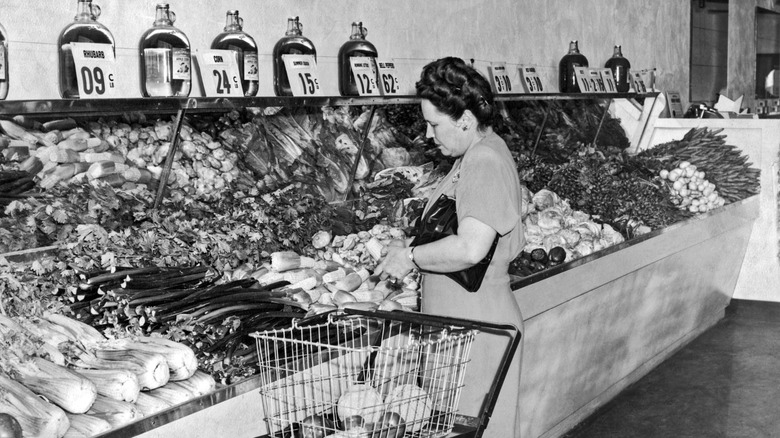
For those looking to learn more about how inflation begins, it's important to realize that there are actually three main causes of inflation – and each can impact the economy in different ways. First, demand-pull inflation occurs when consumers buy more, making the limited supply of products that exist even more valuable — thereby allowing sellers to drive up the price. This force was largely at play in the mid-1940s, when inflation's annual-increases reached all-time highs after World War II. Consumers suddenly had more financial freedom after the war, which caused a buying frenzy that factories couldn't keep up with.
Secondly, cost-push inflation occurs when companies experience higher overhead costs in production, causing them to raise their prices. This was a driving force behind the Great Inflation of the 1970s, when limited access to petroleum drove U.S. energy prices up. As raw material and fuel production prices went up, U.S. inflation rates jumped to over 10% — peaking in 1980 at almost 15%.
Finally, built-in inflation, or the wage-price spiral, occurs when workers anticipate increased inflation and therefore exhibit behaviors that ultimately cause the higher inflation they anticipated in the first place. For instance, if workers demand higher wages in order to keep up with perceived rising living costs, businesses are likely to then raise prices in order to offset these costs — thereby increasing the cost of living. This creates a sort of self-perpetuating loop between wages and prices.