

The Middle Class In 1980 Looked Completely Different Than It Does Today

The 1980s were a decade of great change. The era of immense inflation that kicked off in the '60s was still winding down well into the early '80s, and investing rules from the 1970s were still well in effect as energy shortages and other systemic points of pain continued to impact decision-making strategies in the stock market and beyond. The middle class was a vibrant element of the wider societal makeup of America's consumer base here. While much of the economic changes that would ultimately help reshape the nation's workforce and cost-of-living situation can trace their roots back to the early 1970s, 1980 and the decade that followed exhibited some interesting early shifts in the way consumers interacted with their communities. In particular, some important ripples began to form in the middle class, some of which would fundamentally impact the financial outlooks of middle-income Americans for decades thereafter.
With the benefit of hindsight, it's clear in the modern day how some of those shifts would go on to affect life in the 2020s, but there were still many important differences in the way middle-class Americans experienced the world in the 1980s compared to the modern environment we inhabit today.
Middle-class workers earned around $13,000 to $16,000 annually
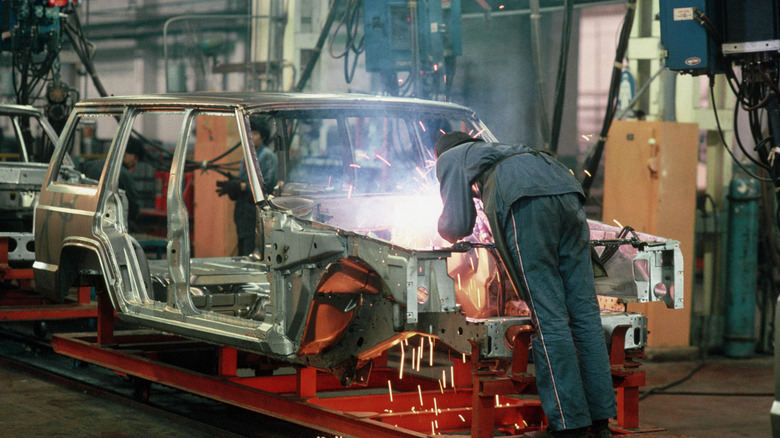
One of the most dramatic differences between middle-class life in the 1980s and what we see in 2026 is what defined middle-class income. Analyzing Bureau of Labor Statistics data, GoBankingRates reports a typical middle-class earnings figure ranged from roughly $13,000 to $16,000 annually in 1980. Those numbers may feel maddeningly small, but those salaries would actually outpace the equivalent personal income in the modern day. In 2024, the Federal Reserve Bank of St. Louis (FRED) reported the median income in the U.S. was $45,140. Taking inflation into account, $16,000 in 1980 would be worth a 2026 dollar value of $64,845.05. By 1989, that same salary would be worth just over $43,000 in 2026. Either way, middle-class Americans in the modern world need to earn significantly more. Middle-income earners bring in roughly $57,000 to $170,000 per year, according to 2022 data from Pew Research Center, and the Census Bureau reports a 2024 median household income of $83,730.
Middle-class workers in this era were often accountants, teachers, police officers, electricians, and steel workers. Postal employees, bank tellers, and a raft of employees within the industrial world were equally capable of earning middle-class incomes. In the decades since, virtually any career involving manual labor took a major hit in the looks department. Many of these jobs dried up as outsourced manufacturing became increasingly prevalent, and trade work was often looked down on despite continuing to deliver strong financial earnings to employees. As such, the middle class increasingly became intertwined with a state of mind correlating with white collar work.
Dual-income households were common, but often looked different
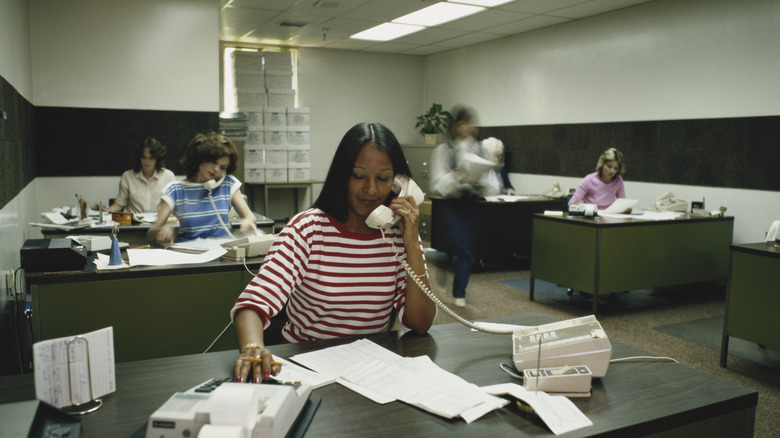
Income figures can be an interesting comparison point of how the middle class' working life has changed over time, but they also deliver an equally telling snapshot of what a typical working family looked like during the 1980s. By 1980, the single-earner paradigm was already under assault. The Bureau of Labor Statistics reports that, in 1968, the share of married couples living together while earning two paychecks was already roughly the same as that of married single-earner homes. This trend continued to grow in the years that followed, and dual incomes have remained a prominent feature of the home lives of Americans into the present day. The 1970s saw a significant increase in the number of women entering the workforce, but data on total household income uncovers an interesting tidbit about what kinds of work the second earner likely did outside of the house.
With a middle-class income in the mid-to-high teens in 1980, the fact that the Census Bureau reported a median family income of roughly $21,000 suggests that the second earner most likely worked part time in a great many homes. Contrasted with real median wages in 2024 of around $45,000, and a median household income in the same year of nearly $84,000, it stands to reason that far more double-income households in the present moment are made up of two full-time workers.
Cost of living differences were stark
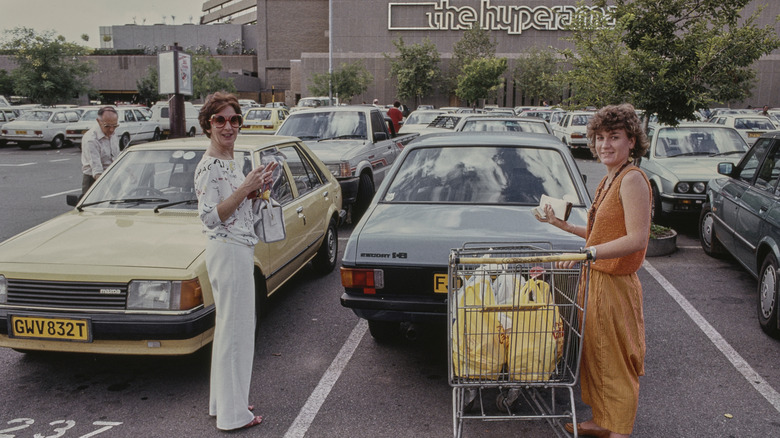
Across the board, people in the 1980s paid less for groceries than modern consumers. Numerous grocery staples were far cheaper in the '80s, including eggs, bread, and butter. Gasoline was also relatively inexpensive, averaging $1.12 per gallon in 1985 (per AARP). Similarly, 12Tomatoes reports that a Colorado Safeway store receipt from 1980 showcased prices like 79 cents for Goldfish crackers and 43 cents for deodorant soap, while those same items cost $2.99 and 85 cents per unit in 2023, respectively. Big-ticket items are a different story, but on the whole it was largely possible to manage the grocery shopping and many other routine budgeting needs without adding a second income into a middle-class household's financial picture. Today, concerns over grocery prices are at the heart of many households' financial plans. In particular, dairy products and bakery goods are some of the most marked-up items on modern grocery store shelves.
Other spending categories like entertainment were far more affordable during the decade, too. Concert tickets in the 1980s averaged a face value in the teens, with Paste Magazine reporting the average 1985 concert ticket was priced at $15.13 — or roughly $47 in 2026. That's a far cry from the more than $100 average cost to attend a show today. Many sub-categories of the consumer price index have also outpaced core inflation in the decades since 1980, with essentials like housing and healthcare both skyrocketing in price over that time period.
Tech purchases were at the heart of consumer spending

Color TVs alongside Walkman music players and early Game Boys (released in 1989) were common purchases for middle-class households in the 1980s. Personal technology gear and entertainment resources were a high priority for households with the budgets to make their homes more inviting, entertaining, and enriching. Television technology was particularly important during this time, and models with increasing capability rolled out on a regular basis.
While TVs have only gotten cheaper over the years, other major tech products you'd find in a middle-class household were generally more affordable on the whole. For example, early Game Boy systems were some of the cheapest gaming consoles comparatively to ever be released, with Visual Capitalist reporting the original Game Boy had the third most affordable inflation-adjusted release price ($225) of any major game console. Meanwhile, the typical gaming tool released in 2020 or later sits near $500 or more in 2024 dollars.
And gaming devices are just one example of how personal technology has increasingly become more unaffordable. The smartphone largely replaced portable tech like the Walkman, beeper, Game Boy, and even the laptop in some cases. But while middle-class families could feasibly afford to invest in the new iteration of the Game Boy or tape player when it was released in the '80s, modern middle-class Americans cannot typically afford to keep up with the now-annual release schedule of new phones that frequently cost upwards of $1,000.
Homeownership was more attainable, but interest rates were high
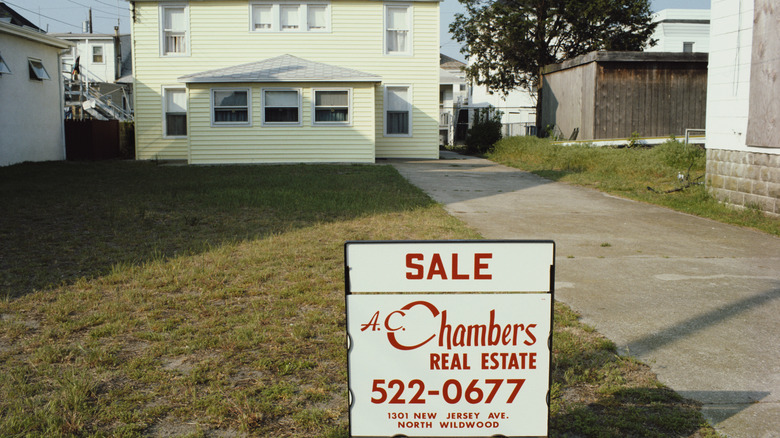
Homeownership has long been a core tenant of the American dream. A Brookings Institution Press research publication from 2016 notes that the wealth gap between renters and homeowners in the late 1980s was dramatic: The median net worth of renters was $2,400, compared to $120,000 for homeowners. It's unsurprising, then, that homeownership would have been so important to people of the era. The sentiment remains popular in the modern age, with 94% of Americans saying homeownership is central to achieving the American dream, according to a 2023 report by LendingTree. However, attaining that part of the dream was far easier in the 1980s. According to FRED data, in the first quarter of 1980, the median sale price of a new home was $63,700 — $258,138.07 in 2026 dollars. 2026's Q1 figure was $408,500, closing in on double the equivalent value.
Matched up against wages that made cost-of-living decisions easier to manage, the housing market was far more approachable for a middle-class buyer in 1980 and throughout the decade. Where these consumers did feel a significant stab of pain was in the interest rate they could secure on a mortgage. Even with purchasing power that made homebuying more affordable in comparison, applying for a mortgage was still a necessity for middle-class buyers. However, the era's inflation left its mark on the industry, with the average interest rates spiking all the way to 18.4% in late 1981 (via Bankrate). The lowest figure of the decade was in that same year, at a still-hot 7.38%.
Purchasing a car was a different budgetary calculation
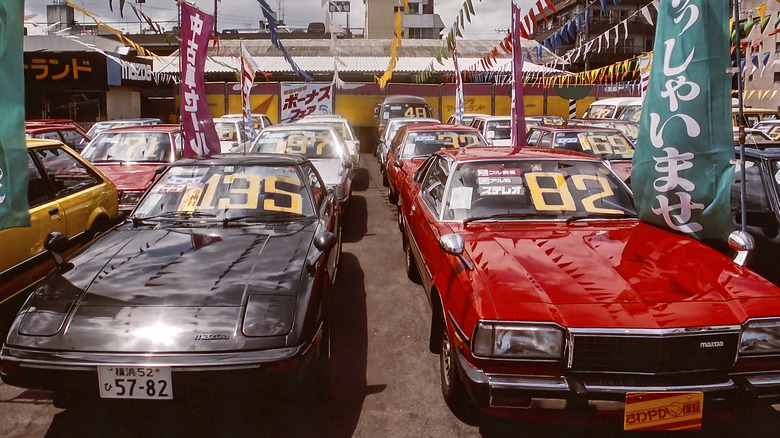
The typical middle-class buyer looking for a new vehicle can expect to pay a sticker price that's a little over half their annual income level in 2026, if not more. Meanwhile, in the 1980s, new vehicles ran buyers roughly a third of the median household income. According to FRED data, the price of a new car averaged $7,591 in 1980, which comes out to roughly 36% of the median household income of the era. Meanwhile, Kelley Blue Book reports the average new car cost $49,855 in July 2026, almost 60% of the contemporary median income. As is the case with the housing market, this expanded purchasing power made the decision to buy a new car a little easier, but it didn't alleviate the value of a personal loan for a middle-class buyer. Even so, the monthly payments on a new ride wouldn't have created the same level of financial vulnerability that a buyer may feel in the modern marketplace.
With higher wages in comparison to the things people were buying on a regular basis, investing in these kinds of purchases with the help of a loan wouldn't have put the same strain on a consumer's debt-to-income ratio (DTI). Similarly, analyzing Department of Transportation data, Kelley Blue Book reports that the cost of ownership has also ballooned for drivers since the 1980s: In 2026 dollars, the average driver would spend around $3,484 per year to maintain, insure, and fuel their car in 1985. In 2024, that figure was almost four times higher at $12,296.
Credit card products were still in their relative infancy
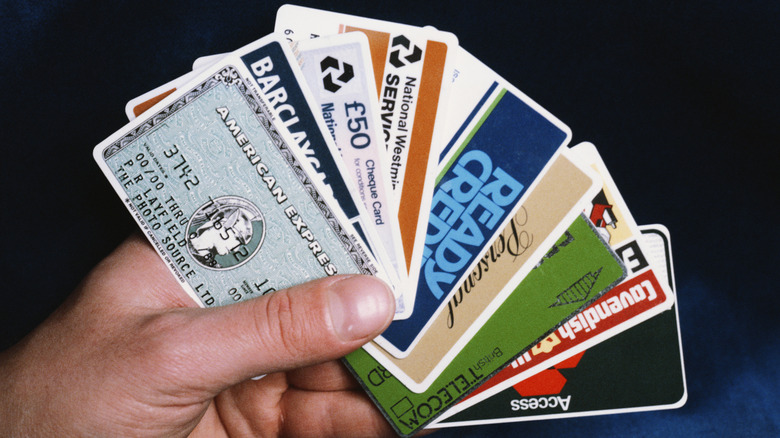
The credit card was coming into its own in the 1980s, and by the end of the decade this payment tool exploded in utilization. But in 1980, they were still relatively minor options for managing special purchasing needs. The rewards programs that have come to dominate credit cards today wouldn't come into existence until partway through the decade, and so this was simply a tool to be used sparingly as a basic pay-it-off option when making notable purchases. Household budgeting largely relied on cash rather than debit cards, too, so pulling out plastic in any form wasn't yet a habit for many consumers. This money idea survived into the 1990s, but has largely vanished from modern financial management frameworks. The average revolving debt figure for cardholders in 1980 was $518, but nearly $2,700 in 1990 (via PBS). These figures have continued to rise, and in the first quarter of 2026, LendingTree pegged the average card debt load for American consumers at $7,756.
The availability of credit cards also grew at a rapid pace throughout the decade. PBS reports that the number of cards in circulation more than doubled from 1980 to 1990, and that spending with these tools grew by a factor of five over the same timespan. The toll of a decade thrashed by inflation almost certainly played a key role in this altered state of financial decision making.
The middle class shrank by the end of the decade and beyond

The Federal Reserve Bank of San Francisco reported in 1997 that the population of the American middle class shrank consistently throughout the 1980s. This group entered the decade with 50.5% of the population as members and ended it at a 45.4% slice of the total citizenry. What gets lost in this shuffle, according to the outlet, is that much of the population that exited this grouping rose up into the upper class instead of falling out the bottom of the middle slice. However, this still hides the fact that roughly 23% of those who were no longer considered middle class by the decades' end did indeed become financially worse off than they were before. The 1980s were therefore a decade of intense stratification, where those at or near the top became significantly wealthier, while others were largely treading water or outright losing ground.
This trend has continued in the decades that followed, with a 2018 study by Pew Research Center suggesting just 44% of people identified as middle class (via AEI). Even more recently, a 2024 report by Gallup suggests that 39% of Americans identified as middle class. However you break it down, though, the Brookings Institution reported in 2025 that, across the country, 20% of those in the middle class struggle to maintain their financial balance.
Union participation was double that of today's workforce

Unions provide a core framework for workers to coalesce around important issues that impact them on the job, and have historically been key collective bargaining tools to promote higher wages, better working conditions, and much more. Despite these assets, union participation has been falling steadily for decades. The Bureau of Labor Statistics reports that 1983 is the first year with comparable union membership data, and notes that 17.7 million workers — roughly 20.1% of the workforce — were union members. In 2025, those figures had fallen, with 14.7 million members totaling a 10% unionization rate.
PBS reported in 2013 that the previous year's median pay for unionized workers was $49,036 annually, and non-union employees doing the same job earned more than $10,000 less ($38,584). The BLS reported in 2025 that the previous year's distinction between unionized workers and their non-union counterparts followed in the same trend more than a decade later: The median weekly earnings of non-union workers came out to $1,138, roughly 85% of the $1,337 those in labor unions earned. In 1986, the Washington Post reported that unionized workers had long earned more, but they saw lower average salary increases than others, perhaps helping to spur on some of the movement away from large-scale organized labor.
A college education was cheaper but less common

Those enrolling in university programs in the present day and in the 1980s share something in common: During both phases of American life, collegiate expenses ballooned substantially. Education Data Initiative reports that the annual tuition cost for a public university in the 1980-'81 school year was $804, but had risen to $1,780 by the 1989-'90 academic year. A freshman on campus in Fall 1980 would see their tuition costs rise to $1,148 by the time they reached their senior year, a 42.8% increase. Students entering their senior year in Fall 2025 will have endured only a 6% bump in tuition costs, but that smaller price hike has come with significantly higher total dollar amounts: Tuition for the 2022-'23 academic year averaged $9,750, but increased to $10,340 for the '25-'26 school year. For comparison, an $804 bill in 1980 was the equivalent of $3,258.13 in 2026, showcasing just how explosively the price of a collegiate degree has climbed.
Equally important is the distinction a college degree creates for its holder. Many people who earned their degree during the 1980s would go on to have children preparing for their own exit from high school in the 2000s, leading to the most significant increase in enrollment in the American higher education system on record and the nation's largest total collegiate population (via Education Data Initiative). Statista reports that just 16.2% of the population had a college degree in 1980, rising to 21.3% in 1990. By 2024, that figure had nearly doubled to 38.7% — making it far less of a difference-maker on the job market.