

Movie Tickets Were So Much Cheaper In The '80s Than They Are Today

While younger generations may know the 1980s mainly through nostalgic entertainment such as "Stranger Things" and Michael Jackson's music, older Americans remember that the decade opened with inflation near 14.5%, according to Federal Reserve History. That was considerably higher than the post-pandemic peak of 9.1% recorded in June 2022 by the Bureau of Labor Statistics. Even amid that inflation, many everyday purchases required far fewer dollars than they do in 2026, and movie tickets were among them. For example, moviegoers paid an average of just $3.55 to see 1985's highest-grossing film, "Back to the Future," compared with an average adult ticket price of $13.46 through July 30, 2026, according to EntTelligence data reported by Reuters. That means the 2026 adult ticket average was about 3.8 times the overall average ticket price in 1985 in nominal dollars.
However, the dollar's loss of purchasing power through inflation does not fully account for the increase in ticket prices. The Bureau of Labor Statistics (BLS) Consumer Price Index rose from an annual average of 107.6 in 1985 to 333.918 in July 2026. Applying that increase to a $3.55 ticket produces an inflation-adjusted price of about $11.02. The actual $13.46 average was therefore $2.44, or roughly 22%, higher than the inflation-adjusted 1985 average.
If not just inflation, why have ticket prices gone up?
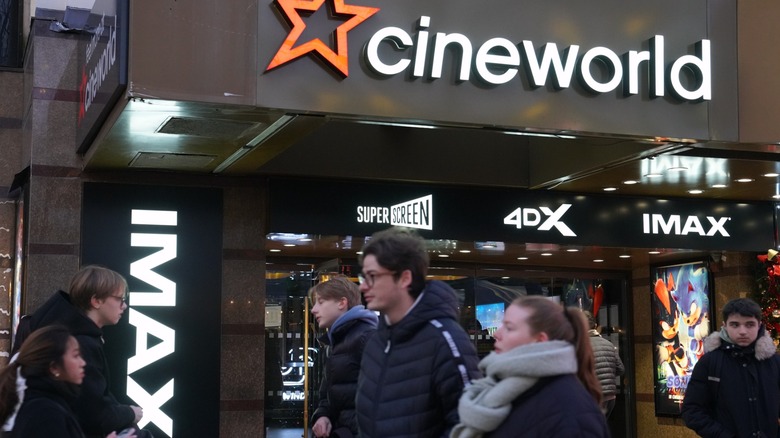
Movie theaters and the film industry as a whole have changed a lot since the '80s. For one, premium viewing experiences are more prominent than they once were, which may be helping drive up the average ticket price. According to the aforementioned EntTelligence data reported by Reuters, premium-format tickets averaged $18.22 through July 30, 2026 — about 35% more than the $13.46 average adult ticket — as theaters expanded IMAX and other premium screens to offer experiences that aren't easily replicated at home.
At the same time, fewer people are going to movie theaters, pushing cinemas to bring in more revenue from each customer. By late July 2026, theaters had sold an estimated 470.9 million tickets, down about 37% from 747.3 million in 2019. Yet domestic box-office revenue reached $6.2 billion through August 2, compared with more than $7 billion at the same point in 2019. As further proof, AMC's 2025 annual report similarly says its average ticket price increased because of higher prices across all formats and greater attendance at 3D, IMAX, and other premium screens.
While it would be hasty to blame the entire decline in attendance on streaming, it is likely part of the explanation. A 2025 AP-NORC poll found that 75% of U.S. adults had streamed a recently released movie at home instead of seeing it in a theater during the previous year, while 65% had visited a cinema at least once. Reuters also reported that the pandemic accelerated this shift, with many viewers now reserving theater trips only for major blockbusters.