

10 Grocery Staples That Were So Much Cheaper In The '80s Than They Are Today
We may receive a commission on purchases made from links.
Filling your grocery carts in 2026 is a challenge, especially as prices continue to rise. Even if you stick to the U.S. Department of Agriculture's (USDA) "thrifty food plan" when budgeting, the USDA still estimates the average four-person household will spend about $1,013.20 per month on food.
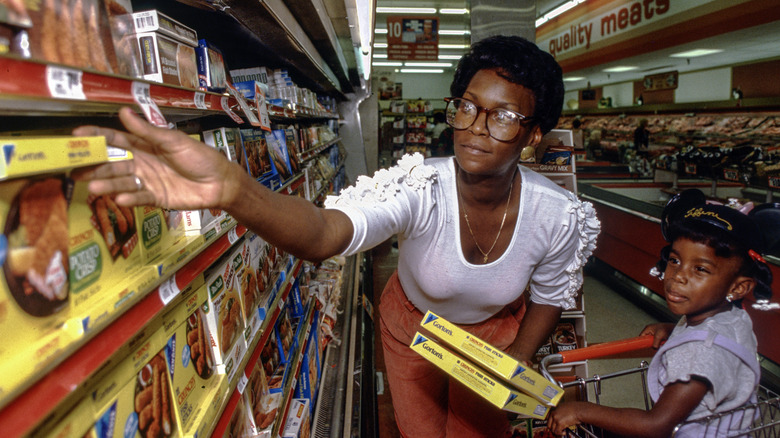
By comparison, food prices weren't as high in the 1980s. In 1981, Morris County Library records indicate you could buy a 5-pound bag of Pillsbury flour for around $0.89. By comparison, the Federal Reserve bank of St. Louis (FRED), finds that, as of April 2026, flour costs roughly $0.54 per pound. Of course, multiple factors determine the cost, and shoppers have a lot to keep track of as some grocery stores can trick them into overspending. In the '80s, overspending wasn't as much of a concern considering how much further your dollar went.
Inflation tracking website In2013Dollars.com notes a $100 bill from 1986 would be worth about $303.85 in 2026. Even Americans living on the USDA's thrifty food plan are projected to spend most of that, $233.80, per week on groceries. If that's not enough to make you feel nostalgia for '80s supermarket prices, here are 10 grocery items that were so much cheaper than they are today. For accuracy, we looked at data from the U.S. Bureau of Labor Statistics' (BLS) Consumer Price Index (CPI) as broken down by the FRED. We also referenced records of '80s-era pricing provided by the Morris County Library. Lastly, we'll also mention what shoppers today might pay for products in different U.S. cities, though prices throughout the country — and especially in rural areas — may be a bit more variable.
Eggs
In recent years, egg prices have become the centerpiece of ongoing discourse around rising grocery prices. That isn't too surprising, as eggs are a staple food for many Americans as both a meal and an ingredient. Therefore, it's practically inevitable that at least a 12-count carton will wind up in the shopping carts of many Americans. So, when egg prices suddenly spike, it can be a huge inconvenience for American households who heavily rely on eggs as a staple meal or ingredient.
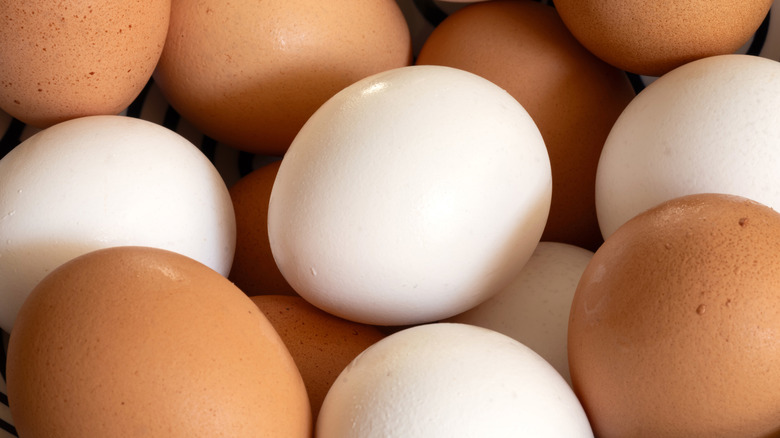
Yet, even without bird flu, which caused an immense egg shortage in 2025, and other factors that could suddenly shift pricing, year-over-year inflation has caused egg prices to rise significantly since the '80s. According to BLS CPI data compiled by the FRED, a carton of a dozen white eggs cost around $0.88 at the start of 1980. By the end of the decade, the same carton cost about $1.14.
Whether eggs are much more expensive today depends on many factors — including your location and the state of the industry. The FRED estimated in April 2026 that a dozen eggs cost Americans about $2.25 on average. Luckily, this is down from a year-over-year peak of about $5.12. Many Americans are no doubt breathing sighs of relief at not paying so much money for a dozen eggs. That said, they may have sighed a little deeper if egg prices were to return to what they were in the '80s.
Bread
There are few food staples as essential to the U.S. population as bread, or as widely consumed. According to Statista, the U.S. bread market generates over $25.9 billion in revenue. This is easy to believe as the USDA estimates Americans consumed 126.6 pounds per-capita of wheat flour in 2025 alone. With so much bread being bought and consumed today, one can't help but look back at how much cheaper this staple was in past decades.
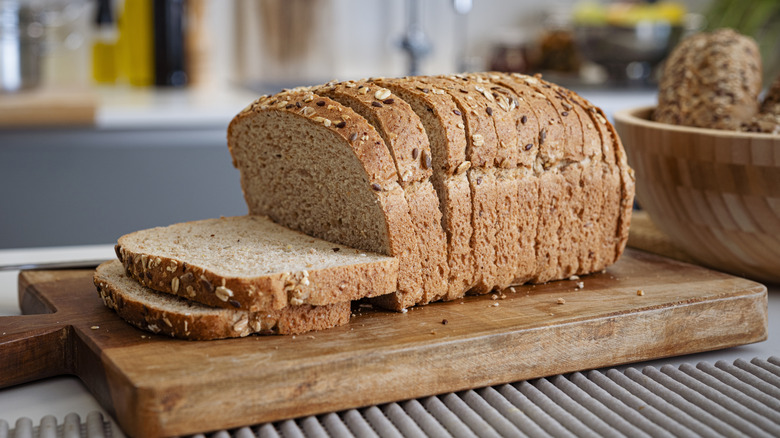
Baby Boomers and some Gen Xers may recall being able to buy a regular loaf of bread for about $0.50 in January 1980, which is what the FRED (per BLS data) determines bread cost at the time. The price of bread fluctuated slightly across the '80s, with the median price sitting at about $0.69 per loaf in December 1989. As of April 2026, the FRED reports that the average price for a loaf of bread is nearly $1.87. That means American shoppers today are paying more than double what their parents and grandparents did in the '80s.
With bread, sometimes pricing varies based on the type of loaf you buy. Instead of white sandwich loafs, perhaps your family prefers to buy wheat bread and always has. For those buying whole wheat bread in May 1986, the FRED reports they paid about $0.86 per pound on average. Almost 40 years later, the median per-pound price of whole wheat bread was roughly $2.74.
Milk
If it seems like people around you are buying and drinking more milk these days, you're not wrong. As The New York Times reported in February 2025, overall dairy consumption jumped by 1.9% between 2024 and 2025 after decades of waning popularity. As the USDA reports, 2024 milk sales saw their first year-over-year increase since 2009. There are a few likely contributing factors to milk's ongoing comeback with American shoppers. Fitness enthusiasts, for instance, are encouraged to view milk as an excellent source of protein. calcium, and Vitamin D. This thinking isn't new, as Millennials famously grew up with the "Got Milk?" ad campaign.
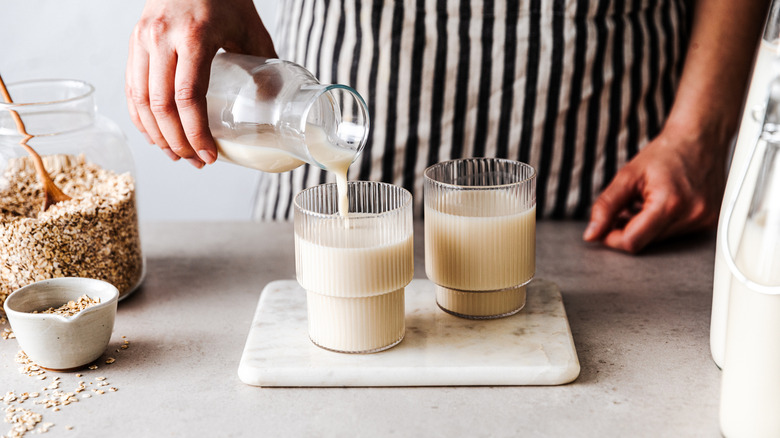
The FRED focused on how ½-gallon whole milk was priced during the 1980s, notably not shifting to whole-gallon pricing until the 2000s. Per the FRED's findings, the price of a ½-gallon of whole milk was about $1.05 in April 1986. BLS data showed low-fat ½-gallon milk cost nearly $1.08 during that same month and year.
As with other groceries, ½-gallon milk is more expensive today than in the 1980s, though the price you pay will vary by store, location, and the product you buy. For example, a Walmart shopper in Sacramento, California, might pay $2.18 for a ½-gallon of milk. Meanwhile, customers in South Salt Lake City, Utah, might find the same product for $2.04. As of May 2026, the USDA also estimates that a ½-gallon of organic milk costs $5.25 on average while an average gallon of conventional whole milk across the U.S. is $3.93. Whether you prefer organic or conventional, or half or whole gallons, it's very likely what you currently pay isn't as low as '80s milk prices.
Butter
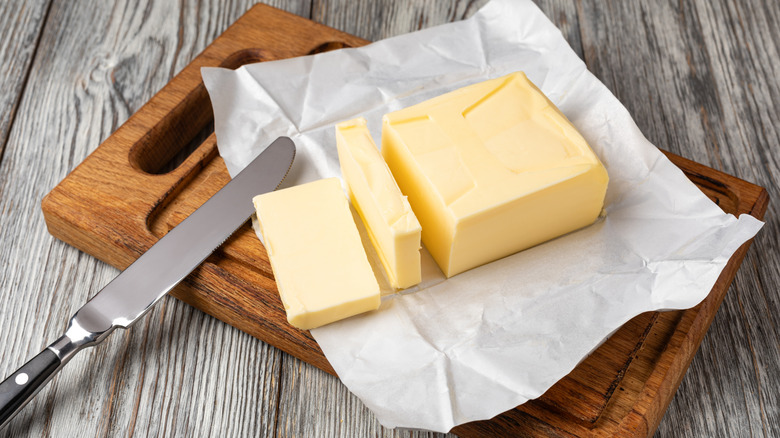
Americans love butter — and that love only seems to be growing. Butter consumption reportedly reached record highs in 2024, with the USDA determining U.S. citizens on average consumed 6.8 pounds per capita. According to the Wisconsin State Famer, demand is so high that the state of Wisconsin alone relies on 13 separate processing plans to turn milk supplied by over 1.2 million cows into butter. With so much effort put into meeting demand, it's of little surprise that butter prices have increased drastically in recent years.
The FRED and the BLS determined the average price per pound of stick butter is $4.22 as of April 2026 — though you may find a better deal if you know where to look. Today, Walmart shoppers throughout much of the country can find a 1-pound container of Great Value butter for just $3.06. That said, it's clear 2026 butter prices are a far cry from the more affordable options available during the '80s. Morris County Library records showed a 1-pound package of Land O'Lakes butter cost $1.99 in 1980, and its records also show an 8-ounce package cost only $0.99 in 1981. As you can see, even if you routinely take advantage of Walmart's rollback pricing, it will take quite a lot of rolling to reach '80s prices.
Sugar
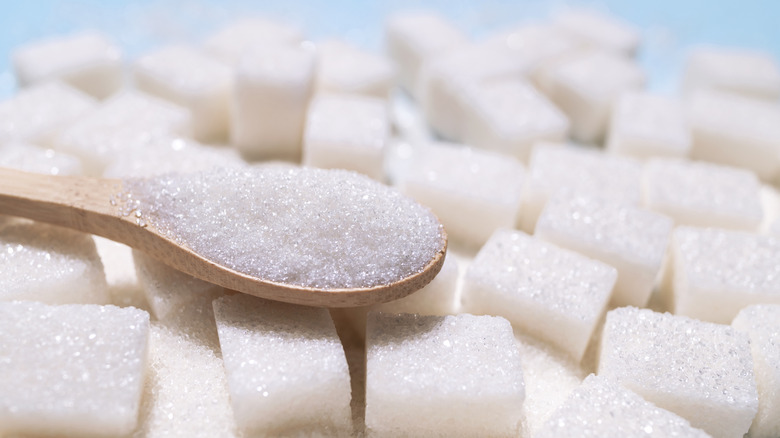
It's almost unbelievable how much cheaper sugar was for Americans living in the '80s. Bureau of Labor Statistics CPI data (per the FRED) shows granulated sugar cost just $0.25 per pound in January 1980. In 1981, Morris County Library's records indicate you could buy a couple of 1-pound boxes of Domino sugar for $1.
There's no such luck today. As of April 2026, the FRED and BLS data shows white sugar costs about $1.01 per pound. What's especially devastating about this estimate is that it spiked significantly since the COVID era. As recently as April 2020, it had been $0.64 per pound. While that was still higher than '80s per-pound pricing, it just shows how much events like global recessions and other socioeconomic crises can have on food staple pricing. It was something that '80s shoppers could afford to take for granted. Looking at the numbers, past generations may never have expected to pay anything more than $0.35 per pound, as was the case in May 1986.
As expensive as this ingredient has since become, there is a slight silver lining: According to the USDA's May 2026 Food Price Outlook, the average price of sugar and sweets fell about 1.4% between March 2026 and April 2026. With the USDA likewise predicting food prices to increase 3.2% overall in 2026, American shoppers will likely appreciate the win, no matter how small. That said, U.S. households would no doubt appreciate it even more if they could once more pay '80s prices for sugar.
Coffee
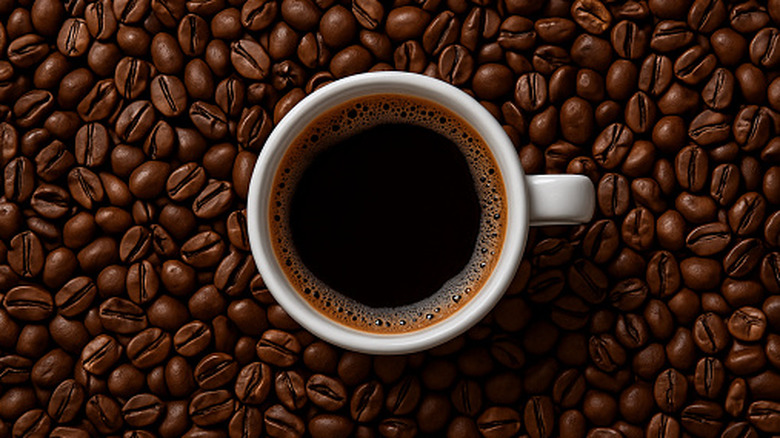
For many people, starting their day with at least one cup of coffee is non-negotiable. In fact, Driveresearch reports that 73% of Americans are coffee drinkers, and 66% of U.S. coffee drinkers prefer to make the beverage at home. Of course, fulfilling their caffeine quotas typically means a trip to the local supermarket. If these coffee drinkers were shopping in 1981, Morris County Library notes a 1-pound container of Eight-O-Clock coffee would have cost $1.49, though coffee prices seemed to rise quickly from there. By 1985, you could grab a 1-pound can of Savarin coffee for $1.99.
For the modern coffee drinker, this grocery item has gotten a bit more expensive, though location often plays a role in price. As of April 2026, the FRED estimates a pound of ground coffee costs American shoppers about $9.72 on average, though someone shopping at a Walmart in Columbus, Ohio, will pay around $7.88 for a 9.6-ounce canister of Folgers Classic Roast ground coffee or $5.88 for the Great Value equivalent. Though prices can fluctuate, we saw the exact same products listed in a store in Honolulu, Hawaii, for $9.12 and $6.76, respectively.
Interestingly, the 1980s saw a massive increase in the popularity of decaffeinated coffee. According to the New York Times, decaffeinated coffee drinkers paid between $3.39 and $4.50 per can at the grocery store. Today, about 10% of Americans prefer decaf over regular coffee. And yet, higher demand in the 1980s represented cheaper prices than today. In Honolulu, a 9.6-ounce can of Great Value decaffeinated coffee is $6.24. In Columbus, meanwhile, the can costs $5.44. Either way, you're paying more than '80s shoppers.
Apples
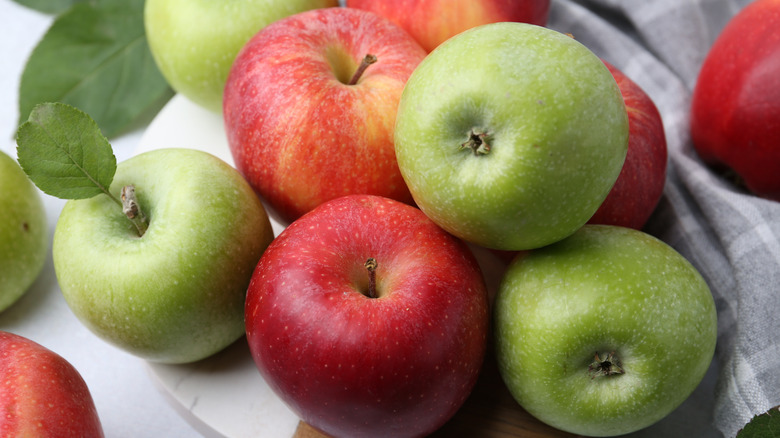
Apples remain one of the most popular fruits consumed by Americans, alongside options like mangos, bananas, and berries. The USDA finds that, on average, Americans consume about 26 pounds of apples per year. As of 2024, Ken Research reports the global fresh apple market is reportedly worth over $110 billion — and Americans can believe it, as the price of these juicy fruits have climbed substantially over the years.
Consider that Morris County Library records shows a 3-pound bag of Red Delicious apples only cost about $1.19 in 1981, less than $0.40 per pound. In 2026, Someone shopping in a Providence, Rhode Island, Walmart location might pay $0.75 for a single Red Delicious apple. In Anchorage, Alaska, meanwhile, the same apple could cost $1.02. All things considered, it's jarring how much an apple in 2026 costs compared to what a multi-pound bag of Red Delicious apples once did.
This increase didn't start in the '80s, either: We previously reported how unexpectedly cheaper apples were in the 1970s than in recent years. This included findings pulled from Business Insider, which determined a pound of apples cost just $0.34 in 1975. If someone were to ask, "How do you like them apples?" the answer would be much, much cheaper than what they cost today.
Cooking oil
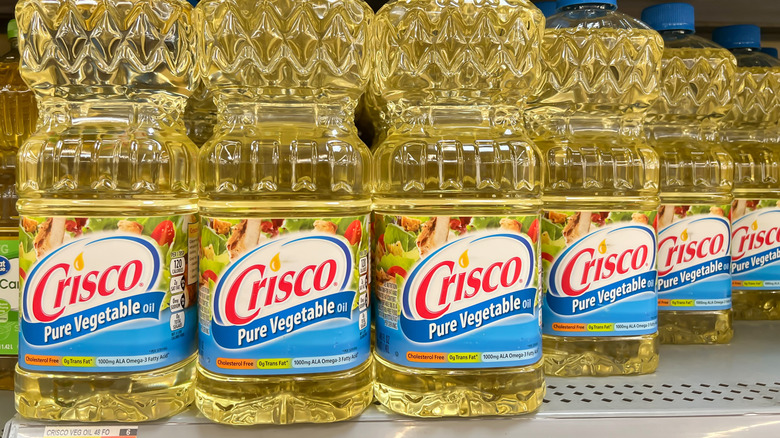
Even the youngest Baby Boomers were well into their teens in the '80s, and Crisco cooking oil was more than likely a familiar sight for many of them. The brand was famous for its shortening, previously made using cotton seed oil. Today, Americans cook food using a variety of options, including butter and various vegetable and olive oils. While cooking oil choices have grown substantially, many can agree that cooking oil was much cheaper in the '80s than it is in 2026.
Looking through Morris County Library records for 1981, you'll see that a 3-pound can of Crisco shortening cost $2.19 in 1981. That ultimately works out to about $0.73 per pound. Meanwhile, the FRED reports cooking oil prices varied across the decade, selling for as low as $0.75 per pound in the early '80s and rising up toward around $0.95 per pound by the end of the decade.
Crisco cooking oils are around today, but are much more expensive than what '80s Americans paid. Columbus, Ohio residents, for example, must pay $2.97 for a 16-ounce bottle of Crisco pure vegetable oil at Walmart. Meanwhile, those in Hilo, Hawaii, might find that the same bottle costs $3.64. Though pricing can vary, it would certainly prove a challenge for any U.S. shopper today to find oil for nearly as cheap as it was in the '80s.
Rice
Rice isn't just a popular grocery item; it may be one of the most essential staple foods in the world. In fact, it's reported that more than half of households across the globe consume rice, and the grain is a major crop in the United States. As the USDA reports, the U.S. exports between 40% and 45% of its rice. Though the United States produces less than 2% of the world's rice, American-grown rice still makes up about 5% of the rice sold around the world. Domestically, the average American consumes well over 20 pounds of rice every year
According to USA Rice, about 85% of the rice Americans eat is grown in the United States. The organization also found long grain rice specifically accounts for about 70% of domestic rice, far more than any other variety. The FRED reports that in early 1980, you could buy a 1-pound bag of long grain rice for about $0.42. The price didn't change too much over the course of the decade, either, with the same bag costing approximately $0.47 at the average local grocery store by the end of 1989. Since then though, prices have shot up. As of April 2026, the FRED reports people across the U.S. pay approximately $1.08 per pound of long grain white rice — more than double what shoppers were paying at the tail end of the '80s.
Flour
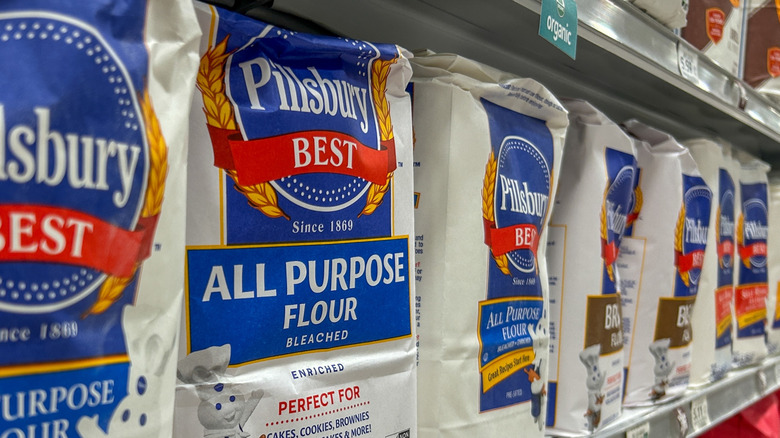
Many Americans rely on flour, a crucial pantry staple, when it comes time to do their own baking at home. In fact, by some estimates, Americans go through the equivalent of 132 pounds of wheat flour per person every year. As such, trying to find the best deal for this grocery item gets that much more challenging.
Phoenix, Arizona, Walmart shoppers can expect to pay $2.38 for a 5-pound bag of Great Value all-purpose flour. This is slightly cheaper than in Fairbanks, Alaska, where we've seen the same bag listed for $2.86. Yet, no matter where you shop, one thing remains the same: The flour you buy will likely cost way more than it would if you were shopping in the 1980s. As we previously mentioned, the Morris County Library's records show 5-pound bags of Pillsbury flour cost less than $0.90 each, or around $0.18 per pound. That price is a little cheaper than the average suggested by the FRED. It determined, per CPI data of the time, that '80s shoppers paid between $0.20 and $0.27 per pound of flour on average throughout the decade.
With that in mind, it's hard not to feel a little cheated, knowing how much cheaper items like flour were for the shoppers of yesteryear. Thanks to a combination of sneaky reasons like inflation and rising supply chain costs, we can only look back in envy and nostalgia.