

The 11 Best Cars For A Retiree On Social Security

For retirees on Social Security, buying a vehicle can be a daunting task. More than a mere feeling, this financial burden is borne out by the data. The National Institute on Retirement Security reports that 40% of seniors depend solely on Social Security payments throughout retirement. At the same time, the price for a new car continues to rise. Kelley Blue Book suggests that the market average value of new vehicles is $49,353, after climbing 3.4% from 2025. Beyond upfront costs, seniors are also saddled with ongoing expenses associated with maintaining a vehicle. Consumer Affairs estimates that the average annual maintenance charges can reach up to $1,200. AAA's most recent prediction for an entire year of fuel costs is $11,577, based on driving 15,000 miles annually, although gas prices have climbed considerably.
These costs can quickly add up to a significant financial burden, especially when the average monthly Social Security benefits for a retired couple in 2026 are around $3,208. The silver lining in the increasingly expensive automotive market is the sheer volume of available vehicles. There are a select number of quality models that have below-average expenses across the board. Money Digest pulled together the best cars for a retiree on Social Security by calculating a real-world five-year ownership cost. We determined this ranking by looking at a vehicle's initial price tag and the prolonged ownership costs, which account for depreciation, insurance, fuel, interest, and maintenance. Then, we subtracted the fuel savings from this total amount for each vehicle to get an adjusted five-year ownership amount. As many of these vehicles exceed the industry's baseline fuel economy, seniors stand to save money over time on gasoline. These are the best cars for a retiree on Social Security.
11. Honda CR-V
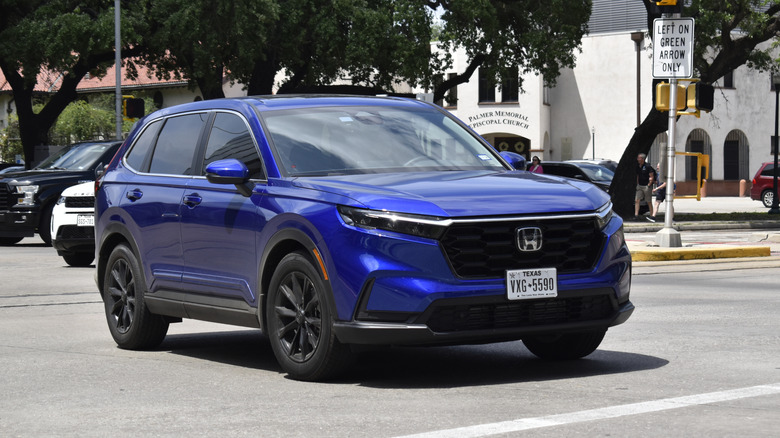
The Honda CR-V is one of the best SUVs you can buy because of its ability to balance performance and accessibility. According to Kelley Blue Book, the CR-V is the fourth best-selling vehicle in 2025, moving 403,768 units. This SUV's reasonable price point helps shed light on its appeal. Within the initial five years of ownership, retirees are only looking at an all-in bill of around $61,865, including fuel savings. J.D. Power estimates people usually pay between $28,180 and $38,961, varying based on the trim options. On the other hand, long-term ownership expenses hit $36,935, per CarEdge.
Depreciation comprises $11,062 of these costs. Insurance is another major drain, costing seniors about $9,795. The half-decade fuel cost is modest at around $7,700. Retirees who take out a loan to purchase the CR-V are looking at an additional $5,953 over this period. Maintenance costs make up the smallest spending portion at $2,425.
FuelEconomy.gov estimates the new CR-V's fuel economy at a commendable 40 miles per gallon, reaching 43 miles per gallon in the city. This exceedingly high-performing engine results in a five-year gas discount of $3,250 when stacked against the market norm. You can extend these savings by opting for a used model. For instance, CarGurus suggests the 2022 CR-V sells for about $26,858. Over the past few years, the CR-V has consistently been ranked by the Insurance Institute for Highway Safety (IIHS) as a Top Safety Pick, which is the independent agency's second-highest classification.
10. Buick Encore GX
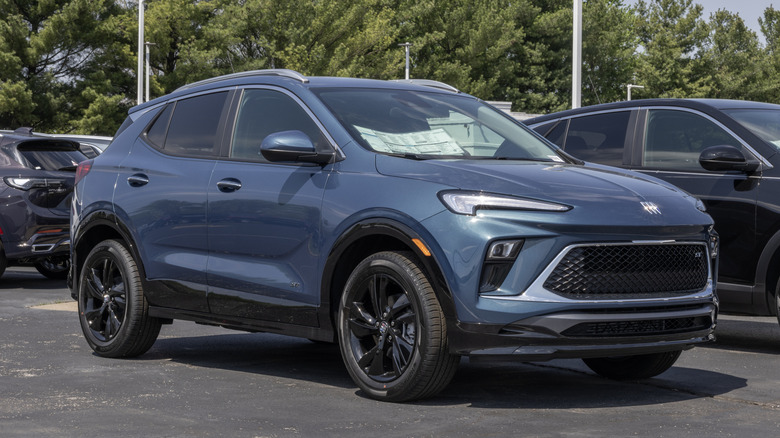
The Buick Encore GX is one of the best cars for retirees under $30,000. Plus, this SUV ranks among the most affordable vehicles for seniors with a five-year adjusted ownership cost of $61,700. J.D. Power places the average sales price of the Encore GX at $24,132 to $36,991. Furthermore, CarEdge predicts that seniors spend another $38,318 across the first half-decade of driving this SUV.
The original value of the Encore GX loses about $12,724 over this period due to standard depreciation. Insurance costs are on the higher end, compared to other models on this list, reaching $10,225. Seniors tend to spend about $7,700 refueling this SUV for five years. Those who take out a loan to support their purchase will need to pay another $4,912 in interest. Maintenance and repairs add up to $2,756.
FuelEconomy.gov calculates the 2026 Buick Encore GX's fuel efficiency at 30 miles per gallon, placing it slightly higher than the market baseline. This effectively acts as a $750 fuel rebate over five years, when looking at gas prices as of Spring 2026. If you're looking for even more savings, CarGurus reports that the 2022 Encore GX is priced at $19,967. Between 2021 and 2023, the Buick Encore GX received a Top Safety Pick recognition from the IIHS, but the latest few releases have received mixed safety ratings.
9. Toyota RAV4
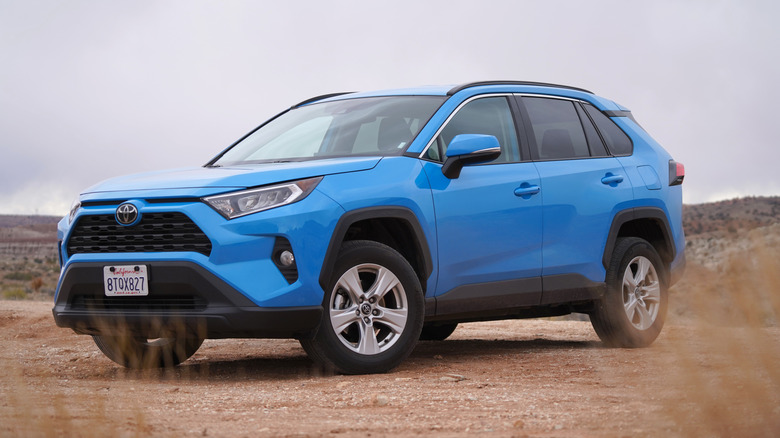
The Toyota RAV4 is another top-selling vehicle that's one of the best for retirees, especially those who rely heavily on Social Security payments. Money Digest estimates that this SUV costs about $61,443 within the initial five years of ownership, after adjusting for fuel savings. J.D. Power puts the purchase price of the RAV4 somewhere between $29,299 and $45,195. In terms of long-term ownership expenses, retirees tend to dedicate $35,894 to this nameplate, as calculated by CarEdge.
Depreciation isn't as egregious as some other models, but it still accounts for $10,377 of these long-term expenses. Retirees are typically charged $9,995 for an insurance policy covering the RAV4. Another $7,700 goes toward gas costs, while interest payments on loans rack up $5,884 of payments. General maintenance and repairs add up to only around $1,938.
Despite its larger size, the RAV4 still maintains a stunning 43 miles per gallon, per FuelEconomy.gov. It's another vehicle that has a better fuel economy in the city than on the highway. This efficiency, which rises far above the fray, saves seniors $3,750 over five years, helping to reduce the financial weight of fuel. For further savings, the 2022 RAV4 can be bought for roughly $27,670, according to CarGurus. From 2020 to 2024, IIHS recognized the RAV4 as a Top Safety Pick option, and the 2019 model even achieved the highest rating as a Top Safety Pick+ inclusion.
8. Hyundai Kona
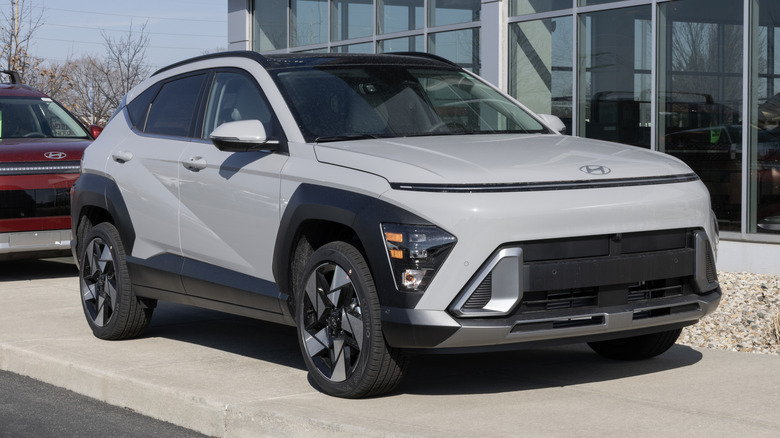
The Hyundai Kona is one of the best SUVs that money can buy right now, and the numbers support this claim. Across a five-year period, retirees can secure this in-demand nameplate for $60,356, including the purchase price, long-term ownership costs, and fuel savings. Seniors tend to spend anywhere between $23,022 and $36,107 for the 2026 Kona, according to J.D. Power. Meanwhile, CarEdge projects the half-decade ownership costs of this SUV to be $38,334.
Over this period, the Kona depreciates by around $13,430, accounting for the largest expense category. The policy cost to cover the Kona averages $9,840. Seniors can expect to pay about $7,450 in total on fuel. Unless you're buying the vehicle outright, interest on a car loan will add up to $4,968. General upkeep for the Kona is the lowest expense, resulting in the final $2,646 of prolonged ownership costs.
The 2026 Hyundai Kona gets around 31 miles per gallon combined, which is higher than the automotive industry's average. FuelEconomy.gov suggests that this heightened fuel efficiency puts about $1,000 back in the pockets of retirees across five years, when looking at Spring 2026 fuel prices. For even more savings, seniors should consider the 2022 Kona, which comes in at $18,587, per CarGurus. Remarkably, the Hyundai Kona has been heralded as a Top Safety Pick+ option by the IIHS for three years running, between 2024 and 2026, denoting superior safety standards and crashworthiness performance.
7. Subaru Crosstrek
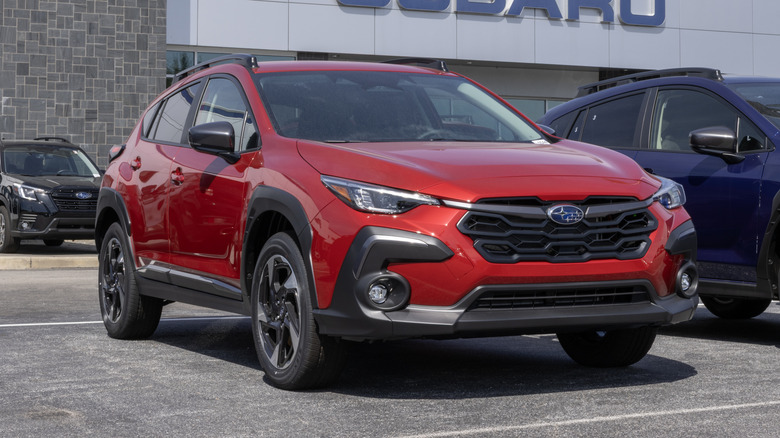
The Subaru Crosstrek is one of the most reliable cars that outsells its competitors. Beyond above-average dependability, this model offers a discount both in initial and prolonged costs. J.D. Power indicates that the brand-new Crosstrek tends to sell for between $24,242 and $38,428. When factoring in long-term fuel savings, the adjusted ownership costs for this Subaru nameplate sit at $59,797 within the first five years.
During this period, Crosstrek owners see about $10,640 of their initial investment offset by depreciation. Insurance costs are a close second, clocking in at $9,880. When you add up the gas bills over the course of half a decade, this SUV demands about $7,965 in fuel. Taking out a loan on the Crosstrek usually requires around $4,927 in interest payments. Maintenance is the least expensive five-year cost at $2,643. In total, CarEdge suggests that the Crosstrek costs seniors $36,055 in the initial five years of ownership.
FuelEconomy.gov tracks this Subaru SUV's fuel economy at 29 miles per gallon, which is slightly above the market benchmark. While not the highest savings on this list of the best cars for retirees on Social Security, the Crosstrek still helps seniors cut their half-decade fuel costs by $500 compared to the average vehicle. CarGurus indicates that the 2022 Crosstrek tends to sell for $22,801. The IIHS has included the Subaru Crosstrek in its highly competitive Top Safety Pick class from 2020 to 2024. The more recent models still boast above-average safety ratings, despite no official recognition.
6. Kia Niro
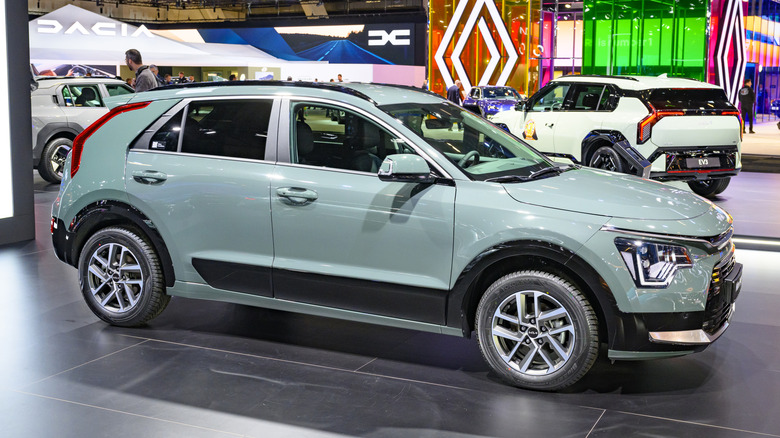
The Kia Niro exhibits a five-year adjusted ownership cost of $59,405. J.D. Power suggests that retirees can pick up the 2026 model for between $24,990 and $39,551. Once seniors cover the initial cost, the half-decade costs of owning the Niro are only $39,165, according to CarEdge. This SUV shows just how quickly a car's value can depreciate after you buy it, losing $16,918 over five years. Retirees tend to spend about $9,965 on automotive insurance to cover the Niro. Interest payments on a car loan are the next highest expense at $ 5,281. The Niro's solid fuel efficiency keeps five-year fuel costs minimal at $4,360. Routine upkeep for this SUV usually hovers around $2,640.
Per FuelEconomy.gov, the all-new Niro boasts a remarkable fuel economy of 49 miles per gallon combined. Interestingly, this nameplate is more efficient cruising around the city compared to the highway. Within five years, seniors stand to save $4,750 at the gas pump, compared to the standard model. If you're thinking twice about buying a new car, you can pick up a used 2022 Niro for $19,293, as calculated by CarGurus. The 2018 and 2019 Niro models were both identified as IIHS Top Safety Pick+ options, even though the more recent production years exhibit superior safety and crashworthiness performances.
5. Honda HR-V
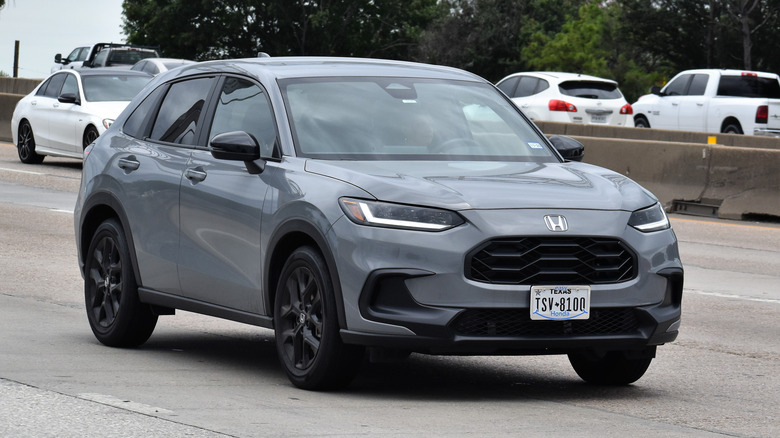
The Honda HR-V is recognized by Money Digest as one of the best cars for a retiree, due to its combination of affordability, fuel economy, and comfortable driving. The HR-V is a more compact budget version of the CR-V. While its larger counterpart has various trims with internal combustion and hybrid engines, the HR-V comes with one engine option but underperforms in fuel economy. Still, this model costs less over the long haul. Within the first five years of owning this compact SUV, seniors can expect an adjusted ownership cost of roughly $58,936.
Roughly half of these half-decade expenses is the initial price tag of between $24,218 and $33,632, according to J.D. Power. Following this initial cost, CarEdge suggests that owners spend around $34,718 on the HR-V. Insurance comprises the largest chunk of these prolonged costs, sitting at $10,070. This SUV's gradual loss of value racks up another $9,319. HR-V owners usually spend about $8,250 at the gas pump over this period. Interest payments on an automotive loan are estimated at $4,732. Finally, the general maintenance bill is $2,347. CarGurus suggests a 2022 model can be purchased for roughly $20,676, for seniors looking for even more savings.
The HR-V's hybrid engine gets 28 miles per gallon combined, and up to 32 miles per gallon on the highway. This falls right in line with the average, so retirees don't get any fuel savings, according to FuelEconomy.gov. The Honda HR-V is a safety powerhouse, landing in the IIHS Top Safety Pick+ category every year between 2023 and 2026, signaling exceptional crashworthiness and robust safety features.
4. Mazda Mazda3 Sedan
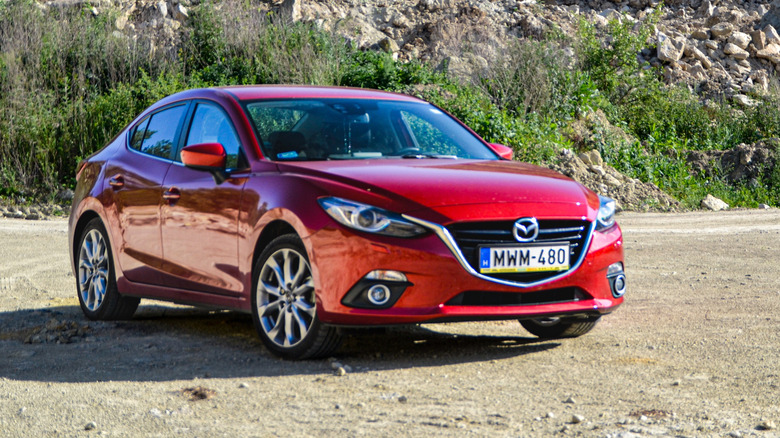
Mazda is one of consumers' least favorite car brands, but that doesn't mean budget-aware retirees need to stay away from all the marque's models. The Mazda3 features a half-decade adjusted ownership cost of $58,080, placing it firmly as the fourth cheapest car for retirees on Social Security. J.D. Power puts the upfront cost of this sedan between $22,304 and $40,057.
Across the first five years of driving the Mazda3, seniors are looking at a total bill of $36,526, per CarEdge. The gradual loss of value is among the costliest expenses, reaching $12,051 over half a decade. Insurance costs aren't too far behind at $10,190. Retirees should budget about $7,450 for gasoline. If you're not buying the Mazda3 outright, you'll end up spending $4,944 on interest. Finally, this sedan's five-year maintenance costs are $1,891.
The 2026 Mazda3 achieves a reliable fuel economy of 30 miles per gallon, getting up to 36 on the highway. This above-average fuel efficiency results in $750 of gas savings for retirees, compared to the new-car average, as reported by FuelEconomy.gov. CarGurus estimates that the 2022 Mazda3 usually costs around $21,036, offering an even larger financial break for seniors. With a remarkable track record, the Mazda3 sedan has been acknowledged as a Top Safety Pick+ option by the IIHS from 2024 to 2026 and from 2020 to 2022.
3. Toyota Prius
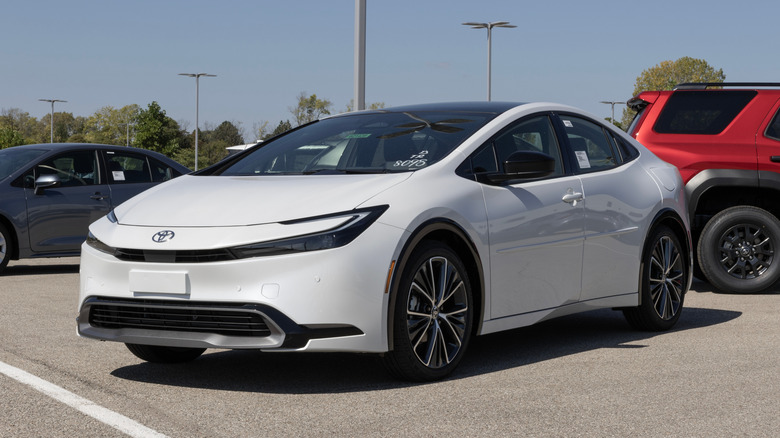
The Toyota Prius is one of the Toyota cars that are perfect for a retiree, due to its market-leading fuel economy, practical design, and prolonged cost savings. This hybrid vehicle features a five-year adjusted ownership cost of $56,633, making it the third most affordable option on this list. According to J.D. Power, seniors would only need to spend about $26,199 to $39,606 for the all-new Prius.
Within the initial five years of owning the Prius, CarEdge recommends a senior budget of about $35,934. This vehicle loses about $12,670 of its initial value within this time frame, and insurance costs follow close behind at $12,330. For those taking out a loan, the Prius' interest would reach $5,443. Fuel costs are on the lower end, given this hybrid's excellent fuel economy, hitting only $4,055 over five years. Maintenance costs are the lowest expense at $1,437.
According to FuelEconomy.gov, the brand-new Prius boasts an industry-topping 57 miles per gallon. This is more than double the fuel economy of the average new vehicle. This remarkable efficiency secures seniors $5,500 worth of gas savings over half a decade, helping minimize their overall expenses. CarGurus places the 2022 Prius' cost at around $22,280, indicating more potential savings for budget-conscious retirees. The Toyota Prius is even more appealing when looking at its safety performance. Between 2023 and 2025, this hybrid achieved an IIHS Top Safety Pick+ selection, while the 2026 model still maintains a Top Safety Pick designation.
2. Toyota Camry
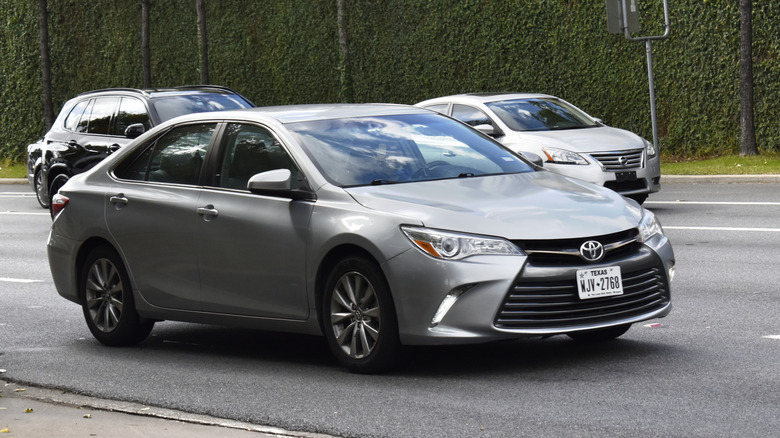
The Toyota Camry comes in as the best car for a retiree on Social Security, boasting an accessible adjusted ownership cost of $54,846. J.D. Power places the 2026 model at $25,299 to $38,804. Although there are plenty of cars that are affordable cars than the Toyota Camry, this sedan's relatively inexpensive upkeep expenses and exceptional fuel economy help seniors save in the long run.
According to CarEdge, the Camry comes with a five-year ownership bill of $34,297. Depreciation accounts for $12,581 of that amount, while insurance eats up $10,240 — the two largest long-term expenses. Beyond that, seniors spend around $5,444 on interest and $4,530 on fuel. The Camry's maintenance costs are set at $1,503 across half a decade.
FuelEconomy.gov reports that the 2026 Camry exhibits a superior fuel economy of 50 miles per gallon. Based on gas prices as of Spring 2026, this sedan saves seniors a solid $4,750 on fuel over five years. Retirees looking to save even more money should consider a used model, with the 2022 Camry selling for around $23,341, per CarGurus. Stunningly, the Toyota Camry has been identified as a Top Safety Pick+ option by the IIHS every year between 2015 and 2026. The 2024 model is the sole exception to this rule, but it still ranked as a Top Safety Pick.
1. Honda Civic
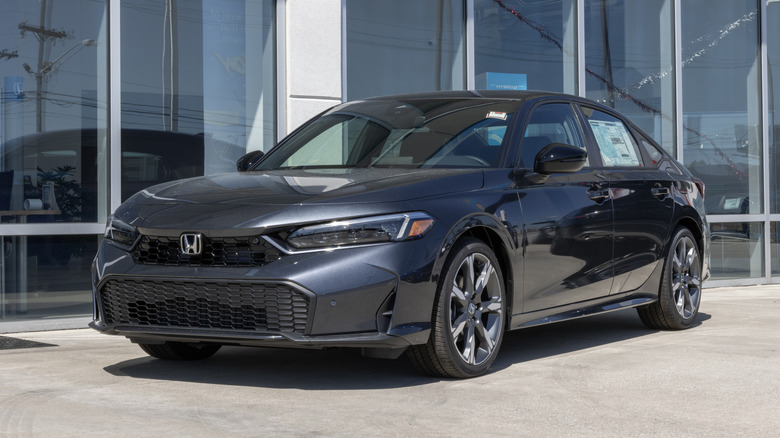
The Honda Civic is a long-running, best-selling sedan, giving seniors a quality driving experience without sacrificing space. Plus, this popular nameplate is also more financially accessible in the long run than many competitors. This nameplate's five-year adjusted ownership cost is $53,746, making it the most affordable car for retirees on Social Security. People tend to pay about $25,955 to $29,845 for the 2026 Civic, depending on the trim type, according to J.D. Power.
CarEdge estimates that retirees typically spend about $32,541 within the initial five years of driving the Civic, spread across an array of categories. This model sheds about $7,972 of its original sales price within half a decade. Interestingly, insurance tallies up to the largest single expense at $12,075. Needless to say, the Civic is not one of the cheapest new cars to insure. Filling up this sedan for five years straight adds up to roughly $6,415. For those using a loan, interest on this Honda nameplate stands at $4,293. Maintenance is the lowest five-year cost at $1,786. CarGurus suggests the average 2022 model sells for around $22,512.
According to FuelEconomy.gov, the Civic exhibits a stellar fuel efficiency of 49 miles per gallon combined, netting seniors a five-year fuel savings of $4,750, when stacked up against the new-car standard. For every year from 2023 to 2026, the Honda Civic has achieved a Top Safety Pick classification, and the 2022 model ranks as a Top Safety Pick+ option, as reported by the IIHS.