

10 Toyota Cars That Are Perfect For A Retiree
Everyone can benefit from having a reliable, affordable, and comfortable vehicle, but seniors have unique variables to weigh. On a positive note, retirees are often in a better financial position than earlier in their careers, opening up a wider range of options. Furthermore, a vehicle provides more freedom to enjoy your golden years on your terms. Before you jump right into a zippy sports car or a classic convertible, it's worth pausing to ensure your means of transportation checks all the boxes, not only the exciting ones. Driving into retirement comes with some sobering considerations.
First and foremost, the average person experiences an 18% drop in their total net worth from 65 to 75, according to the Federal Reserve's Survey of Consumer Finances. More poignantly, seniors 70 and older face an elevated risk of death by car crash than those aged 35 to 54, per the Centers for Disease Control and Prevention. This higher risk comes even as seniors tend to drive less than in their younger years. Between the ages of 55 and 64, the average driver clocks 11,972 miles per year. This figure drops to 7,646 for those 65 and older, as reported by the Department of Transportation's Federal Highway Administration.
With the financial constraints alone, most seniors would benefit from a vehicle with a low price tag, manageable upkeep, and depreciation resistance. Even if you're wealthier than the average retiree, every seasoned driver should prioritize a model with ample safety features and solid crashworthiness. Instead of reviewing hundreds of different models across various brands, retirees don't have to stray from the Toyota brand. CarEdge positions this popular marque as the second-cheapest in prolonged maintenance and the best in long-term resale value. Furthermore, many models fall below $49,191 — the average price of a new car, according to Kelley Blue Book (KBB).
1. Toyota Corolla Hatchback
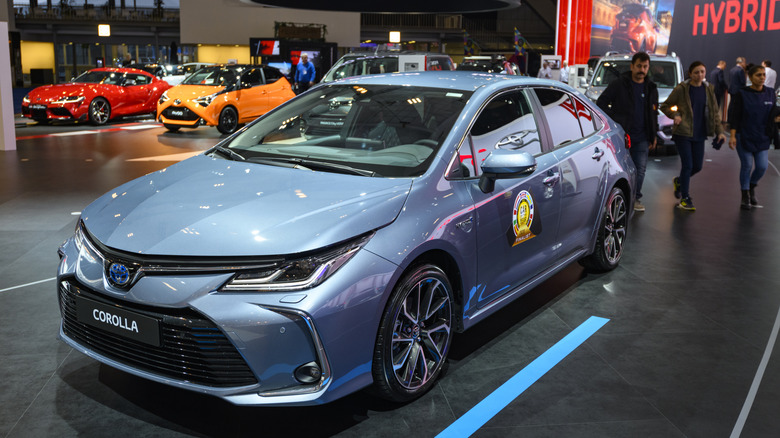
The Toyota Corolla Hatchback is a sporty spin on the classic Corolla sedan. It offers a hatchback trunk, which offers easy access directly to the back seat. The newest model is recognized for its smooth driving experience and 35 miles per gallon (mpg) combined fuel economy. Retirees also benefit from blind spot detection, which comes standard in the modern release. If you're regularly driving around the grandchildren or friends, you may find the interior a bit tight. Edmunds suggests retirees shouldn't have to pay more than $24,803 for the 2026 Toyota Corolla Hatchback, saving 49.6% compared to the average price of a new vehicle. Cars.com indicates that the Toyota Corolla Hatchback has only been recalled three times, most notably for backup exterior lights and fuel pumps.
Within the initial decade of ownership, retirees will only need to put about $4,199 into the Corolla Hatchback. This is a discount of $676 compared to similar models. Additionally, CarEdge reports that this hatchback comes with an 11.58% chance of needing a serious fix in the same period, 3.06% lower than the average. The Toyota Corolla Hatchback enjoys an impressive depreciation rate, maintaining 45.82% of its value after 10 years, according to CarEdge. KBB estimates that the average car retains 45% within just five years. Retirees looking to save even more should wait two years to buy a Corolla Hatchback, when it's $2,778 cheaper than off the lot.
2. Toyota Prius
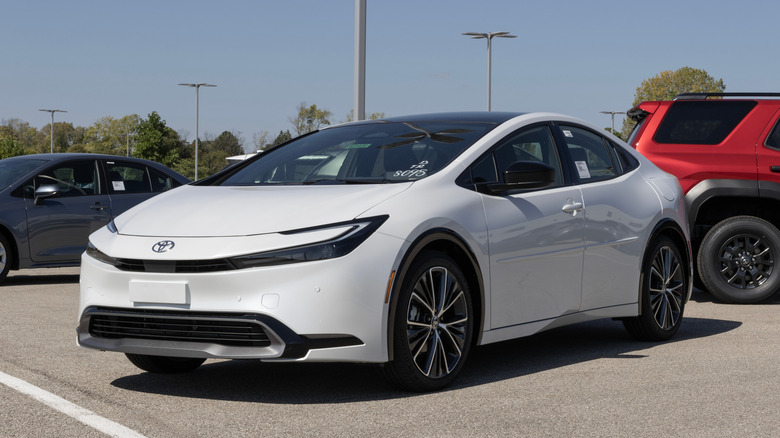
The Toyota Prius has been the de facto ringleader in the hybrid game since its release in the early 2000s. The newest model carries the torch of efficiency, featuring a stellar 54 combined mpg. The intuitive technology and large screen make it easy for seniors to control the suite of built-in features. Similar to the Corolla Hatchback, you won't be able to carpool with too many people, given the tight backseat. However, this is a premium vehicle for budget-aware or even environmentally conscious retirees. Edmunds says you can pick up the newest model for only $28,741, which is 41.6% cheaper than the market average.
CarEdge projects the long-term upkeep costs of the Toyota Prius to be $4,360. This saves retirees $515 compared to similar models. The Prius also comes with an 11.58% likelihood of demanding a considerable fix across 10 years of ownership, falling 3.06% below the average for its class. The Prius's build quality and high demand help protect against steep depreciation. At the 10-year mark, this vehicle still tends to retain 45.82% of its original value, as reported by CarEdge. You'll be able to sell it for around $15,975 if you purchased it for roughly $34,864 brand new. If you're eager to pocket even more savings, wait two years to buy this hybrid model. You could cut back on the cost by $6,328. The Prius is one of the Toyota cars with the best resale value, which is steep competition given the brand's impressive residual value across its lineup.
3. Toyota Prius Prime
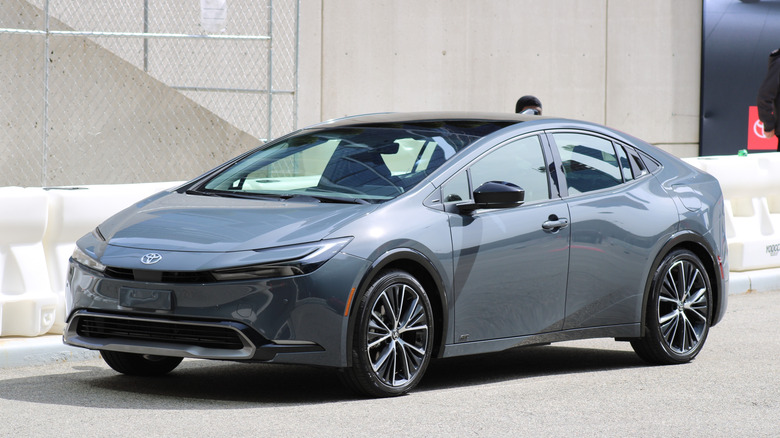
The Toyota Prius Prime is a plug-in hybrid (PHEV) version of the standard Prius. Given the ever-increasing amount the average American spends on gas, this vehicle is a solid choice for retirees who want to cut back on fuel consumption. The newest installment of the Prime can drive 45 miles on a single charge and gets 52 mpg combined, extending considerable energy savings. Retirees who charge this vehicle can often drive for months without visiting a gas station. The standard Prius' ergonomic electronics have been plugged into the Prime. However, this PHEV also lacks serious space in the rear seat. Edmunds estimates the 2026 Toyota Prius Prime has a fair value of $33,928, slightly higher than the standard Prius, but still 31% cheaper than the normal car. The Prius Prime is one of the cars that costs the least over time, especially when it comes to maintenance and repairs.
Within the first decade of ownership, this PHEV racks up only $4,428 in general upkeep. This figure is manageable on its own, but it also undercuts the average for comparable models by $447. Seniors also see a 3.06% lower risk of having to pay for a major fix in the same time frame when measured against comparable vehicles. The Prius Prime's overall probability of needing a huge fix is just 11.58% in 10 years, according to CarEdge. Given their near-identical structure, design, and build quality, the Prius Prime depreciates at the same pace as its Prius cousin, maintaining 45.82% of its worth after a decade, per CarEdge. Assuming this vehicle is purchased for $39,115 off the lot, retirees can reliably sell it for $17,922. Similarly, a two-year waiting period can shave $5,840 off the new price tag.
4. Toyota Corolla
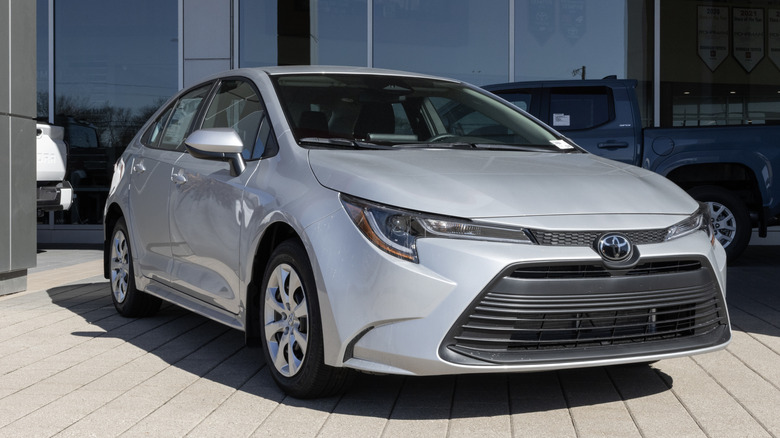
Despite looking like a run-of-the-mill sedan, the Toyota Corolla packs a dependability punch. In fact, it's one of the vehicles that is more reliable than the Highlander. Retirees appreciate this sizeable sedan's smooth driving experience, leading fuel efficiency, and intuitive controls. The Corolla offers more room in the rear seat than the Prius and more cargo space than the Corolla Hatchback. Better yet, this sedan comes standard with blind-spot detection and rear cross-traffic detection. The gas-powered Corolla gets 35 combined mpg, although its hybrid trims can reach 50 mpg. The 2026 Toyota Corolla is sold for about $23,006, according to Edmunds, which falls 53.2% under the market average.
CarEdge estimates that seniors should budget about $4,434 across the first 10 years of ownership to keep the Corolla running smoothly. These long-term repair costs are $1,312 under the norm for comparable sedans. Also, the Corolla comes with a 4.41% lower probability of suffering a serious issue over a decade. Overall, this sedan's risk sits at a modest 12.28%. The Toyota Corolla tends to maintain $14,170 of value after 10 years, assuming an original price of $27,595. That puts the sedan's 10-year residual value at 51.35%. However, a simple two-year delay after a new release reduces its cost by $4,851, per CarEdge data.
5. Toyota Corolla Cross
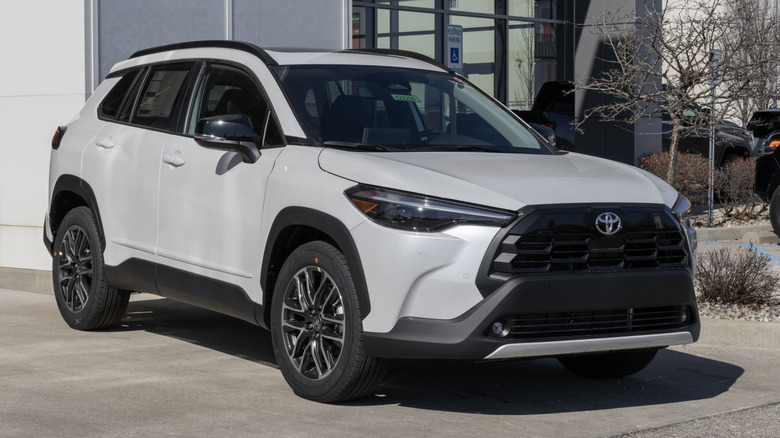
Consumer Reports has championed the Toyota Corolla Cross as a top-selling car that is also the most reliable. This model may share a nameplate with the popular sedan, but that's about where the overlap ends. This compact SUV sacrifices slightly on fuel efficiency with a 32 combined mpg. However, it offers more interior space than the Corolla sedan, but not quite as much as full-size SUVs. Seasoned drivers can take advantage of the large infotainment display and intuitive controls. The smooth ride is another advantage. A reasonable price point of $25,782, as reported by Edmunds, makes the Corolla Cross much cheaper than the typical SUV and 47.6% more affordable than the average new car.
Within the first decade of ownership, the Toyota Corolla Cross demands roughly $5,831 in maintenance costs, according to CarEdge. This is slightly higher than Toyota's sedan lineup, but it's a solid $2,335 lower than the average SUV. The Corolla Cross also outpaces its class in its likelihood of experiencing a serious issue. This compact SUV experiences a risk of 16.61%, which is a significant 7.98% below the norm. The Corolla's depreciation rate falls in line with the Prius and Prius Prime, with a decade-long residual value of 45.12%. If a retiree purchases this model for $29,053, they'll still have about $13,109 worth for resale. CarEdge estimates that the Corolla Cross sells for $2,754 below its list price just two years after release.
6. Toyota RAV4
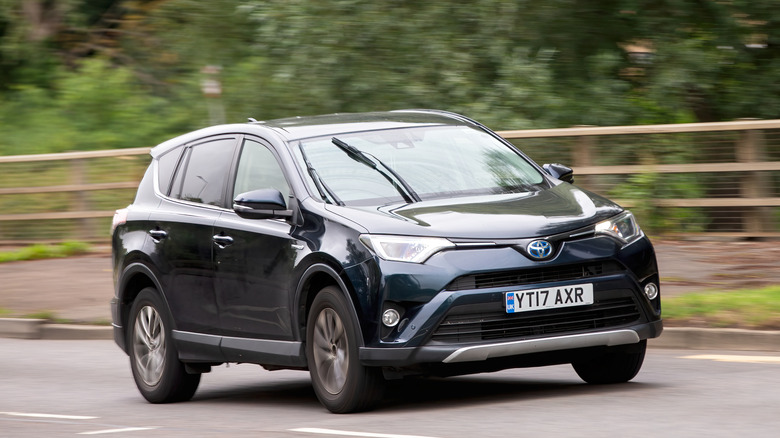
The RAV4 is the largest vehicle so far on this list of Toyota cars that are perfect for a retiree. Seniors who regularly drive around other people will appreciate the larger backseat and higher headspace. The cargo room also has plenty of room to haul stuff around. Seasoned drivers also benefit from excellent visibility due to large windows. The standard hybrid engine ensures responsive steering and solid fuel economy. The 2026 RAV4 has been completely revamped, getting rid of full gas engines completely and adding in some more standard tech features. It's worth noting that the seats aren't the comfiest for extended rides. Edmunds indicates this SUV can be picked up for around $33,290, putting it 32.3% below the price of the typical new car.
Seniors who drive a Toyota RAV4 see an average 10-year maintenance bill of $6,005, which is considerably lower for an SUV. These costs fall about $2,161 under the class average. The RAV4 also avoids a major fix 7.98% better than comparable models, with the probability sitting around 16.61%, according to CarEdge. Retirees also appreciate the RAV4's resistance to depreciation. The average model can hold onto a respectable 48.99% of its original value following a decade of routine use. This leaves owners with a vehicle worth $18,465, assuming the initial sales price was $37,692. Looking to save a little money on the RAV4? Just wait two years to buy a recent release to reduce the price by $6,253, as reported by CarEdge.
7. Toyota Venza
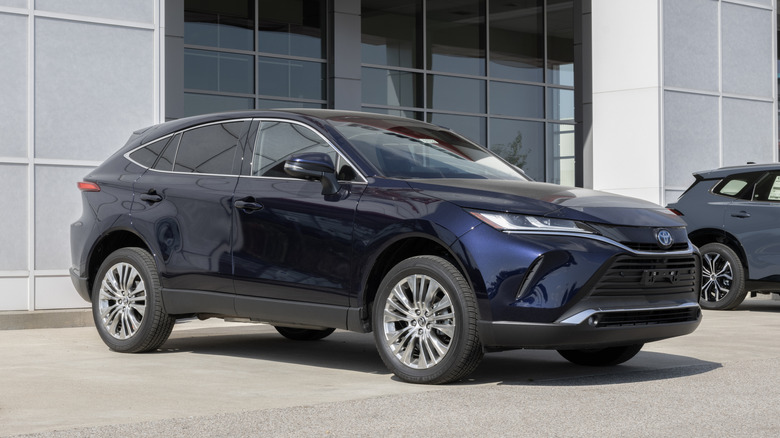
The Toyota Venza is a mid-size SUV that fits squarely between the compact RAV4 and full-size Highlander. It was discontinued in 2024 but remains an exceptional choice for retirees looking for a sizable SUV with decent gas mileage and more room compared to Toyota sedans or hatchbacks. First impressions of the Venza's stylish appearance put it closer to a Lexus SUV, but the interior is equally appealing. The Venza comes with standard all-wheel drive, granting senior drivers a smoother driving experience and more responsive handling. You'll have more space in the backseat than in smaller Toyota models, although the rear cargo space isn't anything to write home about. This vehicle gets the job done, offering a larger, capable vehicle at the price of a typical sedan. You shouldn't have to pay more than $32,465 for a 2024 Venza, according to Edmunds. This is the last year the model was released.
According to CarEdge maintenance stats, the Venza accrues roughly $6,089 in upkeep costs over the span of 10 years. This falls beneath the average for comparable models by $2,077. On top of that, the Venza sees a 7.98% lower risk of needing a serious fix in the same time frame. Owners only face a 16.61% probability of needing to cover this unforeseen expense. Seniors can drive a Venza for 10 years straight while only losing a little over half of their initial expense. CarEdge puts this model's 10-year residual value at 45.12%. That yields a resale price of $19,356 if it was purchased for about $42,899. The Venza holds onto value more than the average vehicle, but it still has one of the worst depreciation rates for Toyotas. This slightly higher depreciation means more savings for those buying used. Only two years after release, a Venza sheds about $9,669 of its retail price.
8. Toyota RAV4 Prime
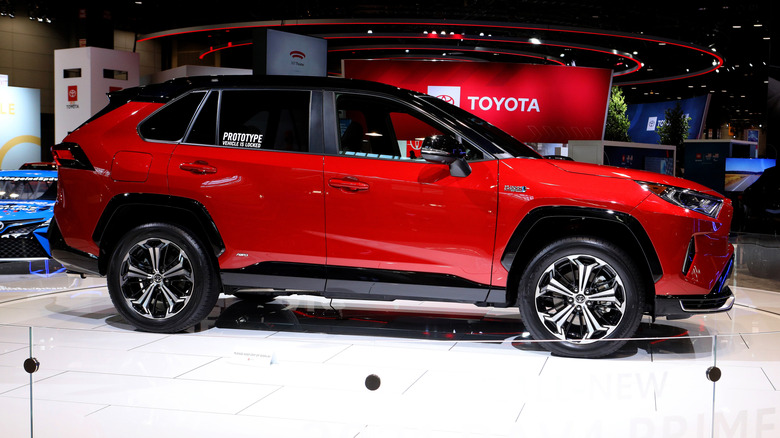
The Toyota RAV4 Prime is the plug-in hybrid version of the successful RAV4. If you're keen on a PHEV but the Prius Prime isn't quite spacious enough, this mid-size SUV may be a consideration. The sleek look and various trim options are a perk, but the real appeal is under the hood. The RAV4 Prime easily runs for 52 miles on a single charge. With broad compatibility, you don't have to find brand-specific charging stations on the road. The newest model is decked out with all the most advanced Toyota tech and features plenty of space for friends or family. Edmunds suggests retirees can pick up this PHEV SUV for around $41,408. It's definitely not the cheapest of the Toyota cars that are perfect for seniors, but it's still 15.8% below the average price of a new vehicle.
In addition to beating out most SUVs on gas mileage, the RAV4 Prime comes with a modest 10-year maintenance cost of $6,199. Retirees would save about $1,967 compared to similar models, as reported by CarEdge. Across the same time frame, this nameplate also features a moderate risk of needing a serious repair, with the odds standing at 16.61%. For context, that's 7.98% lower than comparable vehicles. After driving the RAV4 Prime for a decade, seniors can still sell it for about $21,652, assuming it was bought new for $47,988. This well-built SUV has a 10-year residual value of 45.12%. If the stick price isn't in the budget, waiting a few years can cut the cost by $10,932, according to CarEdge.
9. Toyota Crown Signia
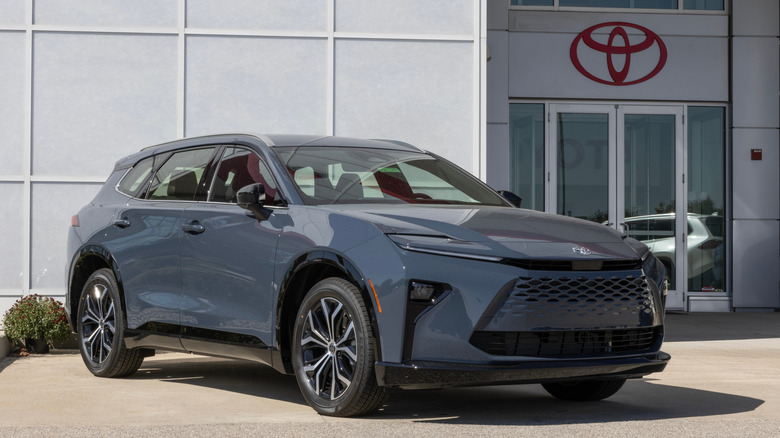
The Crown Signia is one of Toyota's most recent models, first launched in 2025. The newest model enjoys an impressive 38 combined mpg, due to its hybrid engine, which comes standard in all trims. It's slightly more expensive than other Toyota nameplates, but delivers on upscale style on the interior and exterior. This premium quality carries through to the driving experience, which is comfortable, smooth, and responsive. Unfortunately, the cargo space could leave seniors wanting more on longer trips. Edmunds indicates that the Crown Signia usually sells for $43,659 — 11.24% more affordable than the market average, although more expensive than other Toyota SUVs that are perfect for a retiree.
CarEdge suggests that this nameplate typically costs $6,209 in upkeep expenses over a decade, sitting $1,957 below the average for comparable SUVs. Seniors can also benefit from a 7.98% lower risk of having to cover a major repair in this timeframe, with the Crown Signia only facing a 16.61% chance. This mid-size SUV is extremely resistant to depreciation compared to the average model. Following 10 years of regular driving, the Crown Signia holds onto 45.12% of its original listing price. For instance, if you purchased it for $47,990, you would be able to sell it for about $21,653 a decade later. If you're thinking twice about buying a new car, the Toyota Crown Signia offers a steep discount for patient consumers. Waiting only two years after a new release can reduce the price by $10,932, as reported by CarEdge.
10. Toyota Highlander
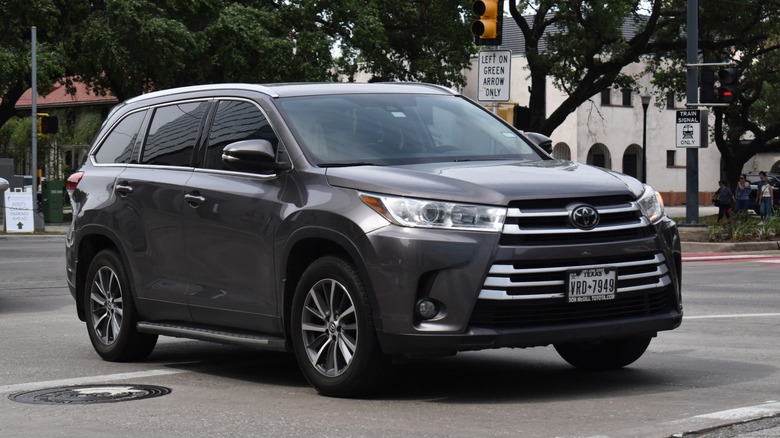
Consumer Reports has highlighted the Toyota Highlander as a top-selling, very reliable SUV. It's the largest SUV on this list of cars that are perfect for retirees, but still smaller than the Toyota Grand Highlander or Sequoia. Seniors looking for a sizable vehicle that's still manageable both in terms of handling and price may consider the Highlander a perfect balance. This three-row SUV offers a spacious interior, even in the last row, with more leg room than similar models. Despite only getting 24 combined mpg, the Highlander still outpaces most SUVs in fuel economy. Retirees appreciate the noiseless, smooth ride, as well as the good visibility. All-wheel drive comes in every trim, giving seniors greater handling and control. These premium features come at a cost, with the Highlander selling for around $45,987, according to Edmunds. It's far from the most affordable Toyota, yet still undercuts the average new vehicle price by 6.51%.
The Toyota Highlander also offers cheaper upkeep expenses in the long run. Seniors tend to spend $6,225 on general maintenance within the first decade of ownership, which is $1,941 less than for other SUVs. The Highlander is on par with many smaller vehicles when it comes to avoiding a major fix. Across a decade, this SUV only faces a 16.61% likelihood of needing a considerable repair, 7.98% lower than the average, per CarEdge data. Forget what you've heard about SUVs falling apart quickly. The Highlander boasts a 10-year residual value of 39.49%. To put this in context, this SUV would still be worth about $19,232 after a decade of consistent use if it were bought for around $48,702. CarEdge reports that stalling for two years after the newest release can minimize the cost of Highlander by $12,887.