

The Worst Toyota Camry Model Years That Aren't Worth The Money
The Toyota Camry was America's top-selling sedan in 2025, purchased 316,185 times, according to Kelley Blue Book (KBB). Much of this popularity stems from the Camry's strong fuel efficiency, paired with the advanced technology and multitude of safety and driver-assistance features packed into later models. Camrys from many eras are hailed among the reliable vehicles owners drive for years on end, but certain model years just don't live up to the hype. Experiencing reliability issues, such as excessively worn components or burning oil, can lead to unsafe driving and drain your bank account. If you buy a Camry from the wrong year, those are the exact issues you may wind up facing.
CarEdge estimates that maintenance costs for the first 10 years of Toyota Camry ownership add up to about $4,580. Unfortunately, Toyota Camrys from 2002, 2005, 2007, and 2008 experience enough problems with engine design, technology features, and maintenance needs that they could significantly increase this bill. As of October 2026, KBB reports the fair purchase price for a 2002 Camry starts at $2,375, with the other problematic model years ranging to upwards of about $4,125 for their base trims. At these price points, it can often be cheaper to simply buy another vehicle than to pay for the more expensive repairs these models may need. If you're looking to save yourself the trouble and money accompanied by major reliability concerns, avoid these early- to mid-2000s Camrys.
2007 & 2008 Camrys are among the sixth generation's worst
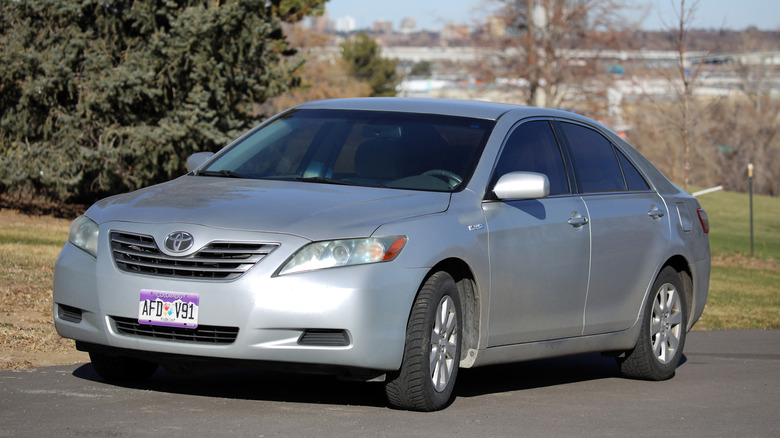
Sixth-generation Toyota Camrys, produced from 2007 to 2011, are often cited as the least reliable model years. While some updates were made toward the end of the generation to address known issues, the early examples are distinctly problematic. The 2007 Toyota Camry has been recalled around 10 times, the most concerning of which involved an issue that could cause the accelerator to get stuck. Additionally, Car Complaints has labelled the 2007 model with its "Avoid Like the Plague" stamp, reporting excessive oil consumption, oil burning, and melting dashboards as its top problems. AutoZone states that the average cost of an oil change is between $30 and $100. Under normal circumstances, you might expect to get an oil change every few thousand miles, but faulty '07 Camry engines often need that service more frequently. Keeping up with these extra oil changes could cost drivers hundreds per year, and Car Complaints estimates more permanent fixes could cost between $2,100 and $2,400.
The 2008 Toyota Camry was subject to the same frightening accelerator recall as the 2007 model. It also has similar issues with excessive oil usage, as well as some other unique problems: Drivers have reported instances on Car Complaints where the vehicle's check engine light comes on, the car lurches during acceleration, and then dies. While most drivers don't report solid solutions to these problems, some are linked to engine and transmission problems that average $3,150 in repair bills. That suggests drivers could spend around 69% of CarEdge's estimated 10-year Camry maintenance costs — or 76% of a 2008 Camry's fair purchase price — on a single repair.
2002 & 2005 Camrys are among the fifth generation's worst
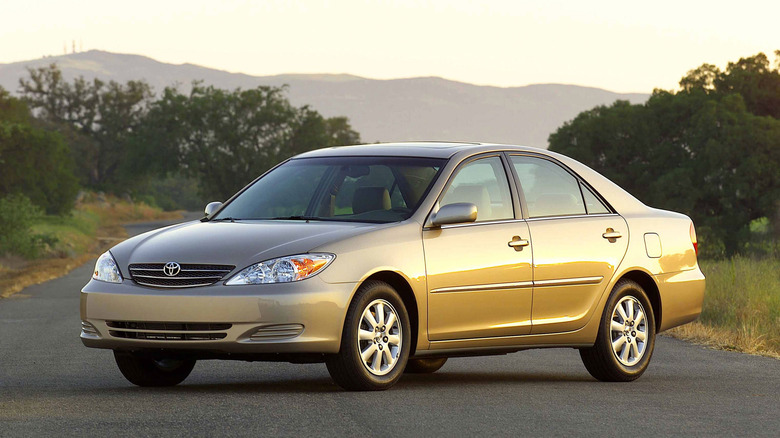
Fifth-generation Camrys span from 2002 to 2006, and a few of these years have earned significant driver complaints, recalls, and displayed common mechanical issues. According to Car Complaints, the top issues for the 2002 Toyota Camry are engine and transmission problems. Transmission failure is arguably the most serious concern financially, as the average transmission replacement costs between $6,238 and $6,764, according to RepairPal. This is followed by stripped head bolts and overheating, which Car Complaints projects cost $2,700 and $4,500 to repair on average, respectively. If you purchase a 2002 Toyota Camry at its KBB fair purchase price of $2,375, investing that much on repairs might not be worth it.
The 2005 Toyota Camry has been subject to five recalls, one of which significantly increases the risk of a crash because of a belt and pulley issue that could cause sudden loss of power steering. Driver complaints also report problems with the brakes not stopping the vehicle, which have led to several rear-end accidents, large repair bills, and safety concerns. Other major reliability issues include internal engine damage and transmission failure, needing expensive engine and transmission repairs ranging between $3,700 and $4,500, according to driver feedback through Car Complaints. Drivers also often report problems with the electrical system, which may require more frequent diagnostic tests and preventative maintenance. According to Express Lube & Car Care, diagnostic testing could cost you between $60 and $500 before repairs, with electrical diagnostics often falling on the higher end of that range.