

Toyota Buyers Be Warned: These Are The Used Corolla Years You Want To Avoid
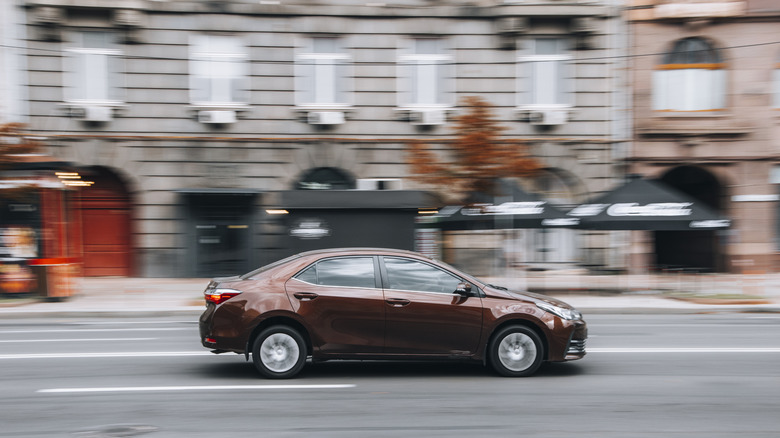
The Toyota Corolla may be one of the best-selling cars in the U.S., but be warned: not all Corollas are created equal. If you're in the market for a used car and are considering a Corolla, you'll want to check the model year before you buy. Some models have had issues with excessive oil consumption and problematic transmissions — things that could cost you big bucks down the line, not to mention put your safety at risk.
According to an analysis of National Highway Traffic Safety Administration (NHTSA) data by PartCatalog, the Toyota Corolla model years with the most complaints are 2003, 2005, 2006, 2007, 2009, and 2010. For all of these model years, airbags were the biggest issue. However cooling systems, speed control, and steering were also common complaints. Overall, per NHTSA data, 2009 is the worst model year, as it has 1,533 consumer complaints as of October 2026. This model year has also had 13 recalls, most notably for the risk of exploding airbags — part of one of the largest car recalls in recent history.
What to know about choosing the right Corolla model year
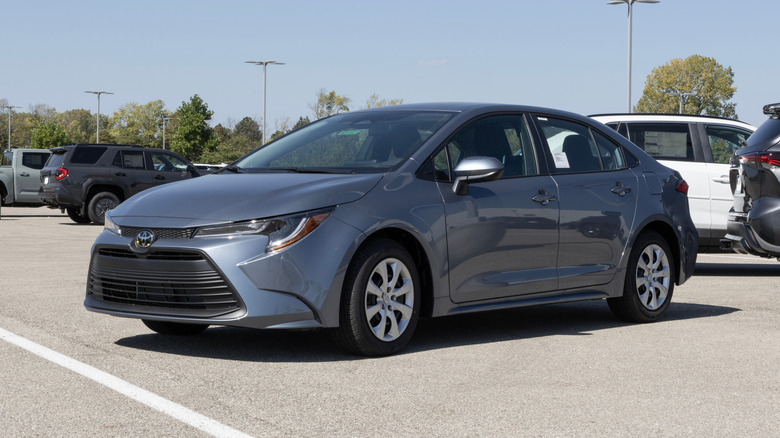
Overall, the Corolla is considered a pretty reliable car with affordable annual repair costs. Apart from the issues mentioned with specific model years, it tends to have limited major problems. This makes it easier to maintain, and ideal for drivers on a budget — such as retirees trying to live on Social Security. Toyota has also had fewer recalls than other brands. Over the past 20 years, Toyota has only made up 5% of all car manufacturer recalls in the U.S., according to the NHTSA. However, the brand does have a few models that qualify as the least reliable Toyota cars, which is why you want to make sure you're not committing yourself to a money pit with a car that comes predisposed to problems.
Under federal law, car repairs that are due to a manufacturer's recall are free of charge, provided the car is less than 15 years old. In some cases, manufacturers and dealers may even extend this beyond 15 years. This is important because it means that used cars listed for sale might already have had previous issues repaired. For example, the airbag issue with the 2009 Corolla would likely already be repaired in any listed used models since this was an urgent safety recall. That said, not all car issues are necessarily recalled. Some 2009 Corolla owners have complained about poor power steering, for example, which wasn't a recall issue. In those cases, you might end up paying out of pocket for repairs.
Corolla issues can cost you
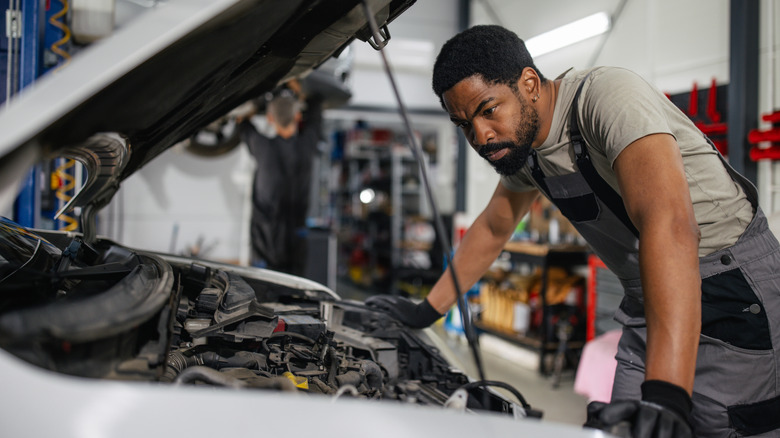
In addition to investigating which model years have common problems, it's also important to recognize the costs associated with those problems. For example, the 2003 Corolla experienced many complaints about transmission failure, while a frequent complaint for the 2009 Corolla was excessive oil consumption due to defective piston rings. Both of these repairs can be quite expensive. Transmission costs vary, but Toyota Downtown LA quotes a new transmission at between $1,300 to $3,400, plus labor costs of $500 to $1,000. Meanwhile, replacing piston rings is particularly labor-intensive and can cost over $3,000, according to FridayParts.
After airbag issues, engine and cooling issues were the second most common complaint for the 2003, 2005, and 2006 Corollas — while the second biggest complaint was steering for the 2009 and 2010 models. Meanwhile, speed and throttle issues were common among all problem Corolla model years. Again, all of these can lead to pricey repairs. A radiator replacement can range from $800 to over $1,000, according to RepairPal, while replacing a power steering pump can cost roughly $800 or $900, per Kelley Blue Book. Meanwhile, a throttle body replacement can cost between $600 and $900 according to RepairPal.
No matter what Corolla model you buy, there are always costs you can't avoid with a car, like annual maintenance and insurance. As such, it can be important to avoid additional expenses on pricey repairs. Before you buy, always check the model year, run the VIN through the NHTSA's recall search, and have a mechanic do a pre-purchase inspection.