

The 10 Least Reliable Toyota Cars Hands Down
Toyota is world-renowned for its industry-leading lineup of reliable vehicles in nearly every mainstream vehicle class. According to Consumer Reports' 2025 dependability ranking, this Japanese marque tops the list of the most reliable car brands, outranking highly competitive names, such as Subaru, Honda, and its own Lexus subbrand. CarEdge reinforces Toyota's top-tier status with the second-highest position in 10-year maintenance costs, with the average model only costing $5,470 in 10-year upkeep. Only Fiat, which specializes in compact vehicles, outranked Toyota. Furthermore, CarEdge gives Toyota the top spot in resale value, putting the average model's five-year resale value at a market-dominant 64.9%.
These exceptional performance stats are backed up by real-world sales volume, too, indicating that these features remain in high demand. Kelley Blue Book (KBB) indicates that three of the 10 best-selling vehicles in 2025 were made by Toyota. More specifically, the RAV4, Camry, and Tacoma fell into these leading positions, selling 479,288, 316,185, and 274,638 units, respectively. Of course, even the most reliable and consistent car brands put out subpar vehicles from time to time. Toyota is certainly no exception to this rule. One of the things people get wrong about buying a used car is relying solely on the branding.
Just because you see the Toyota logo in a vehicle doesn't mean it's going to deliver on the dependability, long-term costs, depreciation rate, and performance for which this brand has become strongly associated. To help consumers avoid buying a lemon with the expectation of top-tier results, Money Digest has compiled a list of the least reliable Toyota cars. Instead of impacting entire nameplates, these issues usually fall under a model's specific production year, making the filtration process that much more challenging. We've identified specific releases along with their commonly reported issues and recall data.
1. 2000 Tundra
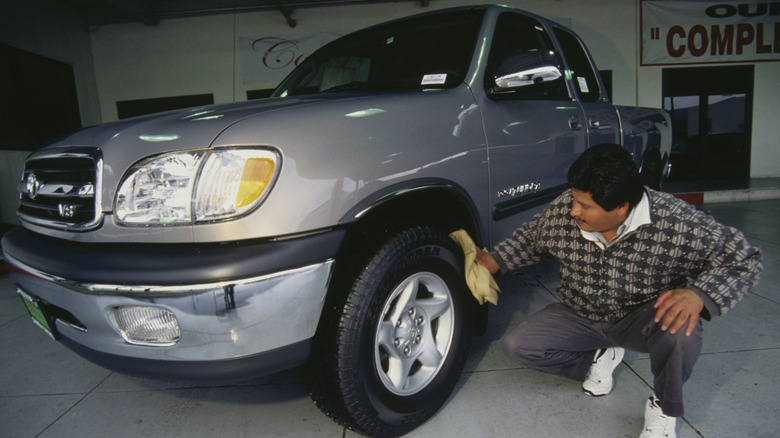
The Toyota Tundra has earned a reputation as one of the most reliable trucks on the market. In fact, it holds a leading position among Toyota vehicles with the best resale value. However, this nameplate's long-running dependability has a blotch on its record: the 2000 Tundra. According to the National Highway Traffic Safety Administration (NHTSA), this production year is subject to nine recalls. The 2020 Tundra's most foundational weakness is structural corrosion along the rear cross member, which has been noted to reduce braking performance and even loosen the spare tire underneath. Both issues heighten the potential for an accident. Various other recalls have focused on wiring issues throughout the vehicle, including limited headlamp visibility, insufficient amber side reflectors, and faulty trailer hitch wiring.
RepairPal explains that Toyota's response to the rear cross member deterioration was to simply spray a fresh coating, yet this isn't a sufficient fix after significant rusting has occurred. 2000 Tundras with corroded rear cross members may require extensive frame repairs, which can cost anywhere between $2,000 and $5,000, according to CarParts.com. If an entire replacement is deemed necessary, owners are looking at a $10,000 repair bill. With the current cost of a 2000 Toyota Tundra standing at $3,986, according to KBB, these exorbitant repair costs would far exceed the truck's value. The 2020 Tundra's experiencing headlight wiring issues come with a repair cost between $30 to $300, per KBB. This relatively moderate cost is easier to justify when seriously considering this Toyota pickup.
2. 2001 Camry Solara
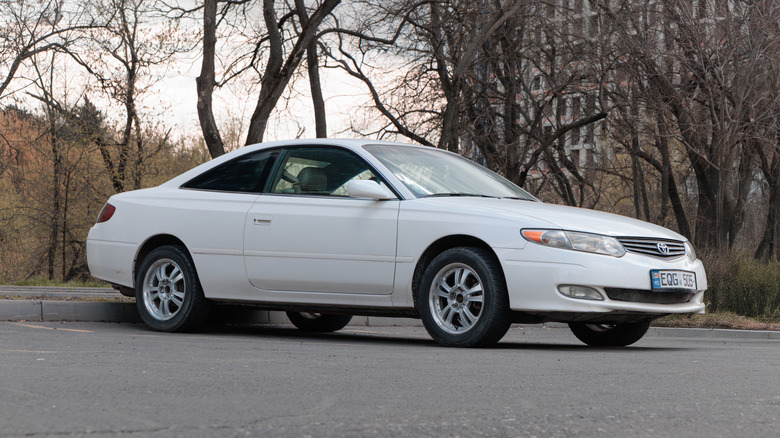
The Solara was a two-door coupe version of the leading Camry sedan, which only saw production between 1999 and 2008. Although the NHTSA doesn't report any marketwide recalls for the 2001 Solara, plenty of complaints from owners point to serious issues. According to Edmunds, this release experienced insufficient stopping power, resulting from unresponsive brakes. Notably, drivers claimed this issue persists even after visiting dealerships, signaling a persistent and repair-resistant problem. Furthermore, the 2001 Solara is criticized for its heavy oil consumption, often demanding more frequent oil changes than normal. In addition to these structural issues, owners have noted the 2001 Solara's inferior paint job, which tends to wear quickly. The convertible version is panned for its excessive road noise, while the standard model is chastised for its limited visibility.
In isolation, these recurring issues may not seem like a financial burden, but the 2001 Solara's consistent issues can result in hefty maintenance expenses in the long run. For instance, the cost of replacing brake pads can range from $115 to $270 per axle, resulting in a total cost between $230 and $540 for an entire vehicle. If the rotors also need to be swapped out, drivers are looking at $250 to $500 per axle, or $500 to $1,000 for the whole vehicle, according to AutoZone. Furthermore, NerdWallet suggests an oil change can set you back up to $100 each time. Solara's that require an entirely new paint job could easily run up a bill of several thousand dollars, per KBB. The cheapest 2001 Solara trim on the market sells for about $2,025 on the private market, as reported by KBB. This may seem like a steal at first, but the cost of fixing this unreliable vehicle's common issues can quickly eclipse its sales price.
3. 2002 Camry
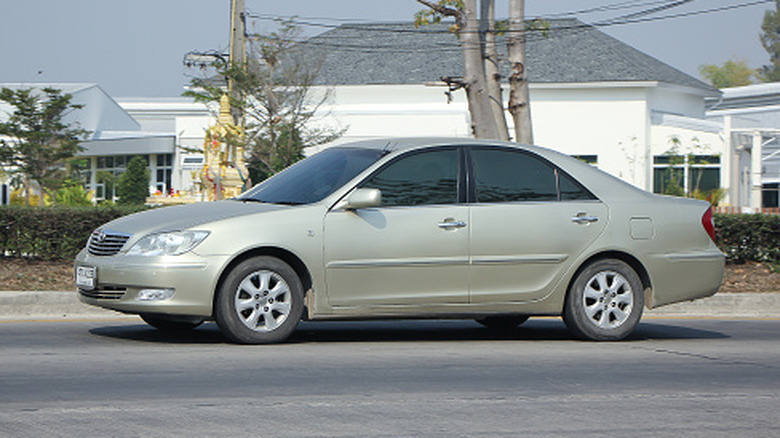
The Toyota Camry is a sizable sedan, often beating out the Corolla in both passenger and cargo spaciousness. It's also recognized as a Toyota car with some of the best real-world gas mileage. While it's maintained impressive sales figures of several hundred thousand units annually since 2005, according to GoodCarBadCar, consumers should still be aware of a few troublesome models. The 2002 Camry certainly isn't the only issue-prone production year, but it's the first in chronological order. Per NHTSA data, the 2002 Camry has been subject to four major recalls, three of which center around the vehicle's abysmal airbag system. The first recall focused on improper deployment, which threatens to harm occupants even when not in a car collision. The second involved a discrepancy between the vehicle's engine capability and the speed rating of the tires, threatening tire failure. The final two recalls revisited the airbag problem, focusing on the unexpected deployment of the driver seat airbag and a delayed deployment of the curtain shield airbag during collisions.
Beyond the obvious safety implications and resulting repair and health costs associated with faulty airbags, replacing these systems can be expensive. RepairPal estimates that installing a new air bag control module, the technology responsible for proper deployment timing, in a Toyota Camry can range from $603 to $666. The actual control module is projected to cost $468, while the labor can reach $135 or $198. Even if a 2002 Camry can escape the various airbag issues, the tire problem could persist. Unfortunately, this fix isn't any more affordable. RepairPal further estimates the cost of replacing a Camry's tires at $689 to $717. According to KBB, the average 2002 Camry costs about $2,675 at a fair-market value. These potential repair costs alone, not to mention ongoing maintenance, would massively inflate the cost of this vehicle.
4. 2004 Sienna
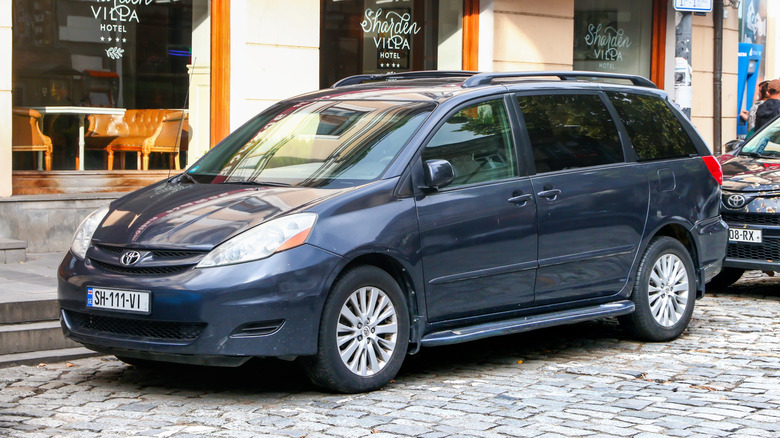
The Toyota Sienna offers competitive gas mileage and more space than the average vehicle. This model was even selected by KBB as the best minivan of 2025. However, the Sienna's reputation isn't without blemishes. The NHTSA logs a stunning 10 different recalls and more than 2,000 customer complaints on the 2004 Sienna. To be sure, these recalls vary in severity, risk, and associated cost, yet they should still present a major red flag for anyone considering this Toyota minivan. Among the most grave concerns about this production year are recalls involving loss of control. In some instances, the 2004 Sienna driver's seat floor cover presses on the gas pedal, causing inadvertent acceleration. Another issue involves a sudden loss of power steering due to a faulty crankshaft pulley, resulting in less responsive steering. Some vehicles even rolled away due to an automatic shift out of the parking gear, without the driver's involvement.
While the unintentional acceleration caused by a poorly designed floor mat doesn't come with a significant replacement cost, it can dramatically increase the chance of a car accident, as reported by the NHTSA. Replacing this minivan's power steering pump can cost anywhere from $622 to $773, per RepairPal. The part is priced at $431 to $492, and the labor costs between $191 and $280. The Siennas that involuntarily switch gears, threatening a roll-away accident, would likely require a shift interlock solenoid — a crucial piece designed to keep the gears from shifting without driver input. RepairPal projects the cost of this replacement at $320 and $440. Although the part only runs $64, the in-depth labor costs $256 and $376. When these inherent problems and associated costs are stacked up against the average value of a 2004 Sienna of $2,750, according to KBB, the equation doesn't add up.
5. 2005 Corolla
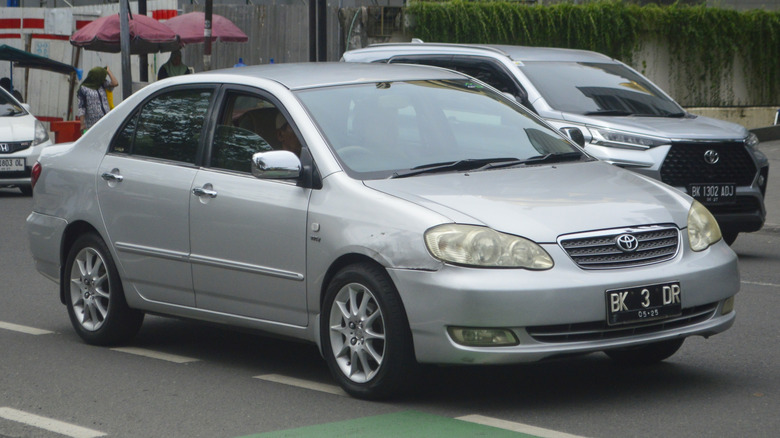
The NHTSA paints a concerning picture of the 2005 Corolla with 11 recalls, 937 customer complaints, and four independent investigations. Many of the 2005 Corollas' recalls overlap with one of the largest and most expensive car recalls in recent history. In 2008, the NHTSA began issuing recalls for tens of millions of models due to exploding airbags from the Takata Corporation, which were found to deploy inadvertently when exposed to high temperatures. The faulty Takata airbags effectively pose serious injury and even death to occupants from the unexpected and rapid deployment, which can send metal pieces flying like shrapnel. Although the 2005 Corolla finds itself at the heart of one of the largest scandals in the automotive sector, this isn't the only issue with the production year. Engine stalling is another major recall issue, often causing the minivan to completely switch off while driving, putting drivers and passengers at serious risk.
Beyond issues that have been addressed by federal recalls, customers still have plenty of gripes with the 2005 Corolla. Edmunds notes that many drivers find the seats extremely uncomfortable. More notably, the sedan's lightweight structure has resulted in complaints of erratic movements during surges of high wind. In a more mechanical sense, this production year often experiences premature degradation of fuel pumps and serpentine belts. Alone, the replacement of a fuel pump on a Corolla can run between $1,335 and $1,701, according to RepairPal. Today, the baseline trim of the 2005 Corolla costs about $3,350, per KBB.
6. 2006 Tacoma
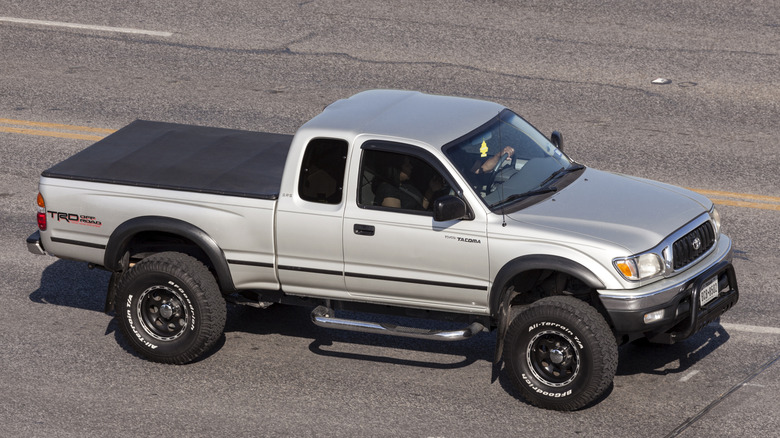
The Toyota Tacoma delivers the capability of a large truck and the convenience of a mid-size pickup. It's been recognized as one of the few trucks known for reliability beyond 200,000 miles. Still, the Tacoma hasn't been a hit every single production year, with the 2006 model receiving significant pushback from federal watchdogs and owners. The NHTSA reports that this pickup has been recalled 11 separate times. These recalls extend to each of the 2006 Tacomas' standard nameplate as well as its regular cab and extended cab. Additionally, this vehicle has received 781 consumer complaints and 329 manufacturer communications. Some of the more extreme systemic issues with the 2006 Tacoma introduce significant fire risks. Faulty copper wiring in the truck's seat heaters can short-circuit, and the leaf spring in the engine can puncture the fuel tank. Both issues pose serious risks to passengers.
Outside of officially recognized issues covered in recalls, Edmunds reports drivers experiencing a host of other problems. Some owners complain about the pickup's frame corroding more quickly than anticipated. Others warn that the transmission switches gears on its own, without the driver's control. Furthermore, many have found the paint's integrity to be lacking, with scratches, chips, and other imperfections showing up seemingly with ease. With so many potential issues, getting a general diagnosis on the 2006 Tacoma is essential. RepairPal puts this cost at $122 to $179. However, the hefty costs come with specific repairs. The problematic leaf spring can cost owners up to $1,008 to replace, according to RepairPal. On top of that, swapping out the seat heater in a Tacoma can run drivers up to $963, per RepairPal data. KBB estimates the fair purchase price of a 2006 Tacoma is $7,700, raising serious questions about the financial viability of this vehicle given its history of dangerous and costly issues.
7. 2007 Camry
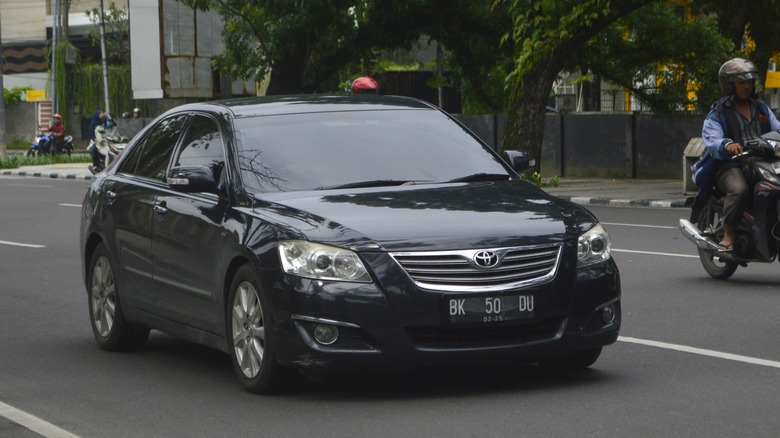
CoPilot highlights the 2007, 2008, and 2009 releases of the Toyota Camry as considerable pain points in this nameplate's long history of production. Although each year should be thoroughly researched before buying, the 2007 model stands out even among these issue-prone years. According to the NHTSA, the 2007 Toyota Camry has been recalled 11 times and investigated five times. Furthermore, this model has attracted 3,612 consumer complaints and 404 manufacturer communications. Several recalls involve risk of fire due to faulty wiring in the seat heaters, as well as the automatic window switch. Other recalls have revolved around unintentional acceleration, due to a sticky gas pedal and pedal entrapment by the floor pad.
These may appear like simple and low-cost repairs at first, but the math doesn't really justify buying a used 2007 Camry. To replace this vehicle's window switch, RepairPal estimates owners will pay between $616 and $710. Getting a new seat heater is even more expensive, with a bill extending from $1,035 to $1,108, per RepairPal data. These recall-related costs don't cover all the issues associated with the 2007 Toyota Camry. Edmunds reports that owners experience additional costs from more frequent oil top-ups and changes due to excessive consumption. Paint quality is another point of concern, with many drivers complaining about premature deterioration. Perhaps the most alarming consumer complaint is transmission failures, especially given the cost of replacement, which can be as high as $6,402, according to RepairPal. These high costs need to be measured against the 2007 Camry's fair purchase price of $3,525, as reported by KBB.
8. 2007 RAV4
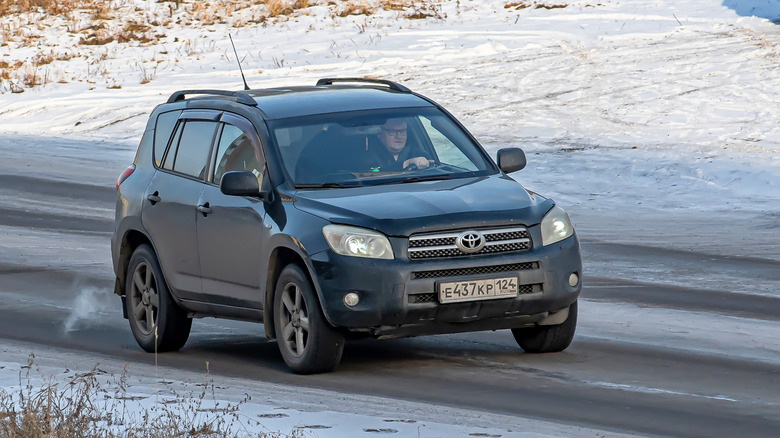
Many detractors have highlighted that the RAV4 isn't the smart buy that it used to be. Yet, it's not only the newer models that may need a deep analysis. With 14 individual recalls, according to the NHTSA, the 2007 RAV4 is easily one of the least reliable Toyota models. In addition to attracting over a dozen recalls, this production year received four investigations, 1,002 consumer complaints, and 309 manufacturer communications. A recurring issue, subject to three different recalls, for the 2007 RAV4 is the corrosion of its rear suspension arm. Also known as tie rods, these crucial components attach a vehicle's system to its wheels. Similar to the 2007 Camry, this model also suffered several fire risks, resulting from short-circuiting copper wires in the seat heater and an overheating power window switch. Furthermore, the 2007 RAV4 has experienced airbag issues, such as failure to deploy and inadvertent deployment.
Alone, the corroding tie rod isn't too costly, with RepairPal estimating a bill between $121 and $144. However, the seat heater is much more expensive to fix. RepairPal estimates that swapping out this component on a Toyota RAV4 can range from $917 to $979. To solve the airbag issue, AutoZone projects a single airbag replacement to cost between $1,000 and $2,000. This bill can jump to $3,000 to $6,000 when the entire system is faulty. Similar to other unreliable Toyota models, the 2007 RAV4 is also known to consume a bunch of oil, requiring unplanned oil changes. A major design flaw placing the water pump in a hard-to-reach area often requires removing the engine to access, transforming a routine checkup into a serious investment, according to Edmunds. KBB says this model sells for $4,800, but it has already eclipsed its repair costs.
9. 2007 Prius
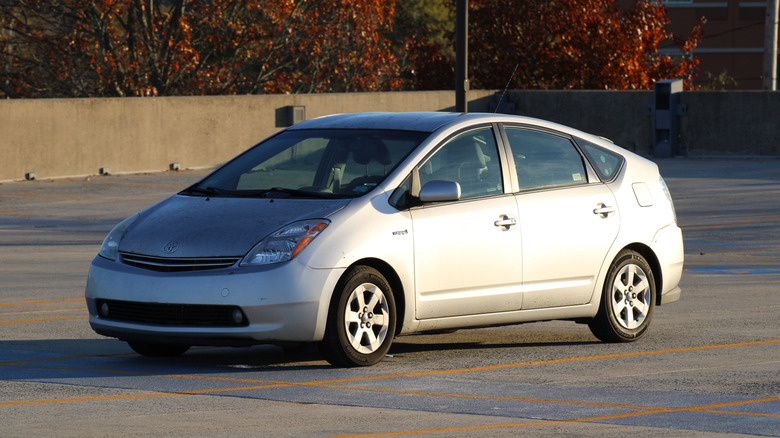
As one of the longest-running hybrids, the Toyota Prius has earned a name for itself as a no-nonsense hatchback with superior fuel economy and a long lifespan at a reasonable price point. Consumer Reports even recognizes the Prius as one of the hybrid cars with the best gas mileage. Unfortunately, 2007 was a problem year for the celebrated model. The NHTSA reports four recalls, three investigations, 2,003 driver complaints, and 219 manufacturer communications associated with this production year. While not plagued by as many recalls as other vehicles on this list of the least reliable Toyota cars, the 2007 Prius poses some serious risks. Driving at high speeds can inadvertently lead to pedal entrapment, dramatically increasing the chance of a crash. This Prius release also suffers from faulty wiring around its water pump, which can stall the vehicle while driving. Another alarming problem is the failure of the steering shaft, resulting in the loss of control.
PartCatalog reports that installing a new gas pedal can cost up to $400. Getting a new water pump is slightly more expensive, costing between $684 and $791, per RepairPal. However, the 2007 Prius' most expensive repair is the steering shaft replacement, which can reach $1,200, according to PartCatalog. Not all of the 2007 Prius' commonly cited issues fall within the identified recalls. Edmunds reports that owners often complain about unforeseen and exorbitant maintenance costs associated with the hybrid engine and specialized headlights. Furthermore, many drivers complain about poor handling in inclement weather. Some people also criticize the uncomfortable seats, making longer trips unbearable. Bear in mind that the 2007 Prius has a fair-market value of around $4,625, per KBB. Thus, even if you were able to successfully fix this model's litany of issues, you would dramatically increase the overall cost of ownership.
10. 2009 Corolla
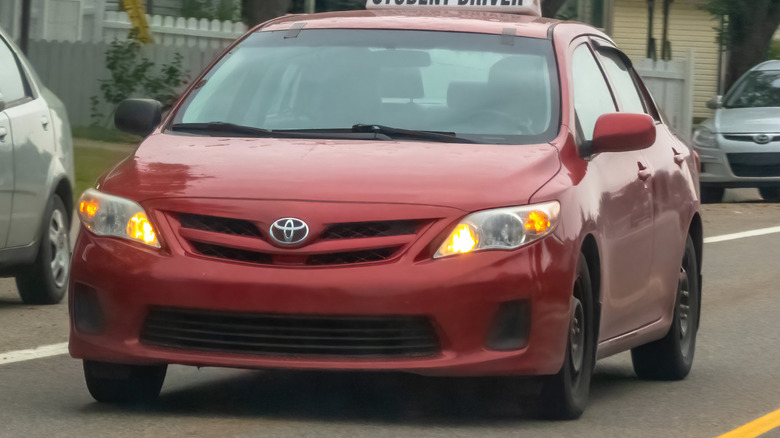
The NHTSA reports 13 recalls for the 2009 Camry, along with three investigations, 1,533 consumer complaints, and 372 manufacturer communications, cementing this model's position on the list of the least reliable Toyotas. The 2009 Corolla's primary issue stems from the catastrophic and industry-wide Takata airbag debacle. Many models were found to have airbags that would explode when placed under heat or humidity, exposing drivers and passengers to serious harm and even death, in some cases. This production year also experiences major fire risk resulting from electrical shorts in the seat heater wiring and an overheating power window switch. Braking and accelerator issues are also associated with pedal entrapment, a sticky gas pedal, and slow braking.
As discussed before, an airbag replacement can cost upwards of $2,000 for a single airbag and up to $6,000 for an entire system, according to AutoZone. RepairPal projects the expenses of replacing a Corolla seat heater at $1,000 or $1,062. These two essential fixes alone already eat up a decent chunk of what a 2009 Corolla is worth today. According to KBB, this model goes for around $5,175.