

Retirees Should Avoid This Popular Ford Model (Your Wallet Will Thank You)
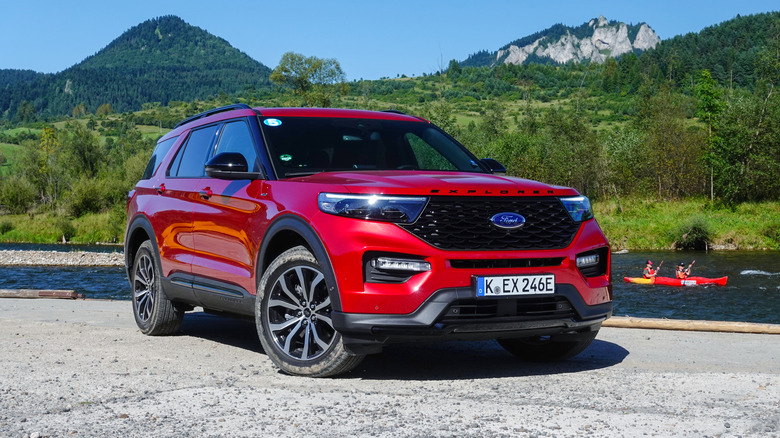
An affordable and fuss-free vehicle allows for consistent mobility while minimizing the risk of frequent breakdowns or high ownership costs. A car that's constantly in the shop is one that can't get you to doctors' appointments or help you get around town. For an older driver, that can mean the difference between routine life and being stuck at home. While the Ford Explorer offers a plush and spacious interior, mechanical faults and recall issues tend to pile up on these models in a hurry. This makes the Explorer a transportation tool that retirees in particular might want to avoid. Though it's one of the best-selling SUVs on the market, the vehicle's J.D. Power Consumer Rating of 79 places it notably far from the best performers in the outlet's 2026 upper midsize SUV rankings.
The 2026 Explorer starts at $38,465 for the base Active 100A trim, which is over $10,000 higher than the price of any of Car and Driver's highest-rated budget-friendly SUVs. But in addition to that high starting cost, Explorers exhibit a laundry list of known issues across numerous model years. Suspension trouble and transmission faults are a common thread across the Explorer lineup, suggesting that many trips to the mechanic may be the norm. AutoZone estimates a full automatic transmission can cost anywhere from $2,500 to $6,000, and even more minor transmission repairs can run drivers $800 to $3,000. Meanwhile, Consumer Affairs reports an average of $1,260 for typical suspension fixes such as a single strut replacement, and repairs aren't the only major expense Explorer drivers should expect.
A Ford Explorer can be a major investment with little return
In addition to its high MSRP and repair bills, the Explorer isn't a great investment in terms of value retention: It's one of the vehicles that loses over half of its resale value in the first five years, with CarEdge reporting a depreciation rate of 57% in this time. The average new car depreciates $4,422 per year, according to AAA's 2026 Your Driving Costs study. Based on CardEdge's projections, a base-model 2026 Explorer would depreciate over three times that amount in the same time frame. This can be particularly troublesome for younger retirees who may plan to eventually replace the car with something newer down the line. Meanwhile, those who expect the Explorer to be their last car may not be able to recoup much of what they put into it should they stop driving and sell it.
Additionally, even without major mechanical issues, keeping Ford Explorers on the road isn't always friendly to a retiree's drawdown strategy and cash flow requirements. AAA's survey found that medium SUVs are the third-most-expensive vehicles to own in terms of operational costs like fuel and routine maintenance (behind only trucks). Medium SUVs cost roughly 10 cents per mile more to maintain than both compact SUVs and sedans, and the Federal Highway Administration reported in 2022 that the average driver logs 13,476 miles per year. That suggests the average Explorer owner could expect to spend around $1,348 more per year than many other drivers by simply using it for routine driving.