

14 Electric Cars That Hold Their Value Better Than A Tesla Model 3
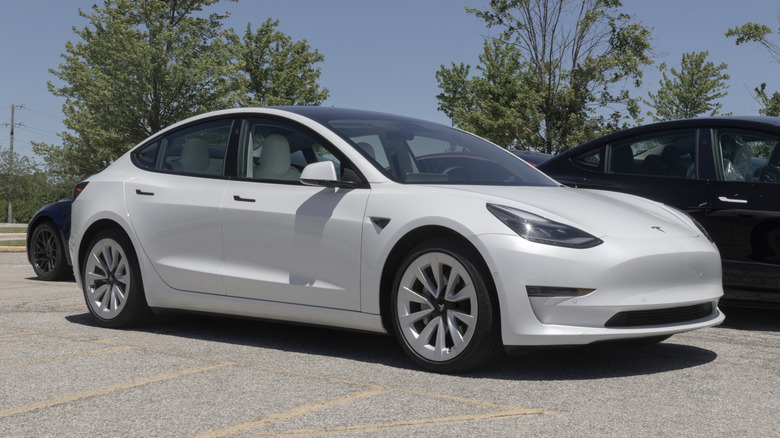
The Tesla Model 3 is one of the dominant fully electric vehicles in the United States automotive market. According to Kelley Blue Book, this EV sold 172,800 units in 2025, making it the second-best-selling EV in the country. It was only beaten out by the Tesla Model Y, which moved 317,800 units in the year. The Model 3 is heralded for its rapid acceleration, smooth driving experience, accommodating cabin, and appealing price-to-value ratio. Perhaps the most standout feature is this EV's remarkable energy efficiency. FuelEconomy.gov – the federal government's official database of fuel efficiency ratings — lists certain Model 3 configurations at up to 139 MPGe, a metric used to compare EV energy consumption with the fuel economy of internal combustion engine (ICE) vehicles.
Depreciation is where the Model 3 starts to fall short of the competition. CarEdge projects that the Model 3 will lose 82% of its value over 10 years, leaving it worth about 18% of its original purchase price. Its five-year depreciation estimate is 61%. This is one of the main reasons retirees regret buying a Tesla, and all owners, for that matter. Fortunately, you don't have to accept rapid value loss when buying an EV. There are many electric cars that hold their value better than a Tesla Model 3.
That's precisely what Money Digest has gathered here. We looked at the residual value of EV models after 10 years to demonstrate long-term value retention. These vehicles are ranked from those with the most to least value retained over a decade, although all models far outperform the Tesla Model 3. We also compared energy efficiency ratings, fuel savings, and other important specs to give buyers the information needed to make the right purchasing decision.
14. GMC Sierra EV
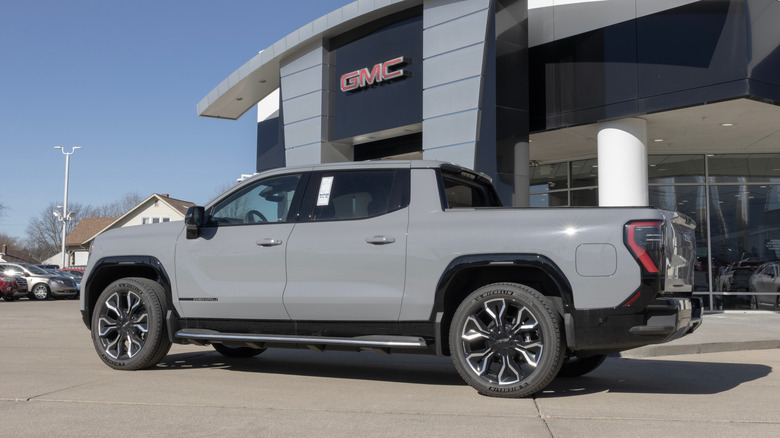
The GMC Sierra EV is a fully electric spin on the marque's popular pickup. The electric rendition of the popular truck even improves upon its gas-powered counterpart in some key areas. More specifically, the GMC Sierra EV has a 10-year depreciation rate of 56.3%, meaning it could hold onto 43.7% of its initial value, according to CarEdge. At five years, this nameplate is estimated to maintain 59.9% of its original worth. In contrast, the GMC Sierra 1500 has a decade-long residual value of 39.2%. Assuming an initial purchase price of $97,308, the EV pickup would be worth about $42,524 a decade later. This assumes 13,500 yearly miles and decent vehicle condition.
Despite its large footprint compared to other EVs, the GMC Sierra EV averages 67 MPGe, or miles per gallon equivalent, as estimated by FuelEconomy.gov. On a full charge, this pickup has about 283 miles of total range. While falling short of the Model 3's industry-leading energy efficiency, the Sierra EV's 67 MPGe still reflects relatively efficient energy use for a vehicle of its size. Owners may still save on energy costs compared with driving a similarly sized gas-powered pickup, depending on electricity and gasoline prices. Altogether, the Sierra EV isn't the best of the GMC vehicles for a retiree, but those looking for an option that will retain its value won't be disappointed.
13. Jeep Wagoneer S
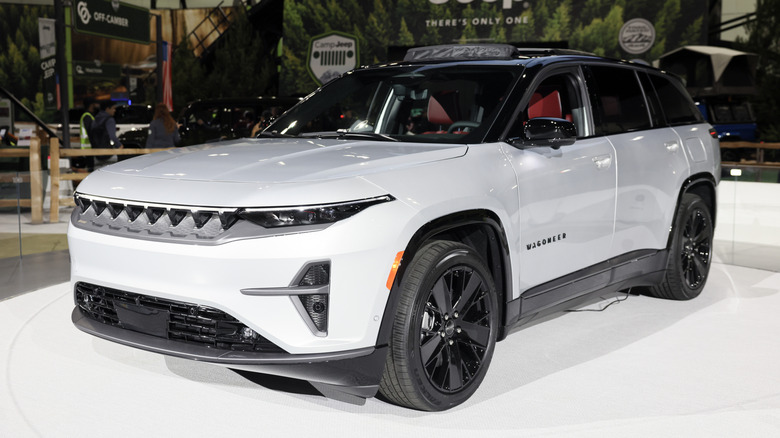
The Jeep Cherokee has been criticized for its five-year resale value being under 50% of its original value, representing a significant loss to owners. Fortunately, not every nameplate from the same marque struggles with rapid depreciation. To be sure, the Jeep Wagoneer S is one of the EVs with the highest 10-year residual value, holding on to 37.7% of its initial sales price, as estimated by CarEdge. This means the model's decade-long depreciation is 62.3%. Looking at a shorter timeframe, the Wagoneer S has a five-year depreciation rate of 48%. If this EV was originally purchased for $70,320, it would have a resale value of about $26,510 after a decade of routine use.
FuelEconomy.gov indicates that the baseline Wagoneer S trim has an energy efficiency rating of 93 MPGe, or miles per gallon equivalent. The standard Falken tires offer better performance than the upgraded Pirelli tires in terms of fuel efficiency and range. For example, the standard Wagoneer S can reduce fuel costs by $7,000 over five years, while the more expensive tire option reduces these savings by $500. Furthermore, the baseline model has an estimated range of 294 miles on a full charge, while the version with Pirelli tires drops to 268 miles.
12. Hyundai IONIQ 5 N
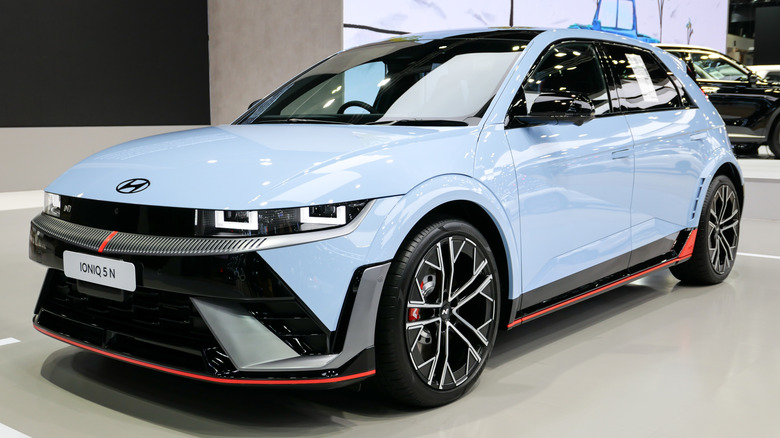
The Hyundai IONIQ 5 N is a fully electric crossover with a futuristic design and an undeniable ability to retain value beyond the norm. CarEdge projects that this model will hold onto 35.2% of its initial value after a decade of routine driving, meaning it will depreciate by approximately 64.8% across the same period. Most of this depreciation occurs on the front end. More specifically, the IONIQ 5 N is expected to lose about 48% of its value within the first five years after the original sale. Adding some financial specifics, this EV crossover would have a value of about $23,820 at the 10-year mark if it was originally purchased for $67,675. This estimation assumes it was driven 13,500 miles annually.
According to FuelEconomy.gov, the 2026 Hyundai IONIQ 5 N gets about 78 miles per gallon equivalent. Although not quite as energy efficient as the Tesla Model 3, this EV model still far outpaces the fuel economy of the average 2026 vehicle. In fact, owners can save around $6,250 over five years with this Hyundai. The IONIQ 5 N has a range of 221 miles.
11. Mercedes-Benz EQB 250 SUV
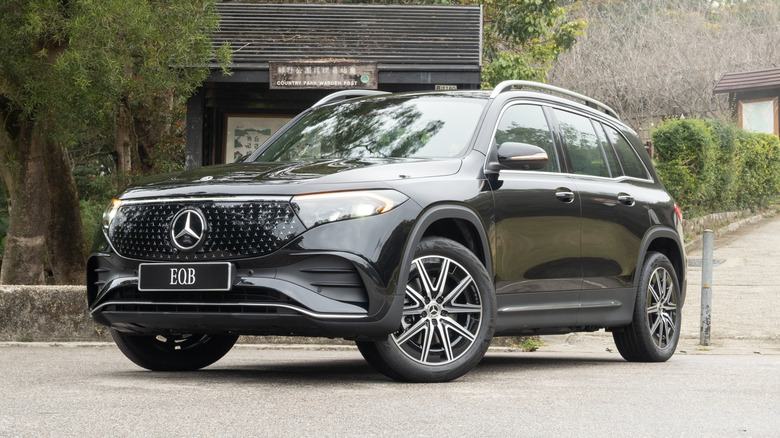
The Mercedes-Benz brand is heavily associated with cars that instantly drain an owner's retirement savings. While this upscale marque features above-average upfront costs, some EV models can still offer relatively strong value retention while helping drivers save on fuel expenses. For instance, the Mercedes-Benz EQB 250 loses approximately 64.8% of its initial valuation after a decade of driving an average of 13,500 miles, as estimated by CarEdge, which means it retains 35.2% over this period. Much of this depreciation will happen within the first five years following the sale, as the EQB 250's value is estimated to decline by 48% during this timeframe. Analyzing this SUV's decade-long depreciation, owners would be able to resell it for about $19,078 if it was originally purchased for around $54,200.
The fully electric Mercedes-Benz EQB 250 may not beat out the segment-dominant Tesla Model 3 on energy efficiency, but this SUV still delivers strong efficiency even among other EVs. According to FuelEconomy.gov, the EQB 250 averages 107 miles per gallon equivalent. Calculating with fuel prices as of August 2026 and assuming 15,000 annual miles, this model can help owners save $7,500 over half a decade on fuel. This model can run for about 251 miles on a single charge.
10. Tesla Cybertruck
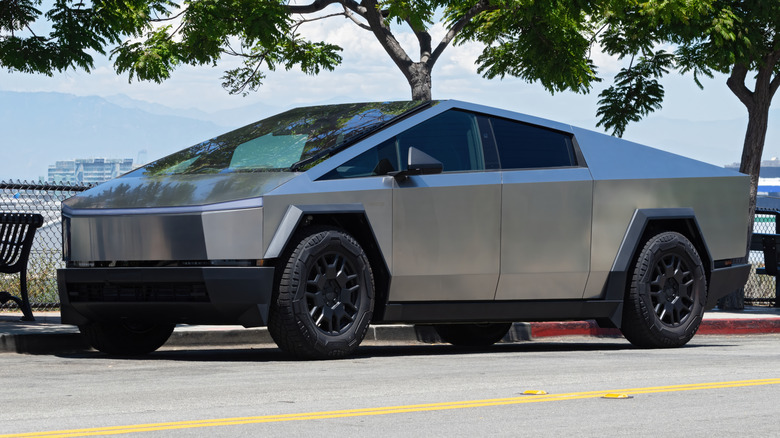
The Tesla Cybertruck further proves that models within the same marque don't necessarily have the same depreciation struggles. While the Tesla Model 3 loses a whopping 82% of its original value, the one-of-a-kind Cybertruck has a 10-year depreciation rate of 65.1%. Put another way, this massive EV pickup holds onto 34.9% of its initial sales price, as projected by CarEdge. For context, this nameplate often depreciates by 46% within the first five years of ownership. Assuming a new purchase price of $94,485, the Cybertruck would have an estimated resale value of $32,975 even after a decade of driving 13,500 miles annually. While there are trucks more reliable than the Tesla Cybertruck, many pickups fail to match its robust resistance to depreciation.
According to FuelEconomy.gov, the Tesla Cybertruck averages 79 miles per gallon equivalent and a total range of 325 miles. Altogether, this can help slash the energy costs for drivers by $6,250 when measured over the course of five years and compared to the fuel economy of the average 2026 vehicle.
9. BMW i4
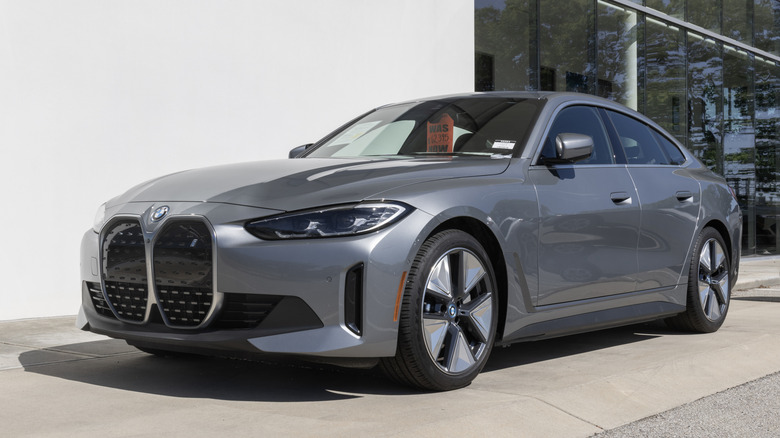
The BMW i4 is a best-selling EV that's one of the most reliable cars on the market. This compelling mix of fuel efficiency and dependability is only augmented by the model's above-average resistance to depreciation, helping owners retain more of their investment. More specifically, CarEdge projects that the average BMW i4 will hold onto 31.2% of its initial value after 10 years, meaning it will depreciate by about 68.8% during the same timeframe. The first few years experience the most depreciation, with the value loss hitting 54% by the fifth year. If a new BMW i4 is bought for about $65,358, it's estimated to have a resale value of $20,392 after 10 years of driving around 13,500 miles per year.
FuelEconomy.gov suggests that the 2026 BMW i4 achieves 109 miles per gallon equivalent, with a 251-mile range on a full charge. When stacked up against the average 2026 vehicle, this EV can reduce a driver's five-year energy costs by $7,500.
8. Ford F-150 Lightning
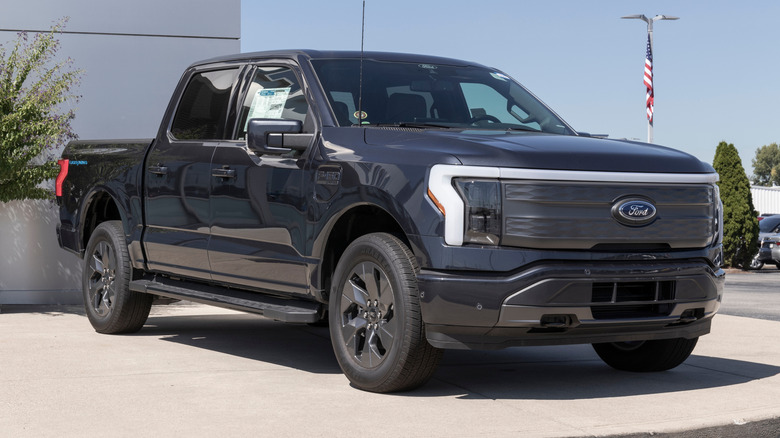
It may be shocking to see a Ford F-150 on a list of electric cars that hold their value better than a Tesla Model 3, but this long-running nameplate now has an all-electric variant. Ford has remained one of customers' favorite car brands, and the marque's high-value models help explain that popularity. CarEdge reports that the Ford Lightning retains 30% of its original sales price after a decade of routine driving. Thus, about 70% of the EV pickup's valuation is lost during this period. By the fifth year, the Lightning usually depreciates by 56%. Applying these percentages to tangible dollar amounts, this vehicle has an estimated resale value of about $22,367 following a decade of driving an annual average of 13,500 miles and an original purchase price of $74,558.
FuelEconomy.gov reports that the 2025 Ford F-150 Lightning — the latest year for which data is available — gets a respectable 70 MPGe. Drivers also benefit from a decent range of 320 miles. Within five years, owners can cut back on their fuel consumption by $5,500, when measured against the average 2026 model.
7. Audi S e-tron GT
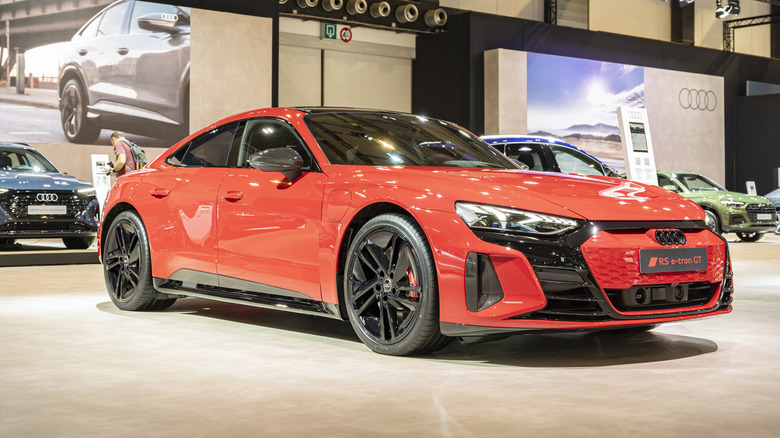
The Audi S e-tron GT is a high-end, high-performance sedan with a price tag that will make most drivers think twice about buying new. The bright side to this more expensive model is its ability to maintain that higher valuation over time. Over a decade, the Audi S e-tron GT only gives up about 70.4% of its original value. The other 29.6% remains available for owners to realize through a sale. Notably, 49% of the depreciation happens within the first five years of ownership. Following 10 years of standard use, the Audi S e-tron GT would have a value of about $37,531, assuming an original purchase price of $126,795, as estimated by CarEdge.
The Audi S e-tron GT sports a solid energy efficiency of 90 miles per gallon equivalent, placing it below that of the Tesla Model 3 while still beating it on value retention. However, this exceptional fuel efficiency, when compared to the average 2026 model, can cut an owner's energy expenses by $6,750 over half a decade, according to estimates by FuelEconomy.gov. This estimate assumes 15,000 yearly miles and uses fuel costs as of August 2026. The Audi S e-tron GT has an estimated range of about 300 miles on a full charge.
6. Kia EV6
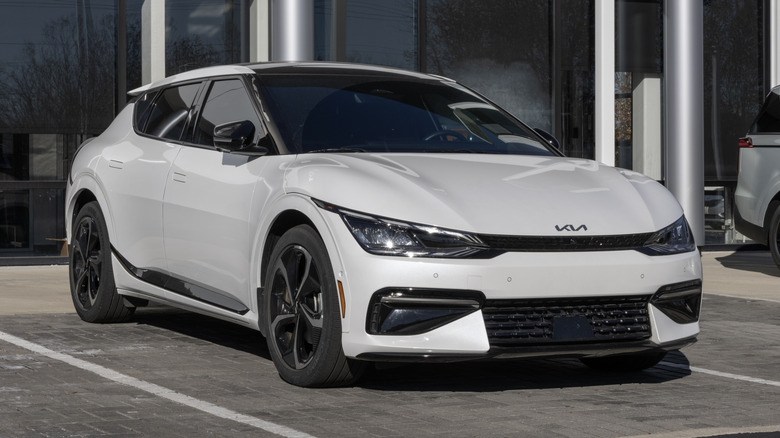
According to CarEdge, the Kia EV6 depreciates by 71.1% over the initial decade of ownership, which means this model retains about 28.9% of its value, much more than the Tesla Model 3. For additional context, this EV depreciates by 60% within the initial five years. If the Kia EV6 is originally bought for about $55,381, it would have an estimated resale value of $16,005 after 10 years of driving 13,500 miles per year. In addition to a respectable resistance to depreciation, the EV6 is one of the many affordable Kia cars that are perfect for budget-conscious buyers.
FuelEconomy.gov estimates that the 2026 EV6 gets 115 MPGe, or miles per gallon equivalent, and has a total range of 237 miles. Compared with the average new vehicle, this EV can save drivers $7,750 in fuel costs over five years. Bear in mind that this presumes 15,000 annual miles and looks at fuel prices as of August 2026.
5. Audi Q4 Sportback e-tron
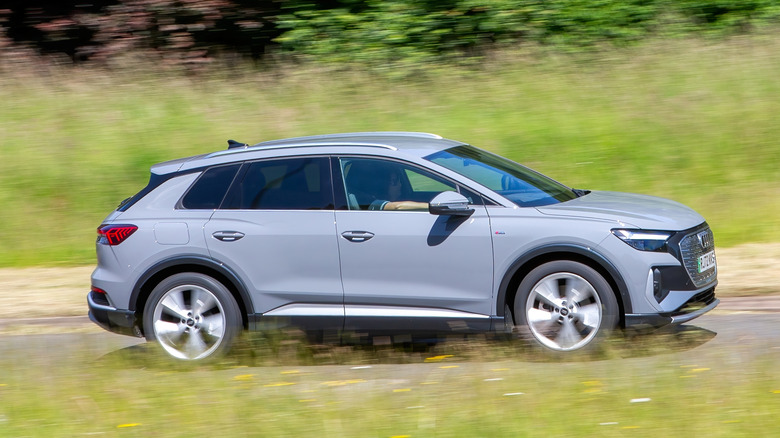
The Audi Q4 Sportback e-tron holds onto 28.8% of its original purchase price after 10 years of standard use, according to CarEdge. In other words, this fully electric SUV depreciates by 71.2% over a decade, beating out the Tesla Model 3 with ease. For more context, the Q4 Sportback e-tron's value loss reaches 57% by the fifth year of ownership, showing how depreciation slows over time. If you've ever wondered how quickly a car's value depreciates after you buy it, these percentages may not offer the most complete picture you desire. Assuming a new purchase price of $59,495, the Q4 Sportback e-tron would have a resale value of approximately $17,135 after a decade of routine driving.
FuelEconomy.gov indicates that this EV SUV gets about 97 miles per gallon equivalent, with a total range of 251 miles. While not quite as energy efficient as the Model 3, this vehicle can still slash an owner's energy expenses by $7,000 over a five-year period, when stacked up against the typical 2026 model.
4. Hyundai IONIQ 6
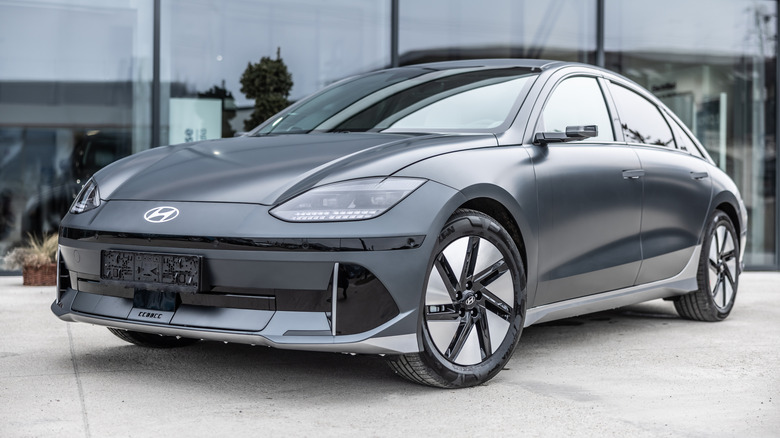
The Hyundai IONIQ 6 is a type of car "upper-class" people buy to save money. What does that mean, exactly? Well, this EV strikes a solid balance between luxury feel and cost-effective appeal. Even with an upscale and modern design, the IONIQ 6 still delivers great energy efficiency and maintains its value better than many competing models in the long run. More specifically, CarEdge reports that the IONIQ 6 maintains 28.6% of its original sales price after a decade of driving 13,500 miles per year. That means it loses about 71.4% after 10 years. As with most models, the majority of the depreciation happens in the years immediately following the sale. Within five years, the IONIQ 6 loses 58% of its value. Putting some dollar figures to these percentages, the IONIQ 6 would have an estimated resale value of $14,277 after a decade of ownership, assuming it were bought for about $49,918 originally.
According to FuelEconomy.gov, this EV sedan has a noteworthy energy efficiency rating of 135 MPGe, or miles per gallon equivalent, which is on par with that of the Tesla Model 3. Additionally, the IONIQ 6's full range is 240 miles. Owners will be happy to hear that this EV can save them $8,250 in fuel costs over five years compared with the average new vehicle.
3. Volkswagen ID. Buzz
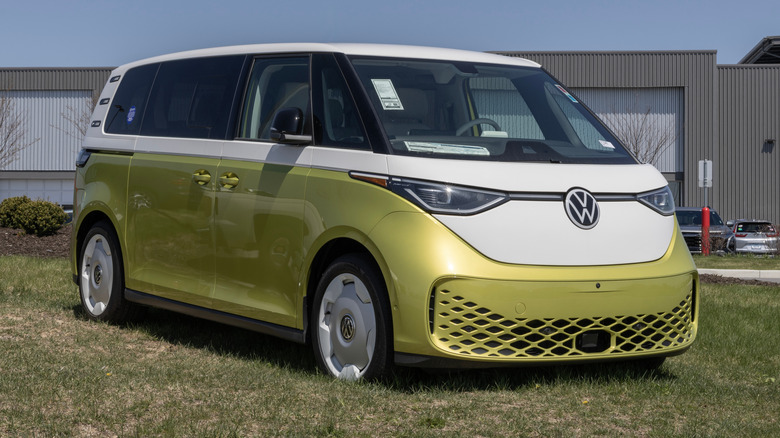
There are plenty of favorite car brands that people wish would make a comeback, but there are even more individual models that consumers are clamoring to see return. For a long time, the Volkswagen minivans lost their classic appeal, until the release of the ID. Buzz. This fully electric vehicle married the panache of the 1970s-era van with modern EV technology, all while maintaining an impressive resistance to depreciation that even beat out the Tesla Model 3. CarEdge reports that the Volkswagen ID. Buzz loses about 71.5% of its original cost over a decade. Put another way, this van holds onto 28.5% of its initial value. At the five-year mark, the ID. Buzz's depreciation rate tends to hit 54%. If we assume that this minivan was originally sold for $67,654, it would have an estimated resale value of about $19,281 at the 10-year point.
FuelEconomy.gov estimates that the 2025 Volkswagen ID. Buzz, the latest model in full production, gets about 83 miles per gallon equivalent. This is outstanding compared to the standard 2026 model and decent for this minivan's size. This model has an estimated range of 234 miles on a full charge. Assuming 15,000 yearly miles and looking at fuel prices as of August 2026, the ID. Buzz can reduce an owner's fuel expenses by $6,500 over five years.
2. Acura ZDX
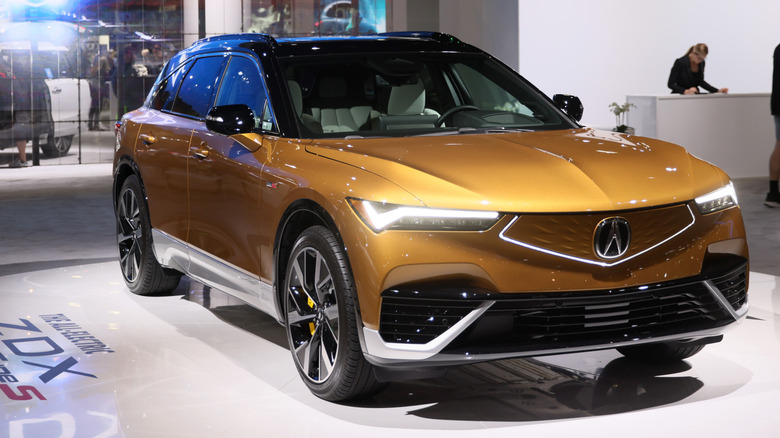
Acura is one of the most reliable luxury car brands, showcasing that luxury doesn't have to sacrifice dependability. The Acura ZDX further proves that long-term value retention can be thrown into the mix, too. CarEdge estimates that this SUV sheds about 71.6% of its original sales value within 10 years, which means it holds on to 28.4%. Notably, 58% of the value loss occurs within the first five years. To put these figures into financial context, the Acura ZDX would be worth roughly $18,476 after a decade of routine driving if it had been purchased initially for approximately $65,055.
According to FuelEconomy.gov, the 2026 Acura ZDX has a superb energy efficiency rating of 91 MPGe, or miles per gallon equivalent. Over five years, this EV can help owners save $6,750 in fuel costs compared with the average new vehicle. This SUV has a full range of 327 miles when completely charged.
1. Toyota bZ4X
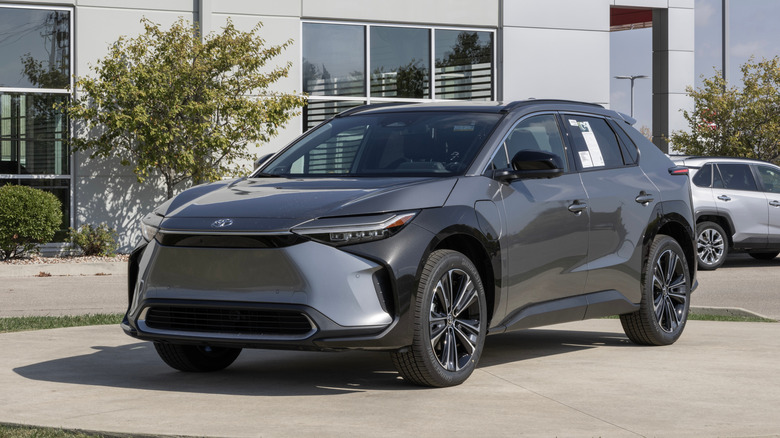
As a brand, Toyota is known for its solid value retention in the long run. In fact, CarEdge indicates that the marque has the best average resale value over three-, five-, and seven-year timeframes compared with other brands. The Toyota bZ4X extends this reputation to EVs, with a residual value of 28.2% after 10 years of routine driving. That means this model depreciates by 71.8% after a decade, as projected by CarEdge. Over five years, the bZ4X depreciates by 58%. To put this into perspective, the Toyota bZ4X would have a resale value of around $12,045, assuming an original sales price of $42,713 and about 13,500 yearly miles.
On top of holding onto value better than the Model 3, this Toyota EV also competes with the Tesla model's energy efficiency. FuelEconomy.gov estimates that the bZ4X achieves 131 MPGe, or miles per gallon equivalent, giving it strong energy efficiency even among EVs. Within half a decade of routine use, this EV can save owners $8,250 on fuel expenses compared to the standard vehicle. The Toyota bZ4X has an estimated range of 314 miles on a full charge.