

12 Affordable Cars From The 2010s For A Retiree, Ranked Worst To Best

Around the U.S., people are blown away by the price of new cars — and it's not in their heads. The cost of a new car continues hitting new highs. In June 2026, the average new car transaction price hit $49,758, according to Kelley Blue Book (KBB). For perspective, Cox Automotive reports the standard sales price of a new car in June 2021 was $42,258. In other words, average vehicle prices have surged $7,500 within only five years. Furthermore, KBB projects that new car prices will continue to rise persistently throughout 2026 and beyond. In fact, CarEdge suggests that car prices are even outpacing broader economic inflation. This rising tide of vehicle price tags can be especially challenging for retirees, who often rely heavily on fixed income or retirement savings to cover their essential costs.
To help seniors navigate this pricey market, we reviewed some of the most affordable 2010s vehicles. Instead of simply highlighting the cheapest models, we separated the bad from the good so you know precisely which cars deliver on your needs. We mainly considered vehicles with a KBB fair purchase price of around $15,000 or less as of August 2026, prioritizing the newest release year that fell within range of this price threshold. This list takes into account a vehicle's initial cost, fuel economy, annual maintenance and repair expenses, as well as crash test results. On a more practical note, we considered each vehicle's cabin and cargo space, interior comfort, and ride quality. Here are 12 affordable cars from the 2010s for a retiree, ranked worst to best.
12. 2019 Fiat 500
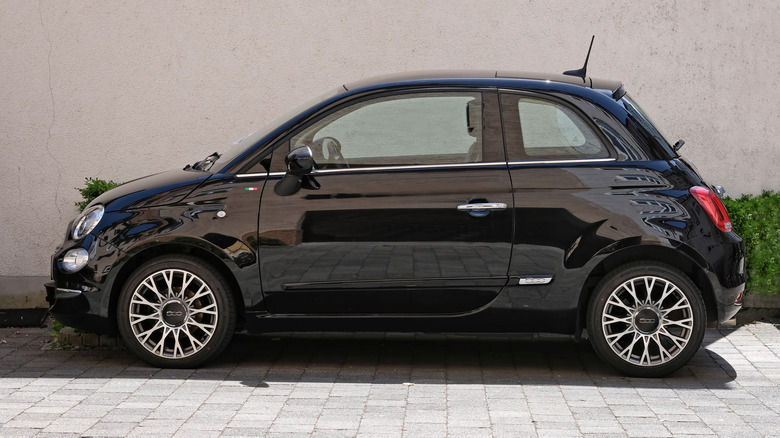
At first glance, the 2019 Fiat 500's modest upfront price tag and decent fuel economy may generate some intrigue from budget-conscious retirees, but this miniature Italian import is bereft of core senior essentials. This extremely compact, two-door economy car feels like a bucket on wheels. The front seats are spacious enough for the average adult, but the rear seat sacrifices dramatically on head and legroom. Though it is quite zippy, a vehicle designed for short jaunts around a European city simply doesn't translate to the traffic-heavy, large-car-dominated American street. Generally speaking, Fiat is one of the car brands retirees will instantly regret buying due to its models' impractical size and lacking long-term reliability.
The 2019 Fiat 500 has a fair purchase price of $9,625, according to KBB, down from an original MSRP of $18,985. FuelEconomy.gov, the federal government's official repository of marketwide fuel efficiency data, indicates that this import gets a combined 27 miles per gallon. Additionally, RepairPal reports that the annual maintenance and repair costs are $522. While the 2019 Fiat 500 checks all the affordability boxes, it falls short on practicality and safety. The Insurance Institute for Highway Safety (IIHS) determined that this diminutive model performs poorly on the driver-side small overlap front crash test, which simulates a head-on collision.
11. 2019 Mitsubishi Mirage
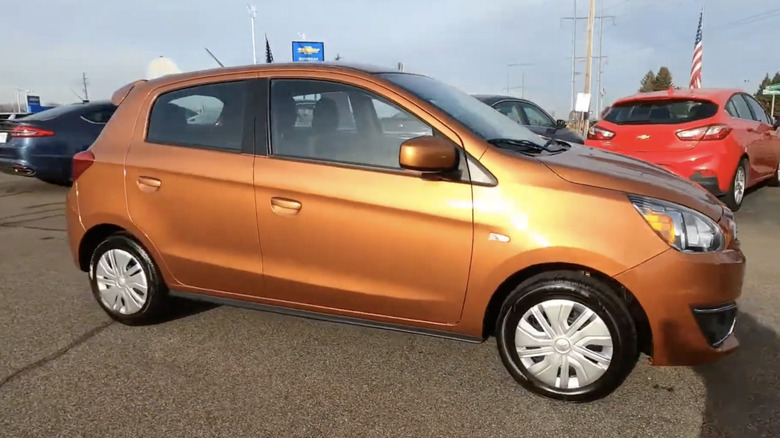
The 2019 Mitsubishi Mirage is another exceptionally affordable vehicle that raises hopes with its low price point, yet completely underdelivers in performance, capability, and comfort. This four-door is a slight step up in space from the Fiat 500, but still lacks an adult-friendly rear seat. Engine output isn't a typical concern for retirees, since most modern vehicles provide sufficient oomph for daily commutes. However, the aptly named Mirage's squeaky 78-horsepower engine noticeably weighs on even the most standard of driving tasks. This underpowered vehicle demands pedal-to-the-floor engagement to achieve any rapid speed, such as merging or passing on the highway. Even among other compact models, the Mirage falls shy of expectations with a plastic-laden interior, no armrest on the passenger side, and an overall feeling of low-quality design.
KBB reports that the 2019 Mitsubishi Mirage has a fair purchase price of $4,725, down from an original MSRP of $14,925. The only real draw of this ultra-compact car is its stellar combined fuel efficiency of 39 miles per gallon, according to FuelEconomy.gov. This offers major savings for those retirees living in the states with the absolute highest gas prices, but the Mirage's other weaknesses may not make these potential savings worth the hassle. RepairPal estimates that the average owner spends $457 on annual maintenance and repairs. Similar to the Fiat 500, the 2019 Mirage also received a subpar rating for its driver-side small overlap crash simulation from the IIHS. However, it performed better than average in most other crash tests.
10. 2019 Nissan Versa
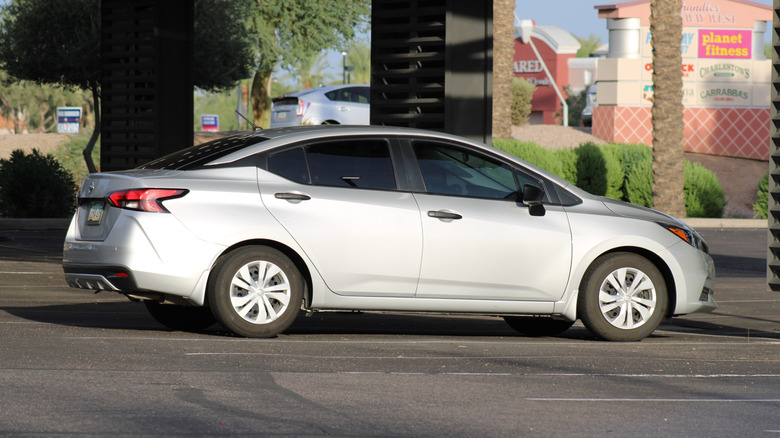
The 2019 Nissan Versa is a bare-bones sedan that offers about as much as you could expect from its economical price point. Despite being released in the late 2010s, this nameplate's entry-level trim comes with crank windows, manual door locks, and no cruise control in its base trim, underscoring its stripped-down design. The puttering 109-horsepower engine makes it a challenge to generate sufficient acceleration for standard driving maneuvers, such as passing other vehicles at highway speeds. The steering and handling are an upgrade from the Mitsubishi Mirage, but that's not saying much. The Versa also lacks the interior space of mainstream sedans. If you're looking for one of the best cheap cars on the market, the Versa is ripe for the picking. However, the advantages remain minimal.
According to KBB, the 2019 Nissan Versa typicallys sells for $7,850, which is down from an original MSRP of $13,385. For its age, the Versa's combined fuel efficiency of 30 miles per gallon stands the test of time, per FuelEconomy.gov. On top of low upfront costs, this sedan offers decently manageable annual upkeep expenses of $456, as reported by RepairPal. The IIHS gave the 2019 Versa four perfect scores on its crashworthiness tests, but the sedan struggled on the driver-side small-overlap simulation, mirroring the safety issues associated with both the Mirage and Fiat.
9. 2019 Honda Fit
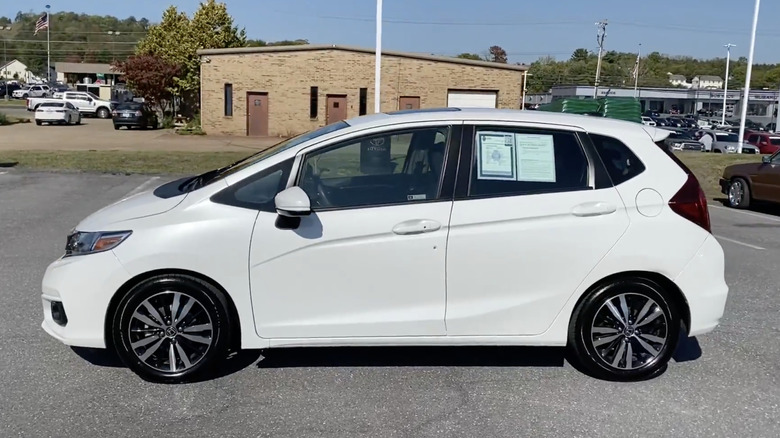
The 2019 Honda Fit is a hatchback with versatile interior space, yet still offers less room in the rear and trunk than leading sedans. Plus, the singular design option limits retirees' options. Despite offering a break on fuel costs with solid fuel economy, the Fit's driving quality starts waning at higher speeds. On the highway, the engine starts to vibrate and emit a droning sound, limiting the model's practicality for anything beyond short commutes. The hatchback's limited suspension leaves seniors feeling much of the road, and the unwieldy steering often gives way to a slight body roll around turns. To achieve such a modest price point, Honda stripped safety and tech features from the baseline trim, requiring owners to spend more to get what comes basic in many other models.
KBB indicates that the 2019 Honda Fit originally sold for $17,945 and has a fair purchase price in 2026 around $14,650. This makes it one of the more expensive models on this list of affordable cars for retirees, despite being one of the lowest quality. Meanwhile, earlier Fit model years are among the used cars you can buy for less than $10,000. FuelEconomy.gov suggests that this model gets a laudable 36 miles per gallon combined, although these fuel savings may not justify other shortcomings to many drivers. RepairPal shows that owners tend to spend $390 annually on general upkeep. Notably, the 2019 Honda Fit received perfect crashworthiness scores, yet it did not receive the small-overlap front test the IIHS gave other models on this list.
8. 2019 Mazda3 Sedan
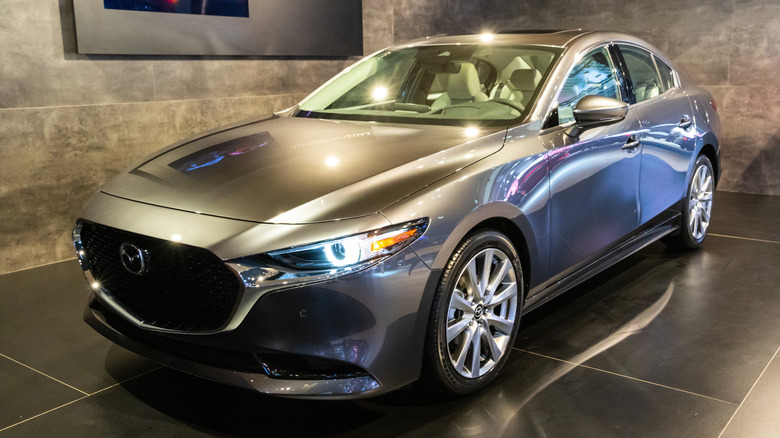
The 2019 Mazda3 sedan has a more premium feel than competing models at a similar price point. The main highlights of the Mazda3 sedan include a comfortable front seat and an optimally positioned driver's seat. However, the upscale, curvy design does reduce visibility in the back, which could be especially inhibiting for older drivers. Furthermore, the back seats are noticeably cumbersome and driver-assist features are extremely limited in the base trim.
According to KBB, the 2019 Mazda3 sedan sells for around $13,400 in 2026, which is down considerably from its original MSRP of $21,920. Additionally, this model averages a fairly competitive 30 miles per gallon on city streets and highways, as reported by FuelEconomy.gov. Meanwhile, annual repair and maintenance costs usually add up to $433, per RepairPal. The IIHS recognizes the 2019 Mazda3 as a Top Safety Pick, the group's second-highest classification, and it received pristine crashworthiness scores across a series of collision simulations. Altogether, this nameplate's premium packaging betrays some core shortcomings that make it a less-than-ideal option for seniors. However, Mazda also produces a hatchback Mazda3 alongside the sedan, which offers additional variety for seniors who prefer one style over the other. And for retirees with a little more to spend, the 2026 model is one of the most valuable cars under $30,000.
7. 2015 Toyota Avalon
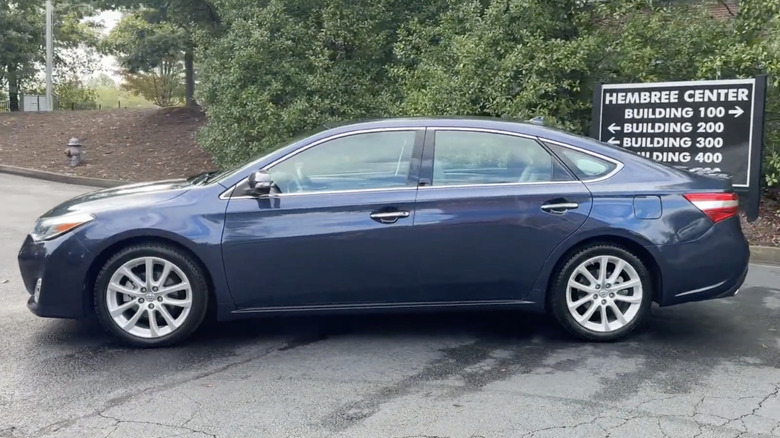
As a larger and more expensive nameplate than other sedans, the Toyota Avalon's design may feel slightly dated. However, it was once among the highest-quality in its segment upon release. What seniors may find most attractive about the Avalon is its large, comfortable front seats, though friends, family, and cargo will also have plenty of space of their own in the back. The controls and features are ergonomic for retirees, and this sedan also offers a quiet ride. However, it lacks in standard safety features, and seniors have to upgrade beyond the cheapest entry-level trim to get pre-collision features, automatic high beams, and adaptive cruise control.
KBB indicates that the 2015 Toyota Avalon has a fair purchase price of $13,150, down from an original MSRP of $33,110 — highlighting why this model is among the Toyotas with the worst resale value. While it may often list at an accessible price point, seniors may find this sedan's combined fuel efficiency of 24 miles per gallon, as reported by FuelEconomy.gov, slightly outdated. On a yearly basis, retirees should budget about $463 to put toward this sedan's repairs and maintenance, per RepairPal. Sporting perfect crashworthiness scores across all simulations, the 2015 Toyota Avalon is also an IIHS Top Safety Pick.
6. 2017 Honda Accord
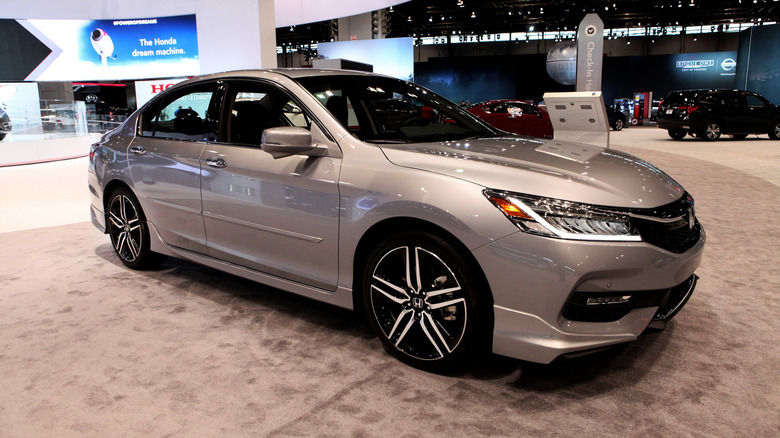
The 2017 Honda Accord seemed to be designed for mass appeal, coming in various trims, a two-door sports coupe, and a hybrid version. While this nameplate's long-running reliability, efficiency, and safety are undeniable, the perks are somewhat spread out among various trim types. So, retirees may need to compromise on some features or spend a little extra to get everything they need. Most crucially, a suite of safety features like collision-mitigation braking, adaptive cruise control, and lane-keep assist are absent from the basic trim. Even if you spring for these extra features, not all have lived up to expectations in the eyes of reviewers.
Originally, the 2017 Accord was priced at $24,145, but KBB shows that its fair purchase price in 2026 is closer to $13,500. FuelEconomy.gov suggests that the standard Accord from this model year achieves a combined 26 miles per gallon. According to RepairPal, owners typically spend $400 annually on repairs and maintenance. Better yet, the IIHS recognizes the 2017 Accord as a Top Safety Pick+, the group's highest-level classification, due to its superb crashworthiness.
5. 2019 Toyota Corolla
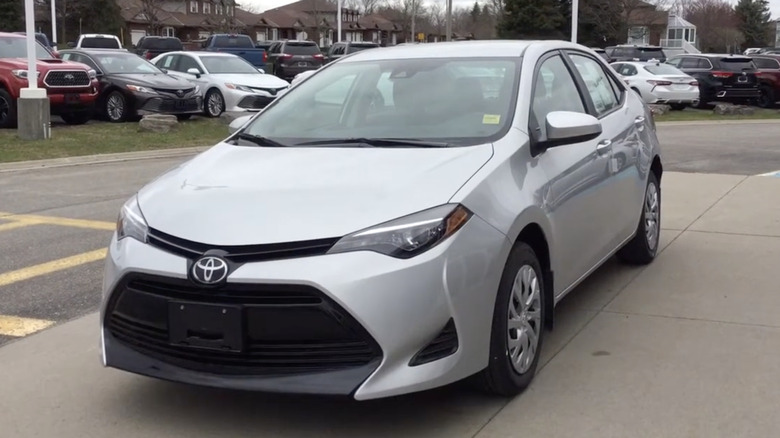
KBB recognizes the 2019 Toyota Corolla as the best compact car of its model year, and its combination of spacious and high-quality interior, robust safety features, low maintenance costs, and a comfortable ride helps establish it as a go-to model for seniors. This nameplate offers fantastic visibility from the front seat and sufficient interior space for five passengers and additional cargo. Whether you're bouncing around town or going on a long cruise, the Corolla's smooth, reliable, and capable ride gets the job done competently. The Corolla exceeds expectations for a sedan of this age, with a standard suite of safety features that includes automatic high beams, adaptive cruise control, lane-departure warning, and a pedestrian detection system.
The 2019 Toyota Corolla initially had a starting MSRP of $19,655, but this vehicle's fair purchase price in 2026 is $13,500, as reported by KBB. FuelEconomy.gov indicates that this sedan averages 32 miles per gallon, placing it high above the 2026 market average of 28 miles per gallon. On top of stellar fuel efficiency, the Corolla boasts modest upkeep costs. RepairPal estimates that the typical owner spends $362 annually on maintenance and repairs. The 2019 Corolla failed to land official recognition from the IIHS in one of its leading categories, but it still achieved perfect ratings across all crashworthiness tests.
4. 2015 Toyota RAV4
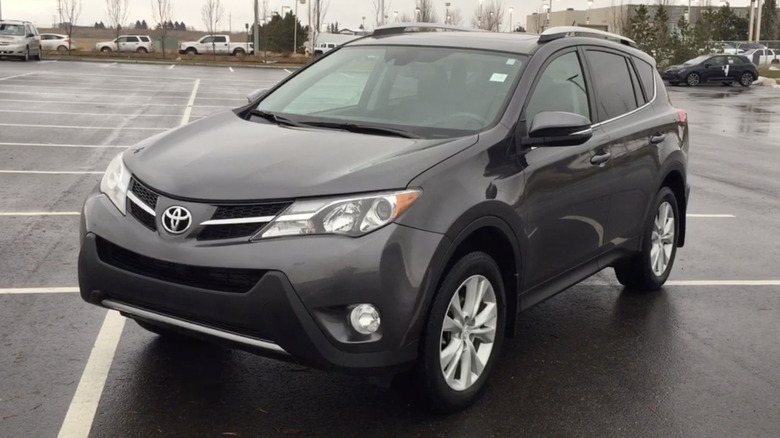
According to KBB, the Toyota RAV4 was the top-selling SUV and the third-best-selling vehicle overall in 2025. Fortunately, many of the core features driving this demand, such as a comfortable driving experience, spacious interior, a robust safety track record, and long-term dependability are available at a discount with the 2015 model. Despite being more than a decade old, this SUV holds its own against modern competitors. The inviting cabin easily seats five adults with plenty of cargo space leftover, and retirees may particularly enjoy the support offered by the carefully crafted driver's seat and the maximized visibility made available with its built-in backup camera.
On the used market, KBB indicates that the 2015 RAV4 has a fair purchase price of $14,050 — a considerable drop from the new MSRP of $26,339. The standard RAV4 achieves a combined fuel efficiency of 26 miles per gallon, as reported by FuelEconomy.gov, and RepairPal projects retirees should budget around $429 for annual repairs and maintenance in this model year. Even though this SUV fell short on the small overlap passenger-side crash test, it eked out a Top Safety Pick classification from the IIHS and achieved premier results in every other simulation. While there may be many cars that depreciate slower than a RAV4, that value drop just makes the 2015 model's well-balanced, smooth ride even more financially accessible to senior drivers.
3. 2018 Subaru Forester
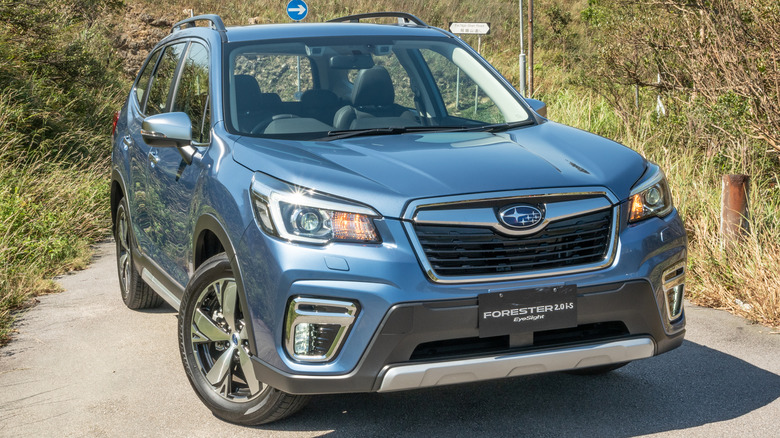
The 2018 Subaru Forester lands a spot as one of the best affordable models for retirees due to its appealing combination of superior outward visibility, above-par handling, and a strong safety record. Similar to many Subaru models, the Forester comes standard with all-wheel drive, which lends itself to improved traction, control, and performance in various conditions. A combination of elevated clearance and a well-positioned front seat also gives seniors more visibility than many competing SUVs provide. While offering capable off-road performance, the Forester is also a practical runaround vehicle. It offers a spacious interior capable of seating five occupants, an adult-friendly rear seat, and plenty of trunk space.
KBB reports that the 2018 Subaru Forester sells for around $14,100 on average in 2026, down from an initial starting MSRP of $24,710. Unfortunately, its subpar fuel economy of 24 miles per gallon might eat up some of these savings, per FuelEconomy.gov. Another financial consideration is this SUV's comparatively elevated annual repair costs of $632, according to RepairPal. With remarkable crashworthiness results across collision tests, the 2018 Forester is an IIHS Top Safety Pick. Across model years, the Forester is hands-down one of the best cars for retirees looking for optimized performance, maximum safety, and long-term dependability. The 2018 model happens to offer all that at an accessible premium.
2. 2019 Honda Insight
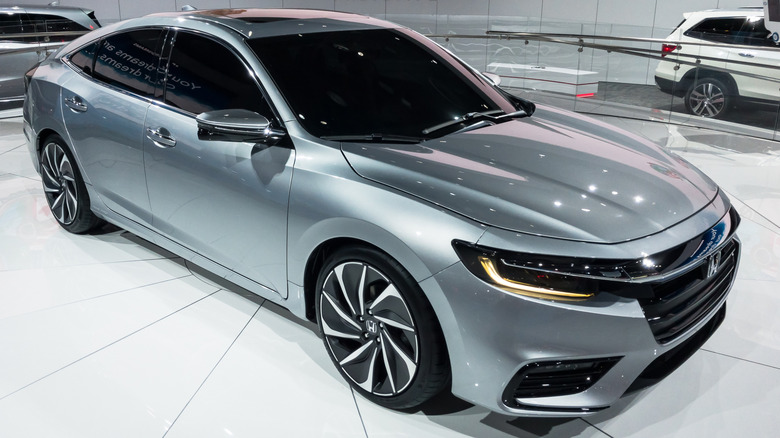
There's an argument to be made that the Honda Insight is one of the more underrated sedans, often overshadowed by the Civic and Accord. This discontinued nameplate boasts outstanding fuel economy and undeniable safety credentials, making it a fantastic consideration for retirees. The 2019 Insight maintains all of these core advantages, and features modern tech that makes it competitive in 2026. On the outside, the Insight exudes style and refinement with a clean and contemporary design. The handsome interior offers drivers a quiet ride, and seniors will have plenty of space in both the passenger areas and in the trunk. Owners can enjoy a flawless driving experience with a quiet interior, competent handling, reasonable acceleration, and smooth braking. Every trim also comes standard with safety enhancements like automatic braking and dynamic cruise control.
The 2019 Honda Insight just slightly exceeds the $15,000 threshold: It boasts a fair purchase price of $15,150, per KBB, down from an original MSRP of $23,785. While that may be relatively pricey for this list, FuelEconomy.gov reports that this hybrid vehicle achieves a staggering 52 miles per gallon combined — nearly double the industry's 2026 average. Adding to a drivers' potential savings, RepairPal suggests Insight owners may spend as little as $392 yearly in general upkeep. The IIHS judges the 2019 Insight to be a Top Safety Pick+, with the hybrid scoring perfectly across all crashworthiness tests. With these advantages, it's no surprise the Insight stands among the best Honda cars for retirees.
1. 2016 Honda CR-V
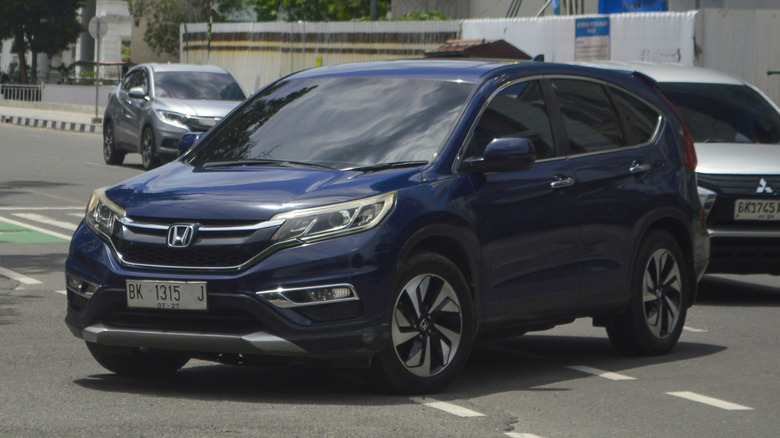
There's a reason the Honda CR-V has been recognized as one of the best SUVs you can buy, and this sentiment is reinforced by the nameplate's routinely high sales figures. In fact, KBB reports that the CR-V was the second-best-selling SUV of 2025, moving 403,768 units. Overall, the CR-V is a well-rounded compact SUV with above-average fuel economy, exceptional safety standards, dependable road performance, and great visibility. This compact SUV comfortably seats five passengers, with an adult-friendly second row and a sizable trunk. Despite its classification, the CR-V offers seniors a quiet cabin, smooth steering, and control in various conditions. Well-structured and comfortable front seats, along with an aerodynamic exterior, optimize visibility.
KBB reports that the 2016 CR-V sells on average for a fair purchase price of $13,650, nearly half of its initial MSRP of $26,045. While not as fuel-sipping as some other retirement-compatible sedans, the 2016 CR-V's combined fuel economy of 29 miles per gallon still outperforms the average 2026 model, per FuelEconomy.gov. Typically, this SUV comes with an annual repair bill of $407, according to RepairPal, while the IIHS identifies the 2016 CR-V as a Top Safety Pick+ for its first-rate crashworthiness results.