

10 Tax-Friendly Asian Countries Perfect For An Expat Retiree

As things continue to grow more expensive in the United States, some retirees have opted out of exploring affordable states in which to settle down. Instead, some Americans nearing or entering retirement are looking abroad in search of a more affordable and comfortable lifestyle. Finding the right area of the world can be tricky enough for families or remote workers. For retired Americans, often living on a fixed income, there are unique challenges.
A big worry is taxes. Americans living abroad may still have federal tax obligations and, depending on their circumstances, state tax considerations as well. With that in mind, retirees should consider not only affordability and climate but also how a country's tax system could affect their retirement income.
In terms of warmer weather and affordability, Asia as a whole is an increasingly popular choice for retired Americans. Some Asian countries offer rentals for as low as $400 per month. Meanwhile, you'll often find your monthly living costs are much lower than in America, especially in destinations that are significantly cheaper than other popular retirement hotspots. Lastly and most ideal, there are Asian countries that are incredibly tax-friendly, making it easy to truly stretch your retirement income. Here are some of the most tax-friendly destinations in Asia for expatriate retirees.
Taiwan

Taiwan is a great option for retirees who want to live in Asia, as it's relatively budget-friendly. According to Livingcost.org, the average monthly cost of living in Taiwan is about $1,027 per person. Wise, meanwhile, estimates that figure is closer to $1,336. If renting, it's relatively easy to find an affordable home or apartment. As Taiwan Housing reports, rentals range in price from $165 to $1,000 per month.
Taiwan does not have an official tax treaty with the United States. However, its tax rules can still make it an attractive retirement destination, depending on how long you stay and the source of your income. Visitors who spend 90 days or fewer in Taiwan generally have no Taiwanese income tax obligations. Those who stay between 91 and 182 days are considered non-residents and may have filing requirements. Even after spending 183 days or more in Taiwan, many retirees still won't owe Taiwanese income tax if they don't have taxable Taiwan-source income.
While retired expats may have to file and pay taxes to the United States, as long as you're not earning Taiwanese income, you likely won't have to pay taxes to Taiwan. While Taiwan can levy taxes on foreign income, including pensions and IRA draws, usually retirees will be exempt if their income falls below certain thresholds. According to Taiwan's current foreign-source income rules, retirees with qualifying foreign income below NT$1 million (about $31,155) generally don't need to pay Taiwanese tax on that income. If your retirement income is above this amount, but less than NT$7.5 million (or $232,910), you will have to file tax forms, but don't owe taxes to Taiwan.
Thailand

Thailand, located in the heart of mainland Southeast Asia, offers a relatively affordable lifestyle for retired Americans. Wise finds Thai expenses average about $1,131 per month. The blog International Living, meanwhile, estimates a cost of living closer to $1,700 for two people. Of course, actual expenses will vary depending on housing, grocery choices (especially imported goods), transportation, and lifestyle. Even so, Thailand is generally considered an affordable destination for many retirees.
If you're planning your retirement budget, minimizing your overall tax burden is likely a priority. Though Thailand updated its tax laws, the nation remains a tax-friendly possibility for retired US expats. First, Thailand has a tax-treaty with the United States that should prevent double taxation in most cases. If income is taxed by both countries, claiming the Foreign Tax Credit may significantly reduce your U.S. tax liability. Second, if you have earnings and savings sourced before the 2024 update, that money will remain tax exempt. Also, retirees who spend fewer than 180 days in Thailand during a calendar year are generally treated as non-residents for tax purposes. Lastly, Thailand does not tax U.S. Social Security benefits; if you happen to live entirely off of these benefits, then you shouldn't have to worry about Thai taxes.
If you feel that Thailand is a tax-friendly choice, there is a retirement visa option available. Applicants must generally be at least 50 years old and meet the applicable financial requirements, such as demonstrating monthly income of at least $65,000 Baht (about $1,950) or satisfying one of the other approved financial criteria.
Hong Kong

For affluent retired Americans looking abroad, Hong Kong is definitely worth considering. If you're used to the pace and costs of a larger city like New York City, Los Angeles, or Miami, then you'll likely find Hong Kong surprisingly competitive in terms of overall living expenses. Per estimates from Wise and the Pacific Prime, you can live relatively comfortably here on a monthly income ranging between $3,300 and $3,800.
Affordability aside, Hong Kong is considered a very tax-friendly location as its tax laws are reportedly among the simplest in the world According to Taxes for Expats, a tax-firm that specifically services Americans filing taxes abroad, Hong Kong has no taxes on capital gains, dividends, or value-added taxes (VAT.) Hong Kong also generally taxes only income sourced within its borders, meaning many forms of foreign retirement income aren't subject to Hong Kong income tax. Retirees who own property in Hong Kong should note that property tax rules may still apply, including a standard property tax on certain rental income.
Generally speaking, if your income is and remains entirely foreign, you shouldn't have to pay taxes to Hong Kong. Should you, however, decide to make local investments that lead to income, that would be taxable. Because the United States and Hong Kong don't have a comprehensive income tax treaty, it's a good idea to consult a tax professional to help minimize the risk of double taxation and stay current on any legal changes. Notably, Hong Kong doesn't have a retirement visa; the only relevant long-term visa for retirees would be the New Capital Investment Entrant Scheme (CIES), which is reserved for high-income individuals comfortably sitting on tens of millions of dollars.
Singapore

Singapore is unique because it's a sovereign city-state rather than a traditional country. Although Singapore has a reputation for being expensive, Singaporean government estimates suggest its overall cost of living is about 41% lower than New York City's. Per their estimates, retirees moving here should expect to spend between $1,391 to $4,076 monthly per person. Wise suggests Singapore's living costs are about $3,840 per month. Actual costs will vary depending on your neighborhood, housing choices, and lifestyle.
Even though Singapore and the United States don't have a tax treaty, it's still considered a tax-friendly place to live. Singapore generally doesn't tax foreign-source income received by individuals, including many forms of U.S. retirement income, making it an attractive option for many American retirees. The only likely way American retirees could generally find themselves on the hook for taxation is if they earn income through Singaporean partnership. Outside of those situations, many retirees with only foreign retirement income won't owe Singapore income tax.
If you enjoy your time in Singapore and find it tax-friendly enough, there are a couple of ways to extend your time here. One option is making repeated short visits under Singapore's visa rules, provided you continue to meet entry requirements. Alternately, high-income retirees with vast savings may choose the Global Investor program (GIP), administered through the Economic Development Board (EDB). Be aware that it requires an investment of about $7.5 million.
Macau (Macao)

Retirees looking for a mix of luxury, entertainment, and city living may want to consider Macau (also spelled Macao), a Special Administrative Region of China often called the "Las Vegas of the East." For retired American ex-pats, it could serve as a fun and luxurious way to live life abroad, though you'll need to budget accordingly. Livingcost.org reports people need at least $1,734 each month to live here. Meanwhile, Wise and Expatistan estimate monthly expenses closer to $2,064 and $2,546, respectively, depending on lifestyle and housing choices.
Aside from fun and luxury, Macau is a big draw because it's considered a major tax haven for foreigners. Crucially, a series of tax updates took effect as of January 2026, where Macau transitioned to a purely territorial approach to taxation. Under these rules, many non-residents and individuals with only foreign-source income generally won't owe Macau tax on that income, though eligibility depends on individual circumstances. As a result, many retirees living on foreign pensions or U.S. Social Security benefits generally won't owe Macau income tax on those payments.
Staying in Macau long term can be more challenging than in some other retirement destinations. First, Americans are able to enter the country without a visa for up to 30 days; you can extend your time here up to 90 days, though you'll need to do so in person; it's best to contact Macau immigration for more accurate information. While some visitors make multiple entries, frequent back-to-back reentries may receive additional scrutiny from immigration officials, and future admission is always at their discretion.
Cambodia
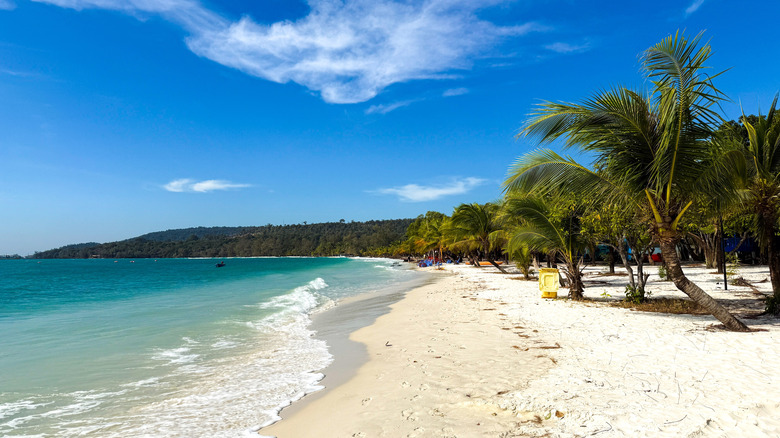
Some expats ultimately settle on Cambodia as a retirement destination because it is very affordable for individuals and couples alike. For instance, Expat Life Cambodia estimates that individuals can live comfortably on roughly $800 to $1,200 per month. Wise, meanwhile, determined monthly expenses averaged $1,063 per person. Apartments here are extremely affordable; we spotted options for less than $200 per month.
If you're a retired expat and interested in staying in Cambodia indefinitely, you can apply for the Cambodian Retirement Visa (ER). According to Cambodian immigration guidance, applicants are generally expected to be at least 55 years old, although exceptions may be considered in some circumstances. You must provide proof of your retirement, and also sufficient monthly income. While there are reportedly no monthly minimum income requirements, you should still have a rough estimate of how much income you'll need to live comfortably. The retirement visa is available for 1-12 month periods, and can be extended indefinitely.
Cambodia does not have an income tax treaty with the United States, and Americans who spend at least 183 days in the country during a tax year are generally considered Cambodian tax residents. That said, Cambodia doesn't count foreign retirement income as taxable. You'll still need to file U.S. taxes, but shouldn't be on the hook for double taxation.
Vietnam
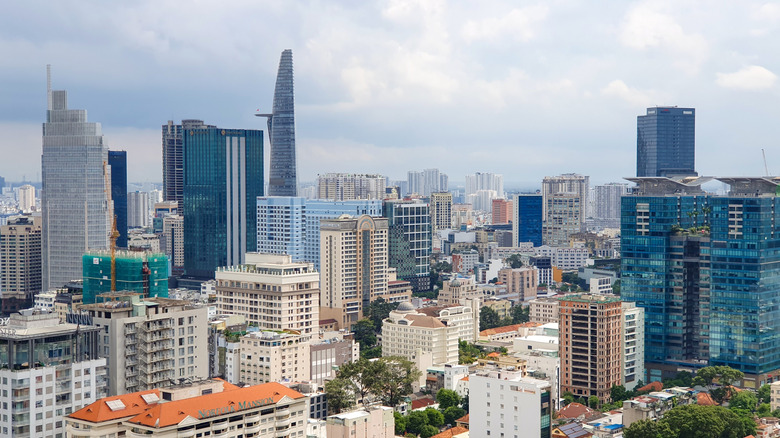
Vietnam is among the most affordable places to live for Americans, especially if the plan is to stay in the country long-term. While it doesn't have a retirement visa, it's generally easy to obtain an electronic visa or "e-visa." To get one, you apply for online before traveling to the country. E-visas are generally valid for up to 90 days and are available as either single-entry or multiple-entry visas, which currently cost $25 and $50, respectively. E-visas generally can't be extended from within Vietnam, so travelers need to leave the country and submit a new application if they wish to return.
Estimates for Vietnam's cost of living vary by source. Livingcost.org estimates Vietnam costs at least $637 per month. Wise, meanwhile, puts their monthly estimate closer to $786. International Living recommends a budget of about $1,100 per month for a modest apartment along with groceries, utilities, and even housekeeping.
In addition to budget-friendliness, Vietnam is a tax-friendly nation for American retirees. TThat may come as a surprise because, although the United States and Vietnam signed an income tax treaty in 2015, it has never entered into force. This makes Vietnam the only major U.S. trading partner without an active tax treaty. Even without an active treaty, Vietnam can work for retirees. First, if you spend less than 183 days per year in the country, you won't be considered a tax resident. Second, if you strictly live off of retirement income, you should be fine, as Vietnam does not tax domestic or foreign retirement income.
United Arab Emirates (UAE)

The United Arab Emirates (UAE) is widely considered one of the world's most tax-friendly destinations for American retirees. The UAE does not levy personal income tax, making it especially attractive to retirees living on pensions, Social Security, or investment income. Even though there's no tax treaty with the United States, the nature of the UAE's tax system means that your foreign retirement income is generally safe from double taxation.
Though taxes won't be an issue, for some retirees, the greater concern might be affordability. Dubai's reputation for luxury often leads people to assume the entire UAE is prohibitively expensive. However, international cost-of-living comparisons suggest the UAE can be less expensive than the United States overa. For example, Visual Capitalist ranks the U.S. with a higher cost-of-living score than the UAE. Wise estimates average monthly living costs at about $2,406 per person. That said, be aware that living costs will change depending on where in the UAE you live. In Dubai, Aetna estimates you'll need between $2,723 and $4,084 per month, per person to live comfortably.
If you're interested in living in the UAE, there is a retirement visa option, officially known as the Residence Visa for the Retired. According to the official government website, you must be 55 or older and have worked at least 15 years professionally at some point in your life. You will also either need verifiable proof of annual retirement income of at least $180,000 AED (about $49,000 USD) or own local property valued at least $1 million AED (approximately $272,294 USD).
The Philippines

For American retirees looking to move abroad, the Philippines should definitely be on their list of options. One of its biggest advantages is its affordability. According to Livingcost.org, individual expenses average about $608 per month in the Philippines, compared to about $2522 in the United States. Wise, meanwhile, estimates average monthly living costs at around $879 per person. As you can see, there's a very good chance that for retirees wishing to live comfortably here, it's likely doable on a budget that doesn't exceed $1,000 month-to-month.
The Philippines also has a territorial tax system. According to SmartAsset, it generally taxes only Philippine-source income. An expat's foreign retirement income will fall well outside of this, making it possible to live in the country without worrying about additional taxes.
In addition to an affordable lifestyle without the fear of hefty taxes, the Philippines makes it easy for foreigners to retire here. If interested, simply apply for the Special Resident Retiree's Visa (SRRV). It's relatively easy to qualify by age; as of September 2025, you need to be at least 40 years old to apply. You may wish to wait until age 50 to apply, as there's a visa deposit required. If you're applying as a 50-year-old pensioner, the deposit is $15,000; for a 40-year-old non-pensioner, you would need to submit a $50,000 deposit. Finally, retired diplomats, high achievers, and members of the US armed service need only pay $1,500 on their visa deposits.
Malaysia

Malaysia is another appealing option for American retirees seeking an affordable Southeast Asian destination with a relatively favorable tax system. Malaysia offers a long-term residency program known as Malaysia My Second Home (MM2H). If applying at the age of 50 or older, you'll need to deposit a minimum of $32,000 USD in a qualifying Malaysian financial institution. You'll also need to pay a one-time fee of $1,000 RM, roughly equal to $245.40 USD. Additional requirements may include obtaining medical insurance, meeting health-related requirements, and purchasing qualifying residential property, depending on the program tier. After qualifying, the visa is generally renewable every five years.
Malaysia is considered incredibly tax-friendly for Americans overall. The nation generally taxes income sourced within the country rather than foreign-source income. As a result, many forms of U.S. retirement income generally aren't subject to Malaysian income tax, although Americans must still meet their U.S. tax filing obligations.
Despite its modern infrastructure and amenities, Malaysia remains relatively affordable by U.S. standards. Wise estimates Malaysia's monthly cost of living is about $940 per person on average. International Living which factors in expenses such as rent, groceries, and utilities, recommends budgeting at least $1,700 per month for a comfortable lifestyle in Malaysia.