

10 Smart Home Devices To Slash Your Utility Bills
We may receive a commission on purchases made from links.
Utility costs are a major concern for consumers across the country. But they're particularly notable in states like Massachusetts, California, and Hawaii — some of the states with the highest electricity costs in America. Even in lower-cost areas, this remains a sticking point. The average American household spends $595 per month on utilities across the board, including a typical bill of $141 for electricity, $62.50 for trash pickup services, and $48 in water charges, according to 2026 data from Move.org. Concerns over inflation don't appear to be subsiding anytime soon, so it's likely that utility costs will continue to rise at a troubling pace year after year. In fact, around 33% of American households struggle to pay their energy bills every month (via The Conversation), meaning that adding some cost-cutting smart upgrades and investments can be a major boon to balancing a home's budget long term.
These 10 smart home devices can make a notable difference in the expenditures a typical household sees throughout the year. In many cases, updates like these take some time to work their magic. For instance, installing solar panels on your home generally requires a timeline of around 10 years to fully recover the upfront cost of installation and break even. However, most of these devices will only set you back somewhere in the low hundreds, meaning some will break even within the first year if you use them strategically.
1. Cut wasteful HVAC costs with a smart thermostat
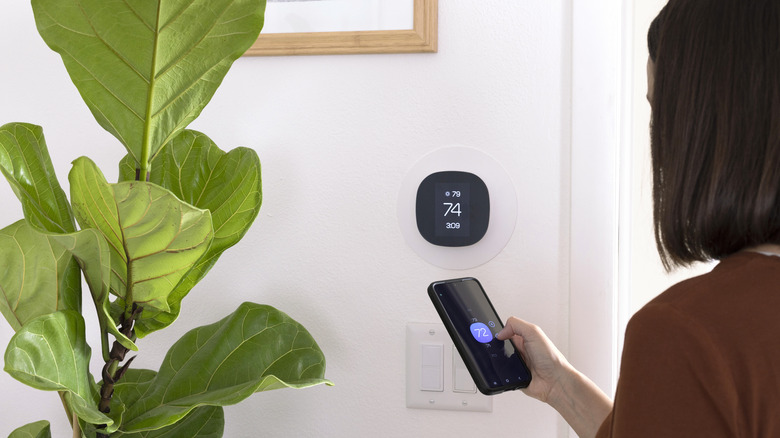
One of the biggest ticket items you'll encounter when pricing out individual line items on your utility bills will be your heating and cooling costs. HVAC usage accounts for an average of 43% of a typical home's overall utility charges, according to the U.S. Department of Energy. However, the agency also notes that some strategic implementations can slice this usage by up to half with relative ease. Taking a more definitive level of control over your HVAC system's performance can be a step in the right direction, and a smart thermostat makes this possible. Typical models run between $200 and $500 (Lowe's lists the typical price for a unit at $157), including installation by a professional. However, a buyer can shave a notable margin off this price by installing it themselves, bringing the total cost down below $200 in many cases.
Even without a specific strategy for managing your heating and cooling, CNET reports that an average smart thermostat user can expect to save 12% to 15% annually by making the switch, working out to roughly $131 to $145 in savings annually. A more aggressive estimate by Mysa places savings as high as $312 per year. Regardless, it's clear that a smart thermostat can lower your usage during peak pricing hours, minimize wasteful runtime, and save you a significant amount of money, likely breaking even after a year or two at the most.
2. Manage your home's ambiance with smart light bulbs

Smart LED bulbs build upon the framework that standard LEDs have developed. Smart bulbs allow users to control lighting elements remotely, providing greater flexibility to manage the output and ambiance at any given moment. Smart bulbs tend to operate with app-based controls, giving you the ability to intermittently turn lights on while you're away on vacation, or ensure that all the lights are actually off after you've left for the day. They also frequently provide color adaptability and tone changes. These comfort benefits stack on top of the utility savings you'll rack up by making the switch.
Switching to LEDs of any sort can deliver a substantial energy efficient upgrade. While the typical bulb will cost you notably more than traditional incandescent bulbs — $15 to $25 each, on average, for smart LED white bulbs and $35 to $50 for color-changing bulbs, according to Security.org, compared to $2 to $3 per regular incandescent bulb – once you're past the initial adoption price you'll immediately start raking in the savings. LEDs average a running cost that is five times lower than their predecessor, and Security.org reports that smart LEDs use 75% less electricity to run while lasting 25 times longer — resulting in an annual savings of around $225.
3. When going electric, charge your vehicle at home
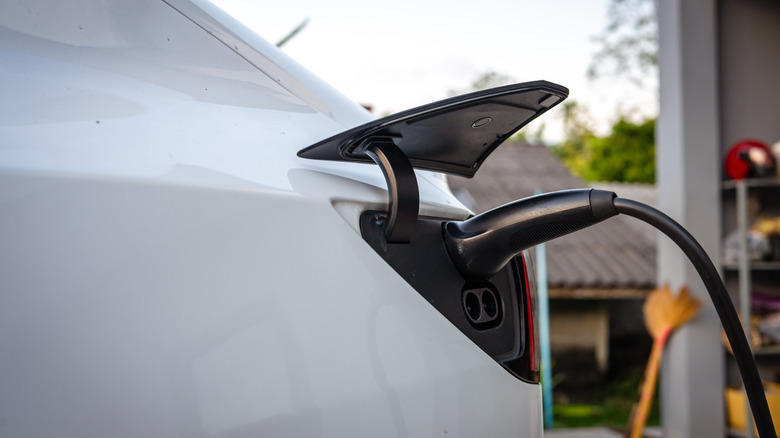
If you already drive an electric vehicle (EV), you likely need to install a charger at home. Without the ability to plug your car in at home, you're sacrificing convenience, mobility, and money. The average price for monthly charging at a public station comes out to $169, according to Kelley Blue Book. That's about 50 cents per kWh (kilowatt-hour) to juice up your car. However, installing a charger at home drops this cost per unit considerably. As of March 2026, the average cost for residential power in the United States was 18.83 cents per kWh, which would make your monthly car charging expense roughly $65 per month, or over $100 cheaper. Using a smart model, in particular, can allow you to take even greater control. Plugging your car in and managing usage from an app — or even automating the process altogether — gives you the ability to save money and time. For instance, adding just enough juice to support your needs that day or only allowing charging during off-peak hours.
The average cost to install a home EV charger ranges from $800 to $3,000, according to Energy Sage, but there may be rebates available depending on the type you select or even where you live. Much of that cost is also rolled up in the installation, with a charger itself typically falling somewhere within the $400 to $700 range. It's also worth noting that installing an EV charger is often included in the list of upgrades that can improve your home's resale value.
4. Manage solar heat transfer through windows with smart shades

In 2023, Consumer Reports analyzed U.S. Department of Energy data and reported that smart shades have the ability to reduce solar heat gain in your home by up to 77%. This can drastically change the heating and cooling regimen necessary to maintain a comfortable home interior. These tools help control the amount of sunlight allowed into your home, limiting solar heating during warmer summer months, and allowing more heat during colder months. The smart element of these shades allows you to program times for the shades to open or close, meaning you can save money on heating and cooling expenses without having to think about it every day.
That said, installing smart window shades can be a potentially big expense. An option like the SmartWings motorized blinds start at $219 apiece. Home Depot also carries smart shades, with the cheapest option starting at $129. Naturally, you'll want to add shades to more than just one window meaning your total costs can even more substantial depending on the size of your home, the number of south-facing windows (with the longest exposure time throughout the day), and other factors like stylistic and aesthetic preferences. However, the value smart shades bring to the table is undeniable. Installing this gadget can reduce your HVAC-related energy costs by roughly 10% to 20% — or even up to 30% off at the high end of estimates, per AAA Blinds & Shutter Factory.
5. Take the sting out of vampire energy drainers with smart plugs
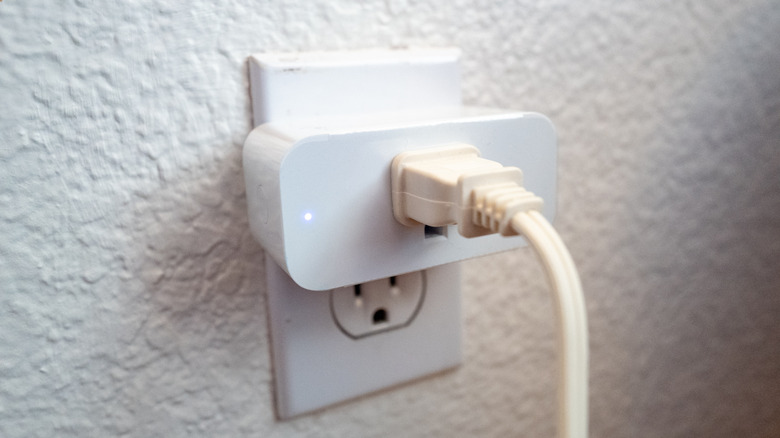
Vampire appliance costs can run rampant even in a home that's populated by newer, frequently more efficient units. Costs can rise to as high as $200 per year in wasted electricity use, according to a 2023 report from CNET. Even with a conservative approach that only tackles big-ticket items, cutting out energy wastes can save you cash that would otherwise be wasted. Enter smart plugs, which can allow you to more efficiently manage the draw from your appliances and equipment.
Unplugging appliances and charged devices that create "vampire" drains on your electricity supply can certainly help, but smart plugs make it even easier. Plus, these plugs are often automated, meaning they can shut off power to connected devices at certain times of day, and can be managed via an app to give you quick control over any devices plugged into them. Smart plugs draw an estimated 10 kWh of power over the course of an entire year of consistent use. That small trickle of added draw introduces as much as $2 annually to your electricity costs, but the addition is frequently worth the trade. A smart plug can run you as much as $35 for a luxury unit, but a typical unit is about $10 to $15 each.
6. Install a smart water heater to manage supply more efficiently
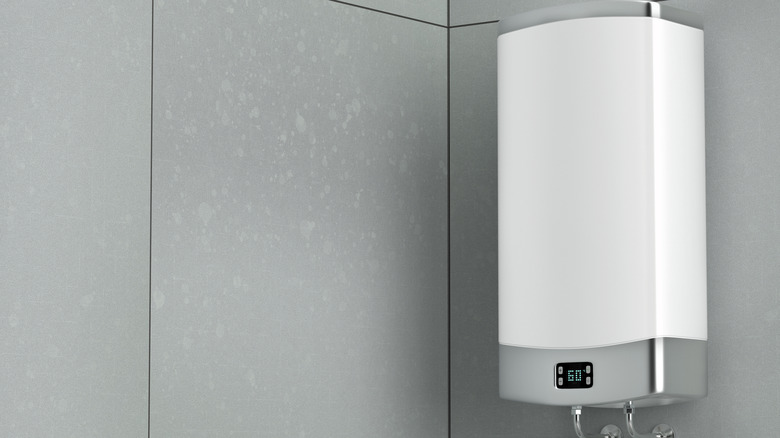
Virtually every home has a hot water tank, but not all tanks are created equal. Older hot water tanks heat water inefficiently, and that can ultimately create a wasteful drain on your electricity bill every month. Meanwhile, smart water heaters optimize the timing, temperature, and volume of heated water to meet your needs with greater efficiency. Rather than delivering basic heating strategies like keeping water in the tank at a constant temperature regardless of demand, a smart tank introduces a tailored approach that allows for better energy efficiency.
A smart water heater can save up to 10% annually on utility costs when compared to a standard alternative, bringing your total expenses down throughout the life of the tank. Plus, these tanks can last as long as around 12 years of service, if well cared for, delivering long term financial benefits. A smart tank can run you as little as $680 for a 40 to 50 gallon unit — well suited for a family of three or four — but can go as high as around the $2,000 mark for premium models.
7. Install water leak sensors to avoid bigger repair needs and lower insurance premiums
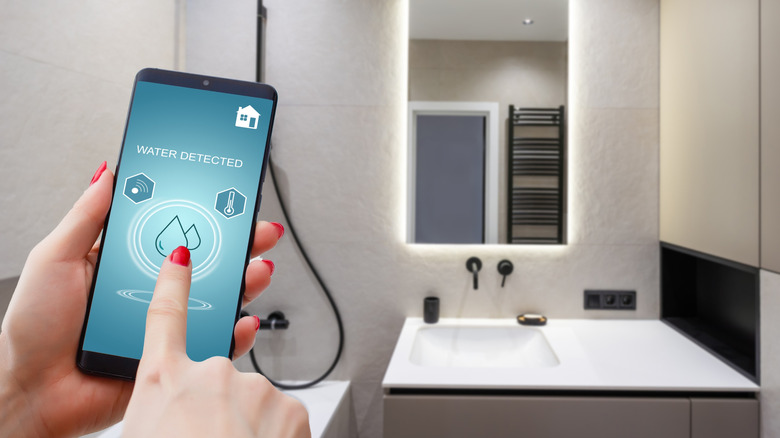
Sensors designed to detect leaks in your piping, tanks, and other connected elements can make a huge difference in your overall home maintenance costs. The average leak repair for minor to moderate issues costs roughly $500 to repair. Meanwhile, a full-scale flooding problem in a basement, or elsewhere, after a burst pipe or tank can easily run a homeowner $15,000 or more (via SoFi). That said, a smart sensor that alerts you right away to a leak can help you stop a problem before it grows into a more significant and costly repair. Some of the best smart sensor options, per Wirecutter, are priced between $28 and $80.
As an added bonus, installing smart water leak sensors can also help to lower your monthly premiums on homeowner's insurance, with many providers offering discounts for additional safety measures. That said, exactly how much you end up saving can vary by your insurance provider and your policy terms.
8. Use smart fans to cool your home more efficiently
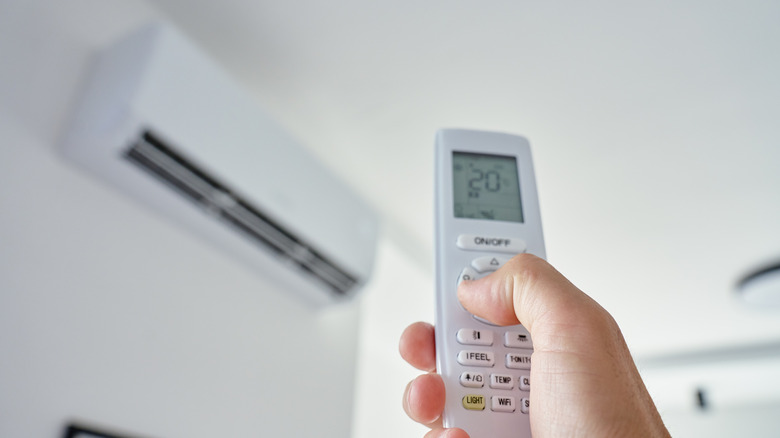
Fans use less energy than air conditioning units, making them a less costly way to keep your home feeling comfortable in the heat. Many homes have ceiling fans, but a smart fan unit can be valuable for those looking to maintain a cool home while limiting their energy use. A 2021 study published in The Lancet found that fans, in general, draw less than 5% of the total electricity demand than that of an air conditioner. That said, adding a fan to your existing AC setup can create an internal temperature feel that's 4 degrees Fahrenheit lower than the actual setting, according to U.S. Department of Energy. This can minimize your use of a bulky HVAC system, allowing you to set the thermostat at a higher temperature and limiting its use. The less you use your system, the lower your operational costs will be.
Most smart fans come in tower formats that plug into the wall, and are Wi-Fi enabled. They allow for greater control with timing options, speed settings, and more — all from the convenience of your smartphone. There are many options available, with mid-sized smart fans priced below $100, while larger models — including notable brands like Dyson — can be found for around the $200 mark. Per Hunter Fan, people can save over $100 by pairing even a basic ceiling fan with their existing AC, meaning you would likely break even on a smart fan purchase in just one summer season.
9. Smart appliances can make everyday tasks more cost efficient
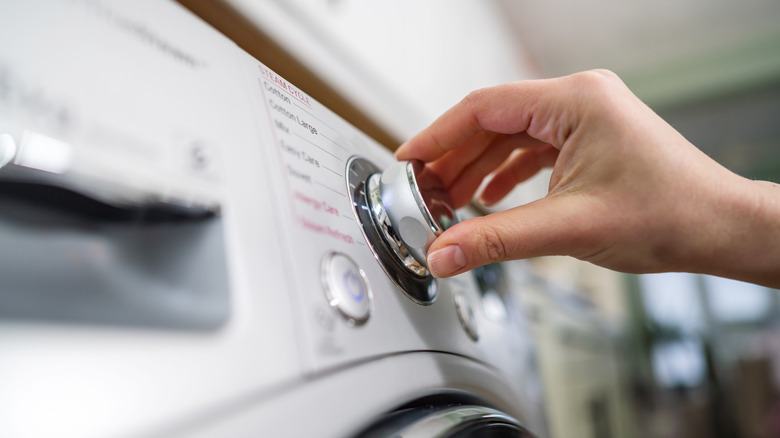
Investing in smart appliances to make your home more efficient will cost a bit more upfront. However, larger smart appliances can save you around 20% annually on your utility costs, according to Reviewed.com. Always-on units like fridges or other appliances that are run on a near-daily basis, like a dishwasher, will naturally make the biggest impact on your utility bill. Smart appliances have better energy efficiency ratings overall, meaning they draw less power to operate. To take advantage of this streamlined electricity usage, you'll want to look specifically for Energy Star-badged appliances.
Many smart appliances also provide remote operation meaning you can remotely set a washing machine or dishwasher to run at the least expensive time of day. Meanwhile, smart fridges include features like the ability to see inside compartments without opening the front of the appliance. Dryers can also benefit from smart features, with sensors that can automatically adjust cycle times. Reviewed.com found that upgrading your washer and dryer alone can slash energy usage by up to 15%, while a smart fridge can save up to 10% in energy use.
10. Smart sprinkler controls can reduce water costs

Homes with front and/or back yards tend to rely heavily on sprinkler systems. While landscaping can add resale value to your property, keeping up with it can be costly. Luckily, smart sprinkler control systems can help reduce the amount of water you use through sensors that can account for rainy weather and other factors. Smart sprinkler systems can save an average household up to 15,000 gallons of water per year (via the U.S. Environmental Protection Agency), which translates to anywhere from $75 to over $200 in annual savings, depending on your rates. This means your smart irrigation system can rack up value over time while also drastically improving your environmental impact.
Given the fact that eco-friendly home upgrades are also beneficial to resale value, this enhancement could also pay off in more ways than one. A typical smart sprinkler control system will run you anywhere from around $60 to $220, according to Wirecutter. This means a homeowner with a small system can break even after roughly two years of use.