

The Old-School Budgeting Trick From The 80s That Doesn't Always Hold True Today
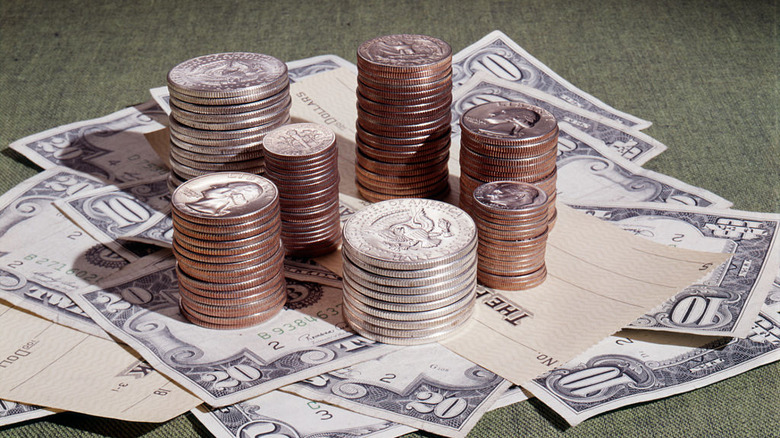
Consumers who remember budgeting in the 1980s are now likely enjoying their retirement, or at least preparing for it. While some current economic features remain similar to the '80s — such as concern over inflation's impact on the economy – many of the strategies and consumer behaviors popular at the time have not survived. One budgeting trick, in particular, that was commonplace during the time was the use of cash for almost all transactions a person might make in a typical day.
While credit cards were becoming more widespread, a continued reliance on cash for everyday spending allowed many '80s era consumers to keep tighter budgets and avoid unnecessary expenses like interest rates on revolving credit card balances. However, even though the phrase "cash is king" endures, this particular payment option suffers from vulnerabilities in the modern marketplace. From convenience issues to a lack of security to ongoing inflation concerns, constantly ensuring that there's physical cash in your wallet can actually end up being more trouble than it's worth.
Cash transactions are simple, but carrying it is not
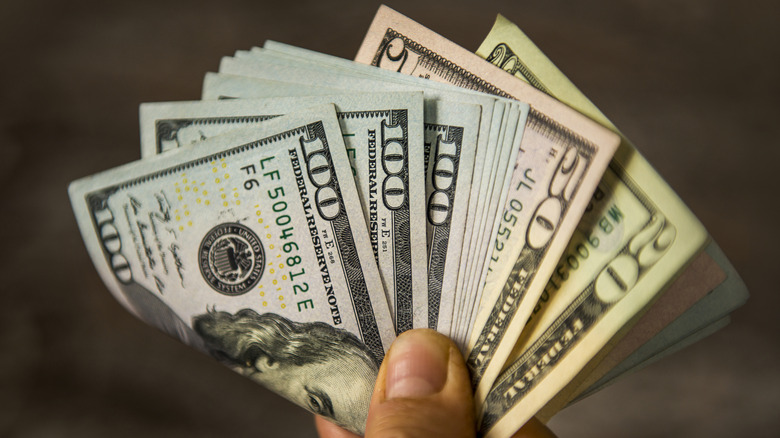
In addition to the lack of convenience involved in needing to find an ATM or bank branch anytime you need money, carrying cash also suffers from a lack of security. Money stored in a checking account is often protected against theft. This means that if your credit or debit card is stolen, you aren't generally responsible for any transactions that a thief makes on your account. Moreover, there's a digital record of every action the thief takes — something that is not true for cash. Any physical currency you might lose while out in the world is generally gone with no recourse to recover it.
Inflation can also be a factor since it squeezes value out of most cash assets. The U.S. Bureau of Labor Statistics reported that the May 2026 consumer price index was 4.2% for all categories, indicating that prices rose over 4% during the 12 months prior. This means that holding cash in your wallet long-term can lose you money. For example, a $100 bill was functionally worth $4.20 less in spending power in May 2026, when compared to the year prior, since the price of goods and services rose but the value of the bill remained the same. Meanwhile an inflation-fighting money move, like keeping your money in a high-yield savings account or CD, can ensure the value of your money keeps up with or even surpasses current inflation rates.