

Back To Basics: Understanding Bank Accounts

Bank accounts can seem like an integral part of modern financial life. Even so, the Federal Deposit Insurance Corporation (FDIC) found in late 2024 that 4.2% of American households (5.6 million in total) were unbanked, and CNBC reported around the same time that 23% of Americans classified as low income fall into this bucket. In extremely rare instances, there are beneficial reasons to perform financial management tasks without a bank. But for the majority of consumers, this isn't going to be the case. Since most bank accounts are insured by the FDIC, the account holders' funds are protected in the event of a bank failure. Some accounts can even serve as a shield against the negative pressure of inflation if they earn interest. This is a secure way to hold cash value while spending as needed without having to carry bills around.
It's usually pretty simple to apply for a bank account of any type. You only need to prove your identity with a driver's license or passport, give your Social Security number, and verify your address (with a utility bill or a similar document). These accounts are offered by traditional retail banks and credit unions — not-for-profit financial institutions owned collectively by the members. Many accounts can be opened online, even those offered by brick-and-mortar institutions.
Bank accounts come in many types and serve numerous purposes. You may use a high-interest savings account to secure your emergency fund, or a money market account to pair up daily checking requirements with the ability to grow unused capital. The baseline is a standard checking account, however, and it's a great place to begin when considering all that the banking industry provides to consumers, alongside some limitations to work around.
Types of bank accounts

The checking account is the standard-bearer of banking services. This type of account links to your debit card and serves as the main conduit between incoming salary checks and spending demands. Checking accounts do the bulk of the work for most consumers, and picking one with good perks is essential. For example, some checking accounts provide cash back on purchases and have other rewards baked into their offers — features usually reserved for credit cards.
A savings account is another must-have financial tool. This account type tends to come with the ability to earn interest, but not all savings accounts are created equal. High-yield options bump the interest rate to around 4%, while the typical big-branch account only yields a paltry 0.61%, according to May 2026 data from Bankrate. Even so, in August 2025, CNBC Select reported that just 18% of Americans use high-yield accounts, leaving significant inflation-besting growth potential on the table.
Checking accounts typically have little to no limitations or restrictions on transactions, aside from overdraft rules applied by your chosen bank. Savings accounts, on the other hand, may come with withdrawal timelines. You may not have instant access to funds held within certain accounts of this type, including quasi-investment accounts like Certificates of Deposit (CDs), which operate as a hybrid between a savings account and a bond investment. There are other hybrid options, like money market accounts, which offer savings-account interest rates alongside checking privileges. But these often come with withdrawal limits, minimum balance requirements, and other constraints.
Bank account barriers and ways to overcome them
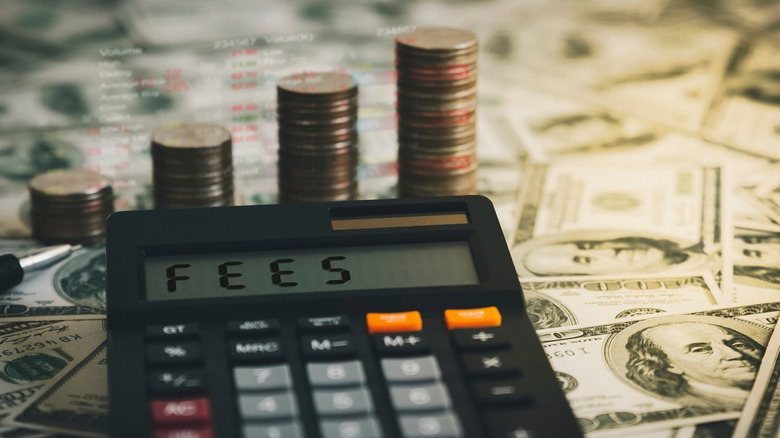
Many people who are unbanked or underbanked find themselves in this situation because of banking fees. For some, minimum balance or usage requirements can tack on monthly charges that simply gobble up too much cash flow to justify the added service. The average monthly maintenance fee in 2026 is $13.51, with overdraft charges averaging $33.40 for traditional banks, according to the MoneyRates Checking Account Fee Survey. On top of that, out-of-network ATM fees average $4.64, throwing gasoline on the fire for low-income consumers and others who have limited access to in-network banking services.
That's all grim stuff, but the survey also found that a little over 30% of checking accounts available to consumers include no fees at all. It's entirely possible to avoid having the minimum balance requirement, using your card for a certain number of monthly purchases, or jumping through other hoops to keep the financial product affordable. Online-only banks are a great place to start this search. They (theoretically, anyway) cut down on operating costs by foregoing the traditional brick-and-mortar setup, allowing for higher interest rates on savings accounts and fewer (or even no) expenses for customers to maintain an account. Many also include fee-free ATM use or reimburse their clients when they do have to pay a fee. It remains crucial to shop around for the right bank for your needs, however, and features like fast and free bank transfers, ATM refunds, and more will play a role in this choice.