

11 European Cars With The Lowest Repair Costs
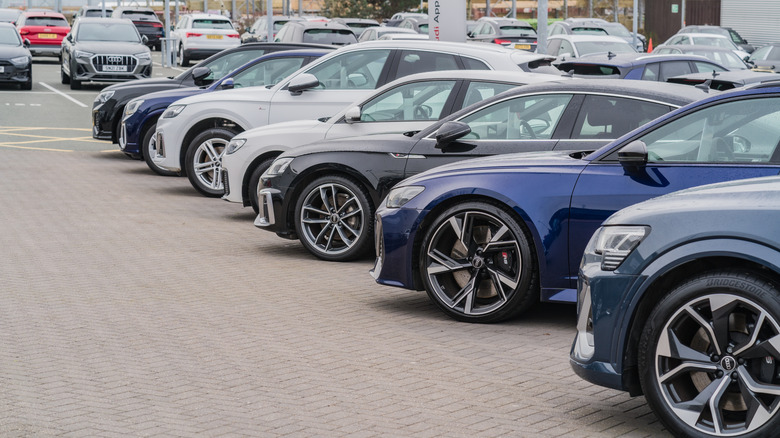
The automotive industry is a complicated patchwork of national parent companies, individual car brands, and seemingly countless nameplates. Out of this virtually impenetrable labyrinth arise some broad consumer conceptions. Chief among these widespread beliefs is that European cars are more costly to maintain than their counterparts. Although some popular assumptions are flat-out wrong, this one actually reflects on-the-ground realities. For example, according to CarEdge, the popular European brands Alfa Romeo, Volvo, and Audi carry 10-year average maintenance costs of $8,712, $10,082, and $10,211, respectively. Meanwhile, non-European luxury brands, such as Tesla, Lexus, and Genesis, all have decade-long upkeep expenses below $8,000.
The Australian Automotive Aftermarket Association's chief executive, Stuart Charity, points to the European Union's more costly labor and the higher price for parts as the primary catalysts driving up the upkeep expenses associated with European models. Fortunately, these figures represent averages, often inflated by a couple of exorbitant models in an otherwise more reasonable lineup. If you're eager to benefit from the aesthetics, reliability, or longevity for which European models have become known, you don't automatically need to pay through the nose for maintenance and repairs. There are plenty of comparatively reasonable models that won't break the bank at the auto shop.
To find the European cars with the lowest repair costs, Money Digest focused on prolonged maintenance costs. More specifically, we compared these routine expenses over the course of a decade to give owners an accurate idea of prolonged investments. After all, if you're spending more than the average model, you may be planning to drive the vehicle for a while. We also look at each nameplate's likelihood of requiring a major fix, defined as a repair costing over $500. For further budgeting, you'll find manufacturers' suggested retail pricing (MSRP) and fuel economy ratings for these models.
11. Volvo S90
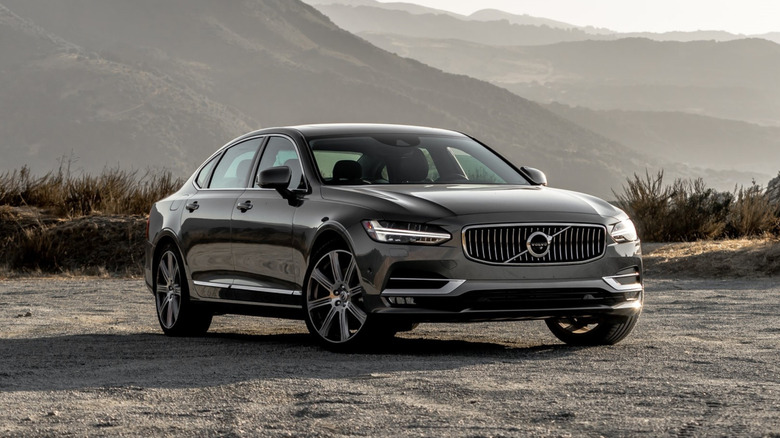
The Volvo S90 features a decade-long maintenance and repair burden of $10,013. Despite sitting at the top of this list of European models with affordable upkeep costs, these expenses still fall below the luxury sedan benchmark by $664. Furthermore, CarEdge indicates that this nameplate comes with a 27.69% risk of needing a serious fix over 10 years. That's still 1.44% lower than its competitors. RepairPal reports that vibrating brake rotors from the rear wheels are the most common problem associated with the S90. Replacing this sedan's brake pads, which ostensibly solves this issue, is priced at $311 to $382. For comparison, the market average cost for this repair hovers between $320 and $379, placing the Volvo S90's cost slightly below the norm.
The 2025 Volvo S90, the latest year available in the U.S., sports an MSRP between $59,495 and $72,395, according to Car and Driver. Meanwhile, a 2022 used model can be purchased for about $33,739, per CarBuzz. FuelEconomy.gov, the government's official source for tracking fuel efficiency across the automotive industry, reports that the 2025 S90 achieves around 26 miles per gallon combined. The Insurance Institute for Highway Safety (IIHS) judged this European sedan's crashworthiness and crash avoidance features to be above-average. More specifically, the headlights received the second-highest score, and the front crash prevention system for pedestrians performed well.
10. Audi A6
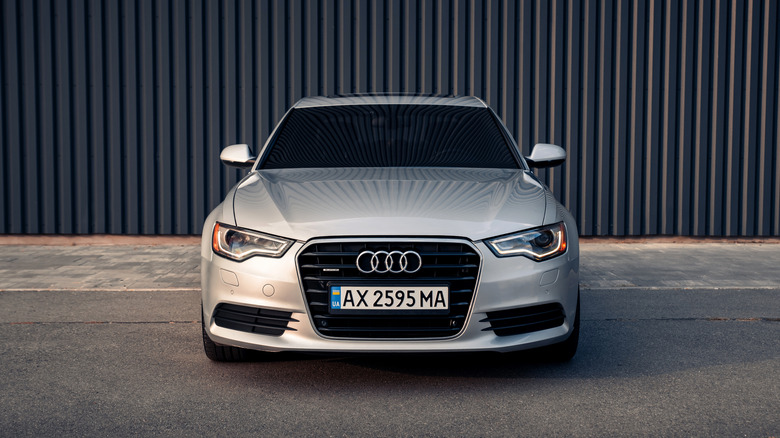
The average net worth of people who own an Audi A6 may surprise you. Perhaps even more revealing is this European sedan's relatively accessible long-term maintenance costs. CarEdge estimates that owners invest about $10,004 to keep this vehicle running smoothly within the first 10 years of driving. These routine maintenance costs fall under the segment average by $655. Additionally, drivers of the Audi A6 face a 27.69% probability of having to pay for a serious fix within the same time frame, which is 1.44% lower than for comparable models. Interestingly, this nameplate commonly experiences a hyper-specific issue of carbon buildup, resulting in various technical issues, including sudden engine shutoff, blinking lights, and bumpy idling. RepairPal suggests a general check engine light analysis as the solution, estimating the cost at $198 to $291. For context, the industry average for this diagnosis usually costs around $122 to $233.
Car and Driver estimates that the average MSRP for the all-new Audi A6 bounces from $65,395 to $72,695, depending on the trim type. However, you can pick up a 2022 used model for about $32,928, according to CarGurus. FuelEconomy.gov suggests that this model carries a less-than-ideal fuel efficiency of 23 miles per gallon combined. The 2025 Audi A6, the latest year tested by the IIHS, received perfect scores across the board, including for its crash tests, headlight performance, front crash prevention functionality, and seat belt quality.
9. Volvo S60
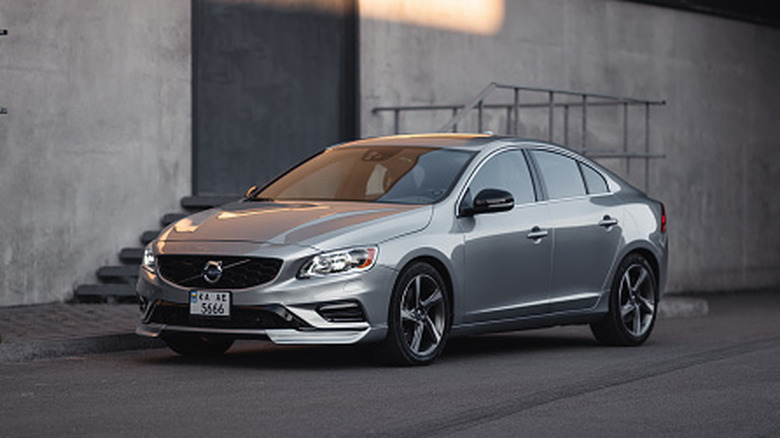
The Volvo S60 is the first model on this list of European models that are cheap to maintain to fall below the $10,000 threshold. CarEdge projects that the typical driver will pay around $9,737 for general maintenance and repairs within the initial decade of ownership. This figure undercuts the segment average by $388. Additionally, the S60's 27.69% risk of demanding a considerable repair over a decade is 1.44% lower than that of comparable models. According to RepairPal, the S60 routinely experiences transmission shifting problems, often resulting from software malfunction or hardware issues. To properly assess the situation, a check engine light test is advisable. For the S60, this usually costs $198 to $291. On average, this diagnosis runs between $122 and $233.
The 2025 Volvo S60, the newest model available for purchase, has an MSRP range between $43,795 and $59,295, per Car and Driver. If you're thinking twice about buying new, a 2022 release runs about $24,043, according to CarGurus. The baseline S60 displays a superior fuel efficiency of 30 miles per gallon combined, far higher than the market standard of 28 miles per gallon, per FuelEconomy.gov. The 2025 production year exhibits solid results from the IIHS, landing perfect results for its crashworthiness and crash avoidance features. Notably, this vehicle didn't receive as extensive testing as other models.
8. Audi A4
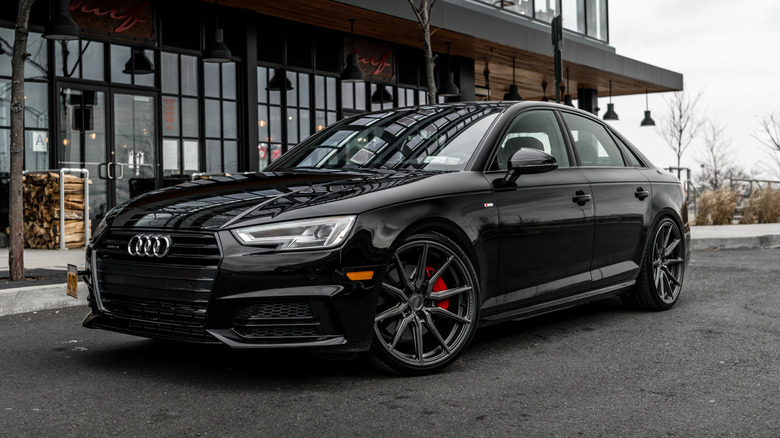
The Audi A4 drives up a 10-year maintenance and repair bill of roughly $9,645, according to CarEdge, saving owners $296 compared to similar luxury sedans. Additionally, this European model sees a 1.44% lower chance of needing a considerable fix over a decade when stacked against the segment average. The A4's probability stands at 27.69%. According to hundreds of driver complaints collected by RepairPal, the Audi A4's most common problem is oil leakage, stemming from engine gaskets. Replacing the valve cover gasket is a procedure that is estimated to cost from $387 to $590 specifically for this European nameplate. This isn't too far off from the market benchmark of $336 to $461 for the same procedure. In another display of outpacing its domestic rivals, Audi is one of the car brands more reliable than Jeep, and the A4 is a flagship model within the lineup.
2025 saw the final year of production for the Audi A4, before being replaced by the A5. When it was released, this model held an MSRP ranging from $43,295 to $52,595, according to Car and Driver. The long-running A4 offers plenty of used options. For instance, a 2022 version usually sells for about $24,925, per CarGurus. The entry-level Audi A4 trim features a combined fuel economy of 29 miles per gallon, which saves drivers over time on fuel compared to the average model, as calculated by FuelEconomy.gov. All of the 2025 A4 IIHS results were above the fray. Its crashworthiness tests were deemed pristine, while its headlights varied between the top and second-highest rating. Its front-crash prevention system for pedestrians in day time also scored well.
7. Audi A3
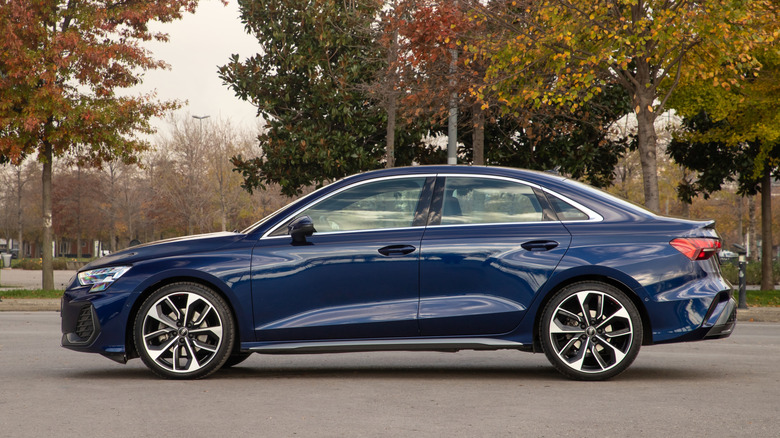
The Audi A3 costs slightly less to maintain than its A4 cousin, with a prolonged upkeep cost of $9,543. CarEdge reports that this figure is $194 cheaper than the costs owners would face from the typical premium-grade sedan over a decade. Furthermore, the A3's 27.69% risk of needing a major fix in the same period is 1.44% lower than that of its competing models. According to RepairPal, some of the more common problems suffered by the A3 include failed ignition coils and throttle system malfunction, which can lead to power loss. The simple, straightforward fix for the former issue is an ignition coil swap, usually priced between $181 and $261 for this European model. This is more accessible than the typical market price of $231 and $333 for the same procedure.
The brand-new Audi A3 has a relatively tight MSRP range from $41,395 to $44,295, per Car and Driver, making the final price more predictable for owners, no matter their trim selection. Owners looking for a bit of a break on this European model should consider the 2022 model, which tends to get priced at $22,888, per CarGurus. The sportier and higher-performing 2026 Audi A3 cannot keep up with its 2025 A4 counterpart in fuel efficiency. Still, this more compact sedan maintains the market average of 28 miles per gallon combined, as reported by FuelEconomy.gov, preventing owners from overspending on gasoline. The 2026 Audi A3 received positive feedback for its crashworthiness from IIHS results, with perfect scores on all its crash test simulations. Its headlights earned the second-highest rating. Both front crash prevention systems for vehicles and pedestrians fared well. However, its seat belt reminders were criticized.
6. Volkswagen Atlas
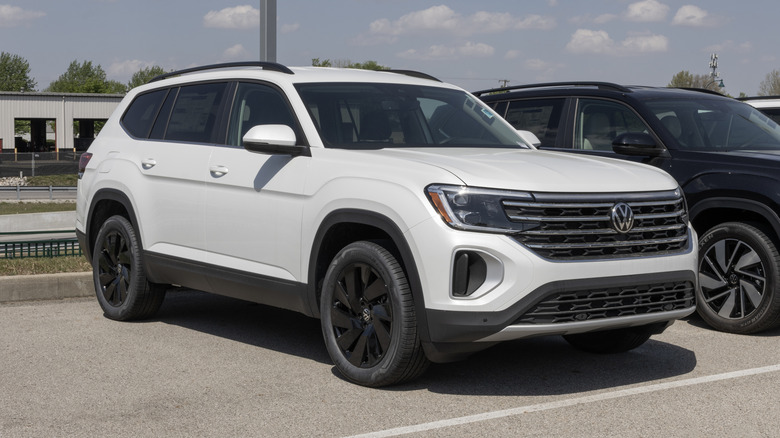
The Volkswagen Atlas pulls down the 10-year maintenance costs below the $9,000 mark, with a decade-long average upkeep expense of $8,411. CarEdge reports that this undercuts the SUV segment norm by $101. Additionally, Atlas drivers experience a 23.55% risk of needing to cover a serious fix in this time frame, which is 0.42% lower than the probability carried by comparable models. RepairPal suggests that Atlas owners commonly complain about a rattling sound emanating from the tailgate. This relatively benign issue is resolvable with felt pads, demonstrating the nameplate's modest maintenance requirements. For context, a battery replacement, which is a routine procedure, runs around $327 to $361 for the Atlas. Meanwhile, the market average price is closer to $412 and $448, placing this European model far below what the typical vehicle demands.
The 2026 Volkswagen Atlas features an MSRP starting at $40,785 and topping out at $56,105, as reported by Car and Driver, varying by trim type. While cheaper than many Audis or Volvos, some budget-aware buyers may be looking for a better deal. Fortunately, this long-running model has 2022 versions averaging $26,363, according to CarGurus. Unfortunately, the all-new Tiguan only gets around 23 miles per gallon combined, per FuelEconomy.gov. This is bad news for drivers in states with the absolute highest gas prices, as it pales in comparison to the market benchmark. The IIHS awarded the 2026 Volkswagen Atlas with a Top Safety Pick classification, the group's second-highest rating, signaling exceptional crashworthiness and safety standards. This SUV landed premium results across all crash test simulations, as well as for its headlights.
5. Volkswagen Tiguan
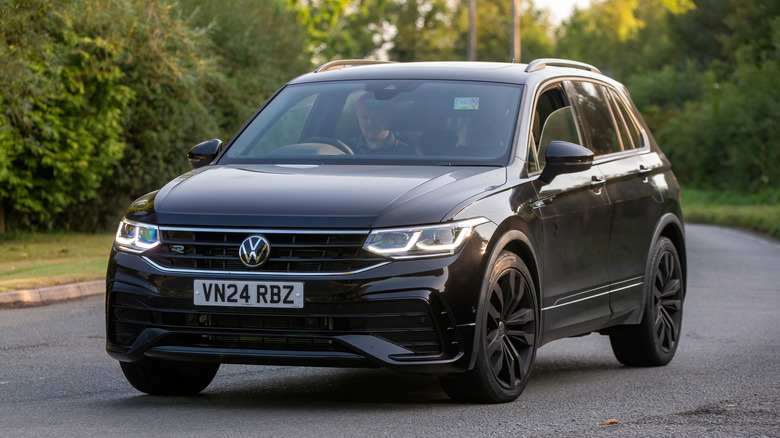
The Volkswagen Tiguan knocks down an owner's projected maintenance costs by another few hundred dollars, with a decade-long upkeep bill of about $8,185. CarEdge reports that this is $327 cheaper than the usual costs for comparable SUVs. Tiguan owners also face a 23.55% risk of needing to cover a major repair over a decade. That's only about 0.42% lower than competing models. Despite these fairly reasonable expenses, Volkswagen is one of the customers' least favorite car brands. According to RepairPal, some of the Tiguan's most commonly cited issues include carbon buildup and a clunky subframe during acceleration. For both issues, diagnostic checks are recommended. Specifically for this European vehicle, a general diagnosis from an auto shop costs between $140 and $206, versus the market average of $122 to $179.
If you're interested in buying the 2026 Volkswagen Tiguan, you should budget around $32,280 to $44,560, per Car and Driver. Of course, you can lock in a lower price on the used market. CarGurus shows that 2022 models usually sell for about $21,551. FuelEconomy.gov indicates that the entry-level trim still achieves a solid 28 miles per gallon combined, which fits squarely with the market average, saving owners from exorbitant fuel expenses. The IIHS gave the 2026 Tiguan a robust safety and crashworthiness report card, with only one metric falling below the average. More specifically, the SUV's moderate front overlap crash simulation received the lowest score possible. In fact, the only other variable failing to get a perfect rating was the headlights of some specific trims.
4. MINI Countryman
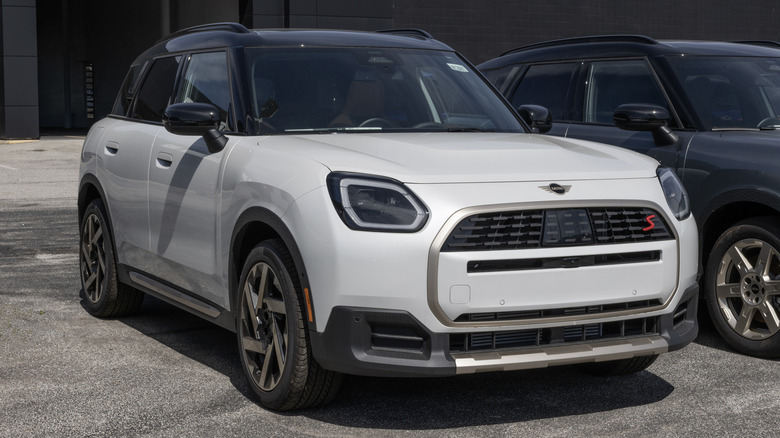
The Mini Countryman runs up a maintenance bill of roughly $8,072 over a decade. This upkeep expense is $440 less than the SUV segment. Drivers face a 22.65% risk of needing to pay for a serious fix within the first 10 years of ownership, although this is 1.32% better than comparable models, according to CarEdge. RepairPal reports that a leaking water pump is among the chief concerns for Mini Countryman owners, although this issue can be solved with a water pump replacement, costing somewhere in the ballpark of $1,042 and $1,377. This isn't too far of a departure from the market's average service cost, between $857 and $1,106.
The 2026 Countryman is an SUV version of the long-running hatchback version. This brand-new nameplate costs between $36,075 and $43,475, according to Car and Driver. CarGurus indicates that the 2022 release drops the price to about $21,324. FuelEconomy.gov reports that the all-new Countryman achieves about 27 miles per gallon combined, placing it close to the market average. The IIHS awarded the 2026 Countryman with first-rate scores on its crash test simulations, headlight performance, and front crash prevention system for pedestrians.
3. Volkswagen Arteon
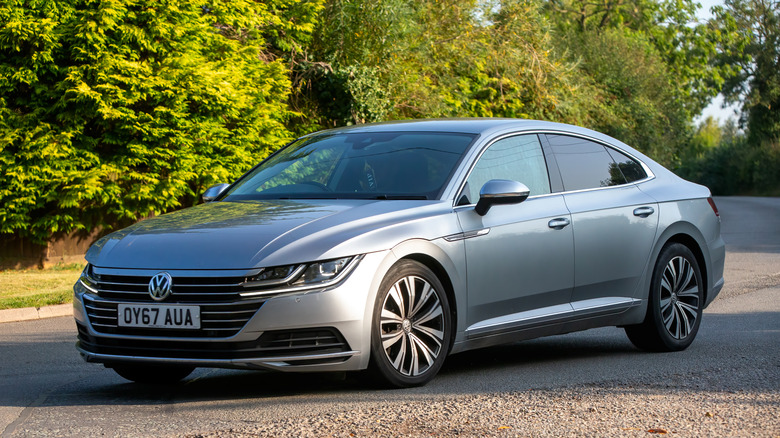
The Volkswagen Arteon knocks down the 10-year maintenance cost of European models even further, attracting an auto shop bill of $6,529 during this period. CarEdge estimates that this upkeep figure is roughly $564 below the sedan average. The Arteon also sees a moderate 17.42% needing a considerable repair over a decade, which is about 0.46% lower than the segment benchmark. RepairPal doesn't report any frequent consumer issues with the Arteon, reflecting a problem-free driving experience and infrequent repair demands. For additional context, a brake pad replacement, a completely normal procedure, costs between $277 and $336 for this model. This is slightly less than the industry average price of $320 to $379.
2023 was the final year of the Volkswagen Arteon, when the sedan saw an MSRP range of $44,305 to $51,470, per Car and Driver. However, the typical used 2023 Arteon sells for an average of $32,235, according to CarGurus. Even more savings can be found with the 2019 version, which tends to be priced at $18,791. FuelEconomy.gov reports that the 2023 Arteon exhibits a stellar 28 miles per gallon combined, which reaches the 2026 market average, but three years in advance. Perhaps most impressive is the 2023 Arteon's IIHS Top Safety Pick+ classification. This hatchback landed pristine scores on various crashworthiness tests, along with its headlight performance. Its front crash prevention systems also did well.
2. Volkswagen Jetta
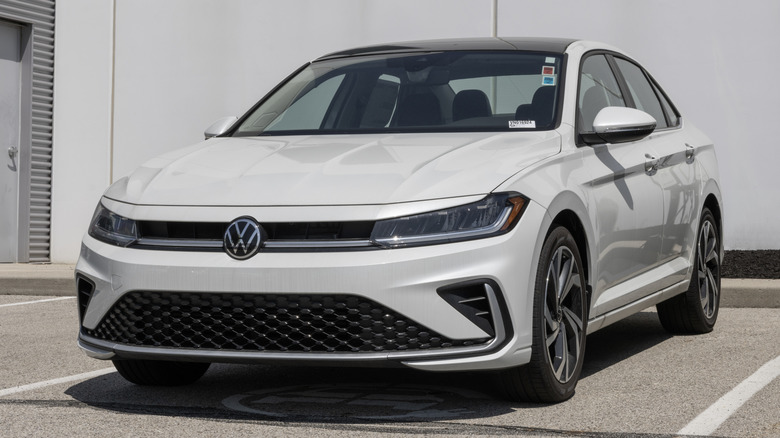
CarEdge recommends that Volkswagen Jetta owners budget about $6,053 for general maintenance and repairs within the initial 10 years of driving, which is $88 below that of competing models. Keep in mind that sedans are known for their affordable upkeep. Additionally, the Jetta experiences a 17.42% probability of requiring a major fix over a decade, once again, falling 0.46% under the average. Some common sources of a Jetta's check engine light illuminating are failed spark plugs, ignition wires, and ignition coils, per RepairPal. In this sedan, a spark plug wire swap costs from $235 to $390, while an ignition coil replacement runs between $155 and $216. When looking at market averages, the former issue costs $231 to $333, while the latter usually costs $249 to $333, placing the Jetta at or even below the norm.
According to Car and Driver, the MSRP for the all-new Volkswagen Jetta jumps between $25,270 and $31,270, making it one of the more modestly priced vehicles on this list. Consumers can get an even better deal by purchasing the 2022 model for an average of $18,455, per CarGurus. On top of a digestible starting price, the Jetta boasts a remarkable fuel efficiency of 34 miles per gallon combined, according to FuelEconomy.gov. This proves you don't need to purchase hybrid cars with the best gas mileage in order to save at the pump. The 2026 Jetta regrettably received mixed results from the IIHS. All crash test simulations performed above the market standard, but the vehicle's front crash prevention system for pedestrians and seat belt reminders fell short.
1. Volkswagen Golf GTI
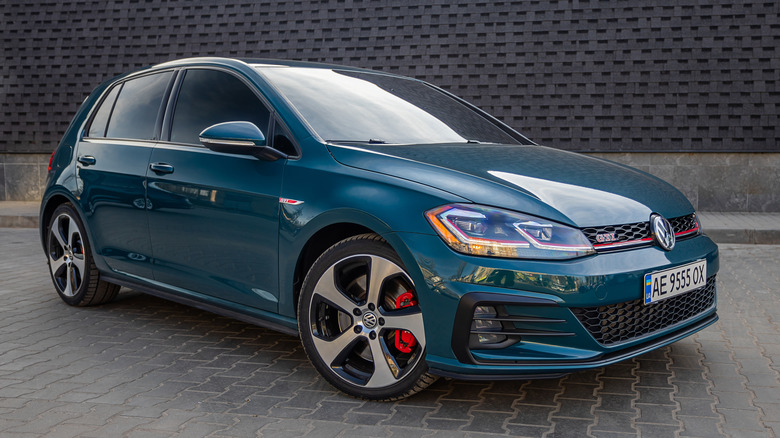
The Volkswagen Golf GTI completes the list of the most affordable European cars to maintain. Over the initial 10 years of ownership, CarEdge predicts that drivers will only spend about $5,973 on general upkeep. For reference, that undercuts the hatchback segment by a staggering $955. Also, the Golf GTI's relatively modest 16.43% likelihood of demanding a considerable fix over a decade is 2.63% better than the competition. RepairPal notes that many production years experience routine failure from power windows, making operation inconsistent. The replacement of a window regulator for this model is priced at $414 to $504. On the general market, this procedure usually runs about $399 to $554, placing the Golf GTI right in line with the average.
Car and Driver estimates that the 2026 Volkswagen Golf GTI can cost anywhere from $35,865 to $43,755. Looking for a little price break? You can scoop up the 2022 version for only $26,575, according to CarGurus. The entry-level trim gets an average 27 miles per gallon combined, per FuelEconomy.gov, which is slightly below the market standard. IIHS awarded the all-new Golf GTI with premier scores across its crashworthiness tests and seat belt standards. However, it's vital to note that this nameplate wasn't put through as strenuous testing as some other models. Still, the agency highlights that this hatchback is equipped with blind spot detection, rear automatic braking, and lane keep assist in all trims.