

12 Lexus Cars For A Retiree, Ranked Worst To Best
The Lexus brand has become synonymous with luxury, reliability, and safety, following a long track record of premier performance across various vehicle classes. Consumer Reports has recognized this Toyota marque as one of the most dependable luxury car brands on the market. Furthermore, CarEdge highlights Lexus as the leading luxury manufacturer for resale value, beating out the competition's depreciation rates across three, five, and seven-year time spans. This first-rate reliability and longevity are even paired with affordable maintenance. According to CarEdge, Lexus is the second most affordable brand in terms of upkeep expenses, with the average model costing $7,110 in general repairs across the initial 10 years of ownership. This automaker is only beaten out by Tesla, since electric vehicles are generally cheaper to maintain than hybrid or internal combustion engines.
Given these highlights, many retirees consider Lexus vehicles to drive throughout their golden years. While there's no denying the dependability and appeal of this lineup, it's crucial to understand that Lexus produces a broad range of nameplates. Some are perfectly suitable for retirees, with reasonable Manufacturer's Suggested Retail Prices (MSRPs), manageable maintenance expenses, and solid safety standards. However, a handful of Lexus models fall outside of what the average senior driver would consider. Some sports-focused models have extremely low ride heights and unnecessarily powerful engines, which can inflate the sales price. Others are simply too pricey to make sense for the average consumer, with a disproportionate focus on performance, materials, and design, all while sacrificing comfort and handling.
To help seniors choose the perfect vehicle, Money Digest has listed 12 Lexus cars for a retiree, ranked from worst to best. We focused on upfront costs, long-term upkeep expenses, and residual value to provide a complete financial picture. Crash test and recall information is included, too, offering an accurate representation of the safety angle.
12. Lexus RZ
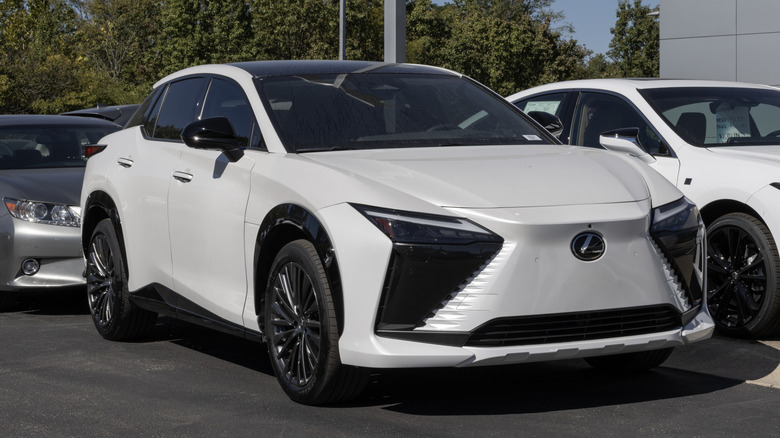
At first, the Lexus RZ may seem like a reasonable choice for retirees, but this electric vehicle (EV) has some significant considerations. The MSRP between $42,800 and $57,430, according to Edmunds, for the 2025 model is by no means the priciest, but the RZ struggles to justify the cost. Kelley Blue Book (KBB) estimates that the average new car sells for $51,456, so the RZ would either save seniors 16.83% or cost them 11.60% more than the industry standard, depending on the type of trim chosen. This fully electric SUV struggles to get 266 miles per charge, which falls behind many of its EV competitors. Unlike hybrids, which offer some energy flexibility, this EV requires seniors to install an at-home charger or constantly find available stalls. Critics also point out the RZ's lack of cargo space, limiting what seniors can do with this model.
If you're wondering if an EV really saves you money in the long run, this Lexus model shows the calculation fairly clearly. Although it boasts a modest 10-year maintenance bill of $4,566, according to CarEdge, it depreciates rapidly. After a decade of ownership, the RZ only retains 26.98% of its original value, per CarEdge. This doesn't leave seniors with much of a resale value when wanting to offload the vehicle. The only upside to this rapid depreciation is a steep drop in cost in the used market, but the RZ is still plagued by practical issues.
11. Lexus LS
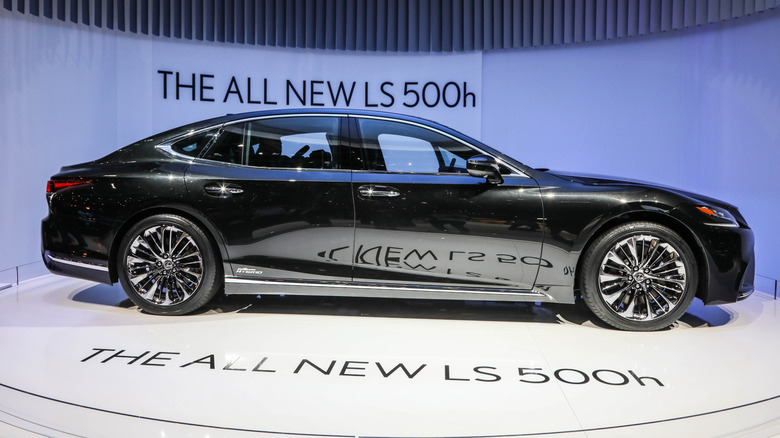
The Lexus LS is a sizable sedan offering more space than a standard model, such as a Honda Civic or Toyota Avalon. However, this model's impressive scale and luxury feel come at a steep MSRP of $97,830, per Edmunds. For reference, this is 90.1% above the average asking price of new vehicles. While convenient for storage and comfort, the extra space can make the LS challenging to navigate in tight quarters, such as a parking lot or even a garage. Seniors may also dislike the overly active safety features, which can be distracting when driving.
Despite its cost-prohibitive price tag, the LS 500 undercuts the average luxury sedan in 10-year maintenance costs by $3,029. Overall, this sedan runs $6,661 worth of upkeep across a decade, according to CarEdge. Unfortunately, this sedan flops with a high depreciation rate, only maintaining 35.05%of its original value, as reported by CarEdge, after 10 years of ownership — the second worst on this list.
10. Lexus LX
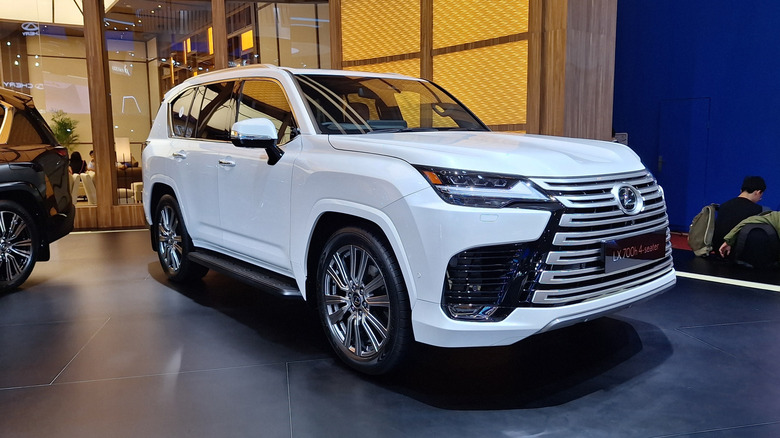
The Lexus LX is a highly capable SUV that dominates in off-pavement performance, but this hyperfocus on ruggedness overlooks the smoothness seniors expect on daily drives around the city or longer trips on the highway. Plus, the blocky LX doesn't even offer more room than comparable models. Furthermore, the low fuel efficiency of 19 combined mpg won't save any money on energy. All these downsides together struggle to justify a towering MSRP between $107,000 and $141,500, as reported by Edmunds. This hovers between twice as much and nearly three times the cost of the average new model.
Unsurprisingly, this highly expensive Lexus SUV also comes with an exceedingly lofty maintenance bill. Owners can expect to pay $8,943 across 10 years of ownership. Perhaps more perplexing is the fact that this figure stands below the average upkeep expenses of luxury SUVs by $3,510, per CarEdge, further driving home the idea that uber-premium SUVs aren't ideal for the average retiree. The LX 600's depreciation rate is a rare upside, with a residual value of 45.29% following 10 years of regular use, according to CarEdge. Still, this means this model remains pricey even when looking to buy used.
9. Lexus LC
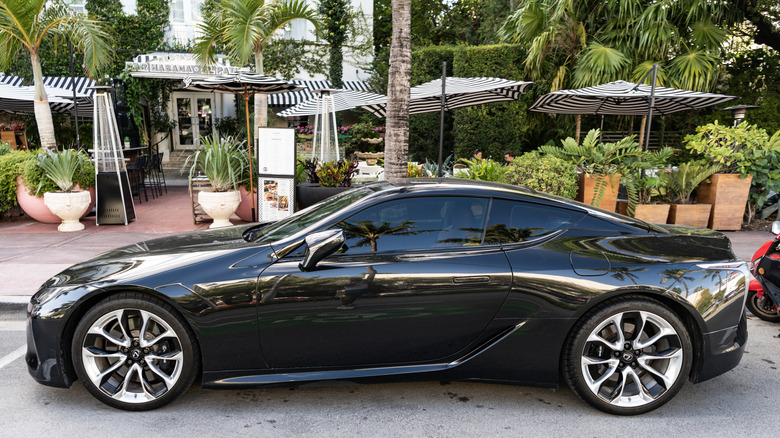
The 2026 Lexus LC is a niche sports model complete with a potent V8 engine. Unless this powerful two-door coupe is your dream vehicle, it may fail to meet many of your essential needs in retirement. For starters, Edmunds reports that the MSRP is a burdensome $109,350, which is an eye-watering 112.5% above the cost of the average new vehicle. Despite its smaller stature, the LC still struggles with low fuel economy, getting about 18 mpg combined. While all retirees would be paying more at the pump, those living in the states with the absolute highest gas prices would face a considerable energy burden. You can get the LC in either a hard-top or convertible version, but both iterations offer limited space in the cabin and trunk. Despite its costly price, the LC doesn't come with an all-wheel drive option. Even if you were to purchase the LC, it still fails to measure up to competing coupes with slugging acceleration.
According to CarEdge, this luxury coupe costs about $7,334 to maintain within the first 10 years of ownership. While sitting above the upkeep expenses of more mainstream vehicles, the LC beats out the competition in its luxury class by $5,082. This nameplate is also extremely resistant to depreciation, maintaining 50.55% of its value even after a decade or routine driving, per CarEdge. Although this is positive for owners, it means buying used remains expensive.
8. Lexus RC
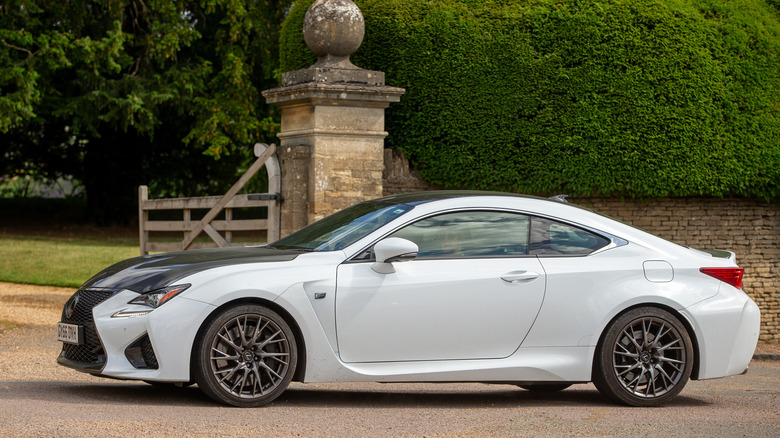
The Lexus RC is a premium two-door coupe with an MSRP between $45,620 and $92,825, according to Edmunds. The cheapest trim is actually more affordable than the average new-car price by 11.3%, although the most expensive iteration is 80.4% more expensive than the market norm. The entry-level trim is equipped with a forceful V6, and the upper-level model is powered by a throaty V8. In reality, this overpowered coupe, even at its lowest price, isn't ideal for seniors. Retirees don't appreciate the lower ride height, extremely tight cargo area, and virtually non-existent rear seat. Similar to the LC, the RC comes up shy when measured against its luxury peers. Lexus must have caught on to the feedback, deciding to discontinue the model in 2025. Again, the RC is generally less expensive to maintain than its counterparts.
CarEdge puts the prolonged upkeep bill at $6,239 over a decade, which is $6,177 lower than that of other coupes. Still, these aren't monthly expenses you want to forget putting in your budget. Additionally, the RC's laudable 10-year residual value of 50.55%, as reported by CarEdge, is solid for current owners but results in exorbitant second-hand prices for seniors buying used.
7. Lexus GX
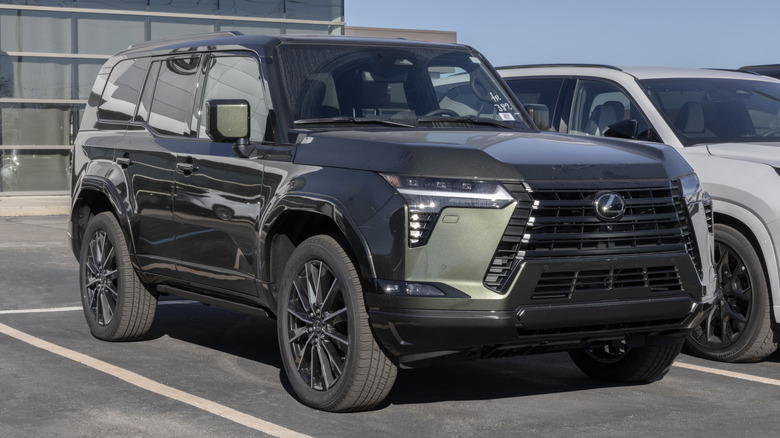
The Lexus GX starts to scratch the surface of what retirees need in a top-tier SUV. True to the brand, this vehicle offers a luxury look and feel with high performance. The undeniable off-road capability is an appealing feature, but, unlike other SUVs on this list, it doesn't take away from the on-the-road experience. A wide array of trims gives retirees a suite of options from which to choose based on their unique needs and wants. The GX's largest blemish is its costly fuel efficiency, with a 17 combined mpg. Although this three-row SUV can fit a ton of people or belongings, the third row is tight. The GX's shortcomings make it harder to swallow the MSRP, which bounces from $66,285 to $82,750, per Edmunds. For perspective, retirees settling on the GX would be paying somewhere between 28.8% and 60.84% more than the market standard for new vehicles.
The elevated costs don't stop there, either. CarEdge forecasts that GX owners should anticipate a total maintenance bill of $8,212 over the span of a decade. While this does fall below the average for luxury SUVs by $4,241, it's still a serious financial consideration. If you've ever thought about how quickly a car's value can depreciate after you buy it, the GX's residual value may come as a pleasant surprise. Following a decade of routine use, this Lexus SUV still retains about 45.29% of its original sales price, according to CarEdge, keeping more money in the pockets of seniors. The flipside of this impressive value retention is higher used prices, however.
6. Lexus IS
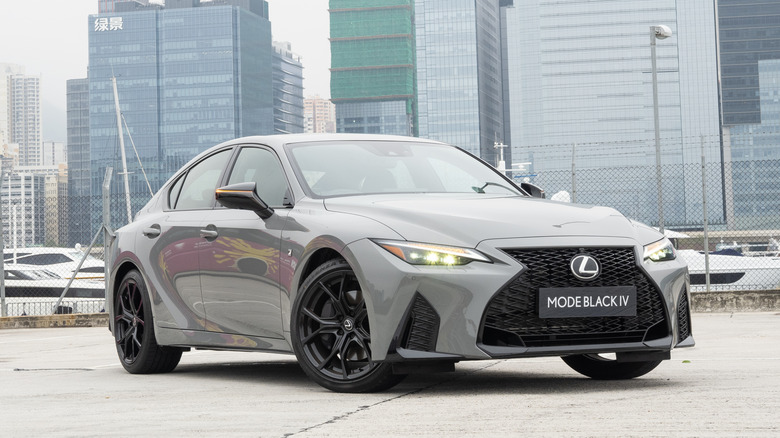
The Lexus IS is a turning point for these Lexus cars for retirees, ranked from worst to best. At this point, the MSRP of $45,500 to $49,950, as reported by Edmunds, is one of the most eye-catching details. All trims undercut the average cost of a new vehicle, saving retirees anywhere between 3% and 11.6%. In the Lexus lineup, the IS is slowly being phased out, with many trims no longer available. Although many of its features haven't been updated in a few iterations, the nuts and bolts can still work for seniors. Drivers enjoy the responsive handling, giving a feeling of complete control. The ride quality is smooth, and the seats are comfortable. While offering more space in the rear than smaller Lexus sedans, the backseat may feel confining for adults on longer rides, but it does the trick for daily commutes. The upgraded 12.3-inch touchscreen control system is intuitive and easy to read.
Lexus isn't known for being one of the car brands that cost the least over time, but the IS helps reduce the luxury marque's associated long-term financial burden. CarEdge estimates that Lexus IS owners commit around $5,848 over the first decade of driving in general maintenance and repairs. This repair bill is a solid $3,842 under the average for similar luxury sedans. CarEdge further estimates that this nameplate's 10-year residual value is 42.39%, offering owners a long-term retention of their investment.
5. Lexus TX
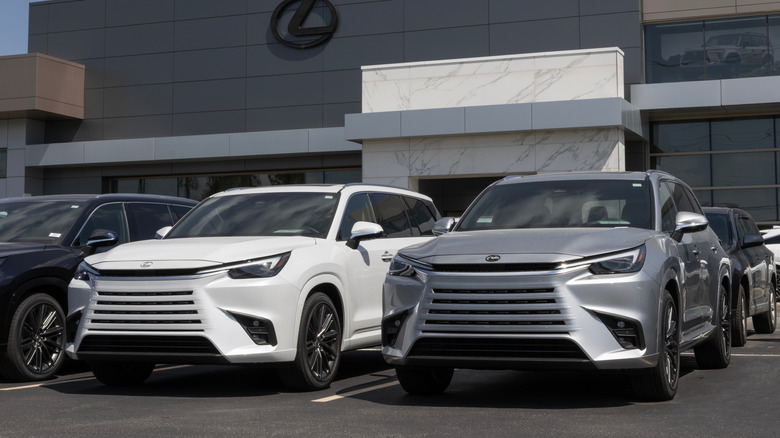
The Lexus TX is a powerhouse SUV with all of the creature comforts and practical features for retirees who want to strike a balance between functionality and performance. Whether you want space to haul around the family, friends, or furry friends, the TX is a solid choice. This three-row SUV offers copious space both in the cabin and the trunk without giving up too much fuel efficiency, with a 23 combined mpg. The sunroof is a nice added feature, too. While not quite as expensive as models that are unfriendly for retirees, the TX also isn't the cheapest. Edmunds places the MSRP range between $56,740 and $80,610. The entry trim is 10.27% more than the average new car, and the most expensive is 56.66% pricier.
Despite its large size, the TX is actually reasonably affordable to maintain. CarEdge places the 10-year upkeep costs at around $7,922, which falls in line with some of the smaller Lexus SUVs. Even among its luxury peers, the TX is $4,531 cheaper to keep running smoothly. If you're struggling to decide between buying used or new, the Lexus TX makes the decision a bit easier. If you buy this SUV new, you'll still have 39.86% of the original sales price even after 10 years, according to CarEdge. That's not the best in this grouping of Lexus vehicles for retirees, but it's not at the lowest point either. This leaves some breathing room for seniors looking for a deal on a used model.
4. Lexus UX
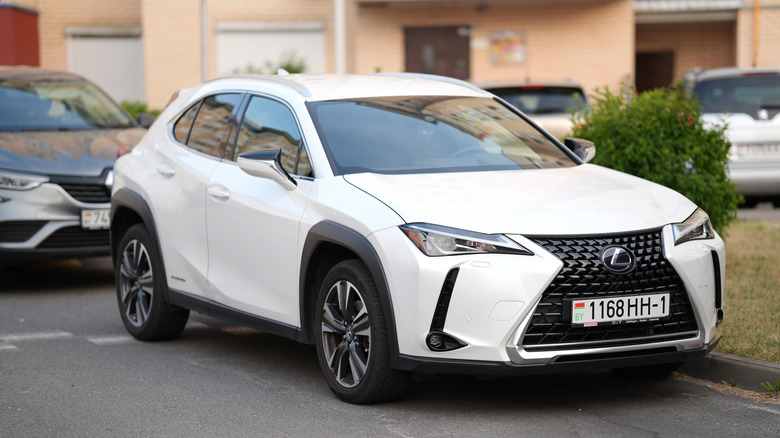
Seniors who enjoy the zippy performance, convenient size, and cost-friendliness of standard crossovers but want a little kick of luxury will love the Lexus UX. Edmunds places this nameplate's MSRP between $37,155 and $47,145. Seemingly ironically, this luxury vehicle can save retirees up from 8.4% to 27.8% compared to the market average. This compact SUV comes standard with a hybrid engine, which gets an exceptional 44 combined mpg. This ensures seniors end up paying less than what the average American pays in gas. On top of nearly unbeatable fuel efficiency, seniors can benefit from a suite of standard tech. This small SUV makes for an easy driving experience throughout the city and simple parking. Of course, the UX gives up a little space in the rear seat, but it remains comfortable for daily driving.
CarEdge estimates that owners spend about $7,516 on general maintenance within the initial decade of ownership. This is $4,937 lower than the upkeep expenses of similar luxury SUVs. Even after a decade of routine driving, the UX retains roughly 39.86% of its initial sales value, according to CarEdge depreciation data. This sweet spot helps equip current owners with a solid long-term investment while keeping used models from remaining too pricey.
3. Lexus NX
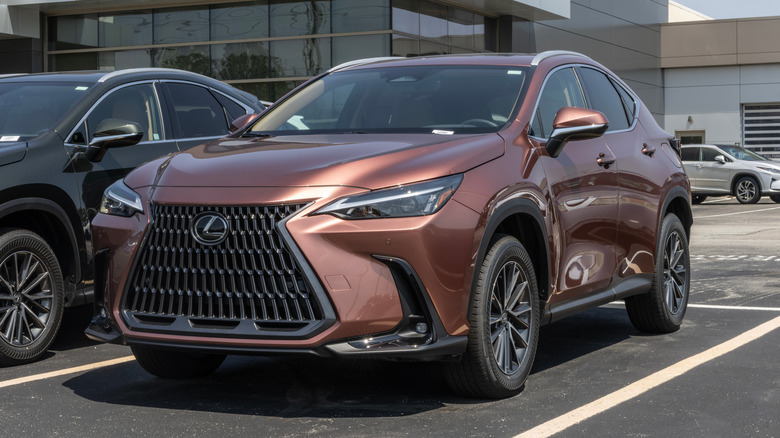
The Lexus NX packs a whole lot of premium feel and performance at a modest price for a luxury brand. Edmunds indicates that the 2026 model is sold for between $45,175 and $62,830. The most accessible version will save you 12.20% compared to the average new-car price, although the priciest trim is 22.1% higher than the market standard. The Lexus NX's standout feature is a remarkable fuel efficiency of up to 40 mpg combined. Admittedly, this SUV has less room than some of its peers, giving up some space in the rear seat and trunk. Seniors can benefit from the long list of standard features, comfortable seating, smooth handling, and an easy-to-see 14-inch display. The NX gives up some sportiness present in more performance-oriented models, but the driving experience is no-nonsense and straightforward, something all retirees can appreciate.
CarEdge predicts that the NX runs up a maintenance cost of $7,570 over the initial decade of ownership. Retirees would be saving $4,883 when measured against comparable luxury SUVs. This vehicle's depreciation rate falls somewhere in the middle among this list of Lexus cars for retirees, with a 10-year residual value of 39.86%, as reported by CarEdge. This balance leaves current owners with decent resale value without making used models too pricey for buyers who baulk at the MSRP.
2. Lexus RX
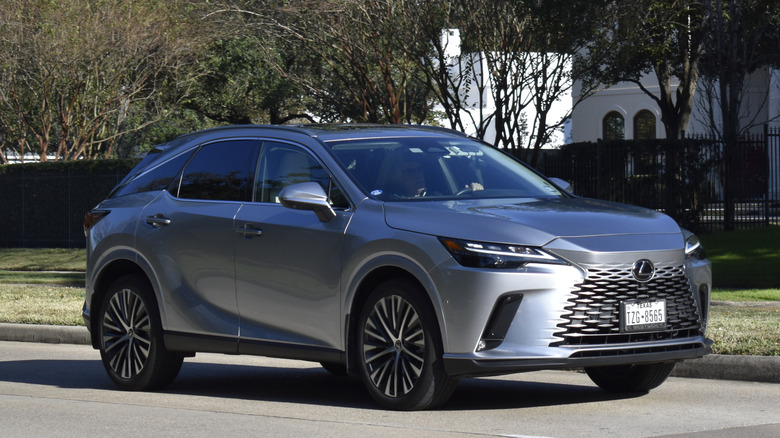
Money Digest has highlighted the Lexus RX as a good investment for retirees. This framing as an investment is purposeful given that this SUV's MSRP of $50,525 to $71,860, according to Edmunds, represents a high cost for many retirees. However, the reliable RX has the longevity to endure throughout your golden years. The baseline trim is about 1.8% more affordable than the typical new car, and the priciest version extends beyond this average by 39.6%. For retirees committed to an SUV nameplate, the RX is an excellent selection. You'll get a wallet-padding 25 mpg combined, which beats out many of its peer models. Admittedly, this nameplate gives up some of the engine capacity and acceleration offered by pricier Lexus SUVs, but the average retiree isn't looking for world-class sportiness. Drivers find the seating spacious and comfortable with a premium feel. The interior is more than roomy enough for driving around friends or grandchildren.
CarEdge projects the decade-long maintenance for the RX at $7,842, which is a considerable $4,611 under the average for luxury SUVs. The RX holds onto a stellar amount of value, with a 10-year residual value of 45.29%, as reported by CarEdge. This helps retirees preserve their investment over the long run.
1. Lexus ES
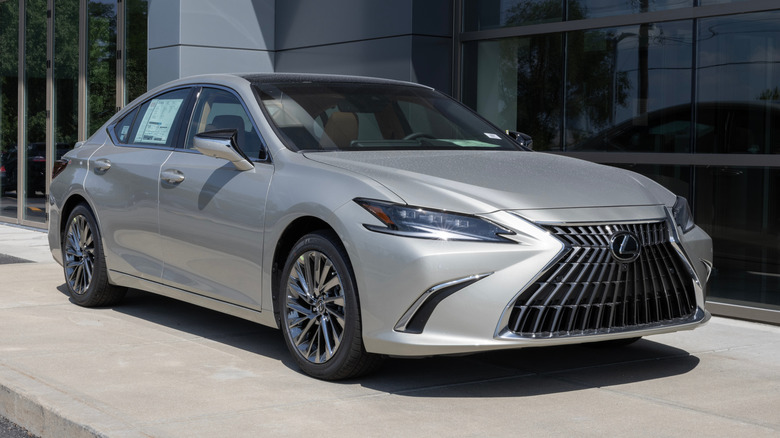
The Lexus ES tops the list as one of the best cars for a retiree. The 2026 model features an MSRP between $47,500 and $58,900, per Edmunds, among the more reasonable prices for a new Lexus. Depending on which nameplate you choose, the cost will hover from 18.1% cheaper and 1.9% costlier than the industry average. While not quite as inexpensive as the best cheap cars that are still reliable, these prices are reasonable for a luxury car brand. The ES is about as straightforward a sedan as offered by Lexus. It offers the style, opulence, and quality material offered in other Lexus models with the spaciousness and comfort retirees can enjoy. The rear seat is plenty large for both kids and adults, although they don't fold down. Fortunately, the trunk is sufficiently proportioned to hold daily needs or long-term hauls. The base model engine isn't quite as powerful or speedy as other models, but it offers smooth and responsive handling. Spending a little bit more for the hybrid version yields excellent gas mileage, but even the standard 28 combined mpg is a cost-saver.
Beyond a manageable entry price, the Lexus ES offers a comparatively modest 10-year maintenance cost of $5,919, which is $3,771 lower than the norm for other luxury sedans, according to CarEdge. The Lexus ES also holds onto its value across long periods of routine use. After 10 years, owners will still have 45.11% of their original investment, per CarEdge data.