

The 11 Best Nissan Cars For Retirees, Ranked Worst To Best
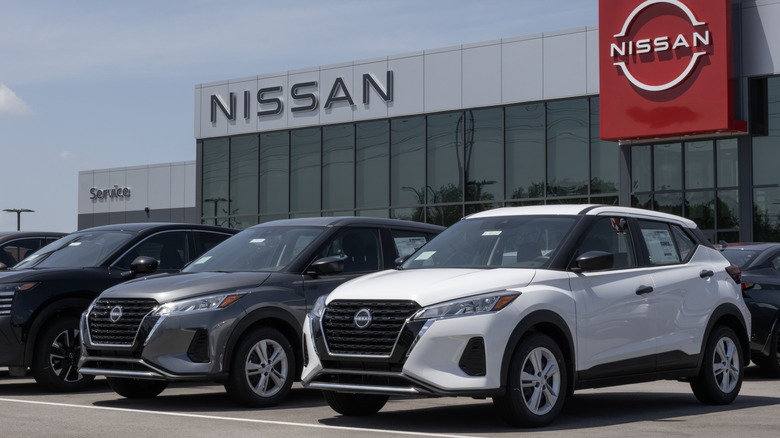
Nissan is a successful Japanese car brand that has had a continuous presence in the United States since 1959, and it maintains a wide array of options for customers in 2026. Whether you're searching for a zooming sports car, a practical sedan, a capable pickup truck, a dynamic SUV, or a cost-saving electric vehicle, Nissan has you covered. But while the brand's variety cannot be denied, that doesn't automatically qualify each nameplate as a viable choice for retirees.
Many of the best cars for retirees share the same important characteristics: solid fuel economy to limit costly bills at the pump, sufficient room in the cabin for a comfortable ride, a reliable build to prevent costly maintenance and repairs, and premium safety ratings and features.
To assess how Nissan's current lineup tracks with these specific requirements, we looked at new and used sales figures in early May 2026 to give seniors a clear cost difference between nameplates of varying production years. Furthermore, long-term maintenance expenses give potential buyers a full view of prolonged ownership costs. Average fuel costs were pulled directly from government sources and paired with projected gas savings based on national average gas prices in spring 2026 and the assumption that the driver travels 15,000 miles per year. Lastly, we assessed independent crash test data to give an accurate depiction of each vehicle's safety standards.
11. Nissan Z
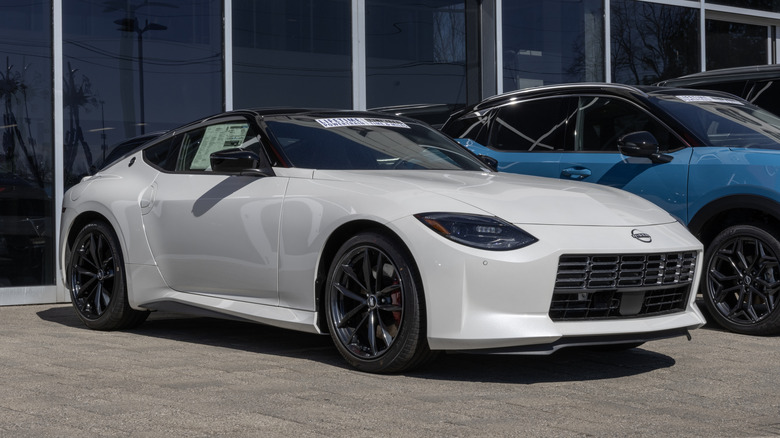
The Nissan Z is a high-performing, two-door sports car reminiscent of old-school Nissan designs. This coupe's V6 engine boasts 400 horsepower and quick acceleration. Unfortunately, it has no rear seat and limited cargo space. For the majority of seasoned drivers, this nameplate is simply too overpowered, too costly, and too severely limited in space to be a legitimate consideration.
J.D. Power estimates that the 2026 model costs between $39,670 and $70,102 as of May 2026. The oldest used model you can get is from 2024 and still sells for about $44,111, per CarGurus, as of this writing. Furthermore, FuelEconomy.gov estimates that the newest Nissan Z's combined fuel economy is 20 miles per gallon, resulting from 18 in the city and 24 on the highway. Overall, retired Z drivers could face fuel expenses around $6,500 more than the average new car over the course of five years, based on gas prices in spring 2026.
CarEdge estimates that the average owner of the Nissan Z spends about $6,794 in maintenance over the initial 10 years of driving. This is $525 cheaper than its peers in the coupe sector, though it still experiences a 17.94% risk of needing at least one $500 fix in that same time frame. The Nissan Z comes with various standard safety features across its trims, such as blind-spot detection, pedestrian monitoring, and automated emergency braking. However, the Insurance Institute for Highway Safety (IIHS), an independent agency that tests vehicle safety, hasn't even tested this model due to its small market share.
10. Nissan Armada
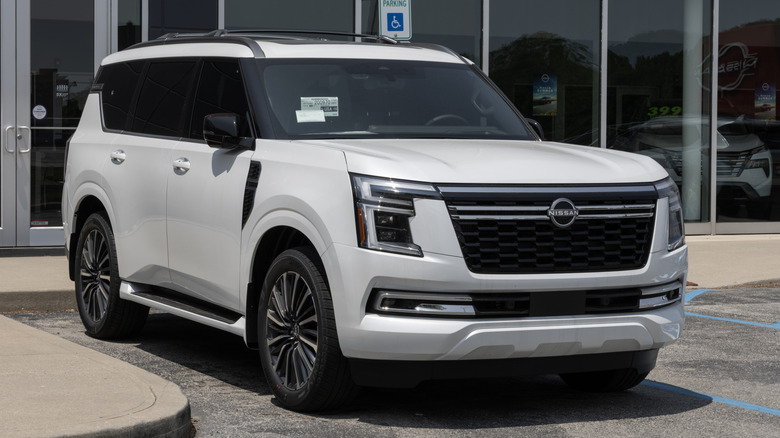
The Nissan Armada is an imposing full-size SUV that lives up to its name, offering three full rows of seating fully suitable for adult passengers. This model's standard V6 engine can pull up to 8,500 pounds and produces up to 460 horsepower. While the Armada is unquestionably powerful and sizable, it simply surpasses the basic needs of most retirees. This overachievement is perhaps best reflected in its relatively hefty price range of $51,398 to $87,896, per J.D. Power's May 2026 estimates. If you're thinking of buying used, the Armada remains costly. For example, the 2022 model still sells for $32,200, according to CarGurus. The standard two-wheel drive model suffers from a gas-guzzling 18 miles per gallon combined fuel economy, and FuelEconomy.gov indicates that the Armada's five-year fuel costs exceed those of the market average by a whopping $8,500.
Within the first 10 years of ownership, Nissan Armada owners tend to spend $8,729 on general upkeep. These maintenance costs extend beyond the class average by $563. Furthermore, this SUV comes with a 22.95% likelihood of demanding a considerable repair in the same time frame, as reported by CarEdge. However, the Armada does make up for what it lacks in affordability with its safety standards. The IIHS has included the last two releases in its two highest safety classifications. More specifically, it declared the 2025 model a Top Safety Pick+, while the 2026 model is recognized as a Top Safety Pick.
9. Nissan Frontier
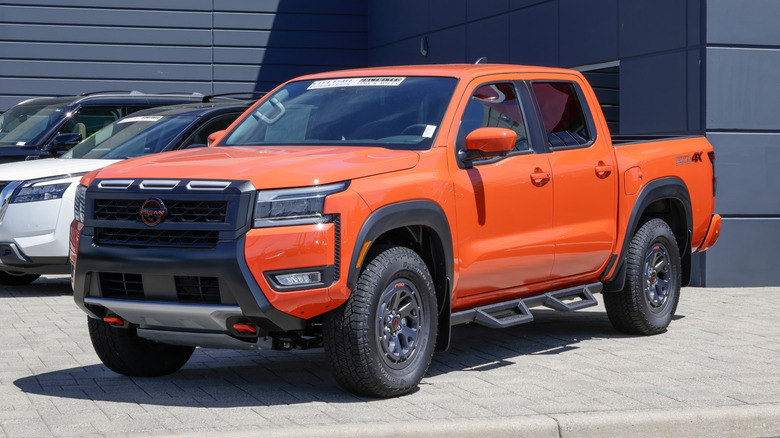
The Nissan Frontier is already a major improvement compared to the Z or the Armada in terms of functionality and practicality for retirees. However, this mid-size truck still misses the mark in several key categories. J.D. Power estimates that the 2026 model sells for between $31,165 and $46,161, putting it right in line with similar pickups. Yet, the standard Frontier has limited rear legroom, subpar towing ability, and subpar performance on tough terrains compared to some competing trucks. The baseline trim exhibits a mediocre 21-mile-per-gallon fuel economy, which results in five-year gas costs $3,500 above the market average, per FuelEconomy.gov. CarGurus suggests that the 2022 Frontier usually goes for around $27,518, offering a decent discount from newer models, but far from the most affordable on this list of the best Nissan cars for retirees.
CarEdge projects the decade-long upkeep costs of the Nissan Frontier could reach a hefty $9,190. This is elevated compared to many models from the same marque, but still falls below the class norm by $435. Additionally, this pickup comes with a 26.42% chance of needing a major fix within 10 years. The Nissan Frontier's IIHS safety ratings are consistently mixed. In fact, this pickup has never been recognized by the agency for above-average safety standards or crashworthiness. It's not surprising that the Frontier has been identified as one of the least reliable new cars.
8. Nissan Pathfinder
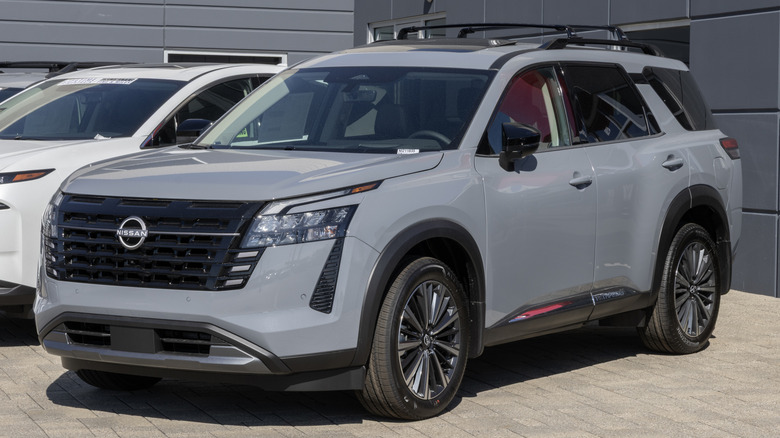
Unless maximal space is the ultimate priority for you in retirement, the Nissan Pathfinder is another overpriced, oversized, and overzealous option. Seniors can comfortably fit themselves or their friends in the front two rows, but the third seat is best reserved for grandchildren or cargo due to limited space. The driving experience is slightly underwhelming and rough, although the V-6 engine provides power enough for a competent driver. FuelEconomy.gov indicates that the newest Pathfinder's baseline trim gets a combined 23 miles per gallon, falling below the website's reported new-car average of 28. This subpar fuel economy means seniors face a five-year gas bill roughly $2,250 above the norm, as of spring 2026.
J.D. Power estimates that the average 2026 Pathfinder sells for between $32,863 and $54,029, offering a break compared to Nissan's most expensive models but still not the deal budget-conscious seniors might want. CarGurus indicates a used 2022 version costs about $26,641. Within the initial decade of driving the Pathfinder, owners can expect to spend $8,178 on repairs and maintenance, falling right in line with the class average. Additionally, CarEdge puts this SUV's risk of needing a serious repair in the same time frame at 22.95%. The Pathfinder does exceed in safety standards and crashworthiness, earning IIHS recognition as a Top Safety Pick+ for every one of its model years from 2022 to 2026. If size is the sole consideration for retirees, the Pathfinder is the strongest option in the lineup, but many senior drivers may find its stature and cost overbearing.
7. Nissan Murano
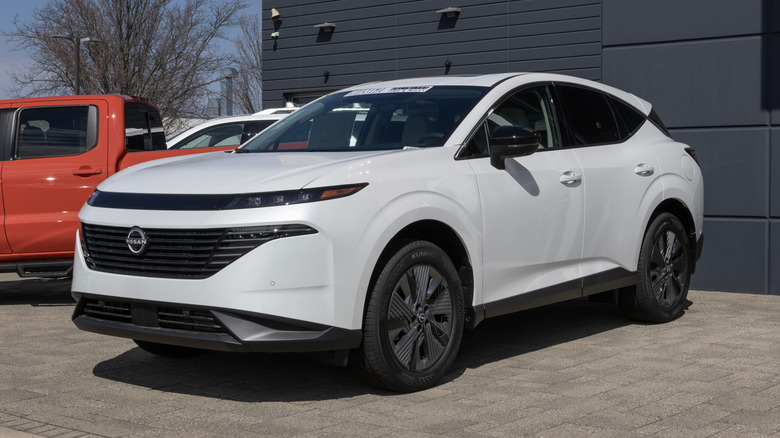
The Nissan lineup is dominated by compact and mid-size SUVs, which can make it challenging for retirees to determine the worst from the best nameplates. At first glance, the Nissan Murano appears to feature similar aspects to its counterparts, many of which could fit a seasoned driver well. However, the Murano's costs of ownership place it much more in line with the pricey Pathfinder, just without the intimidating size. Similar to its larger SUV cousin, the Murano only achieves a combined fuel economy of 23 miles per gallon, per FuelEconomy.gov. This results in owners paying $2,250 more in fuel costs over half a decade when measured against the typical new car in May 2026. J.D. Power places the average cost of the Murano between $37,381 and $51,859, which is largely in line with the price of the Pathfinder. If you're thinking twice about buying a new car, you can scoop up a used 2022 Murano for $22,362, according to CarGurus.
It's not only the Murano's upfront costs that align with those of the Pathfinder. CarEdge puts this mid-size SUV's decade-long maintenance bill at $8,198 as well. This is more than the average for similar SUVs. Plus, the Murano comes with a 22.95% likelihood of experiencing a significant issue that owners may need to pay to repair. If you don't mind footing the comparatively high price tag and maintenance costs, the Murano does boast an above-average safety record. The IIHS graced this model with a Top Safety Pick+ classification every year since 2021, with the exception of the 2024 model.
6. Nissan Leaf
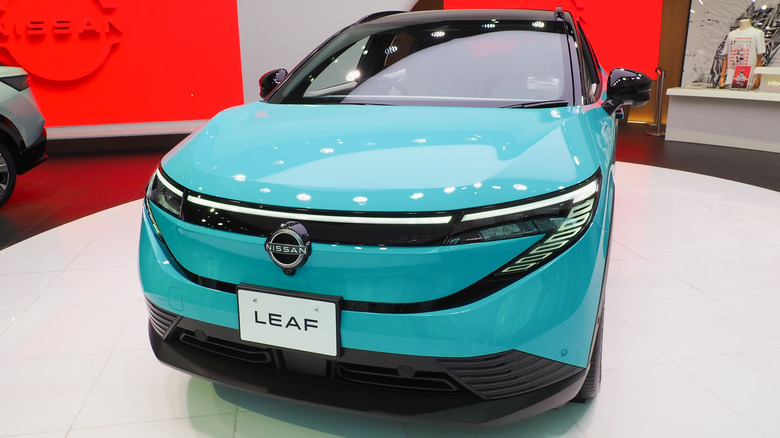
The Nissan Leaf's relatively modest upfront cost and exceptionally affordable prolonged maintenance expenses make it seem like the perfect Nissan car for retirees. Although this fully electric vehicle checks many boxes for seniors, there are some major blind spots worth pointing out. EVs remain frankly unappealing to most drivers, with this market only comprising 6.5% of all new cars sold as of February 2026, per Edmunds — a nearly 1% drop from the previous year. The Leaf gets between 259 to 303 miles on a single charge, which is competitive among its peers but could demand more frequent stops than a standard combustion engine. This Nissan model's front seat is comfortable, but the sloping roof and smaller stature make for a confined backseat and limited trunk space. According to J.D. Power, people usually spend between about $28,165 and $41,621 on 2026 Leaf variants. You can drop this price nearly in half by buying used, with 2022 models listing for around $14,362, per CarGurus.
Over 10 years of driving the Leaf, retirees would only see about $3,217 in maintenance costs, as reported by CarEdge. This is a wallet-padding $1,658 less than the upkeep expenses of similar hatchbacks. Furthermore, owners only face a 16.01% risk of having to pay for a serious fix during this period. In recent years, the Nissan Leaf has achieved above-average crash safety results from the IIHS, though it wasn't as thoroughly tested as other vehicles on this list. Notably, if you're set on getting an EV but are flexible on the nameplate, there's another best-selling EV that's one of the top cars for a retiree.
5. Nissan Kicks
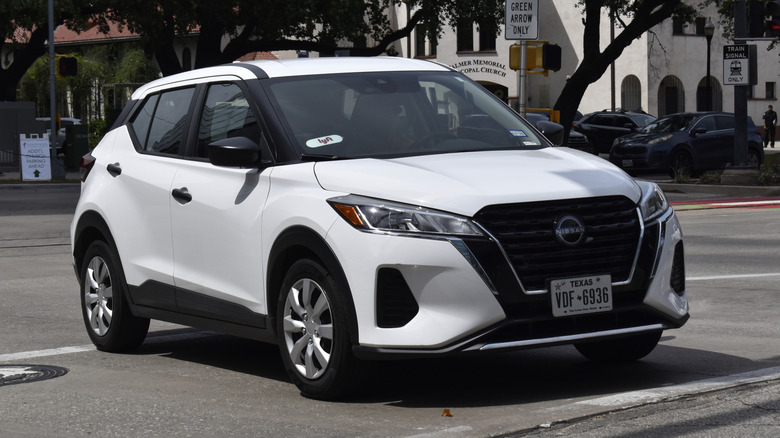
The Nissan Kicks marks a significant turning point in this automaker's lineup where seniors can finally see their primary needs starting to align without any significant stumbling blocks. In fact, this compact SUV stands out as a reliable car that's also cheaper than the best-selling Toyota RAV4. The Kicks sports a purposefully fun design, but its driving experience is straightforward and no-nonsense. The acceleration and engine performance aren't going to blow you away, but Kicks drivers can expect comfortable, convenient, and smooth daily rides. According to FuelEconomy.gov, this compact SUV features a fuel economy of 31 miles per gallon, stretching up to 35 on the highway. As of spring 2026, this above-average fuel efficiency would save retirees an average of $1,000 over five years. J.D. Power puts the 2026 Nissan Kicks between $20,393 and $30,306, although you can purchase a used 2022 model for around $16,450, according to CarGurus.
Within the initial decade of ownership, retirees usually dedicate $7,791 to general maintenance for the Nissan Kicks. This is $375 less than the class average, but not the least expensive for Nissan's lineup. Also, CarEdge estimates that drivers experience a 22.95% risk of needing to cover a serious fix for this SUV within the same decade. The 2025 Nissan Kicks is also an IIHS Top Safety Pick, performing superbly on various crash test simulations and exceeding safety standards. Although the 2026 model didn't achieve the same status, its results only missed a perfect rating on the front crash prevention system for vehicles — and that feature still performed decently.
4. Nissan Versa
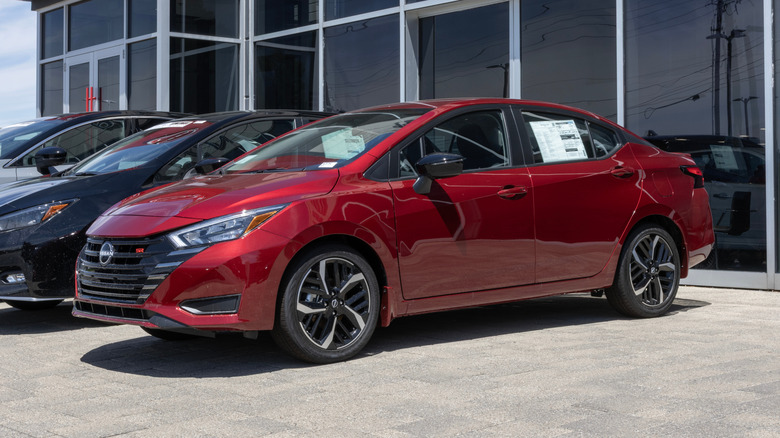
The Nissan Versa is the most affordable vehicle for retirees from this marque, and one of the least expensive to maintain. The Versa is also one of the best cheap cars when factoring in reliability. Seniors can pick up the newest Versa for between just $15,522 to $22,810, according to J.D. Power, although 2025 was the last year of production for the model. For an even larger discount, retirees can purchase a 2022 model for less than $14,200, per CarGurus. This sedan answers the call for budget-aware seniors looking for an uncomplicated sedan that delivers sufficient space, robust fuel economy, and a pleasant driving experience at a reasonable price.
The Leaf may outperform it in terms of energy efficiency, but the Versa is the clear leader among hybrid and gas-powered Nissan vehicles. FuelEconomy.gov places this model's combined fuel economy at a remarkable 35 miles per gallon, which can increase to upwards of 40 miles per gallon on highways. This is estimated to help seniors cut back on fuel costs by $2,250 over half a decade, when factoring in fuel prices as of spring 2026. The Versa also undercuts many other Nissan models with a 10-year maintenance and repair cost of around $5,785. In addition, CarEdge places the Versa's decade-long likelihood of demanding a considerable fix at 16.97%. The IIHS hasn't put the Versa through as rigorous testing as more in-demand models, but the sedan has achieved top scores in all crashworthiness tests since 2020.
3. Nissan Altima
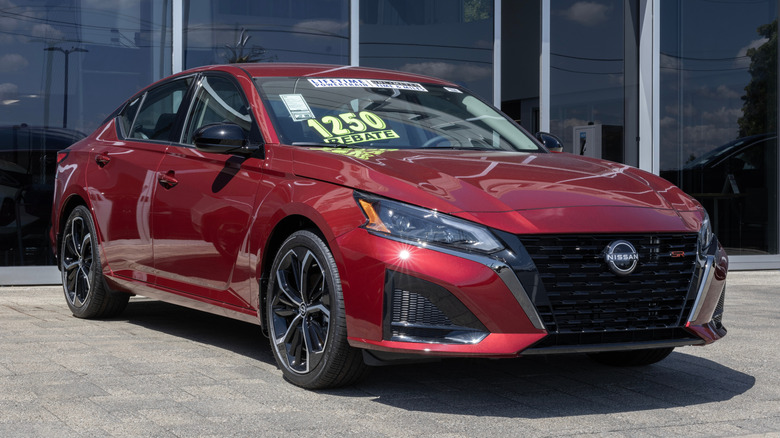
The Nissan Altima pieces together a compelling package for retirees, combining affordability in upfront and long-term costs with a comfortable driving experience. Plus, drivers looking for a little style without the premium price tag may enjoy the Altima's sleek design. This sedan's 2026 model year exhibits a stellar 30-mile-per-gallon combined fuel economy, even reaching up to 36 on the highway. This makes it one of the most fuel-efficient options from Nissan for budgeting retirees. Compared to the average model, seniors stand to save $750 on fuel over a five-year period, as calculated by FuelEconomy.gov in 2026. According to J.D. Power, buyers can get newer Altimas for between $25,345 and $36,520, placing it on the more affordable end of this list. Meanwhile, CarGurus estimates that the 2022 model could be yours for around $18,400. Notably, this sedan is more affordable than the extremely popular Toyota Camry.
Across the first ten years of owning the Nissan Altima, CarEdge estimates that seniors would need to budget around $6,013 to keep the sedan running optimally. This is $267 more than for similar sedans, but much lower than some of the costs racked up by other Nissan models. Additionally, this nameplate's probability of needing a serious fix over a decade is 16.97%. From 2024 to 2026, the Nissan Altima has struggled with mixed safety ratings from the IIHS. However, earlier iterations were consistently deemed a Top Safety Pick or Top Safety Pick+ by the organization.
2. Nissan Rogue
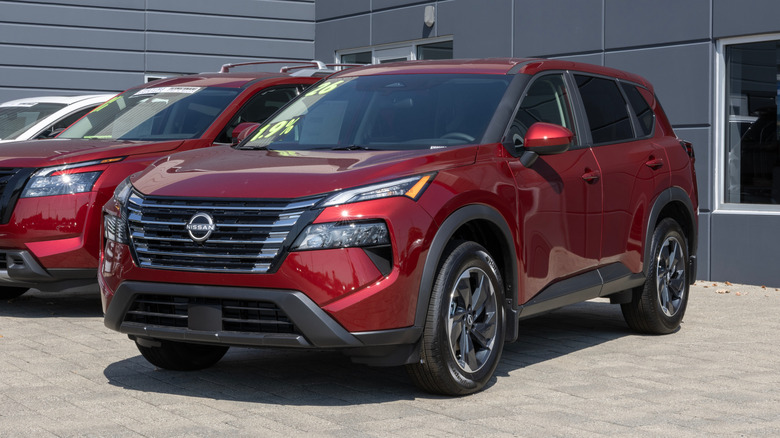
The Nissan Rogue is an appealing SUV option for retirees, striking a balance between capability and affordability. Seniors who want something spacious without the exaggeration of the Armada or Pathfinder will appreciate the Rogue's roomy interior. Even the backseat is large enough to accommodate adults, with sufficient head and legroom. The driving experience is suitable for daily commuting or long hauls, but isn't overblown with an unnecessarily powerful engine.
This middle-of-the-road build helps maintain a modest price between $25,133 and $42,344 for the newest release, per J.D. Power. If you're looking for a sweeter deal, CarGurus estimates that the 2022 model typically sells for about $20,770. Perhaps the most standout feature of the Rogue is its impressive combined fuel economy of 32 miles per gallon, leading Nissan's SUV options. This above-standard fuel efficiency nets seniors five-year savings of $1,500 on fuel costs when measured against the new-car average, according to FuelEconomy.gov.
CarEdge estimates the Rogue costs owners roughly $7,987 in general upkeep and repairs within the first 10 years of driving. This is $179 less than the maintenance costs of similar SUVs. The Rogue comes with a 22.95% likelihood of requiring a considerable repair within the same period. Since 2014, the Nissan Rogue has also regularly earned the IIHS Top Safety Pick or Top Safety Pick+ designations, with the exception of the 2024 and 2025 releases, exemplifying Nissan's high safety standard.
1. Nissan Sentra
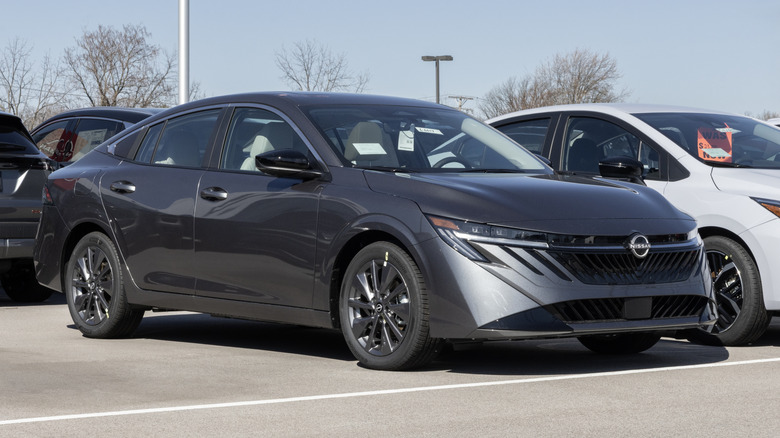
The Nissan Sentra is a standout option for retirees looking for the best fit from this Japanese marque. This popular sedan admittedly cedes some ground on engine output, but still more than delivers for most retirees' daily needs. At an affordable price point, you're still getting a stylish exterior, sophisticated handling, and a sizable infotainment system in new models. According to FuelEconomy.gov, the 2026 Sentra's baseline trim achieves an energy-saving combined fuel economy of 33 miles per gallon, achieving up to 38 on the highway. This saves drivers $1,750 on fuel costs within five years of ownership, compared to the new-car standard. J.D. Power estimates that retirees could pick up a brand-new Sentra for anywhere between $19,363 and $29,529, placing it among the more affordable Nissan vehicles. You can compound those savings even more by purchasing a used 2022 model for a little over $17,000, per CarGurus.
Retirees also benefit from exceptionally modest long-term maintenance costs. CarEdge projects that owners only spend around $5,852 to keep this sedan running smoothly within the first 10 years of driving. Also, Sentra drivers only take on a 16.97% risk of needing to pay for a major fix within the same period, which is lower than many other Nissan models. The 2026 Nissan Sentra is an IIHS Top Safety Pick+, signaling exceptional crashworthiness and safety standards, while earlier model years have also performed admirably in crash tests as well.