

Banking Legends From The '70s And '80s That Changed The World Forever
The banking industry is a truly unique subsection of the global economy. Visions of corporate fat cats in gaudy pinstripe suits emerge from the depths of many imaginations when thinking about "the banker." Banks form a key part of the financial experience that we all share, and every individual in this process from the teller who handles your cash transactions to the corporate executive (perhaps wearing that aforementioned suit), plays a role in how that experience is shaped. High profile bankers have done so much more than the average consumer might think, all largely in the background of the larger economic currents. Some are quasi-villainous figures, while others changed the financial landscape in positive ways, delivering ripple effects that still shape consumer banking and investing today.
These legends of the banking industry, from some of the high profile corporate fixtures like Chase and Citibank as well as investment banking and the corporate finance world more broadly, have left their mark on the world we know today. Their influence, largely centered on innovations in money management (and sometimes nefarious deeds), were individually at peak power in the 1970s and '80s. This was a time of immense transition for consumers, savers, and investors, so the stamp placed upon the finance world by these banking legends came at a meteoric era of consumerism, change, and strife.
David Rockefeller, a banking titan who sought to globalize the industry
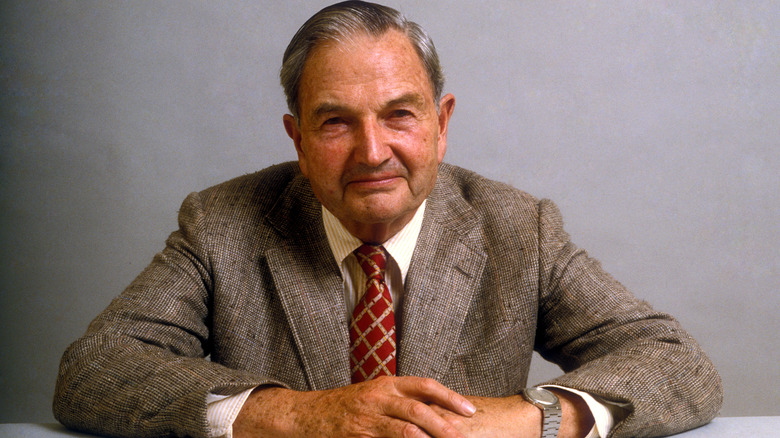
David Rockefeller hails from the legendary Rockefeller family and is the grandson of the family's foundational patriarch, John D. Rockefeller, who founded Standard Oil alongside his brother. He was a student of the University of Chicago economics department, earning his Ph.D. in 1940 before eventually settling into a career at Chase National Bank after the war. He worked in a variety of posts throughout the family-associated Chase bank until ultimately taking over as CEO and manager of the financial institution in 1969. Rockefeller remained at the helm of the institution until 1981 when his involvement in bringing the Shah of Iran to the United States for cancer treatment played at least a tangential role in sparking the Islamic Revolution that included a lengthy hostage crisis in the American embassy.
However, earlier in his tenure, Rockefeller took a struggling bank and made it an international player. He spent much of his time overseas seeking to strengthen bonds with other nations and their finance industries, seeing the world of banking as a global phenomenon rather than a national or regional experience. Chase was an underwhelming force in the stock market early in his tenure, but it eventually became a beacon of performance. His son told Euromoney in 2019 that his Rockefeller had once told him "that until the 1960s, Chase did not even have a budget." By the end of his tenure as its chairman, it was often called "David's bank," and James Wolfensohn has noted David Rockefeller was almost certainly "the first truly global banker."
Peter G. Peterson, founder of Blackstone, the firm involved in nearly everything
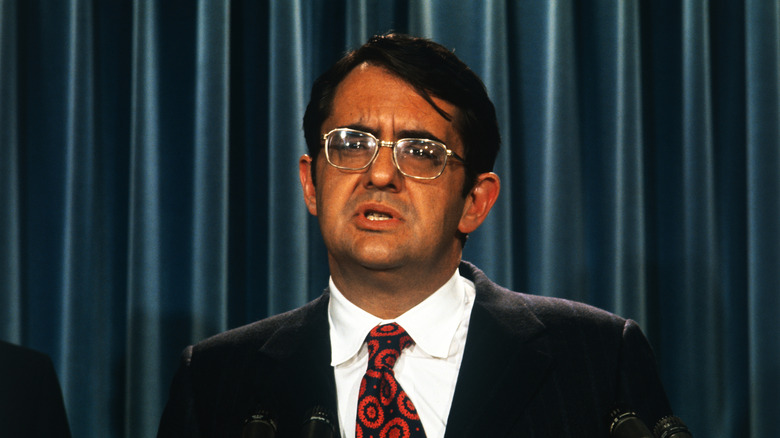
Peter Peterson served as the U.S. Secretary of Commerce from 1972 to '73 under Richard Nixon, and later became the chairman of the Council on Foreign Relations in 1985, taking over where David Rockefeller left off. Directly after his stint as commerce secretary, Peterson served as the chairman and CEO of Lehman Brothers from 1973 to 1984. Upon leaving the infamous investment bank that eventually would dissolve during the 2008 housing market crisis, Peterson would co-found Blackstone Group (in 1985). His resume in the world of finance is certainly impressive, but this last commitment is perhaps one of the most impactful financial institutions in the world today, and not always for good reasons!
Blackstone has come to define a wide range of encounters the modern day consumer has when working their way through the world. Blackstone controls $1.2 trillion in total assets under management, making it the most well-endowed alternative investment firm in the world. The firm gobbled up housing assets during the 2008 crisis, and operates in private equity, debt repackaging, and infrastructure spheres. There's a good chance you bump up against Blackstone's interests on a regular basis, even if you're not actively aware of the intersection. It owns more than 274,000 rental homes packaged as part of its BREIT, and a total of roughly $315 billion in real estate more broadly. It's also worth noting that his co-founder Stephen Schwarzman remains the firm's CEO and is one of the highest paid corporate executives in the U.S., earning a total compensation package of $120 million as of 2023.
Thomas R. Butler, progenitor of the Discover card and its quintessential cash back perks
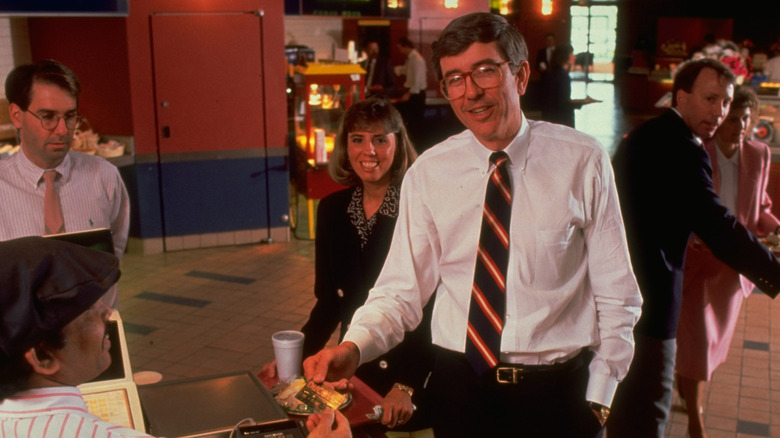
Thomas R. Butler might not be a highly decorated name in the world of finance and banking. He's not the same kind of industry titan as a Rockefeller, Carnegie, or Morgan, but his efforts at Sears pioneered something that tens of millions of Americans use on a daily basis. Butler is credited as the driving force behind the company's Discover Card (serving as the chief operating officer), launched in 1986. The card is well-known today, naturally, but when it debuted it delivered something that no other line of credit offered consumers: a cash-back reward and no annual fees. It's worth exploring some of the dark sides of cash-back card that have crept into the picture more recently, but at the time of its arrival, this tool was a total game changer, even if it didn't receive overwhelming attention at the time. Discover's popularity has only blossomed in the last two decades, exiting the housing market meltdown in a unique position of strength after settling a lawsuit with Visa and MasterCard to the tune of $3 billion in 2008.
Butler's contribution has blossomed into a true force in the world of consumer finance. Virtually every card issuer in the market offers some kind of rewards perks, all thanks to this innovative draw for users from an under the radar card back in the 1980s. There are plenty of issues that card users can find themselves drawn into when chasing rewards points and cash back options, but for savvy cardholders who pay their bill in full each month, the benefits can certainly add up over time.
Muhammad Yunus, pioneer of community-focused microfinance

Muhammad Yunus is a Bangladeshi economist who has spent time in academic settings as both a student and educator in his home country and in the United States. Yunus pioneered the concept of microfinance, seeing the impact that small loans could have on the business aspirations and livelihoods of local entrepreneurs and workers. Small loans were a specialty of Yunus' Grameen Bank, established in 1983. Microfinance options from the outlet were specifically designed to give people a helping hand without securitization that might crumble an impoverished person's life. This approach stands in direct contrast to similar low-income finance tools like the payday loan that often traps users in a cycle of ever-expanding debt thanks to huge interest rates and convoluted repayment terms.
Microfinance done in the example of Yunus' Grameen Bank can generate lasting upward mobility for those in need of a small helping hand. His innovative approach grew out of an observation that a small loan could make an outsized impact on a borrower coming from a cycle of living paycheck to paycheck, or worse. His targeted microfinance products helped people become more independent, and with favorable repayment terms, the outlet served as something of a communal credit union designed to raise the floor for all its local members. The blueprint has expanded significantly in the years since and paved the way for all manner of projects in the developing world and beyond.
Michael Milken, the 'Junk Bond King'
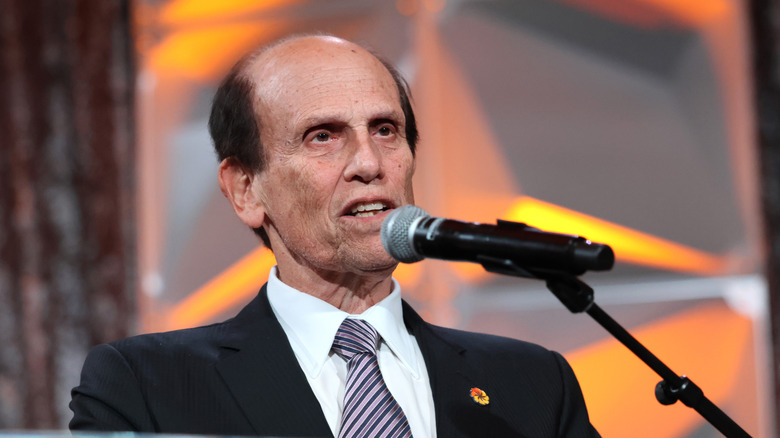
The "Junk Bond King," Michael Milken is currently barred from operating in the securities industry thanks to his borderline and sometimes illegal trading behavior. In 1989, Milken was indicted on 98 counts of racketeering, securities fraud, and other charges. He eventually pled guilty, avoiding the worst of the RICO case, including charges like insider trading, and was sentenced to 10 years in prison. Milken served two years and was released after cooperating with the government in its investigations of other traders he worked with.
Milken operated at the fringes of what was legal, and there is some gray area to many of the tactics he employed, at least at the time. His efforts to stay at the bleeding edge of corporate finance resulted in allegations of price manipulation, illicit corporate takeover strategies, and more. His indictment came at a time when SEC oversight was limited and enforcement relatively weak, but the winds of change were in the air. Milken and a co-conspirator in a range of the activities deemed to be illegal, Ivan Boesky, helped push ahead new regulatory capabilities within the SEC, making insider trading and other aggressive trading strategies harder to accomplish successfully and easier to punish.
Paul Volcker, longstanding chairman of the Federal Reserve
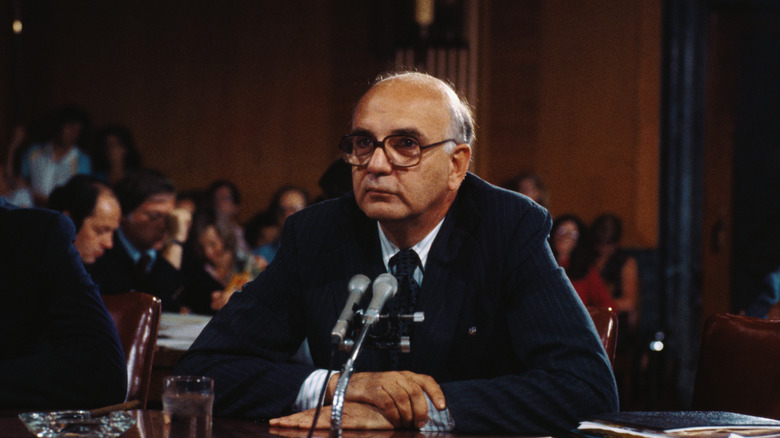
Paul Volcker died in 2019 after a lengthy career as an economist serving the American public. Among his final positions in government was as the chair of the President's Economic Recovery Advisory Board, created by President Obama in 2009 to aid in the economic reconstruction necessary after the housing market collapse. During the 1970s and '80s, he served in numerous roles as an economist within the Federal Reserve system. In 1979 he became the chairman of the Federal Reserve, a position he held until 1987. This made him principally responsible for many of the nation's economic decisions and strategies at a time of immense financial strain. In this era, inflation experienced runaway levels that the federal government continuously attempted to curb. Volcker's efforts included significant raises to the base interest rate in an attempt to minimize spending on the whole.
Volcker would be honored with a rule named after him. The Volcker Rule is part of the 2010 Dodd-Frank Act, specifying that banks could not use their accounts for short term trading of a range of highly volatile investments. This was aimed at minimizing a bank's ability to utilize its clients' funds for high risk investments that might leave the institution incapable of covering withdrawal needs from customers. It came about as a guardrail to prevent another catastrophic economic meltdown the likes of the 2008 housing market collapse.
Jim Simons, the 'Quant King' who pioneered a mathematics-based approach to investing
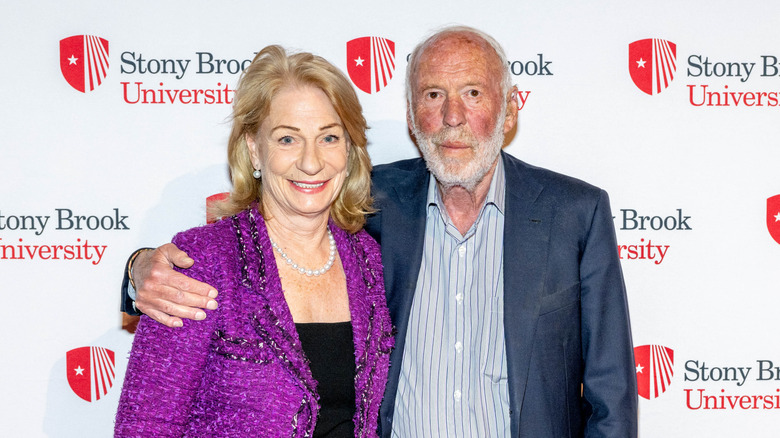
A fixture in the hedge fund arena, Jim Simons founded Monemetrics in 1978 (eventually becoming Renaissance Technologies in 1982). Here, Simons developed the brand's Medallion Fund and pioneered the concept of quantitative analysis for investment purposes. Simons was a mathematician by scholastic upbringing and leveraged his educational background, which began at MIT and culminated in a doctoral degree from UC Berkeley. The hedge fund is still operating today, with managed assets of over $106 billion, as of 2024.
Simons is called the "Quant King" for his innovative approach to market research. He leveraged his math background to explore patterns and opportunities in the marketplace, trailblazing a new way of looking at stocks to find undervalued assets before the wider market of traders caught wind of their positioning. His Medallion Fund still utilizes a "black box" approach to the algorithmic strategy, and it's thought that even the coders who work on maintaining the program aren't fully read in on how it works. That secret is so closely guarded specifically because Renaissance Technologies remains the most successful quantitative investment firm in existence. Retail traders aren't likely to match Simons' abilities at predictive analytics, but they can learn from his example and focus on key datapoints in their research (like P/E ratio, beta figures, or PEG ratio).
John Reed, a globalizing force at Citibank
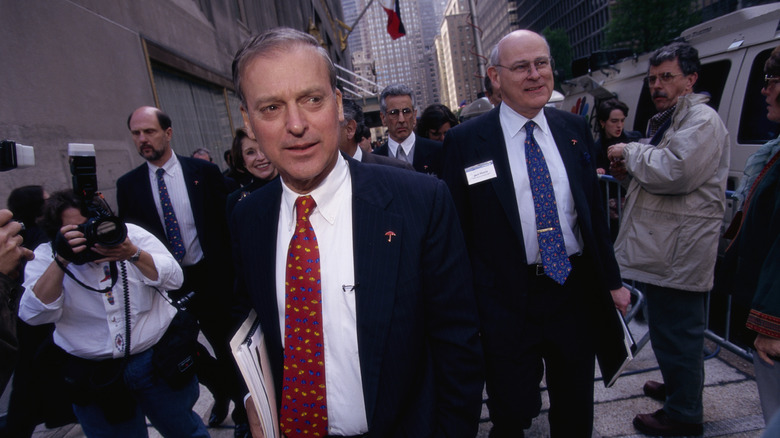
John Reed is a banking executive most prominently known for his leadership of Citi (known as various Citi- monikers throughout the years, including Citibank and most recently Citigroup). He served as an interim CEO of the New York Stock Exchange between 2003 and 2005, as it went public. Reed joined the Citicorp ranks in 1965 and became a member of the Philip Morris board of directors in 1975. He became Citicorp's CEO in 1984 and led the company during a time of unique financial pressures that included an urge to globalize in the new world of increasing digital interconnectivity. Reed was seemingly an ideal choice to lead the bank into this era, considering his upbringing that spanned two continents (after his birth in Chicago, he spent considerable amounts of his youth living in Argentina and Brazil).
Reed told Ethix in a 2002 interview that he was part of a new generation of corporate executives. "My generation arrived with notions of flows and systems ... What our predecessors saw as accounting, bookkeeping, and record-keeping, we saw as information management — a big conceptual shift." Reed noted that his approach sought to make the massive multinational bank operate as a local one, no matter where it did business. Even so, one of the most prominent ripple effects of his time at or near the helm of Citi was the significant loans it advanced to Latin American countries that ultimately turned sour and led to government bailouts and new guardrails being erected to prevent risky dealmaking.
Ray Dalio, the legendary investor and author of the 'Principles' series
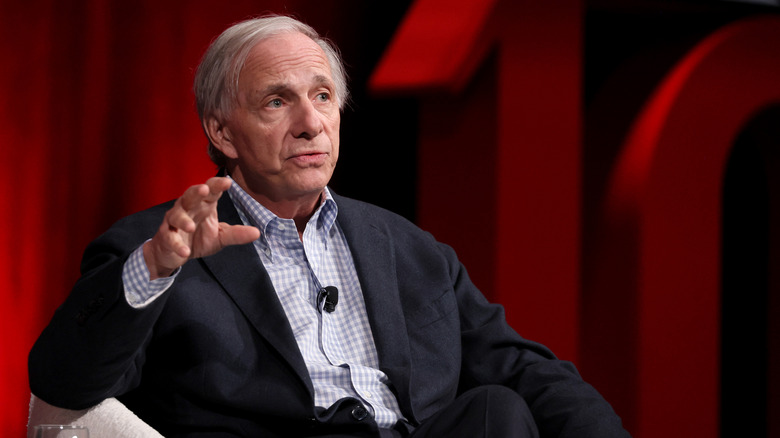
Ray Dalio founded Bridgewater Associates in 1975. Today it's the world's most lucrative hedge fund, with a 2022 assets undermanagement figure of roughly $130 billion. Dalio began his investment journey as a 12-year-old caddie listening to stock market conversation among players he walked the course with, and launched his career in earnest shortly after earning his MBA from Harvard Business School in 1973. His first Wall Street job was at Shearson Hayden Stone, before being fired at the end of 1974 for punching his supervisor in the face. Dalio peeled away some of his clients from the firm while launching his own hedge fund, and the rest is history.
Many investors will be familiar with Dalio thanks to his work as an author, and specifically his "Principles" books, with the lead title selling over 5 million copies and being translated into 30-plus languages. As an investor, he has become wildly successful and the Bridgewater Associates firm is among the most influential in the industry. He's particularly focused on diversification, suggesting that investors need to lock in on at least 15 uncorrelated assets to complete their diversification strategy. He's also a strong believer in doubling down on stocks that are undervalued when compared to competitive brands, meaning expanding positions that have shrunk in value if your fundamental belief remains bullish on the asset's long-term horizon.
Milton Friedman, Nobel Prize winning economist and a driving force behind 'the Chicago School'

Milton Friedman is yet another name that most will be familiar with. He is an infamous influence in the sphere of economics, winning the 1976 Nobel Memorial Prize in Economic Sciences and vastly advancing "the Chicago School" of thought (stemming from the University of Chicago), where he was an economic theory professor from 1946 until 1977. He spent virtually his entire career in the educational realm, but prior to landing his first long-term teaching position Friedman worked as an economist within the U.S. Treasury (from 1941 to 1943). Here, he is credited with helping to establish the payroll tax withholding system still in place today as a means to support the financial demands of the war effort.
Friedman's key contributions to the economics of the world we live in today revolves around a concept known as "monetarism." He was a key pioneer of this notion, delving into the theory in a 1963 book titled "A Monetary History of the United States, 1867-1960." One of his key assertions was that federal monetary policy acted as the primary driver of the Great Depression rather than ills baked into the system of free market capitalism that underpins American society today. By controlling monetary supply, he reasoned, a government held the main ingredient in affecting the economy, for better or worse. Interestingly, his approach directly contradicted Paul Volcker's and Friedman was a definitive detractor even as Volcker's methods proved successful. Friedman would eventually spend the 1980s producing research as a fellow at the Hoover Institution, which would guide much of the economic thinking throughout the Reagan administration.
Warren Buffett, the 'Oracle of Omaha'
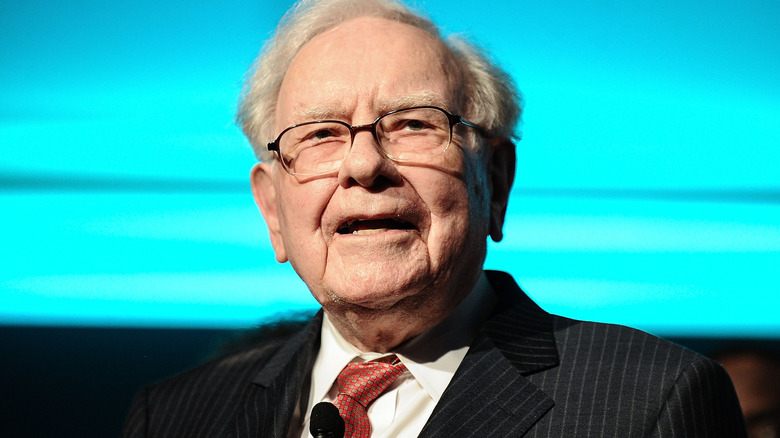
Warren Buffett is a financial mind that needs very little introduction. His prominence as an institutional investor is overshadowed by very few, and his lengthy track record of success speaks for itself. Buffett has long been an investor with a focus on long-term growth, and this came to a head when he became the chairman and CEO in 1970 of a recently acquired textile company, Berkshire Hathaway (which he completed purchasing in 1965). The name is equally famous in investment circles today, but it also started from humble, and very different beginnings. Buffett's key tool for growing the brand's holdings was in using insurance premiums from some of the company's first acquisitions in the insurance industry to float other investments. Rather than leaving this cash unleveraged, he began buying into stable companies that his research suggested would continue to hold their value over the long term.
Buffett has just recently stepped down as the guiding force of Berkshire Hathaway, but his legacy remains. As the primary mind behind the investment firm's maneuverings, Buffett has long prioritized investments in brands with a large "moat," meaning they typically derive income from numerous business segments while frequently maintaining key agility elements that can help see them through tough times. Brands like American Express, which Buffett bought in the 1990s and has remained untouched since, drive revenue from issuing cards to consumers and by operating a global payment network. Another of his most lucrative trades came when he bought into Coca-Cola in the 1980s. Berkshire owns around 9% of the company in total, generating over $800 million in annual dividends.