

13 Investments For Long-Term Retirement Savings, Ranked Worst To Best
Unfortunately, saving for retirement isn't as simple as setting a portion of your income aside until you stop working. With inflation eating away at the value of your hard-earned money and raising the cost of living every year, simply holding onto your savings is a losing strategy over time. That's where investments come into play. These financial vehicles are leveraged to provide a return over time, either in the form of appreciation or income generation. In other words, the underlying investment can increase in value, or the investment can result in a payout. The former setup is much more common, such as with equity growth, although the latter isn't unheard of, such as with dividend stocks.
The real complication lies in finding the right assets for long-term retirement savings, given the sheer range of options. Although there are literally thousands of different investment products, they're usually grouped into a handful of categories. Perhaps the best way to make sense of an investment, no matter the specifics, is in the relationship between risk and return. Usually, these characteristics are positively correlated, meaning an investment that poses a greater risk also offers the potential of a higher return. This relationship between risk and reward is essential for making sense of the dynamic landscape of asset options.
Let's take a look at 13 investments for long-term retirement savings, ranked from worst to best, to give you a broad view of your choices and how each can impact your fiscal planning on a prolonged time frame. This way, you won't have to wait until the age at which the average American starts saving for retirement.
13. Cryptocurrency

Cryptocurrency is often cited as one of the riskiest and least advisable investments, especially for long-term financial planning. This relatively new digital asset class is known for its rollercoaster ride of boom and bust cycles, where eye-watering gains and losses can be realized within a relatively tight timeframe. For reference, the flagship cryptocurrency Bitcoin first broke above a dollar in 2011 before reaching an all-time high of over $126,000 in 2025, per Investing.com data. Those staggering returns eclipse virtually all traditional assets, but the long-term view can gloss over the tremendous volatility experienced in between. Over the past 10 years, some of the worst years for Bitcoin have seen losses up to 64% and 74%, as reported by SlickCharts.
Due to Bitcoin's status as the first and most well-established cryptocurrency, it often experiences less volatility than the rest of the market. Kaiko Research indicates that these altcoins, which refer to any cryptocurrency other than Bitcoin, experience twice the amount of volatility as the space's primary asset. This greater unpredictability is attributed to smaller markets and less trading activity, leaving the underlying asset more exposed to disruptions. This extreme variability and uncertainty alone are enough to keep it out of consideration for most investors, especially since most people don't even know where cryptocurrencies get their value.
12. Whole life insurance

If you're confused to see life insurance referred to as an investment, you've already pinpointed the issue. Although these insurance policies are primarily designed to leave beneficiaries with a financial sum in the event of a policyholder's passing, there's a specific type of plan often positioned as an investment option. More specifically, whole life insurance is an alternative to the standard term life insurance plans, offering a cash value variable. This component is often advertised as a long-term investment that will grow over time. However, the account is only funded by part of your monthly premium. Although the cash value's growth is tax-exempt, the returns are extremely low.
InsuranceNewsNet puts the estimated annual return of whole life insurance plans between 2% and 3%, much lower than the broader stock market's average growth. In addition to unimpressive gains, whole life insurance makes for a poor long-term retirement savings investment because of the higher monthly premiums. Compared to conventional term life insurance, whole life policies come with inflated premiums. Furthermore, the money in your cash value account is accessible, but withdrawals reduce the death benefit until the borrowed amount is paid back. There's a reason even Dave Ramsey says you should avoid this type of life insurance.
11. Savings accounts

On its face, a classic savings account may seem like an ideal option for long-term retirement savings. The accounts are relatively easy to open, you always have quick access to your cash, and your savings are insured by the Federal Deposit Insurance Corporation for up to $250,000. These characteristics certainly make a savings account one of the lowest risk choices, but this relatively safe play doesn't come with much upside potential. Banks offer interest rates to encourage people to keep their money in savings accounts, but these returns are often measly compared to other mainstream investments.
Experian suggests that the average savings account yield in 2026 is between 0.39% and 2.4%, although this varies greatly depending on the interest rate environment. A select few financial institutions offer high-yield savings accounts designed to offer above-average returns. As Experian further points out, even the best bank account yields still fall below typical stock market returns. Furthermore, the rates are wholly reliant on interest rates, meaning investors cannot depend on their returns remaining consistent over time. This makes long-term planning challenging without offering much of a financial incentive in the first place.
10. Money market funds
While many people wonder about the difference between a savings account and a money market account, a more meaningful advantage is found in the money market fund. To be sure, money market accounts, which only provide a 0.43% average return, according to Bankrate. Alternatively, money market funds offer higher yields, with some popular choices, such as the Charles Schwab Prime Advantage Money Fund and the Vanguard Federal Money Market Fund, returning 3.48% and 3.64%, respectively. T. Rowe Price estimates that the typical money market fund has averaged 4% to 5% in annual growth over the past few years.
The Consumer Financial Protection Bureau explains a money market mutual fund as an investment product offered by brokerages, unlike money market accounts, which are usually provided by banks or credit unions. This investment product strikes a middle ground between moderate risk and high liquidity, meaning the potential losses are on the low end, but the funds are easily accessible. The limited risk associated with money market funds is partially due to the Securities and Exchange Commission's (SEC) stringent requirements for institutions that provide this asset. By only allowing financial entities with extremely reputable credit to establish these investments, the government seeks to provide reassurance to investors.
9. Certificate of Deposit (CDs)

Investing in a certificate of deposit (CD) is one of the smart things you can do when you have $10,000 saved. The SEC defines a CD as a savings account wherein a person places a predetermined amount of money for a set period. This timeframe can last half a year to a decade and beyond, but the fixed investment is inaccessible for that amount of time. The incentive to lock in a cash investment for a set period comes in the form of interest. When the investment period expires, you get the principal cash investment along with all the interest accrued.
Similar to a traditional savings account, CDs are fully FDIC insured, meaning up to $250,000 of your money is backed by the federal government. This makes CDs relatively low risk. However, investors are giving up some short-term financial flexibility by locking away their investment for a certain period. Bankrate indicates that the best offers for CDs currently yield 4% annually. Often, the longer the investment, the higher the return. According to the SEC, non-banking entities sometimes provide what's known as deposit CDs with higher returns. However, it's stressed that these are not backed by the federal government and don't have the FDIC coverage.
8. Gold

Traditionally, gold has been positioned as a hedge against inflation and economic downturns. General investing wisdom usually suggests investors put about 5% to 10% of their portfolios into gold, although more extreme strategies can call for a 20% allocation, according to GOBankingRates. The World Gold Council highlights gold's negative correlation with the stock market during bouts of economic volatility. In other words, gold tends to maintain its value or even grow when stock indices fall. Furthermore, this inverse relationship doesn't stick around during periods of upward momentum. Gold also often rises when the stock market performs well. Thus, the metal is widely regarded as a worthwhile long-term investment for its ability to protect a portfolio against unpredictable and recurring market downturns.
With gold recently hitting an all-time high, the conversation around the asset has shifted from the traditional frame as a portfolio protector to a growth investment. Gold even outpaced the S&P 500 in 2025, per GOBankingRates. Goldprice.org shows the spot price of gold more than doubling from $2,500 to over $5,000 in the past two years alone. Furthermore, gold's annual returns have increased when looking at the past 15 years, yielding an average of 9.2%. It's important to contextualize these unprecedented gains, however, as the typical return of gold over history is much lower than in recent years. For instance, GOBankingRates puts the annualized return of gold at 4.4% between 1980 and 2023.
7. U.S. Treasury securities
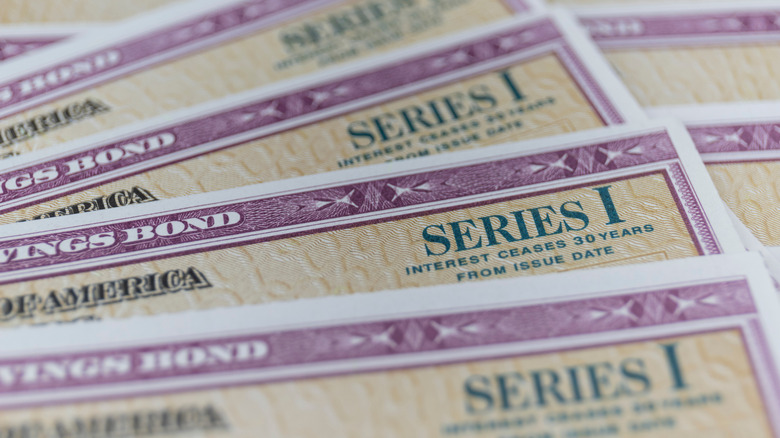
U.S. Treasury securities refer to various financial instruments offered by the federal government to raise funds. These securities are largely considered among the lowest risk assets because they're backed by the "full faith and credit" of the U.S. government, as described by the Department of the Treasury. These federal securities are broken down into marketable and non-marketable iterations. Most of the financial assets offered by the federal government are marketable, meaning they can be bought or sold before the term is complete. These include Treasury bills, bonds, and notes. On the other hand, non-marketable securities, such as U.S. savings bonds, aren't tradable because they're tied to a single individual's tax identity.
Generally, U.S. Treasury securities offer a fixed interest rate return in exchange for an investor locking in a certain amount of money for a fixed period. The longer the term, the higher the yield. These returns are highly dependent upon the interest rate environment, though. For reference, in 2025, three-month Treasury bills had an annual return of 4.21% and 10-year Treasury bonds had an annual return of 7.8%, according to the NYU Stern School of Business. Even if you only have $100 to spare, U.S. Treasury securities are among the best investments to make.
6. Corporate bonds

The SEC neatly sums up corporate bonds as IOUs to a company. Similar to the federal government raising money through the issuance of U.S. Treasuries, some companies increase their spending capacity by issuing bonds. Investors can purchase these bonds as a loan to a corporation in exchange for interest over a certain period. Once the fixed frame is reached, the principal is returned. Unlike stocks, you're not purchasing a share of the company. This means that bondholders don't benefit directly from the growth of the company issuing the bond. However, the flipside of that scenario is where some risk is introduced. Although corporate bonds act similarly to U.S. Treasury securities in structure, the key difference is the entity backing the debt.
Corporate bondholders are at the mercy of the company's success, leading many people to argue these instruments are not as reliable as those from the federal government. However, SmartAsset puts the default rate of high-rated corporate bonds far below 1%. Furthermore, corporate bonds provide a higher yield than U.S. Treasury securities, with an average annual return between 5% and 6%. Although corporate bonds make a solid long-term savings instrument, these assets are also considered a strong investment opportunity for retirees.
5. Private equity

Private equity involves the investment in companies that aren't publicly traded on stock exchanges. According to the Harvard Law School Library, some of the main considerations of this less traditional investment option include a higher barrier to entry, lower financial liquidity, and a dearth of legal protections. However, the flipside is the potential for outsized returns compared to more conventional assets. Cambridge Associates estimates that the U.S. private equity space yielded annualized returns of 16.4% over five years, 15.9% over 15 years, and 11.8% over 25 years, far outpacing the returns of its publicly traded counterparts.
BlackRock, which manages the world's largest collection of assets, according to CNBC, argues that private equity excels in high returns because of the financial incentive of investors to ensure companies remain on the right track financially and operationally. The risk inherent in private equity stands in stark contrast to that of crypto because it's moored by tangible businesses oriented toward positive growth rather than speculation and market hype.
4. Real estate investment trust (REIT)

Real estate is often cited as a powerful growth engine due to its steady upward trend over the decades. However, many people find the average home price cost-prohibitive, making it challenging to invest in the most direct manner. A recent Gallup poll revealed that only about 62% of Americans own a home, while 34% of the population rents. Fortunately, owning a home isn't the sole way to gain exposure to the powerful U.S. real estate market. Instead of shouldering a 15 or 30-year mortgage, many people put money in a real estate investment trust (REIT).
It's helpful to think of this asset as the mutual fund of the real estate industry. Similar to how mutual funds allow investors to gain exposure to multiple companies through a single asset, REITs offer access to the real estate market without requiring homeownership. You invest in a trust that owns a bunch of physical property, but these REITs can be bought and sold like normal stocks. According to Nareit, the average annual return of a REIT between 1998 and 2023 was 9.72%. Due to their high performance in the long run and relatively low risk, REITs are one of the best ways to invest in real estate without buying a home and certainly remain a top choice for long-term retirement savings.
3. Real estate

As mentioned earlier, the real estate market is a major source of revenue in the U.S. In fact, the National Association of Realtors estimates that the real estate industry accounts for 18% of total national gross domestic product, underscoring the outsized impact it has on the broader economy. Homeownership is the most direct means investors have for tapping into this growth engine. According to data from Zillow, the average value of a home in the U.S. has surged from about $260,000 in 2020 to $360,000 in 2026. That's over $100,000 in just six years. On an annualized basis, real estate property tends to increase in value by 3% to 5%, according to Better.
Notably, this is much lower than the returns offered by REITs, and with the added hurdle of a down payment. However, physical real estate is still a better investment for long-term retirement savings when accounting for the full spectrum of perks. When owning a home, you're eliminating the cost of rent. Known as imputed rent, this means you're paying yourself instead of another property owner. Business Insider highlights this as an effective tax-free form of investment. Homeowners also benefit from capital gains exclusions, which can leave more padding in their nest egg from the long-term appreciation of a property.
2. Dividend stocks

Dividend stocks are shares of companies that share their profits with investors through routine payouts. These financial instruments boast the potential for appreciation of the principal investment, similar to traditional stocks, but come with the added incentive of regular cash payments. Although dividend stocks typically make these distributions on a scheduled basis, normally every quarter, a minority of companies make them irregularly. According to Hartford Funds, the income generated from dividend stocks accounted for more than one-third of the S&P 500's total yield from 1940 to 2024.
Using data from Yale economist David Shiller, the same research reveals that the median yield from dividend stocks was 2.9% over the same timeframe. Although this figure may seem low, the real potential of dividends comes from reinvesting. Hartford Funds further reports that the compounding effect of the reinvestment of dividends made up 85% of the S&P 500's returns since 1960. On top of that, dividends were found to be less volatile than those of companies that didn't pay out dividends. Although their annualized returns may fall below the average stock market return, dividends provide an additional and guaranteed payout. Finding the best dividend stocks for long-term income is crucial to optimizing this asset class to work for your retirement plan.
1. Equities
The U.S. stock market is widely regarded as the gold standard of investments due to its long track record of providing reliable and sizable returns. A Gallup survey indicates that 62% of the U.S. are invested in at least one stock. According to Experian, the stock market has returned an average of 10% annually, marking a much higher yield than many other investment products. This return was derived from the performance of the S&P 500, which is a collection of the 500 most valuable publicly traded businesses.
Although this major stock index returns 10% on an annualized basis, not every year is a clean 10% yield. Sometimes, this figure is much higher, while it dips into the negative in other instances. The reason the stock market is broadly considered the best investment for long-term savings is that these ups and downs smooth out over time into a relatively reliable and respectable return.
While stock indexes, such as the S&P 500 or Dow Jones, represent some of the largest collections of publicly traded companies, investors have the choice of more focused investments. Exchange-traded funds tend to focus on a specific sector of the economy, without requiring the management of singular stocks. For the most direct stock investment, you can purchase the shares of individual companies. ETFs and individual stocks concentrate exposure risk with a single investment spread out amongst fewer companies, but this greater risk comes with the potential for outsized returns.