

The Affordability Crisis Forced Americans To Make 3 Big Changes In 2025

Overall, Americans aren't feeling very optimistic about the economy and their ability to afford what they need. In a December 2025 poll by NPR, PBS News, and Marist, about six in every ten people said that they have been personally struggling in this economy, with 45% of them naming prices as the biggest economic concern. Quinnipiac University found similar results in its 2025 poll when 65% of voters described the economy as "not so good" or "poor." Plus, 48% of voters say that the economic situation is worsening. In a Q3 2025 survey by Harris and Axios Vibes, almost half of Americans said that their groceries are less affordable now than they were a year ago. Meanwhile, the U.S. Bureau of Labor Statistics reports that energy costs increased by 6.4% year over year in September 2025. Couple those statistics with how tariffs can really impact a family's budget through higher retail prices, and families in the United States are feeling the pinch.
In response, people are tightening their belts. Some of the precautions they're taking include using their savings accounts to pay expenses, lowering the amount they're putting into savings for a rainy day, and relying upon credit cards more heavily.
People are paying with their savings accounts more often

According to a Q4 2025 survey, McKinsey & Company found that 29% of people have used their savings to pay for expenses, a 3% increase from the previous quarter. As for how much money the average American has in savings, the Federal Reserve provided some context in its report through May 2025. When faced with a surprise expense of $400, 63% of respondents said they would have enough cash on hand to pay for the expense, or at least use a credit card that they could pay in full by the statement date. However, 37% of respondents reported they would need to borrow money or sell items to pay for the cost.
A look at Bankrate's annual Emergency Savings Report, performed in collaboration with SSRS and YouGov, shows the percentage of Americans with reduced savings for emergency situations. Overall, 32% of Americans fall into that category, with 73% of them citing inflation, increased loan interest, or a disruption to their earnings as the reason why as of November 2025. Serving as a red flag, a lacking emergency savings account can be a predictor of less financial health overall. According to Vanguard, in a study of 12,400 investors, people who have $2,000 in an emergency account can experience a 21% boost in their financial well-being. However, it appears that a growing portion of the U.S. population is unable to achieve this milestone as of early 2026.
Consumers are adding to their savings more slowly
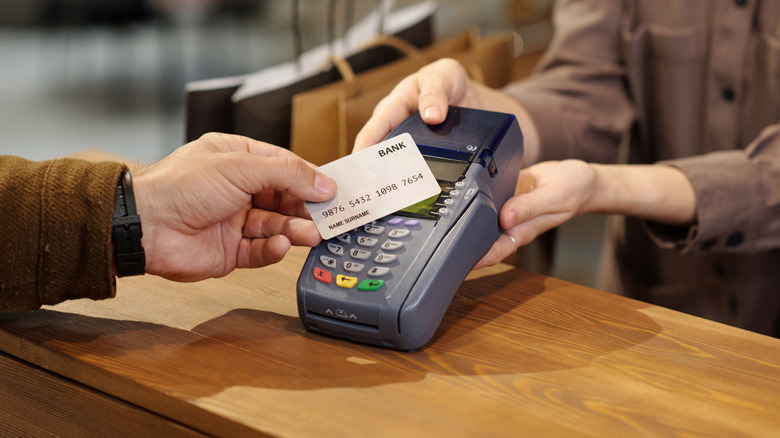
In addition to revealing that an increasing number of people are using their savings to cover costs, McKinsey & Company also found that 29% of Americans are saving money at a reduced rate. Compared to Q3 2025, 3% more participants have started adding a smaller portion of their income to savings accounts. Data at the Bureau of Economic Analysis supports this incrementally slowed savings rate: In June 2025, people were saving 4.6% of what was leftover from their income after taxes and expenses. By September, that figure was down to 4% — the same month that YouGov reported that more than half of both the Millennial and Gen-Z generations feel that they can't even save enough to treat themselves to something they want.
Despite these grim projections, it seems many consumers still consider saving both a priority and a possibility. Plenty of people plan to try to save more in 2026, according to a Credit Karma study conducted by Qualtrics. Out of the more than 1,000 people surveyed, 33% plan to make saving a more direct part of their routine, with more than half of them planning to accomplish this goal by making a budget to create a more strict outline for what they can spend while continuing to build wealth. In a Wells Fargo survey performed in collaboration with Ipsos, 70% of people also reported they planned to save more money in 2026, optimistically making this resolution despite the challenging economic conditions.
Credit cards and buy now, pay later are both more popular
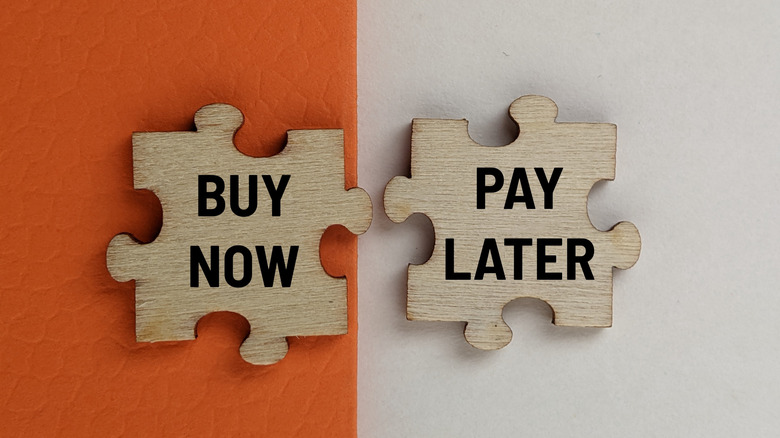
Finally, McKinsey & Company also revealed that consumers' use of non-cash payment methods also increased in late 2025. Reportedly, 28% of those surveyed have used their credit cards more frequently — a 2% increase from 2025's Q3 — while buy now, pay later (BNPL) plans also saw a 1% increase in popularity. Credit card usage can pile up balances in sneaky ways and, according to the Federal Reserve Bank of New York, balances collectively rose by $24 billion in Q3 from the previous quarter, up 5.75% from the previous year. As for BNPL, Adobe for Business, which leverages trillions of data points, reported that consumers spent $20 billion via BNPL plans during 2025's holiday season alone, up from $18.2 billion in 2024.
Each of these strategies described highlights how Americans are trying to navigate the current economic situation. While many citizens are taking on more debt or getting more financially conservative, polls still show mixed results about how people are feeling going into 2026. For instance, Gallup showed that 68% of Americans predict that 2026 will be a year marked by economic difficulty, while Ipsos shows that 66% of people expect 2026 to be an overall better year for them personally.