

Who Pays When A Neighbor's Tree Falls In Your Yard?
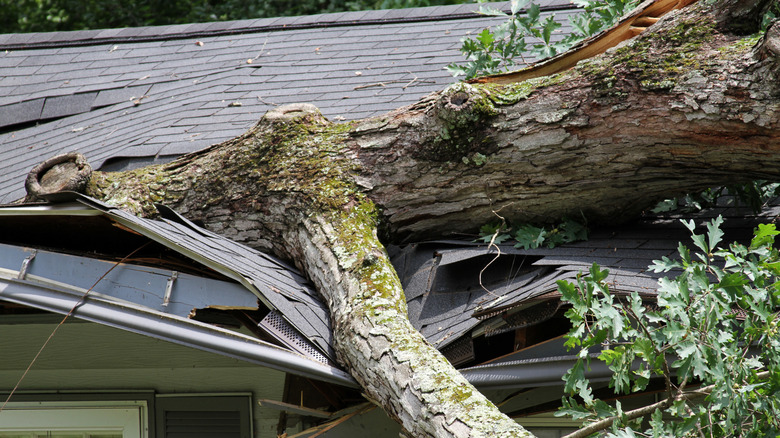
If a neighbor's tree crashes through a fence or hits a garage or even house, it's normal to feel upset. However, the person whose property was damaged might expect that the owner of the tree — the neighbor — would be responsible but the reality is less simple. Although laws vary by state, in general, if a tree falls through an act of God, the tree owner is not responsible for the damage. That said, the neighbor whose property was damaged could still file a claim with their own insurance company. Meanwhile, when negligence is involved, the tree owner is responsible.
The first step is to verify tree ownership, which is determined by the placement of the tree's trunk, rather than any of the branches. If the trunk falls in between two properties, there could be dual tree ownership. The next step involves determining whether the tree (or even just a part of the tree) fell through an act of God — such as a tornado or hurricane — or through owner negligence. Acts of negligence can include knowing that a tree is diseased or otherwise likely to harm a neighbor's property, but not taking appropriate action. When determining negligence in a court setting, something known as the reasonable care standard is applied. This determines whether a reasonable person would think that the amount of tree care that was applied was sufficient. Through the process of determining tree ownership — and whether negligence was involved — an insurance company can then review, and subsequently act, upon any filed claims.
Insurance might not pay out the way you hope
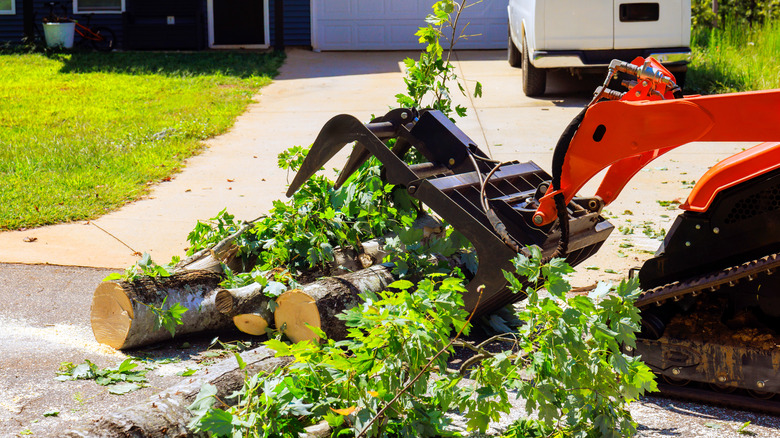
Filing an insurance claim might not get you the response you hoped for. According to Weiss Ratings, between 40% and 51% of claims sent to large insurance companies received no payout in 2024. In the current era of climate related disasters, insurance companies increasingly don't want to cover certain events anymore. This means it's especially important to investigate whether you have enough homeowner's insurance and what, precisely, your policy covers — including whether negligence is a required component for a payout. If you find yourself unhappy with how an insurance company handles a property damage claim after a tree falls, you might consider hiring a licensed public adjuster to represent you in claims management. However, keep in mind that if they negotiate a settlement, they keep a percentage of what is awarded.
In order to best protect yourself from any future claims, ensure the trees on your property are healthy and well cared for through proper watering, pruning, and pest treatments. A tree with discolored leaves and cracking bark may be unhealthy — and one of the home maintenance red flags that could cost you if the tree should fall and damage your, or someone else's, property. Similarly, if you have concerns about the condition of a neighbor's tree, talk to them proactively about solutions. If the tree does damage your property in the future, having copies of any written requests that you sent your neighbor about the situation may help with an insurance claim.