

The 13 Most Underrated Ways To Save Money On Coffee
We may receive a commission on purchases made from links.
Coffee is among the most widely imbibed drinks in the world, and the United States boasts one of the highest rates of consumption. The National Coffee Association (NCA) reports that a staggering 66% of adults in the U.S. drink this caffeinated beverage daily. That already impressive figure has risen sharply by 7% since 2020. Averaged out, these U.S.-based coffee drinkers drink about three cups a day. When looking weekly, the number of U.S. adults consuming coffee jumps to 70%.
While the behavioral aspects of coffee intake at the national scale are intriguing, the tangible impact can be seen on the economic side. America's heightened coffee drinking habits support a robust sector of the economy. According to the NCA's U.S. Coffee Economic Impact Report, the country spends almost $110 billion annually on coffee items. Within the U.S. alone, the entire coffee sector accounts for over two million local jobs and pays out over $100 billion. The coffee sector's overall market size is $343 billion, which is more than 50% larger than in 2015.
If you've noticed your favorite coffee beans or go-to Starbucks order getting more expensive, you're not alone. The price of coffee has been drastically increasing over the past few years. According to the Federal Reserve Bank of St. Louis, the average price of coffee in the U.S., as measured by the Consumer Price Index, has increased by around 48% year-over-year. Inc. attributes these rising costs to a host of geopolitical and climate factors, including steep tariffs on coffee-producing nations and increased weather risks that hinder coffee plant production. While the average consumer cannot influence these variables, there are some underrated ways you can save money on coffee.
Choose more affordable coffee shops

Generally speaking, the most expensive place to get coffee is when you're out and about. Whether you're patronizing a national coffee shop or grabbing a quick cup of joe from the neighborhood corner store, you're likely paying more than you would to make coffee at home. If you're short on time, don't want to invest in coffee makers, or simply enjoy the taste of coffee-on-the-go, you can cut down on coffee expenses without the home-brew option by choosing more affordable coffee shops.
Let's apply this coffee-saving assessment to the classic Starbucks versus Dunkin' comparison. A venti Americano, the brand's fancy term for large, at Starbucks is $5.75. In contrast, a large Americano at Dunkin' is $4.92. That $0.83 difference might not seem like a lot for a single purchase, but the savings add up over time. If you buy coffee out once a week, on par with 70% of Americans, the savings reach over $43 annually. Price differences may vary by product, so you'll need to find where your preferred caffeinated beverage has the best price.
Stick to cheaper drinks or smaller sizes
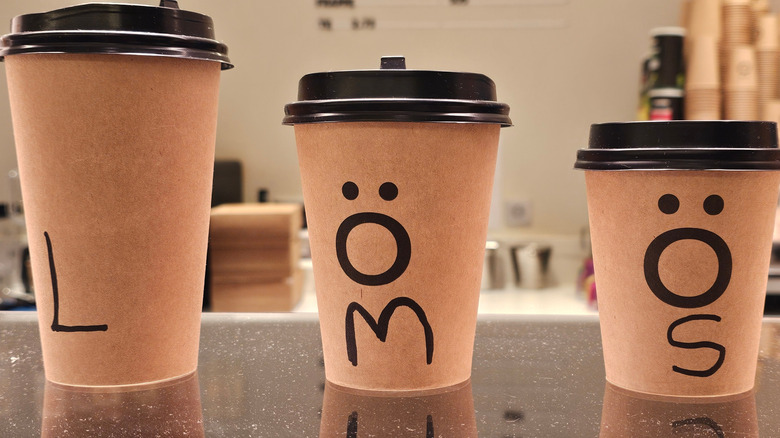
Being choosy about where you buy coffee isn't the only way to save money for a cup of joe on the go. As you've undoubtedly recognized, coffee products vary greatly in price within a single menu. Generally, a coffee rises in value based on its size and how many add-ons it includes. Sticking with the smallest and most basic coffee is reliably one of the cheapest items on the menu, no matter where you're ordering. Often, buying a filtered coffee or an Americano is more cost-effective than purchasing the frappe of the month, chock-full of creamers and other extras.
As mentioned before, a large Dunkin' Americano is $4.92. In contrast, the popular coffee chain's Latte of the same size jumps to $6.61. If you're partial to Macchiatos, your bill for a large size will spike to $7.23. Using the same frequency of a coffee per week, a Dunkin' Americano would reach $255.84 annually. On the other hand, a Latte would total $343.72, and a Macchiato would extend to $375.96. Keep in mind that these prices are merely the starting point. The more creamers, sweeteners, and shots you add, the higher the potential for a more expensive bill.
Use rewards programs and discounts
Many coffee shops offer loyalty programs or other forms of discounts to encourage customers to return. Even small markdowns can make a big difference in the long run. No matter where you're ordering coffee out, ask what kind of discounts they're offering. Some places don't advertise their offerings well, requiring a little inquiry from the customers. Rewards programs tend to favor regular clientele, but it never hurts to ask. If you're a current or former member of the armed forces, you may be able to save on coffee at places that offer military discounts.
Let's take one of the country's largest coffee chains as an example. The game-changing trick to save money at Starbucks is joining its loyalty program. The Seattle-based coffee company's loyalty program enables customers to accumulate points, represented by stars, through any in-store purchase. As those stars increase, you can exchange certain amounts for free coffee items, including hot brew, iced alternatives, and even snacks. To give you an idea of what rewards you can receive, the lowest redeemable tier of 25 stars unlocks a free drink of your choice. The upper end of the reward system of 400 stars allows you to choose anything from the merch store up to $20.
Bring your own cup
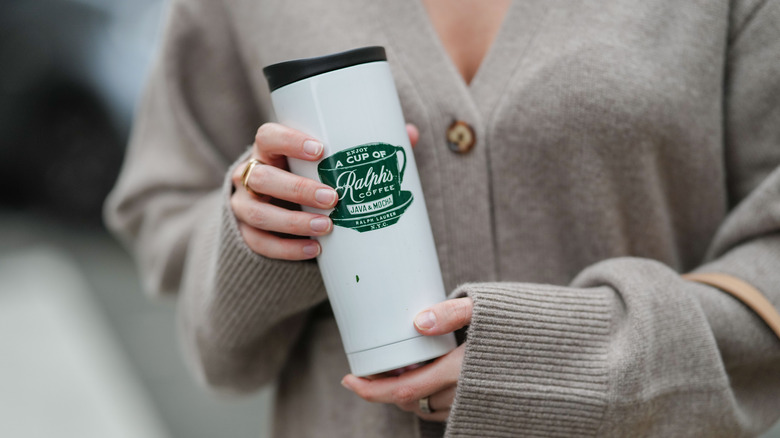
Have a favorite mug you always use when drinking coffee at home? Bringing that go-to cup with you when getting coffee out might just save you some money. Some coffee places offer a discount to users who bring their own coffee cups in an effort to reduce their waste. While disposable cups have been extremely convenient, they've brought a bevy of criticism against major American coffee chains. Market Data Forecast reports that the U.S. produces 16 billion single-use coffee cups yearly.
The discount provided for filling up with your own cup varies by chain or independent coffee shop. Starbucks, perhaps the largest chain offering such a discount, adds a 10% discount to every beverage poured into a personal mug, instead of a single-use cup. Using the previous example of the $5.75 Americano from Starbucks, bringing your own cup would bring this order down to $5.18. That roughly $0.57 off your regular can act as a savings snowball over time, especially if you get coffee on the go often. Peet's Coffee, a San Francisco-centric brand, takes a flat $0.25 off your coffee order. Some local coffee shops may offer similar incentives, so it doesn't hurt to ask before visiting. Just make sure your coffee mug is clean. That's usually a fine print stipulation to qualify for these discounts.
Purchase coffee in bulk
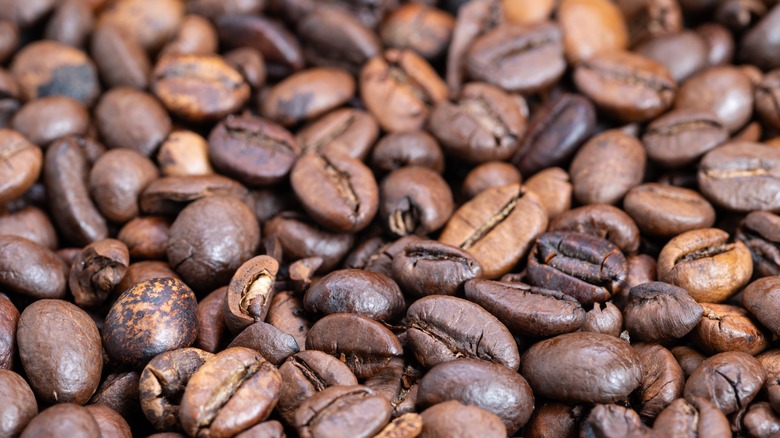
Another extremely underappreciated way to save money on coffee is buying in bulk. As with most products, producers sell coffee at a lower price per pound in larger quantities. As the Corporate Finance Institute explains, companies can achieve a reduced cost-per-unit burden when engaging with larger volumes based on the discounts offered by wholesalers. These production savings allow coffee sellers to offer their larger products at a more affordable price. This would apply whether you're buying beans or ground coffee.
Let's see how this price difference can play out in real life. Walmart's self-branded Great Value coffee retails for $5.88 when sold in a 9.6-oz container. That's equivalent to $0.61 per ounce of coffee. The same type of coffee is sold for $19.77 when bought in a 40.3-ounce container, roughly averaging out to $0.49 per ounce. While the overall cost of the larger item is more expensive, it's cheaper when measured on a per-ounce basis. In this example, buying coffee in bulk can help save you 20% compared to piecemealing your purchases with smaller containers. It's easy to see that buying in bulk is not one of the huge mistakes costing you money at Walmart.
Store coffee properly to keep it fresh
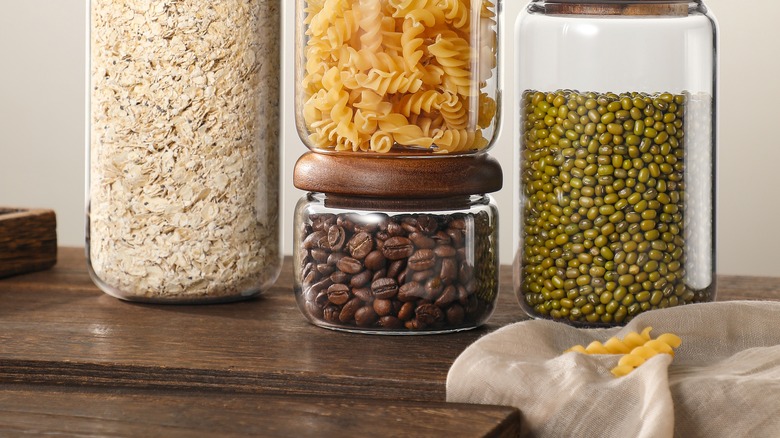
Saving money on coffee isn't only accomplished at the point of purchase, whether heading out or brewing at home. You can also lose money on coffee by failing to use all your beans or grounds before they go bad. Coffee is remarkably resilient, with an ability to stay fresh much longer than other items in the pantry. Still, even coffee beans or grounds have an expiration date. The longer you're able to keep this raw ingredient fresh, the more you can cut down on your coffee-related expenses.
According to the legendary Folgers brand, coffee beans can last anywhere between twice and four times as long as their ground counterparts. Once roasted, beans are fresh for four or six weeks, while grounds only last one to three weeks. The manufacturer points out light, moisture, heat, and oxygen as the most common variables that reduce the lifespan of coffee. For maximal and prolonged freshness, it recommends storing coffee in a dark, airtight place. If you can, grind the beans yourself to avoid housing grounds for too long. Sticking with beans can ensure your coffee doesn't go bad before you're ready to consume it.
Opt for reusable coffee filters
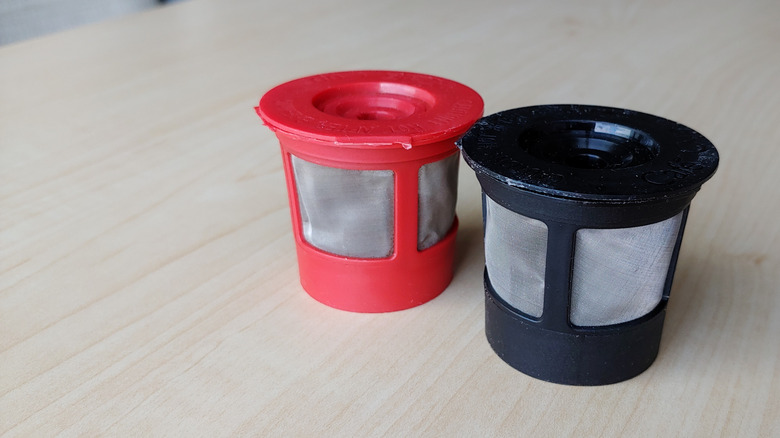
Filters are arguably the least expensive coffee-related item. For instance, Walmart sells 100 coffee filters for under $5. That works out to roughly $0.05 per filter. Given their extremely low cost-basis, most people looking to cut down on their coffee expenses overlook coffee filters. Besides, these components are often considered unavoidable if you're brewing coffee at home.
Yet, those looking to cut their coffee expenditure in every area shouldn't overlook the cumulative cost of single-use coffee filters. If you're one of the 66% of U.S. adults who drink three cups of coffee a day, it's safe to assume you're using at least one coffee filter daily, or roughly 365 filters per year. Thus, you would need to buy four packs of 100 filters, which works out to about $20 annually.
Again, that's a minuscule expense compared to other coffee-related costs. However, you can get a reusable coffee filter for a fraction of the annual cost of disposable ones. Walmart sells a mesh coffee filter for under $7. In addition to the yearly savings you get with reusable coffee filters, avoiding single-use filters helps reduce their negative impact on the environment, such as methane production.
Make your own coffee additions
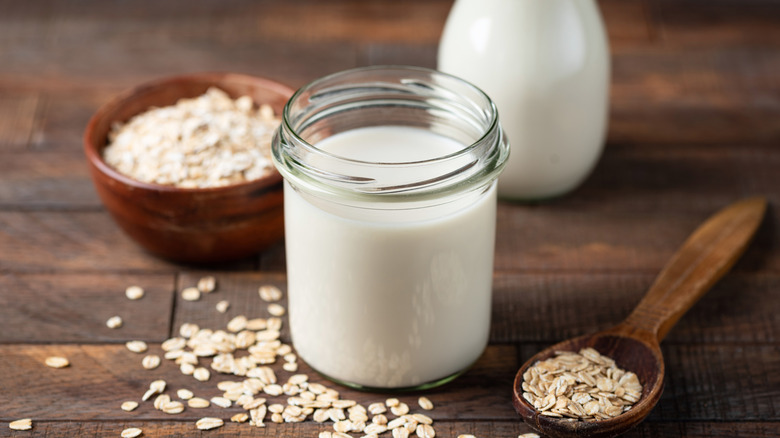
There's no question that brewing coffee at home is cheaper than buying out, but your DIY savings don't have to stop there. As mentioned before, coffee shops often hike their coffee prices because of the extras people add to their coffee. Those milk substitutes, creamers, and flavorings can send your bill over the affordability edge. These extra costs extend to the grocery store, too, meaning even homebrewers are overpaying. For instance, Walmart — often considered one of the cheapest grocery stores — sells various Starbucks creamers for around $5.
Alone, that price might sound reasonable, but you can make your creamer at home for a fraction of the price. All you need is milk or a milk substitute, half-and-half to add thickness, and a sweetener or flavoring of your choice. Beyond saving money, you'll also be making your cup of joe healthier. According to the Center for Science in the Public Interest, many popular store-bought coffee creamers, such as International Delight and Coffee Mate, are primarily made of seed oils and sugar, along with some potentially harmful ingredients.
Reuse coffee grounds
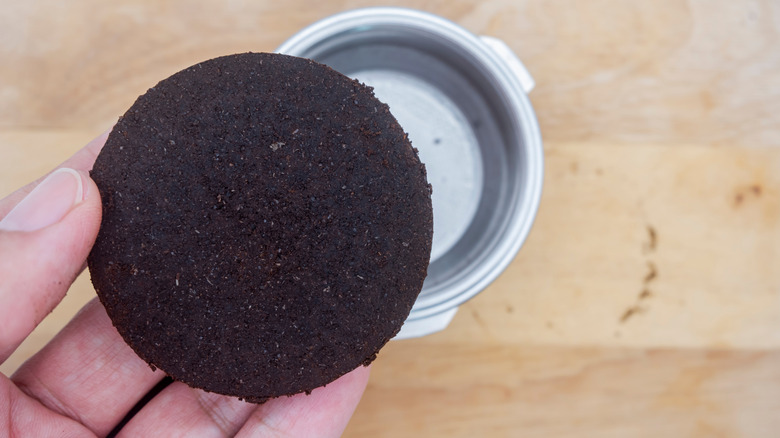
A routinely overlooked method for reducing the amount you spend on coffee sits right in front of you every time you make coffee. In fact, there's a good chance you're throwing it away each day. Believe it or not, coffee grounds aren't completely spent after a single use. Reusing your grounds can help prolong the life of your initial investment. This works for filtered coffee, French press, and even espresso makers. Simply replenish the water, and repeat the brewing method. You don't even have to remove the grounds.
Notably, most of the caffeine and other aromatic elements that give a cup of joe its distinct flavor and kick will be used up. As a result, you might want to reduce the amount of water you use to preserve those key components. Giving your coffee grounds a second life is actually perfect if you're looking for a brew with lower caffeine. Through this cost-saving method, you may be able to double the lifespan of your coffee beans or grounds, virtually cutting your budget in half.
Clean your machine routinely
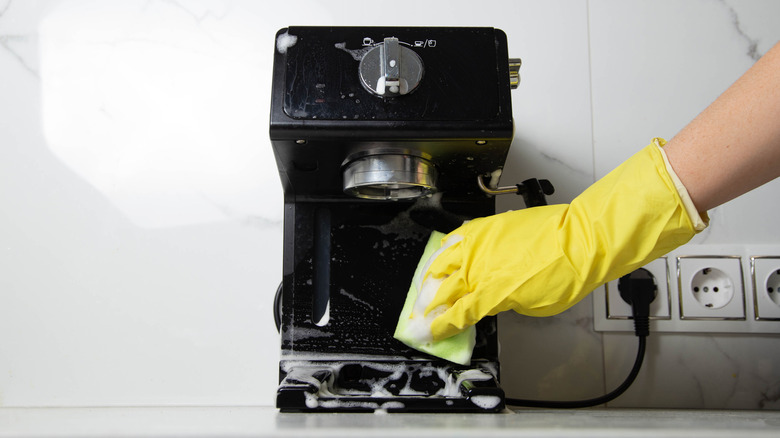
As with any piece of equipment, coffee machines require some routine cleaning to ensure proper functioning. Unfortunately, many people neglect their equipment until either the coffee tastes too bitter or it stops functioning properly. Keeping up to date on cleaning and repairs can extend the life of your coffee maker, preventing replacement costs. Those hefty prices of coffee machines we mentioned before can upend even the most diligently maintained coffee budget.
The primary risk factors to a coffee machine's longevity are the deposits of various minerals and oils left behind from both the water and coffee grounds. These leftovers can build up considerable over time, obstructing pathways, obstructing moving parts, and wearing on vulnerable materials. Fortunately, doing away with these potentially damaging minerals is fairly easy. All you need to do is empty any coffee grounds, take out the filter and other removable components, and wipe reachable parts down with a cloth and some vinegar.
Consumer Reports advises homebrewers to clean their coffee machines every three or six months. The required frequency of cleaning is relative to the frequency of use. Generally, the more often a piece of equipment is used, the more it should be cleaned because the more exposure it has to damaging deposits. The best way to determine the ideal cleaning frequency is to look at the user's manual of your specific coffee machine.
Don't throw out leftovers
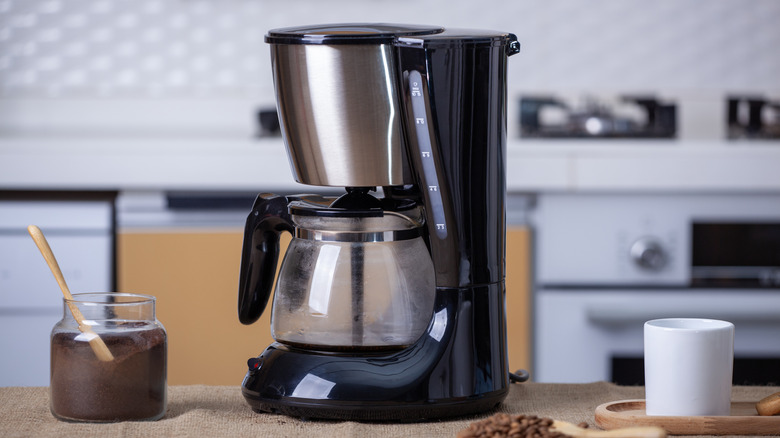
It's common to brew more coffee than you're able to consume. Whether you reach your caffeine limit quicker than you expected, simply run out of time, or miscalculate when making coffee for a bunch of people, these leftovers represent an avoidable expense. Every cup you pour down the drain represents a waste of fresh grounds, electricity, water, and filters. Instead of tossing out the leftover brew, consider saving it for the next day. You'll limit the waste and might even prevent yourself from having to make coffee in the morning.
What do you do with the leftovers exactly? Well, that's where the fun begins. While you can simply pour it into a coffee cup and reheat it in the microwave, there are more creative options. If you're a cold brew fan, place the leftovers in a cup, leave it in the fridge overnight, and add ice cubes when you're ready to consume. You can add creamers, flavorings, and sweeteners as an ad-hoc, at-home barista. There's no shortage of recipes for homemade coffee online. Thinking outside the box, you could use the coffee to bake coffee-flavored pastries or cakes. If you have a craving for coffee in the evening, you can use the leftovers to make a homemade coffee liquor.
Split the costs
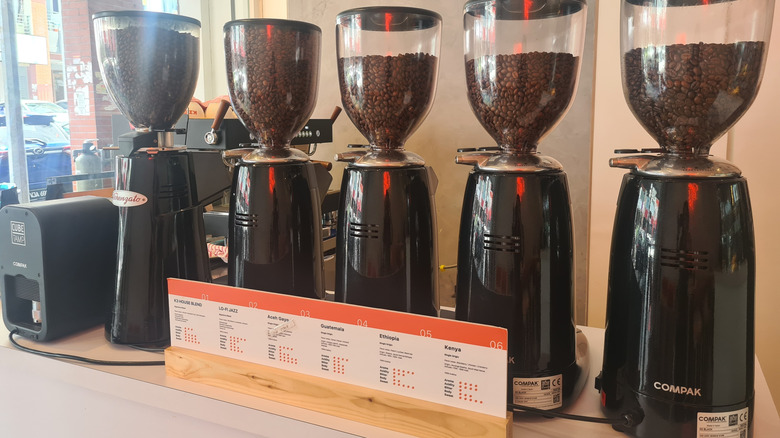
The cost of brewing from home can vary widely. If sheer affordability is the goal, sticking with bulk grounds from a generic brand and a standard filter machine is the way to go. These machines tend to be among the more affordable. However, if you're looking to maintain the flavor and quality of a professional coffee shop, you may want to invest in a premium coffee maker. Consumer Reports indicates that an espresso machine can cost between $90 and $2,200. The consumer organization site also suggests cold brew coffee makers can easily reach $200.
When comparing the upfront costs of brewing great-tasting coffee from home with the price of a single coffee from a chain, the tradeoff can seem cost-prohibitive. The key is to focus on how your long-term coffee costs will diminish dramatically in the long run. If you're living with roommates, friends, or family members who would likely use the same coffee machine, see if they're willing to split the cost with you. It's a great way to offload some of the initial financial burden of becoming a homebrew maestro.
Set a coffee budget

Coffee just might be one of those monthly expenses you're forgetting to put in your budget. It's a sneaky expense that doesn't seem significant enough to affect your overall budget, especially when looking at daily expenditure. Yet, those costs add up considerably over time to the point where they can make a dent in even the most carefully designed financial plans. For instance, if that $5.75 venti Americano becomes a daily staple on your way to work or any out-of-the-house activity, your monthly budget is suffering a $172.50 blow.
Annualized, that comes out to a staggering $2,070. For perspective, that would account for nearly 2.5% of the median household income in the U.S., which is $83,730, according to the U.S. Census Bureau. As with any expense, it's tough to control your spending without setting a strict budget. Determining how much you want to spend on coffee monthly can ensure you don't go above your limit. The precise allowance you dedicate towards coffee will be determined by your personal financial circumstances.