

The Best Tips For A Retiree Trying To Afford Life In Florida

There are plenty of good reasons to move to Florida, from the gorgeous sunshine to the fact that it's one of the rare places without a state income tax, including on retirement income. There's also no estate or inheritance tax. That said, some retirees regret moving to this low-tax state because of the sales tax. In Florida, the state sales tax rate is 6% (and 6.95% on electricity), which falls into the higher half of state sales tax rates across the country. Depending upon where a retiree moves to in Florida, local sales taxes can be tacked onto the state rate. On average, according to the Tax Foundation, local taxes add another 1.02% to what people pay on purchases.
Then there is the prevalence of hurricanes and the associated higher home insurance costs. This is, in fact, why many retirees are leaving Florida to move to other states. The 2025 PODS Moving Trends Report noted that, between 2021 and 2023, Florida had six or more cities listed as top move-to destinations; by 2025, only two existed. Plus, two Florida cities made PODS' 2025 list of places that people are leaving.
Each retiree will need to decide if the many benefits of Florida outweigh the costs — or vice versa. To help, here are five ways that retirees can save money when living in the Sunshine State.
Choose one of the more affordable locales in Florida

Where you move to in Florida can make a significant difference in your costs of living. As of November 30, 2025, Zillow noted the average price of a Florida home as $372,356. In Cape Coral, meanwhile, the average home value came in at $336,624, which is 8% less than the national average. Retirees also appreciate the town's low violent crime rate and fishing and boating opportunities, thanks to Cape Coral's closeness to a canal. This city is also known for its infrastructure and its proximity to big medical facilities. Palm Bay is another good example of more affordable living, with Zillow listing its average home price as $300,387. With very low property crime, there are plenty of quiet neighborhoods for peaceful living in this city.
If looking for even more affordable living, consider Sebring. According to Zillow, the average home value is at $235,401, with its location between two lakes offering proximity to waterfronts without higher prices. Besides waterfront-related recreation, people can stroll the historic downtown or enjoy museums like the Highlands Museum of the Arts or the Military Sea Services Museum.
This small city also contains the Sebring International Raceway, which is the home base for the Mobil 1 Twelve Hours of Sebring endurance race as well as a concert venue. Then there's Arcadia, which has homes with an average value of $240,791, serving as another affordable living choice. It's a purportedly calm area with lots of fossil hunting; even the name of the river sounds calming – Peace River.
Clearly establish Florida residency to benefit from tax breaks
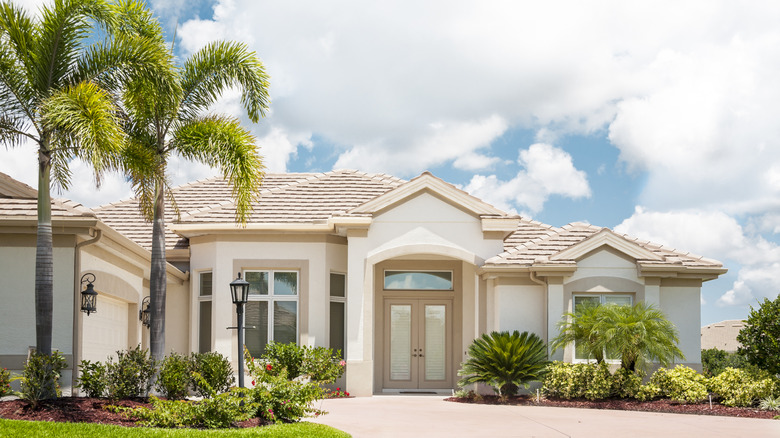
While some people retire to Florida year-round, others divide their time with another state. If you're one of these snowbirds and you're still looking to benefit from the state's tax breaks, it's not enough to simply show that you've bought a home in Florida. Instead, you may need to live in the Sunshine State for 183 or more days annually, depending upon the laws in the other state you're leaving or spending part of the year in.
If subscribing to the better-safe-than-sorry philosophy, it's best to clearly document where you're living on each day, perhaps in a journal kept for that purpose. To legally declare that Florida is your primary residence, you can file an affidavit of domicile; per Florida Statutes §222.17, you would file this document with the clerk or the circuit court where you plan to live. It needs to be signed in front of a deputy clerk or notary public.
Additional tips to follow include establishing your residency through voter registration, changing your driver's license and vehicle registration to match your Florida address, opening bank accounts locally, getting a library card, and so forth. Update your address with the U.S. Postal Service so that you receive bills and other important pieces of mail at your Florida address. Each of these steps can help to establish residency and allow retirees to benefit from tax breaks. It also makes sense to get involved in the local community for another reason: to make friends, establish roots, and engage in enjoyable activities.
Make sure your home has the right wind mitigation features
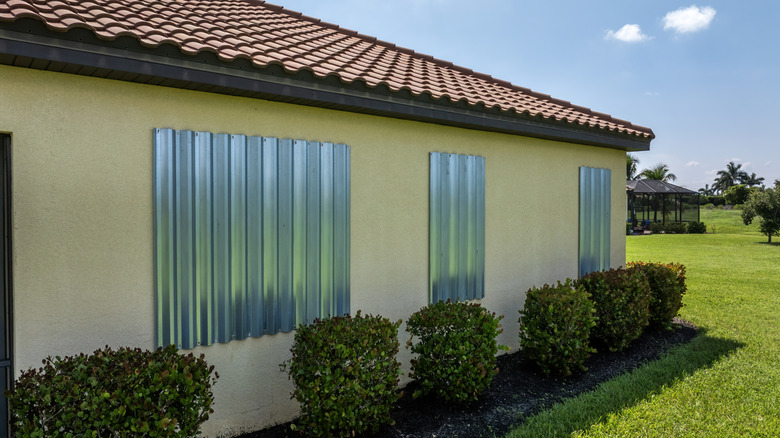
Although people living in Florida can enjoy plenty of warm, sunny days, many parts of this state are hurricane-prone — and home insurance costs reflect that. So, if someone hasn't yet chosen their house in Florida, it can make good sense to choose one with a roof that slopes down to provide wind resistance with shingles or tiles that meet current building codes. Roof trusses should securely attach to the home's walls with secondary layers of water resistance. Additionally, windows and doors (including garage doors) should be high-impact choices, well-braced against wind.
Homes that don't have wind mitigation features can come with much higher insurance costs, with Kiplinger quoting an insurance expert as saying that costs could be as much as four times higher. As such, if someone already owns a Florida home, they may want to make updates. Public Claims Adjusters Network reported that wind mitigation inspections could reduce home insurance costs by as much as 55%, with 2025 inspection prices coming in at just $100-$150.
If those percentages hold, a retiree can save significant money, given that Insure lists average Florida home insurance prices as $4,405 annually for $300,000 in coverage with $100,000 in liability protection and a $1,000 deductible. This broad range of coverage amounts to another tip for retirees: shop around for the best home insurance coverage, and make sure your house has wind mitigation features. Of course, home insurance typically doesn't include flood insurance coverage, which is a whole other issue, considering Florida buildings are literally sinking.
Be proactive in your pest control strategies in Florida

Excel Pest Services examined the number of pest-related Google searches per state, comparing that to climate data and the number of farms, restaurants, and landfills in the area. Using this information, they determined that Florida has the highest number of carpenter ant invasions in the country, the second most termite and spider problems, the third highest numbers of bed bugs, cockroaches, fleas, and rats, and the fifth most (non-carpenter) ant problems. In other words, when living in Florida, it's important to proactively protect your home against pests.
Tricks that can save money on pest control include cleaning up immediately after eating, washing dishes, and wiping up spills. Store foods in airtight containers and take trash out regularly, putting it in tightly lidded garbage cans kept away from your home's foundation. Fix any leaks that can provide moisture to pests and keep standing water on your property to a minimum.
If you decide to get professional pest control services to eradicate any current populations or help to keep critters away, ask neighbors for recommendations and/or shop around. Gardener Bible listed a range of costs in Florida, noting that what you'd need to pay can depend on the size of the area that needs treatment. The types of pests and levels of entrenchment also matter, with price ranges quoted for ant control at $50-$200; termite treatment at $500 to $2,000; rodent control at $100 to $500; and mosquito control at $50 to $200.
Find a comfortable part-time job to afford Florida living

Plenty of retirees are returning to the workforce, with the National Conference of State Legislatures putting this figure at 20% to 25% at the end of 2024. Depending upon where someone retires in Florida, a wide range of employment opportunities could exist. Several of the 12 post-retirement jobs listed by the career site Indeed especially dovetail with Florida's lifestyles, including a resort worker, where the retiree could work in hospitality roles, customer service positions, and so forth. The average wage for this in December 2025 was $16.00 an hour.
Another potential job could be an event staff position, where the retiree would work at a festival or venue, perhaps checking people into events or working at the concession area. The average wage listed for this position was $18.20 an hour. Providing service at a hotel desk as a concierge is another possibility; the average wage listed for this was $17.97 an hour.
Depending upon the retirees' skill sets, they may find remote work during retirement: in accounting and finance jobs, administrative roles, substitute teaching, consulting positions, data entry, freelance writing, graphics design, and so on. Money earned from part-time jobs can help make living in Florida more affordable during a person's golden years.