

The Largest GM Recalls In Recent History Cost The Company Billions
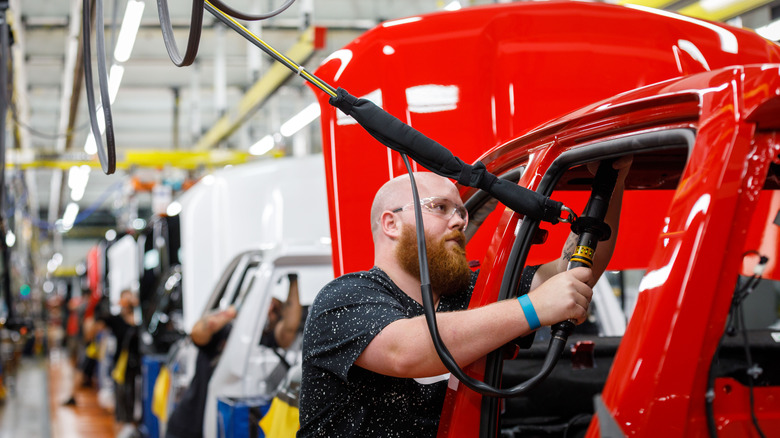
For companies like General Motors, the industry-wide cost of vehicle recalls can be a significant financial liability for big automakers when it directly impacts profits. Aside from the damage to a company's brand, GM's recent history of recalls from 2001 to today demonstrates how quality issues can translate into billions of dollars in losses, particularly when related to expenses like warranty coverage, litigation, fines, and replacement of parts.
According to CNN Business, recalls of 143,000 General Motors' Chevrolet Bolt vehicles in 2021 carried an estimated price tag of just under $2 billion. That was the equivalent of approximately $14,000 per recalled vehicle in warranty and recall expenses. Meanwhile, as per GM Authority, 2025 is on track to see one of the worst quarterly losses in GM's history. According to GM's Chief Financial Officer, Paul Jacobson, the warranty coverage for 2025 is already $300 million higher than the previous year, and in addition to the impacts of tariffs on American cars, represents a total $1.1 billion dollar hit to the company's second quarter. The cost of warranty coverage was second only to the additional cost of tariffs, with a recall of 597,630 vehicles in the U.S. and 721,000 units around the world and to the car manufacturer's woes.
Faulty ignition switches: 2014

As per the U.S. Department of Transportation, the National Highway Traffic Safety Administration (NHTSA) determined in May 2014 that the automaker had intentionally delayed reporting faulty ignition switches in its vehicles, resulting in a $35 million civil penalty. GM's problems didn't end there. As per The Guardian, in September 2015, GM agreed to pay $900 million to settle a U.S. criminal investigation into its failure to disclose the defect.
According to Motor Trend, February 2014 saw the recall of 619,122 GM vehicles. The main culprits at the time, the 2005 to 2007 Chevrolet Cobalt and Pontiac G5, were recalled due to the faulty switches that could click into the off position while driving and fail to deploy airbags in the case of a collision. According to NPR, about two weeks after the first recall in March 2014, GM included another 748,024 vehicles before including 1.55 million sedans, SUVs and vans. However, the defect was first noticed in 2001 while testing the new Saturn Ion vehicles. It was noticed again in 2004, and in 2005 when an engineer suggested the problem be fixed. In both March and May 2005, GM made the financially and ethically catastrophic mistake of ignoring the issue because of the estimated cost and time it would take to address it. Between 2025 and 2012, there were 10 crashes — six fatal — stemming from the faulty ignition system.
Chevrolet Bolt battery: 2017 to 2022
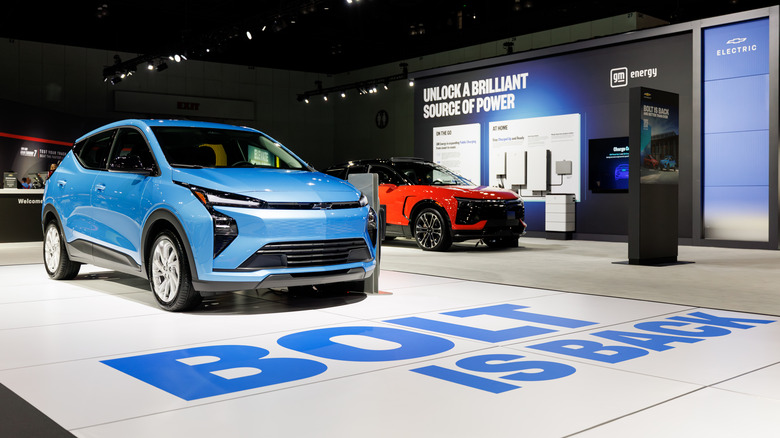
According to CNN Business, the total estimated cost of the Chevrolet Bolt battery recall was $2 billion to fix approximately 143,000 vehicles at risk of catching fire due to a manufacturing issue. This worked out to a staggering $14,000 per vehicle due to the high cost of the lithium-ion battery packs. In a critical financial development, GM secured a $1.9 billion reimbursement from LG Electronics, its battery supplier, to cover the vast majority of these expenses. GM released a statement in 2021 explaining why the automaker and LG reached the agreement. Apparently, the root cause of the battery issues could be traced to manufacturing defects produced at LG plants — related to folded separators and broken anodes — placing the battery maker at fault. The financial burden on GM was largely mitigated by the supplier agreement, leaving GM on the hook for a much lower $100 million.
The recall involved the replacement of battery modules in nearly all Bolt models sold between 2017 and 2022, with first priority given to the older models. However, GM also implemented a sophisticated software solution for many 2020-2022 models that would consistently scan and autonomously restore full charging capability to a battery after every 6,200 miles, so long as no defects were found. Does an electric car actually save you money in the long run? If you weren't the owner of one of these GM vehicles, maybe.
Bad Brakes: 2014, 2019, 2020, and 2025

For General Motors, bad brake systems have proven to be a particularly expensive and recurring safety failure which, in 2014, cost the company a landmark $35 million civil penalty — at the time the maximum penalty ever handed out by the National Highway Traffic Safety Administration (NHTSA). To boot, GM was fined $7,000 for every day the company failed to respond to the NHTSA's queries, an amount that hit $300,000 by May 2014. Although related to the aforementioned deadly ignition switch defect, this specific issue targets disabled power brakes and steering, with the cost of recalls for 11.2 million vehicles in May 2014 totalling $1.5 billion, per Global News.
This is part of a repeating pattern. In September 2019, almost 3.5 million full-size SUVs and pickups, including the Chevrolet Silverado and Tahoe, were due to a faulty powered brake-assist system that could make it more difficult for motorists to push their brake pedal, according to Consumer Reports. The NHTSA linked the defect to 113 crashes and 13 injuries before the recall was issued. As per Sanger Chevrolet GMC, the average cost of brake pedal replacement is $145. That's around $508 million, and doesn't even include the 14,620 vehicles added by October 2020. In June 2025, GM recalled over 62,468 Chevrolet Silverado trucks due to a defective brake pressure sensor that could cause leaks and lead to a fire. According to Repair Pal, the average cost of replacing a brake pressure sensor carries a maximum cost of $401, representing just over $25 million in warranty costs.
Faulty airbags: 2007 to 2014

In November 2020, GM conceded to recalling 5.9 million SUVs and pickup trucks from the 2007-2014 model years, including the Chevrolet Silverado, Tahoe, Suburban, GMC Sierra, Yukon, and Cadillac Escalade. The company disclosed that the cost of replacing faulty Takata passenger-side airbag inflators would be approximately $1.2 billion after losing a battle with the National Highway Traffic Safety Administration (NHSTA) as part of the most widespread safety recall in U.S. automotive history, according to CNBC.
This decision on the part of the NHTSA centered on Takata airbag inflators that could explode if ever actually used, causing major, up to fatal, injury. This involved not just GM, but 18 other auto manufacturers forced to recall, in total, some 67 million airbags from, now defunct, Japanese automotive company, Takata. Set off by extreme temperatures and moisture, the Takata airbags once deployed could send metal shards flying into a vehicle's cabin. According to Consumer Reports, as of April 2024, 88% of vehicles with these airbags have been cleared either through repair or replacement, however, as per the NHSTA, that was only after a reported 400 injuries and 28 fatalities.
Dodgy seatbelts

While, according to Age Styling, there are a number of factors that include the make and model of a vehicle, the complexity of issue, and the availability of parts, the average cost of seatbelt replacement is $100 on the low end, to $200 on the high end. In March 2021, GM SUVs, Escalade Tahoe, Suburbans, and Yukons, were recalled due to a single or both third row seatbelts having a defect that could cause the seatbelts to break on impact. The recall impacted 484,155 vehicles. Based on Age Styling's average cost estimate of $200, that cost to GM could be anywhere around $97 million to $194 million in warranty coverage, according to CBS News. In July 2024, Motor Safety noted that the recall of 13,464 2024 and 2025 model-year Corvettes represented a direct hit to General Motors' profitability due to dodgy seatbelt retractors could jam if extended to full length. Using the same calculation, the repair of a single seatbelt in each vehicle could cost around $2.7 million, rising by multiples depending on how many seatbelts were affected in each vehicle.
Making matters worse where the Corvettes were concerned, replacement parts weren't immediately available at the time. According to James Group, the cost of expediting parts by air freight to automotive manufacturers could be anywhere from five to 10 times higher than average shipping rates.
Blinding headlights: 2022 and 2023

In 2022, GM was forced to recall approximately 740,000 of its full-size SUVs and pickups—including the Chevrolet Silverado, Tahoe, Suburban, and their GMC counterparts—because of a fault in the automatic high-beam system that prevented the lights from dimming for oncoming traffic, according to CNET. By January 2023, that number had risen to 740,108 vehicles that included cars. The remedy was a software update, a fix far less labor intensive than replacing physical parts. Still, although no cost estimate for the recall was provided by GM, according to analysis by Wired, the cost of repairing software defects in the automotive sector now averages around $66.50 per 1 GB of repair.
As per Micron, the average vehicle will average 90 GBs thanks to software inputs. At a cost of $66.50 per 1 GB multiplied by 740,108 vehicles, that could be anywhere between just over $49.2 million to just over $4.4 billion. Even if the automatic high-beam system took up a tenth of the average GBs in a vehicle, GM would be looking at a centi-million dollar charge against quarterly earnings. Depending on how often you intend to drive, and your ability to pay for platinum warranty coverage, the risk of faulty software may be a reason to really think about whether you should buy new, buy used, or lease a vehicle.
Untrustworthy instrument panels: 2023 and 2024

General Motors' November 2023 recall of 60,000 2024 Chevrolet Trax, Buick Encore GX, and Buick Envista crossovers for blank instrument panels was a pretty serious safety hazard caused by the entire digital dashboard blacking out while driving, per GM Authority. By December 2023, GM added another 154 vehicles to that recall. The irony of the above is that Chevrolet consistently ranks in the top 10 favorite car brands for consumers. The culprit was the virtual cockpit unit module, which the company planned to remedy a free over-the-air (OTA) software upgrade at any dealership. Then again, Motor Safety noted that in July 2024, GM recalled 6,746 2023 to 2025 Cadillac SUVs over defective instrument panels that would fail to show turn signals and other important indicators.
Unlike the billion-dollar battery pack replacements or million-dollar engine repairs, a software fix avoids massive expenditures on physical parts and complex dealership labor. However, using the industry benchmark from Repair Pal for Instrument Cluster repairs, GM could be looking at an average cost of $1,006 to $1,058 per vehicle, including parts and labor. For 60,154 recalled vehicles, a high estimate of the cost to GM could be around $63.6 million, and for the 6,746 recalled Cadillac SUVs, just over $7.1 million.
Faulty Tailgates: 2024

In February 2024, GM issued a series of recalls for its 2020 to 2024 model of heavy-duty Chevrolet Silverado HD and GMC Sierra HD pickup trucks related to faulty tailgates, Motor Safety noted. The issue, caused by water intrusion that could short-circuit a touchpad switch, risked the tailgate opening unexpectedly while parked. The level of recalls expanded over time, with an initial recall of approximately 570,434 model-year 2024 trucks growing to add another 132,037 trucks by December 4, 2024. Then, by December 6, 2024, the last number rose again to 150,000. While Chevrolet happens to be one of five car brands that cost the least over time, the replacement cost for a GMC tailgate, according to Lemon Law Experts, may have cost GM big time. With the cost of parts and labor for around 720,434 vehicles costing $1,000 to $3,500, and $200 to $500 respectively per vehicle, faulty tailgates could have cost GM anywhere between $864 million just over $3.6 billion on the higher end.
GM 6.2L V8 L87 engine: 2025

According to GM Authority, the warranty cost coverage for 600,000 vehicles following a U.S. government investigation by The National Highway Traffic Safety Administration (NHTSA), climbed to $300 million in the second quarter of 2025 compared to the previous year. This increase made warranty expenses GM's second-largest cost for the quarter, trailing only behind tariffs. While there are reasons why an extended warranty may not be worth the cost, this situation at least demonstrates that there may be extenuating circumstances a consumer may not be considering. The May 2025 recall included the Chevrolet Silverado and Tahoe, GMC Sierra and Yukon, and Cadillac Escalade, and was caused by a defect involving connecting rods and the crankshaft that could lead to sudden and catastrophic engine failure.
While the $300 million charge covers immediate repairs and logistics, it likely doesn't represent the full financial fallout. While recall has sparked a federal probe into whether the problem is more widespread, according to Hagens Berman, a class-action lawsuit has also been filed alleging the recall doesn't go far enough to compensate consumers since it reduced the value of their vehicles.
Defective tires: 2001 and 2025
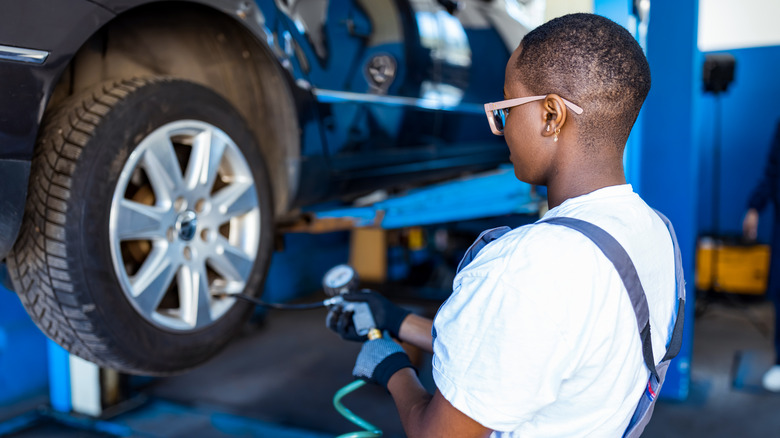
In October 2025, GM issued a recall for 22,700 Chevrolet Equinox and Cadillac Optiq models equipped with specific Goodyear tires, according to Car and Driver. The tires could develop cracks in the sidewall, increasing the risk of a blowout. Owners of the affected vehicles are to receive replacement tires at no charge. According to Performance Plus Tires, the cost of replacing a set of four modern tires, specifically for a compact SUV like the Equinox, could easily cost $100 to $150 per midrange tire, to $160 to $350 per premium tire. That said, consumers buying their own tires should anticipate an expense between $460 and $1,280 for a full set of four. Assuming GM would replace all four tires per recalled vehicle, GM would be on the hook for just over $41.7 million to just over $116.2 million in warranty coverage. Hopefully, as a consumer in this position, you would have the opportunity to take advantage of the warranty since the cost of covering four tires might be the point at which automotive repair becomes not worth it.