

Student Loan Wage Garnishment Will Resume In 2026
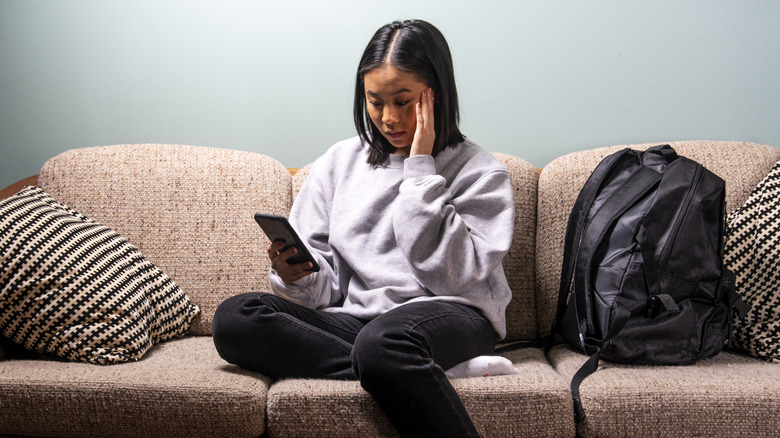
Millions of people in default on their student loans may start seeing a portion of their paychecks disappear in 2026 as the Trump Administration restarts a wage-garnishment program that has been frozen since the COVID-19 pandemic. The Department of Education confirmed that the Trump Administration will once again garnish wages on those in default of their student loans. The first batch of roughly 1,000 people will be notified on January 7, 2025. In the following months, more and more people in default will also see deductions from their wages, though federal law requires the Department of Education to provide those who are considered in default 30 days' notice before the garnishing takes effect.
The U.S. Department of Education has been gearing up to collect money from those who did not pay their student loans for several months since April 2025. In May 2025, after giving borrowers 65 days' advanced notice, the department announced it would take portions of Social Security benefits and other forms of government compensation to repay defaulted student loans. Meanwhile, those in default who expected to get a big tax refund in 2026 may be in for a shock, as the federal government has been seizing those payments as well.
10 million Americans could have their wages garnished.

The wage-garnishing action only targets borrowers in technical default, meaning they haven't made a payment on their student loans for at least 270 days. After being notified, borrowers can request a hearing, pay their loan balance in full, negotiate a settlement, or negotiate payment terms, according to the education department's Federal Student Aid webpage. If no action is taken, then up to 15% from the default borrower's after-tax paycheck could be deducted. However, the Department of Labor reports that whatever amount the government takes must leave the borrower with at least $217.50 a week, which equates to 30 hours of minimum-wage work.
Michele Raneri, vice president and head of U.S. research and consulting at TransUnion, told USA Today that there may be at least 4 million people who are in default on their loans. However, the Education Department believes that number may have reached 10 million, a figure that represents roughly 25% of the federal government's $1.67 trillion outstanding loan portfolio.
As for why so many people are defaulting on their loans, Secretary of Education Linda McMahon pointed her finger at confusion caused by President Joe Biden's push for student loan relief in a statement to the Department of Education. This initiative included the Saving on a Valuable Education (SAVE) Plan, a flexible payment plan that would have enabled low-income students to pursue debt forgiveness. However, it ended up being tied up in court by Republican state attorney generals who deemed SAVE unconstitutional.
Why so many borrowers are struggling to pay their loans

The Department of Education moved to eliminate the SAVE Plan in December 2025, and implemented alternative payment options for low-income borrowers via the One Big Beautiful Bill Act in July 2025. By this time, NPR reports almost 7.7 million people enrolled in the SAVE Plan also had to deal with additional interest that started building in August 2025.
But Biden's policy isn't the only reason why millions thought twice about aggressively paying off their student loans, or making any payments altogether. Budgets were limited by higher housing and transportation costs, with many younger adults prioritizing rent payments and car loans over catching up on their student loans. These conditions resulted in falling credit scores for Americans, particularly those in Generation Z.
The Trump Administration, meanwhile, wants those with student debt to make their payments, emphasizing that American taxpayers who are owed much of that money. Even loans from private companies are often backed by the federal government, so those with unpaid student debt from seemingly non-federal organizations could be impacted by these changes in the coming years.