

The 11 Cities With The Fastest-Growing Wealthy Populations In The U.S.

Research compiled by residence and citizenship investment planning firm Henley & Partners in partnership with wealth intelligence firm New World Wealth found that the 11 cities with the fastest-growing wealthy populations in the U.S. are Boston, New York City, Seattle, Houston, Dallas, Austin, Washington D.C., Miami, The Bay Area, West Palm Beach, and Scottsdale. The firm determined these cities have the largest concentrations of millionaires, centi-millionaires — those with net worths between $100 million and $1 billion — and billionaires in the country. Some of the factors contributing to the influx of wealthy individuals to these cities include favorable tax structures, access to a prime real estate market — one of several ways for the wealthy to grow and protect their fortune — opportunities for high-net-worth careers in tech, finance, and media, as well as access to political power.
Lifestyle can also be a huge driver for the wealthy. For example, warmer climates and access to the southern border can make a city more attractive. For those with children, access to the best private schools and institutions of higher learning offer even further benefits. Similarly, proximity to first-class medicine is another serious source of appeal for aging members of the upper class who may not have to worry as much about healthcare costs that can sneak up on people in retirement. Many of the cities on the list offer some, if not all, of these amenities to their wealthy inhabitants.
Boston, Massachusetts
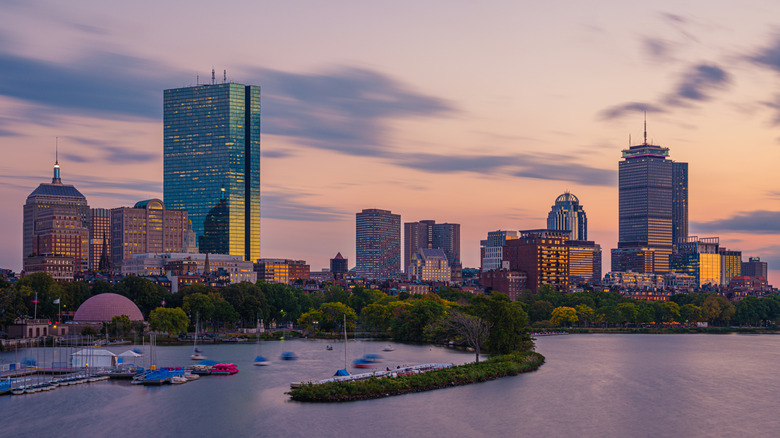
According to New World Wealth via Henley & Partners, Boston is home to 45,000 millionaires, 112 centi-millionaires, and eight billionaires, making it the eight wealthiest city in the U.S. It's also had one of the fastest-growing wealthy populations in the country, as its concentration of millionaires grew by 40% from 2014 to 2024. As per the City of Boston, revenue from property taxes totalled $3.3 billion in 2025. Given Massachusetts is a state with one of the highest costs of living for single people, that's not a surprise.
Access to some of the best educational institutions in the U.S. has caught the interest of many wealthy Boston inhabitants. As per a U.S. News & World Report ranking of the top universities in the U.S., two of the top three — Massachusetts Institute of Technology (MIT) and Harvard — are located just outside Boston Proper in Cambridge. According to the World Intellectual Property Organization (WIPO), the frequency of technological inventions, venture capital investments, and scientific publications coming out of the Boston-Cambridge area makes it the ninth most innovative area in the world. As there are high-paying career opportunities in each of these industries, it's no surprise the rich flock to the seaside town. Meanwhile, top-tier hospitals like Dana-Farber Cancer Institute and Big Pharma firms like Moderna make Boston valuable for wealthy individuals as invested in their health or biotechnical research as they are in the global economy.
New York, New York

Listed as New World Wealth and Henley & Partners' No. 1 wealthiest city in the U.S., it should come as little surprise that New York City also has one of the fastest-growing wealthy populations. An impressive 384,500 millionaires call the metropolis home, followed by 818 centi-millionaires, and 66 billionaires. Those on the New York side of the New York-Boston rivalry will also be happy to hear the number of NYC millionaires rose by 45% — 5% more than Boston — from 2014 to 2024.
As the home of Wall Street, its position as the financial heart of the U.S. — and arguably the world — is a major factor in its attractiveness to the top income-earners in the country. As per Savoy & Partners, the city houses over $3 trillion in private wealth, largely thanks to its proximity to capital and the luxury real estate. After all, New York is one the most expensive cities to own a house in the U.S. While this is bad news for people struggling to enter the housing market, it provides a lucrative investment opportunity to the select few with the means: According to Realtor.com, asking prices for luxury home sales for properties valued at $4 million and above totaled over $189.3 million for the week of November 30, 2025. Meanwhile, according to data compiled by UrbanDigs, luxury home values in Manhattan appreciate 3% more than non-luxury alternatives, and luxury homes in Brooklyn appreciate over four times more than more affordable Brooklyn properties (via Forbes).
Seattle, Washington
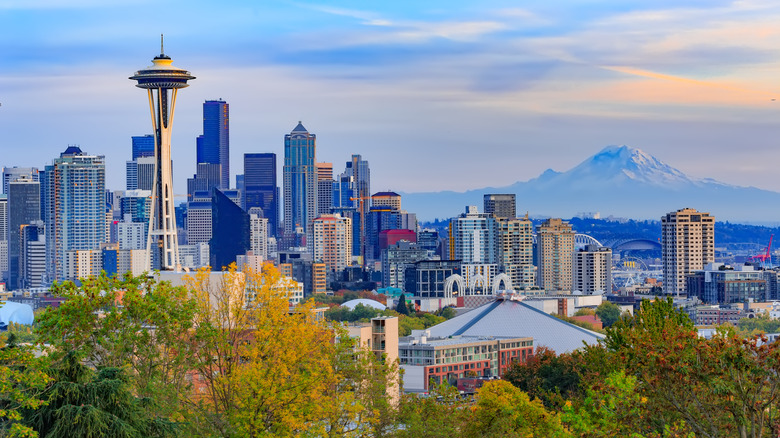
Across the board, Washington is one of several states with the highest median incomes in the U.S. But according to New World Wealth and Henley & Partners, the city of Seattle might be the most lavish area within its borders. Its wealthy individuals rose by 48% between 2014 and 2024, and as of December 2024, the growing number of income earners crossing the wealth threshold required to join the 1% include 11 billionaires, 127 centi-millionaires, and 53,100 millionaires.
According to JLL, 31 Fortune 500 companies are located in Seattle — Amazon, Google, Microsoft, Apple, and Meta all have offices there — helping to drive young, upwardly mobile professionals to the city. With 60% of office space being secured by tech companies, there's been a domino effect of escalating rent for startups. In other words, it's very hard for companies — and employees — that can't comfortably afford staggering expenses to get a foothold in the city. According to Payscale, the cost of living in Seattle is 45% higher than the national average, with the median cost of a home reaching around $1.09 million. Additionally, Washington State as a whole has no corporate or individual income tax, which allows those who can afford to live in Seattle the freedom to keep more of their money to themselves.
Houston, Texas
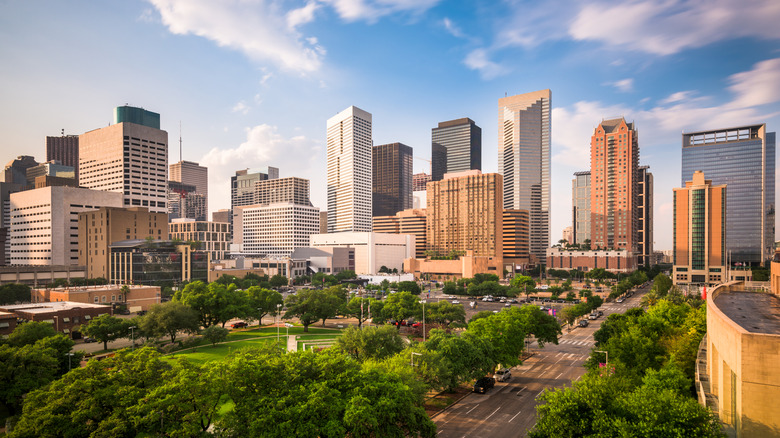
As its residents will surely attest, Houston, Texas, is one of America's most overpriced cities. While that makes life more difficult for the middle class, it suits the city's rising population of rich households just fine. New World Wealth and Henley & Partners reports that Houston's 10-year growth is represented by 81,800 millionaires, 210 centi-millionaires, and 16 billionaires — 75% of whom arrived between 2014 and 2024. And while the city itself is huge, you'll find several of the richest suburbs in Texas in the surrounding area as well.
High-dollar industries like manufacturing, aerospace, and energy all thrive in Houston. According to the Greater Houston Partnership, the city was responsible for $180.9 billion in exports in 2024, crediting the city's accessibility via land, sky, and sea as a large part of the community's economic success. Cloudavize reports that 52.1% of the city's trade centers around oil and gas, which is only supported by the fact that the Houston-based corporation ExxonMobil reported $36 billion in profits on its own in 2023. Similarly it's not uncommon for tech companies based in the area to clear nine or 10 figures in revenue in a year. Seeing as the Federal Reserve Bank of St. Louis reports the total gross domestic product of Houston in 2023 was valued at $697 billion, and the Greater Houston Community Foundation states that Houston alone makes up 26% of Texas' total gross domestic product, there's plenty of incentive for enterprising millionaires to swoop in and break a piece of this immense wealth off for themselves.
Dallas, Texas
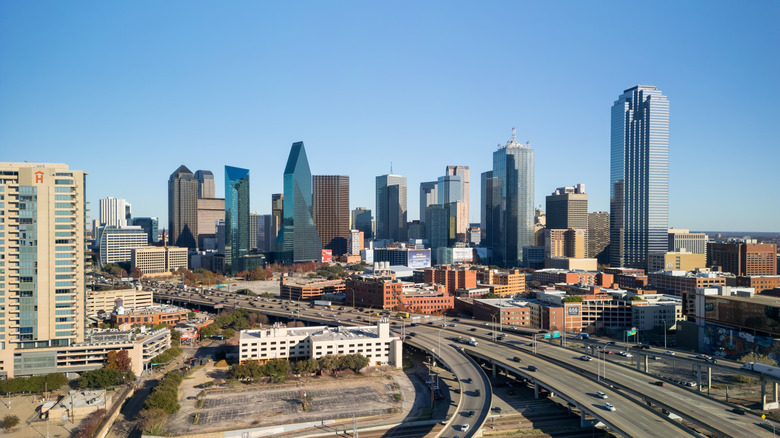
While the millionaire concentration of other cities on this list undoubtedly grew, that community shot up like magic beanstalks in a few areas. As New World Wealth and Henley & Partners point out, Dallas, Texas, is one of those cities. The wealthy population grew by 85% between 2014 and 2024, and the city of roughly 1.3 million is now home to 72,400 millionaires, 135 centi-millionaires, and 16 billionaires. In 2025, Chief Executive magazine crowned Dallas' home state of Texas America's best state for business. Looking at what Dallas has to offer does little to challenge that claim.
According to educational information technology website CompTIA's 2024 State of the Tech Workforce report, Dallas is the sixth largest tech industry in the country, with 360,322 employees as of 2024. As Dallas News reports roughly half of Texas' data centers are situated in the area, it seems to offer plenty of opportunity for those in the industry. The wealthy in Dallas live in enclaves like Highland and University Park, where The Living in Dallas Texas Team reports the average home is priced between $3 million to $50 million. According to the Federal Reserve Bank of St. Louis, the 2023 gross domestic product for the Dallas-Fort Worth-Arlington area in 2023 was just under $745 billion, while the City of Dallas reports that Dallas-Fort Worth was responsible for contributing 31% of Texas' total gross domestic product. With so much going on in and around Dallas, it's no surprise high-net-worth individuals flock there for a piece of the pie.
Austin, Texas
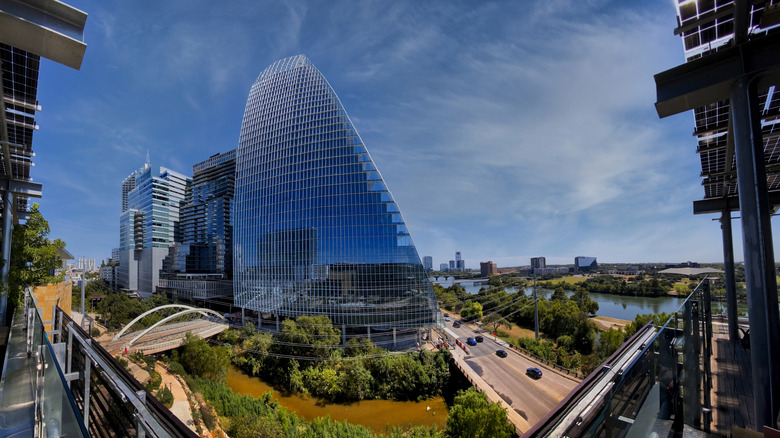
According to New World Wealth and Henley & Partners, the population of millionaires in Austin grew even more than it did in Dallas, increasing 90% between 2014 and 2024. With 32,000 millionaires, 90 centi-millionaires, and 10 billionaires, Austin boasts a large art and cultural scene that attracts people from all over the world. In addition to being known as the Live Music Capital of the World, there's a thriving scene for virtually every other artform, and plenty of museums, theaters, and clubs to enjoy them in.
In recent decades, the city has also earned another nickname: Silicon Hills. This came about due to the widespread influx of Big Tech, which may explain the rapid growth in its wealthy population. Major tech brands like Tesla and Oracle call Austin home, while many other huge companies also have offices in the city. So, a wide array of skilled workers cross into the city limits in search of the high salaries Fortune 500 companies in the area can provide. Meanwhile, Austin's finance community houses an enormous collection of venture capital and private equity firms circulating billions of dollars every year. As recently as October 2025, Silicon Hills News reported self-driving vehicle startup Avride was given $375 million in capital funding from Nebius Group and Uber as an addition to a multi-year investment arrangement between the companies. Though it's still a quaint college town full of restaurants and music at heart, with huge amounts of cash going around and no state income tax, it was only a matter of time before the rich caught wind of what the city has to offer.
Washington, D.C.

According to Henley & Partners, the Washington, D.C., metropolitan area is home to approximately 28,900 millionaires, 97 centi-millionaires, and 12 billionaires. This represents a growth of roughly 92% in its millionaire population over the past decade, a significant increase underscoring its appeal to a certain class of wealth.
While the Nation's capital is expected to lose a ton of money, that doesn't change the fact that it's still home to top-tier government contractors, media outlets, and private equity firms on top of being the entire nation's political center. The city's status as a global diplomatic hub ensures a steady influx of ultra-high-net-worth individuals, so even as unemployment in the district continues to climb, extravagant industries like luxury real estate continue to have capital flowing in. According to New York Magazine, the wide array of wealthy individuals President Donald Trump has brought to work in the area have a combined net worth $450 billion, and far be it from the rich and powerful to skimp out on housing. Even in the year leading up to Trump's inauguration, the Washingtonian reports that one local real estate firm, Heider, earned $487 million in sales, while some of its competitors brought in nine-figures as well.
Miami, Florida
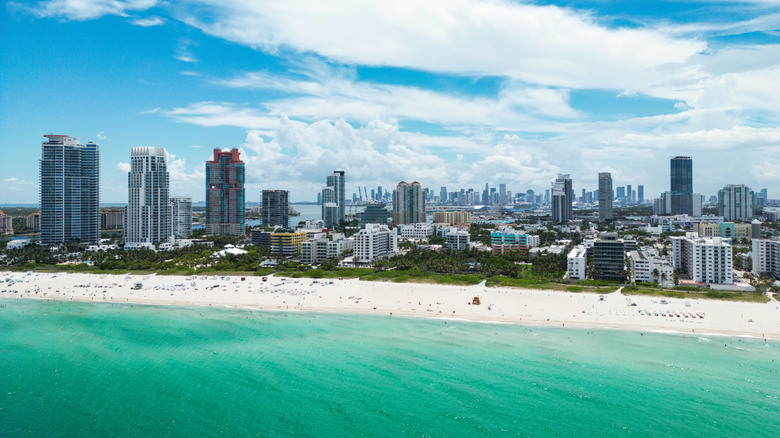
Miami has solidified its status as one of the new capitals of wealth in the U.S. According to New World Wealth and Henley & Partners, the city's millionaire population exploded by 94% between 2014 and 2024. With 38,800 millionaires, 180 centi-millionaires, and 17 billionaires, it's easy to understand why. Aside from existing in a state with no income tax, the city houses a higher right-wing political concentration than many other metropolitan areas on this list. So, it's easy to see why wealthy individuals in favor of a free market might flock there.
A city that was once just a popular retirement and vacation destination has grown into a serious hub for high-income earners and the tech savvy looking for work, investors, or financial services without having to deal with the tax-related expenses of other jurisdictions. Meanwhile, Capital Analytics Associates reports that convenient access to the Latin American market through shipping ports generated $40.3 billion in trade throughout 2023, suggesting Miami's sunny, seaside location offers more to its residents than a relaxing environment. The real estate industry in particular is thriving as of late, with Multi-Housing News reporting that commercial properties sold 30% more frequently in 2025 compared to previous years. Notably, much of the capital coming to the city this way is coming from overseas: Swiss, Brazilian, and Spanish developers have reportedly arrived, set up shop, and invested well over $1.1 billion into various projects.
The Bay Area, California
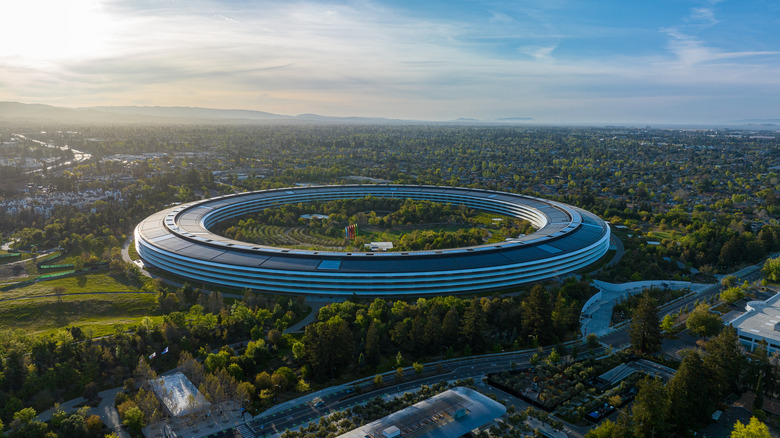
As New World Wealth and Henley & Partners' research supports, the San Francisco Bay Area remains the undisputed mecca of technological wealth creation. The famed home of Silicon Valley is where 342,400 millionaires, 756 centi-millionaires, and a stunning 82 billionaires — the most of any city on this list by a sizable margin — call home. Its millionaire population grew 98% from 2014 to 2024, which says a lot considering it's been a breeding ground for massively successful enterprises since the 1950s. And while the community is as famous for its high cost of living as it is for its rich inhabitants, the Bay Area's gravitational pull for elite tech talent and venture capital is stronger than ever.
Another essential piece to the Bay Area puzzle is the fact that it has plenty to offer outside of the tech industry as well. The National Park Service reports that the naturally beautiful Golden Gate National Recreation Area brought in 15 million visitors and $1.5 billion in 2023. Meanwhile, creatives and cultural consumers alike can enjoy museums, theaters, and live music to their heart's content. Of course, that doesn't make the area any less expensive. So, as much as the region has to offer, there's a pretty high financial barrier for entry. Some wealthy individuals may even see the fact that they can afford to live there at all as a pretty immense status symbol.
West Palm Beach, Florida
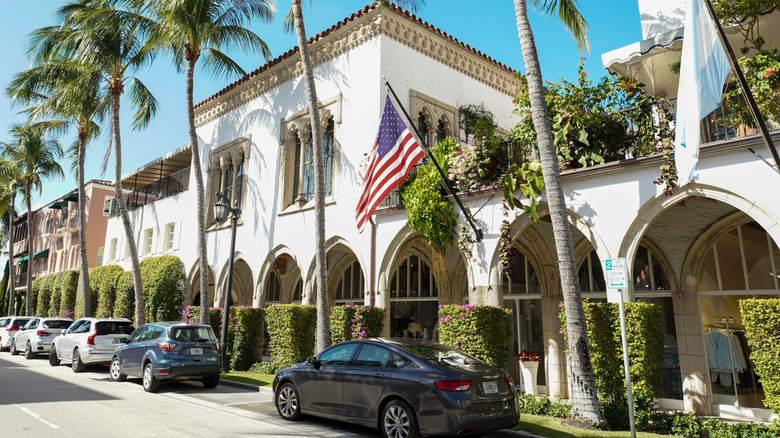
According to New World Wealth and Henley & Partners, West Palm Beach has seen an immense growth of 112% over the last decade where regional wealth is concerned. With 11,500 millionaires, 78 centi-millionaires, and 10 billionaires, this city had the second highest growth rate in the nation. According to Myer Lucas, West Palm Beach is becoming known by migrating New Yorkers as "Wall Street South," and it's clear why: Global Finance reports there are over 300 financial institutions such as hedge funds and investment banks in the area, offering workers in this high-dollar industry a wide array of options for potential employment.
West Palm Beach saw a major population surge starting in 2020, as individuals from around the country bounced to Florida to enjoy its more lenient treatment of the COVID-19 pandemic. The financial results of that influx are clear, as the Federal Reserve Bank of St. Louis reports a massive increase in the Miami-Fort Lauderdale-West Palm Beach area's gross domestic product in the following years: In 2023 alone, it reached $533 billion. On top of that, a new Cleveland Clinic branch opened up in the form of the Tomsich Health and Medical Center of Palm Beach County. Seeing as Newsweek ranked the original Cleveland Clinic in Ohio the No. 2 hospital in the world, that also added incentive for well-paid medical professionals to swarm the area.
Scottsdale, Arizona
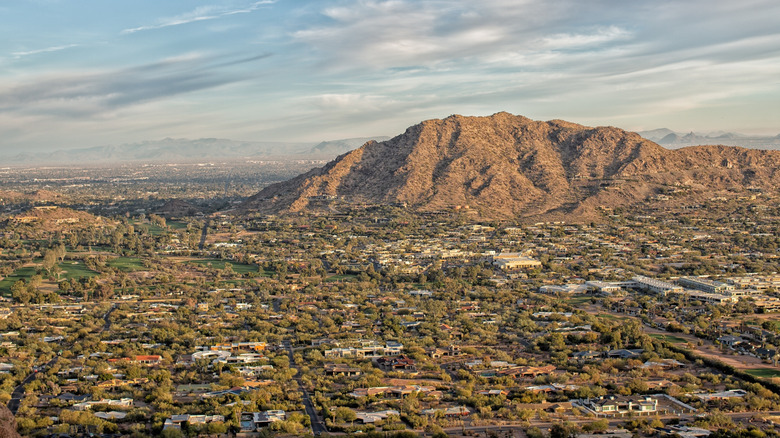
Topping the list as America's fastest-growing wealth hub, New World Wealth and Henley & Partners' study found that Scottsdale, Arizona, saw an extraordinary 125% increase in millionaires per capita from 2014 to 2024. Some 14,800 millionaires, 64 centi-millionaires, and 5 billionaires make their home in this corner of the Phoenix Metropolitan Area.
Scottsdale's success formula combines a rapidly expanding tech sector with the appeal of an affluent, wellness-focused lifestyle. Where industry is concerned, healthcare, insurance and finance, cloud computing, and semiconductor manufacturing all have strong representation in Scottsdale. As per Arizona Ascent, the arrival of Big Tech has brought billions in investment, with Taiwan Semiconductor Manufacturing Company (TSMC) and Intel earmarking $12 billion and $20 billion, respectively, to plant their flags. But perhaps the surest sign that Scottsdale is blossoming financially is the simple fact that so few people can afford it: Realtor.com lists the median home price at $950,000 as of December 2025. And while that kind of money may be a dealbreaker for some, its vast variety of outdoor activities and stellar hiking make this Arizona city a great place to retire whether you're a millionaire, billionaire, or just a fan of the desert's rolling hills.