

10 Reasons Retirees Regret Moving To A 'Low-Tax' State

The ultimate goal of retirement is to enjoy a comfortable lifestyle without financial burden. Though you may no longer have to worry about a traditional 9-to-5 job, taxes can still be a concern. After all, some sources of retirement income, such as your pension or 401(k), are still taxable. Likewise, you may have other financial concerns, such as medical bills or insurance payments. In an effort to make the most of your financial situation, you may decide to relocate to a low-tax state, a region of the country with no or very low income tax obligations. According to U.S. News & World Report, South Dakota, Florida, New Hampshire, Tennessee, Wyoming, Missouri, Texas, Oklahoma, Arizona, and Idaho ranked as the top 10 states with the lowest tax burden.
In addition to working Americans seeking to avoid higher taxes, these states have become popular destinations for retirees due to the lack of taxation on pensions and IRA withdrawals. Although these benefits are undoubtedly tempting to retirees considering a future move, some drawbacks could get overlooked, leading to serious disappointment. While many seniors move to lower-tax states and do well, there are various financial implications to keep in mind. After all, the money seniors save on taxes could turn into unexpected inconveniences and expenses. With that in mind, here are 10 reasons retirees may come to regret moving to a low-tax state.
Potential roadblocks to healthcare access

As much as Americans dislike paying out hefty taxes, these state and federal payments can have a massive impact not only on the quality of healthcare services, but also on their availability. Per Forbes Advisor, Arizona, Texas, Wyoming, and Idaho, all of which are low-tax states, ranked among the top 10 states with the least accessible healthcare for residents. In Texas, approximately 16% of people delay medical appointments due to cost; the state also ranks 10th among states with the fewest specialists per 10,000 residents.
For retirees in poor health or who have chronic conditions, moving to low-tax states might severely lower their quality of life. After moving to a low-tax state, retirees may find fewer hospitals, clinics, or specialists in the area than they would like. They may also struggle to access necessary medication or special procedures. Finally, it may take longer to get to and from appointments because there aren't any healthcare services located nearby.
For retirees who are very healthy and don't anticipate frequent doctor's appointments and other medical necessities, this might not be something to be too worried about. However, for a retired senior or their spouse, for whom quality healthcare access is an immediate and constant concern, it's crucial to know in advance what the low-tax state's healthcare infrastructure is, otherwise, it may lead to serious post-move regrets.
Will likely pay higher sales taxes
The phrase "low-tax state" or even "no tax state" is ultimately misleading. While it's true that a move to a lower-tax state may protect your retirement income in some ways, there are other means by which these states collect money from residents, including a higher sales tax obligation.
Caroline Bruckner, a tax professor on the Kogod School of Business (KSB) faculty and the Managing Director of the Kogod Tax Policy Center, shared insight into how several low-income tax states were able to function without this source of revenue from residents. As Bruckner noted, though Tennessee is technically a low-tax state, it also has some of the highest combined state and local sales taxes in the country, at nearly 10%. Meanwhile, state sales taxes account for 79% of Florida's and 56% of Arizona's public service funding. This data did not include any additional city-level tax obligations, potentially pushing the total obligations even higher.
Low tax states aren't exactly free of tax obligations. Depending on where you move, you could find your personal spending habits negatively affected, causing you to feel remorse about your chosen destination.
Might have fewer social services and support options available

The Association of Healthcare Journalists reports that the population of older Americans living in poverty continues to grow in many states. Though New York is not a low-tax state, researchers were still alarmed to find that the population of senior-age New Yorkers living in poverty increased by 50% within the last decade. They also noted that the number of residents 65 and older within the state was the highest it's ever been.
Ultimately, the story is similar across many states as the overall American population continues to age, and there are concerns about what happens when there are not enough working-age Americans to fund income tax revenue into the state and federal systems that pay for programs such as Medicaid. Even if retirees hope to head off these concerns by moving to states that don't rely on income taxes, the story will likely be the same, as these states may struggle to afford social services and support options that some retirees depend on. For instance, New Hampshire is a low-tax state, yet according to U.S. News & World Report it is currently capable of matching federal Medicaid spending on an even level, contributing 50% of program funding. Idaho, meanwhile, requires nearly 67% of federal government support to ensure its residents access Medicaid.
As for state-specific social services, there may not be enough public funding available to cover programs such as senior assisted living resources, transportation to and from medical appointments, or emergency funding for those in danger of becoming unhoused. As retirees are increasingly moving to low tax states, they may find that there is not enough tax money to fund the very programs they need, especially if they're relying on a lower, fixed income.
Low public funding may lead to poor infrastructure
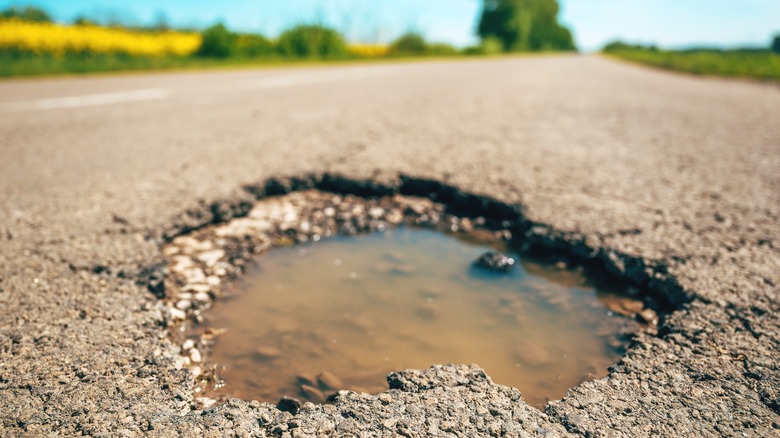
Retirees could regret moving to a state that, while low in taxes, simply does not have the funding necessary to improve roads or clear them following a heavy snowstorm. Nearly half of U.S. states reportedly lack the funds to pay bills, according to Stateline.org, and those with balanced budgets might focus on what is politically popular at the expense of properly paying local seniors or funding quality infrastructure relevant to their quality of life. Though the Biden Administration approved hundreds of billions of dollars in spending to improve U.S. infrastructure, some states continue to struggle. Texas may have no income tax, but it is also known for having some of the worst, most dangerous roads due to poor spending.
Relocating to a state like this can be jarring to retirees who moved away from a living situation where roads were repaired on time or cleared within a reasonable timeframe following severe weather. As such, low-tax states could seem like a great place to live on paper, but can lead to a regretted move if state funding is so poor that retirees have to endure riding on bumpy roads and unsafe living conditions during especially hot or snowy times of the year.
Domicile change may impact your Social Security benefits
A key point of consideration when moving to a different state is how it might affect your current Social Security benefits. As AARP notes, some states do levy taxes on Social Security benefits. While you may buy a home in a low-tax state with the intention of avoiding this type of situation, you could find that even with a move, you are still on the hook for tax obligations that impact your benefits.
The key is which location is recognized as your state domicile, or the main state of residency that you call home. This is extremely important, as your domicile is ultimately the place to which you owe the majority of state-level taxes. If you originally were a resident of Colorado, Connecticut, Minnesota, Montana, New Mexico, Rhode Island, Vermont, Utah, or West Virginia, your SSA benefits would be considered taxable. Should you move to a low tax state but not take the steps to change your domicile, you could still be on the hook for certain tax payments.
Some common missteps for retirees include holding off on a change of mailing address, failing to update voter registration, and getting a new state driver's license. These are important changes to validate your new home in the state you moved to as your primary state of residence. You could seriously regret not following through with updating your state domicile within the first few months, if not weeks, of a move, as you learn more of your Social Security income is taxable than you would like.
Could face additional tax obligations from sticky states
Some states like California and New York have garnered a strong reputation for pursuing taxes owed by former residents. These places are what's known as sticky states because the methods of defining residency aren't necessarily clear, and it can be very hard to prove you no longer have ties there. While taking steps to update your domicile may be enough to cover your Social Security benefits, these sticky states might decide you have not done enough to get off of the hook for taxes owed. While it is true that some of the most aggressively pursued current and former residents are remote workers, retirees may still find themselves dealing with a sticky state's residency requirements.
Some of the most aggressively pursued are remote workers or "digital nomads," who are able to earn a living in one state while living in another, or even abroad. However, under some circumstances, retirees may also find themselves coming to terms with trying to work out a complicated tax situation if moving from a sticky state to a new, low-tax home. For instance, if you're a recent retiree who worked remotely and traveled abroad, but then permanently settled in a state post retirement, you could still face unaddressed tax obligations if your former primary state of residence decides you haven't done enough to properly update your new domicile.
You must carefully check state laws to ensure that you no longer satisfy anything that could make that state claim your retirement income or any other taxable assets. Whether it's canceling memberships to local programs, selling property, or even closing local bank accounts, you have to take every necessary step. Otherwise, it may take some time to disconnect your finances from your previous state, and the process could turn into a costly nightmare.
Retirees without reliable transportation may struggle to get around

If you're a retiree who previously navigated around town using public transit, you may find that this option is not as reliable or even available in your new home state. Arizona, for instance, is sometimes ranked among the worst states for public transportation, with Phoenix noted for long wait times and gaps in service availability that make it hard to get around. At the same time, Dallas and Houston, Texas frequently rank among the worst public transportation systems in the country, with commute times averaging close to 50 minutes.
While some may not realize it, reliable transportation can directly affect the quality of life of retired Americans. Even if they no longer need a ride to work, they may still need to get to a medical appointment on time. Likewise, they may want to visit friends and socialize or attend senior-specific events or programs. Even if moving to a low-tax state increases their income, it can make it harder to get around if they don't own a vehicle or are unable to drive.
Could face high real estate and personal property taxes

Even if you leave behind taxation on your pension and IRA by moving to a low-tax state, you could likely relocate to a place where real estate and property taxes are incredibly high. Both New Hampshire and Texas have among the highest property taxes in the 50 states. According to Rocket Mortgage, New Hampshire has an effective tax rate of 1.77%, while Texas has a rate of 1.58%. The average annual property tax is $6,505 and $4,111, respectively.
Should you decide to buy a condo or mobile home in New Hampshire, you could find yourself experiencing an unexpected property tax hike. That's what Kiplinger reports happened to Rochester residents following a citywide reassessment that saw property values climb between 73% and 208%.
In addition to unanticipated and dramatic fluctuations in property taxes, it's also crucial to remember that depending on where you move, you could also be required to pay out HOA fees in addition to homeowner's insurance, and the yearly cost of maintenance and general upkeep. If your current pension and retirement savings doesn't allow for extremely high property and real estate fees, you might regret a move to certain low tax states.
Hidden fees could impact savings and day-to-day spending

Even if you manage to account for sales and property taxes successfully, there are other ways low-tax states move to finance themselves. Some states look to excise taxes, which add charges to everything from fuel to cell phone plans. These extra fees across multiple services add up over time, potentially eating further into your retirement savings than you expected, and faster than you or your spouse were prepared for.
In addition to hidden or less-than-obvious state taxes, be mindful of how your state will treat any 401(k) withdrawals; tax obligations can differ by location, and it's good to know what the rules are once you've changed your residency to the new, low-tax state. You also want to be sure you are reporting any withdrawals when you file your taxes, as failure to do so won't just lead to IRS penalties, but potentially state penalties as well.
It might not be the best move for low-income retirees

Another reason retirees may regret moving to a low-tax state is that it might not be the best financial move for them. In a 2024 opinion article for The Hill titled "The 'Low-Tax' Lie: States Hyped For Low Taxes Are Low-Tax Only For The Rich," Jon Whiten stated that, despite claims by news sources and politicians, the people most likely to move to and benefit from these states are wealthy Americans. Meanwhile, Whiten argued, middle- and lower-income households bore the majority of the tax burden.
One example is Florida, where the bottom 20% of resident income accounted for 13.2% of tax state's tax revenue. By comparison, the top 5% of Florida residents accounted for around 7.7% of tax revenue. Apparently, low-tax states Texas and Tennessee had similar issues, creating an inequality gap that lessens the living situation and affordability of these places for low income households while boosting the quality of life for the wealthiest residents. Not only is such a divide in tax burden outright controversial, but for retirees with little savings and very tight budgets, they may find themselves remorseful over moving to states that don't provide the financial benefits they had hoped. Prior to relocating, it's best to confirm that the low tax state will be a financial boon to your retirement experience and not a regretful bust.
If a move to a low-tax state isn't a good fit for your retirement lifestyle, you may be better off with a state that has some tax obligations, but where the burden is more evenly distributed across different income levels. It may likewise be better to consider a move abroad, as the U.S. has treaties with multiple countries that allow you to relocate without having to worry about getting taxed twice.