

Take These Crucial Steps Every Time You Get Paid

With every new paycheck comes a wealth of opportunities. Assuming you haven't been caught up in the cyclical trap of the payday loan, lots of choices come with a new influx of financial capital. Paying your bills is a must, but for many, that only accounts for a portion of their available cash. If you follow something like the model laid out by the 50/30/20 rule, you'll have 30% of your income to use on things you don't outright need to survive, such as new gadgets, getting lunch with friends, or going to concerts. Budgeting can benefit from ingrained flexibility, but there are some structural elements that can help support you even when additional financial stressors come into play.
This requires some basic and important financial responsibility. Taking these steps every time your paycheck hits your account will set you up for success even during leaner times. If you lose your job or need to take time off to care for yourself or a loved one, for instance, things like your emergency fund will kick in to help smooth over a downturn in earnings. Other steps you should be taking will give you more flexibility later on, and you'll thank yourself for taking them when a big purchasing opportunity comes around or you eventually arrive at retirement age. With these five steps in your payday checklist, you'll be ready for whatever life throws at you.
Calculate your essentials and explore what's leftover

The first step for any money management task is planning and visualization. As soon as you get paid, it's commonly advised that paying your non-negotiable bills should come first. Though not necessarily a requirement, you'll gain particular peace of mind by paying these off the same day your paycheck is deposited. Moving the cash required to cover your housing costs, electricity bill, internet, and other essentials out of the available balance in your account gets them paid right away and checks off a major financial task.
Starting with the consistent bills allows for additional clarity when working through the rest of your commitments and desires, too. Many workers won't receive the exact same salary figure with every check. The Bureau of Labor Statistics reports that almost 56% of American workers were paid on an hourly basis as of 2023. Therefore, more than half the nation's workers could easily see fluctuations in their work schedule leading to small differences from month to month. A budget isn't a monolithic framework with unyielding rigidity. Every month, you should be performing some small recalculations to assess where you are and where you want to be financially. Taking care of the big commitments first and then calculating your remainder will ensure your essentials are covered while giving you a clear idea of your real-time budget.
Add to an emergency fund for stability and confidence

The exact amount you should have in your emergency fund varies for individuals, but ideally it will be consistently evolving. Some months may require you to draw from the savings account, but most workers will want to regularly add to their pool. Emergencies and other unexpected needs come with little notice. When you aren't dealing with additional expenses, it's absolutely essential to continue adding to your cash savings so that when something does come up you're ready for it. YouTuber Nischa suggests separating your "quick solution fund" from your full emergency reserve, aiming for one month of expense coverage in this pool of resources. However you visualize your backup cash account, the importance of constantly adding money to it can't be overstated. Having to pull out a credit card or borrow money from a loved one to cover an unexpected cost can put you in a significant financial hole that's not easy to fix.
Even if you're only able to add a small amount with each paycheck, the habit of adding rather than subtracting is a powerful one that can help you continue moving in the right direction. Financial pundits like Dave Ramsey suggest saving $1,000 in your emergency reserve before moving on to other financial goals. This is a great milestone that most people can achieve without excessive financial sacrifice. An added layer of financial protection also just feels good, and once this step is part of your routine, you may find your entire attitude toward saving will change.
Strategize paying high-interest debts for long-term savings
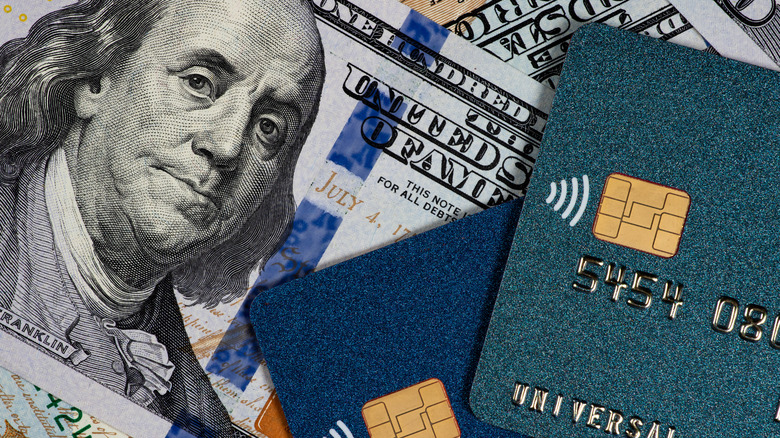
Paying your credit card bill on time each month is central to protecting your credit report and score, but those with high-interest debts need to go beyond that basic step. Even if you have already paid the minimum payment amount for the month, when you get your paycheck, it's a good idea to pay off even more of any loans that could be accruing high interest. The more you can pay in the present, the lower your interest bill becomes. As a result, you'll clear debts faster and at a lower overall cost.
A viable approach here is to utilize either the debt snowball or avalanche method. The typical credit card user in America has between three and four credit cards. If you're paying off three or four bills at the same time, it can be hard to navigate a successful clearance strategy. These approaches will see you prioritize one account and pay the minimum on the rest, moving on once you clear each account. The snowball method prioritizes the lowest balance first, while the avalanche approach tackles the account with the highest interest rate. Regardless of the strategy you deploy, focusing your efforts on attacking high-interest debts ahead of other purchasing decisions every time you get paid can help you manage these pain points more advantageously.
Save for retirement and consider employer match options

Even if you can only afford a small contribution with each paycheck, setting money aside for retirement is another non-negotiable task that you can't afford to minimize. Even so, Gallup found in April 2025 that around 40% of American adults don't have any personal retirement savings accounts. Without your own retirement savings to support your golden years, many of the things you might envision for yourself are taken off the table. It's true that Social Security checks will kick in to help ease your financial needs in retirement, but that program was never designed to completely support older Americans. Instead, it operates as a supplemental source of income.
The best time to start saving for retirement is yesterday. But barring time travel, today works just fine. Whatever you're able to contribute is a great start, and prioritizing this item on your budget with each new paycheck will slowly and steadily build your nest egg. The most important factor in saving for your older years is time, giving the money you've saved an opportunity to compound. Another helping hand that many can utilize is employer match options. Many companies offer an employer matching system that ensures the more you save, the more free money gets added to your account. If you can take advantage of your workplace's matching program, your future fund will build even faster.
Think about your next purchases on a longer timeline

If you're working with a healthy budget, you'll likely have at least some money left over for fun. However, if you've got $100 to spare on things like movie tickets or fashion every month, it might make sense to set aside some or all of this cash to leave more available for pricier indulgences later on. If you want to go to a playoff game to see your local team, for example, saving that extra money for a few months so that you can afford the ticket without dipping into a credit card account gives you the splurge purchase you want without any of the financial guilt of pulling out a high-interest debt product to make it happen.
Unless you're aggressively working toward a near-term financial goal like buying your first home or finishing off a credit card balance, these budget items offer an important change of pace. Keeping some room in the budget for a few expenses that deliver entertainment or relaxation to your life can help keep you from feeling like life is one monotonous slog. Rewarding your hard work can keep you looking forward rather than languishing in some of the more difficult aspects of the present. But keeping present wants balanced with the financial demands of longer-term desires is equally crucial. Sometimes it's worth it to minimize your fun budget for a short time to fund a vacation or experience, and each paycheck offers a fresh opportunity to explore this balance.