

You've Been Warned: This Gas Station Mistake Could Be A Waste Of Money
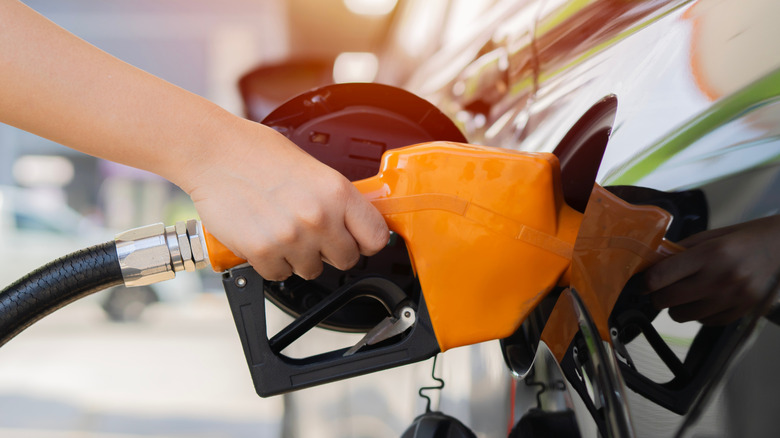
As of November 28, 2025, AAA Fuel Prices showed a national average gas price of $3.022, reminding many consumers how staggering the amount of money an average person spends on gas each month can be. Using data from the U.S. Department of Transportation, U.S. Census Bureau, the Bureau of Transportation Statistics, and AAA, Finance Buzz calculated that people typically spend 2.28% of their income on fuel. Paying fuel costs is unavoidable for drivers, but where and when to buy — along with which octane rating of gasoline you put in your vehicle — can impact how much you spend. You may be familiar with the labels Regular (87+), Plus (89+), and Premium (91+) — otherwise known as unleaded, super, and super premium, respectively — displayed at gas pumps. Those figures represent the amount of pressure needed to trigger spontaneous fuel combustion in a vehicle's engine. Higher numbers correspond with more stable fuel.
The fancy name "premium" may make it seem like high-octane gas would be the best choice for efficiency, performance, and safety. In reality, if you drive a typical passenger car, it's more likely to be an expensive form of overkill. Premium-grade gasoline is designed for high-performance engines, such as what you'd find in sports cars or certain pickup trucks. Your average passenger car probably doesn't need it, and some vehicles could even be worse off with premium gas in the tank. In other words, using gasoline that's of a higher octane grade than what's necessary may simply be throwing money away.
Other ways to save money on gas costs & mistakes to avoid

According to U.S. Energy Information Administration (EIA) charts, the price difference beteen lower-octane graded fuel and premium gas has been growing for years, with lower-octane fuel going for nearly 60 cents less than premium as of 2021. So, more than ever, you can save money by not using premium if your car doesn't call for it. To verify what you need for your vehicle, refer to your owner's manual.
Other tricks to save gas money include using an app like Gas Buddy to get the best prices in your area, using credit card reward points or gas station loyalty points when available, and ensuring that you have a well-sealed gas cap on your car to keep dirt out of your gas tank. Also avoid other driving mistakes that cost you gas money, such as driving too quickly or aggressively, idling for too long, or driving inefficient routes. Even tires that aren't properly inflated could be costing you at the pump: According to the U.S. Department of Energy, maintaining proper pressure can improve gas mileage, on average, by 0.6% with some people benefiting by as much as 3%. Using the motor oil grade recommended by the vehicle's manufacturer can boost gas mileage by 1-2%. Similarly, addressing engine issues promptly will likely save you fuel costs, and while replacing clogged air filters may not improve miles per gallon, it can improve your vehicle's performance.