

These Billionaires Lost All Their Money And The Reasons Couldn't Be Clearer
It can be difficult for the average person to quantify exactly how much $1 billion really is. As of 2026, Forbes reports there are 3,428 billionaires in the world. That's roughly .04% of the population of New York City, and a miniscule fraction of the entire U.S. population. Anyone who achieves a net worth of $1 billion or more likely possesses around 1,000 times more money than many Americans make in a lifetime. But somehow, many of the people who earn such astronomical wealth turn out to be perfectly capable of losing it.
As the wealthiest class of people, many billionaires' lives, relationships, business practices, and assets are matters of public discussion and controversy. Whether someone earned their billionaire status through technological innovation, wise investing, inheritance, or even alimony from a divorce, it's fairly easy to get the details of their rise to ultra wealth. However, a particularly special area of interest are those rare moments where someone manages to squander what should be an inexhaustible amount of money.
Just as the average person can't necessarily appreciate what it means to have at least $1 billion in the bank, many of us can hardly imagine going from being worth such an incredible amount of money to filing for bankruptcy or worse. Here is a list of billionaires who had it all, then lost it.
Bernie Madoff
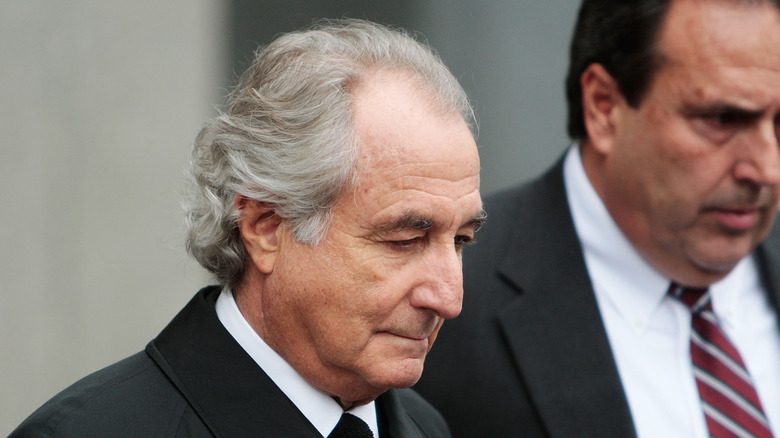
Bernie Madoff may go down as one of the most recognizable billionaire fraudsters in history. Before his downfall, Madoff was a celebrated financial expert known for keeping investors rich, regardless of how the markets performed. Unfortunately, in reality, Madoff used his firm Bernard L. Madoff Investment Securities LLC to concoct what some consider to be the largest Ponzi scheme in Wall Street history.
Madoff built his criminal empire by taking money from new investors to pay old investors. As thousands of people were roped in, sometimes through unwitting third-party entities, he was able to steal over $18 billion in funds. Some publications project that figure was as high as $65 billion, but that was only the amount of money he duped victims into believing that his firm had helped them collectively earn. It's not clear what Madoff's personal peak net worth was. Though court documents claimed he and his wife were worth close to $1 billion when caught, Madoff spent years funneling hundreds of millions in and out of his firm.
Though much of Madoff's schemes were shrouded in mystery, what was clear is that the Great Recession forced his decades-long scam into the light. When Wall Street buckled in 2008, worried investors tried to get cash liquidity. That's when many began to learn that their money was gone. Madoff was arrested in December 2008 and ultimately sentenced to 150 years in prison. Upon his death in 2021, Celebrity Net Worth estimates his net worth was minus $17 billion.
Patricia Kluge
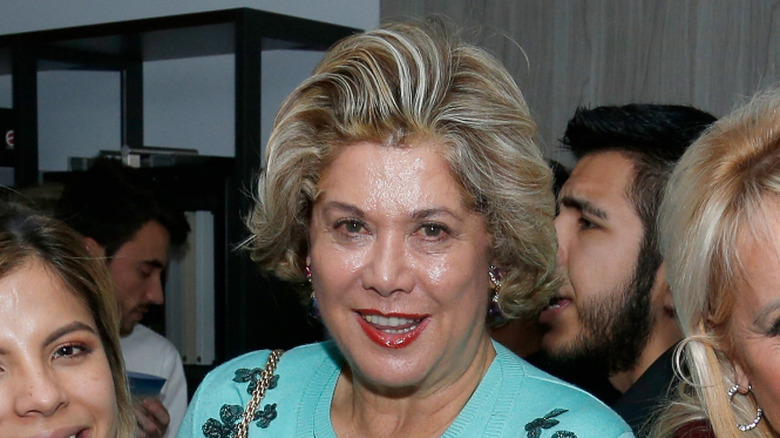
Patricia Kluge once enjoyed the glamour and prosperity that came with being part of a billionaire power couple. At least, that was life when she was married to media mogul John Kluge, who was once said to be worth at least $5 billion. When Patricia Kluge and her husband divorced in 1990, the media dubbed her "the richest divorcee in history." Though the exact details were never made public, Forbes estimated Kluge left the marriage with a massive 45-room estate in Virginia — which she once listed for sale for over $100 million — on top of a $1 million annual lifetime payout.
Speculation aside, multiple sources agreed that Kluge likely enjoyed a $1 billion windfall before she effectively squandered it. While Kluge's wealth was no longer what it was when she was married to her billionaire ex-husband, the divorce settlement allowed her to live comfortably for years. The problem is that her spending exceeded her alimony payments. Kluge hosted lavish parties and made heavy investments into her personal winery, borrowing against her huge Virginia estate. However, these habits were far from sustainable.
Her life of luxury came crashing down when the 2008 financial crisis hit. The poor economy caused severe money troubles for Kluge and her third husband, William Moses. By 2011, Kluge and Moses were forced to file for Chapter 7 bankruptcy. Kluge may never have imagined she would go from being part of a billionaire power couple to being remarried and destitute in roughly two decades.
George Huntington Hartford II
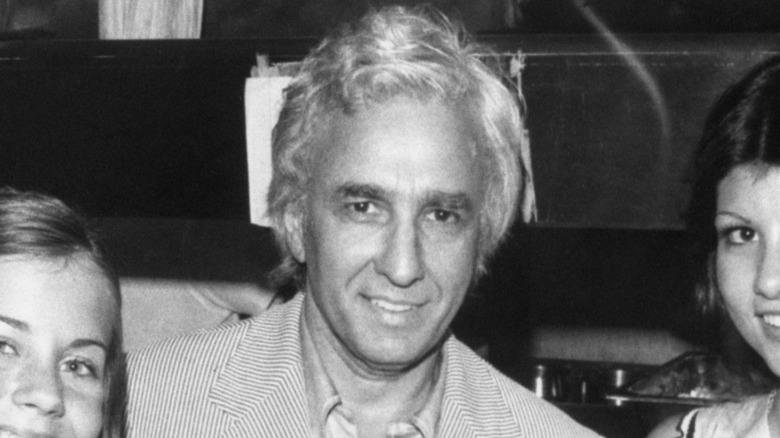
George Huntington Hartford II was an heir to the Hartford Family A&P grocery chain fortune. The A&P brand was once one of the most influential retailers in the United States, long before Walmart became a household name. Huntington Hartford reportedly inherited around 10% of this vast wealth while he was still a child in 1922. The Telegraph estimated those shares to be worth around $90 million at the time, or roughly $1.8 billion in 2026.
It was during his adult years that Huntington Hartford burned through his fortune. The A&P heir bought a private island and other pricey real estate, as well as expensive art and luxurious yachts. By the 1960s, Huntington Hartford garnered a reputation as a wealthy playboy and art enthusiast.
He lived fast and spent money faster, and a series of poor financial decisions ultimately caught up with him. He lost a large sum on his "Paradise Island" project, and was openly struggling with debt by the 1970s. These struggles ultimately culminated in a 1992 bankruptcy filing. Huntington Hartford would spend the remainder of his life living away from the public eye in shoddy conditions. He ultimately passed away in 2008, with just a tiny portion of his wealth still remaining.
Allen Stanford
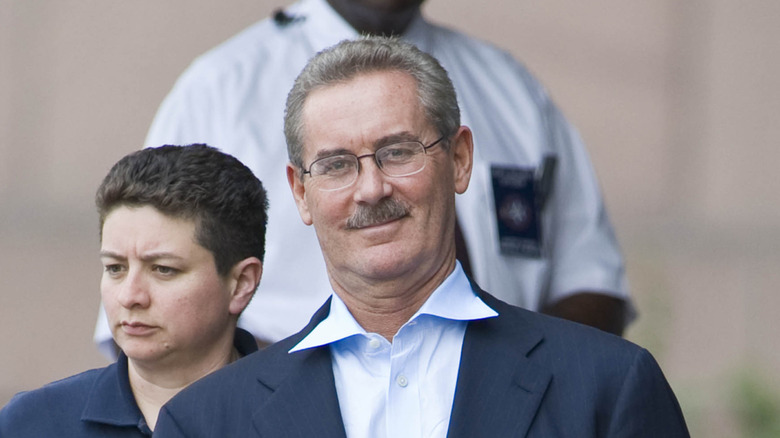
While some people made their billions on bright ideas or uncovering previously untapped natural resources like oil, Allen Stanford earned his riches a bit more aggressively. Stanford was born in Mexia, Texas. When the oil bubble burst in the '80s, he and his father reportedly seized the opportunity to buy up cheap land, launching a thriving real estate empire. He'd ultimately use a portion of this wealth to launch an offshore banking venture, Stanford International Bank, in the late 1980s.
Stanford did his best to dodge regulators, moving his company to Antigua in the early 1990s and even becoming a citizen of Antigua and Barbuda. That didn't stop him from making at least $1 million in donations to political campaigns for both Republicans and Democrats. He also spent his money on various stunts, such as the $20 million cricket match between the English national team and his own Stanford Super Stars. Despite his extravagant spending habits, Stanford managed to garner significant wealth: At his financial peak, he was reportedly worth about $2.2 billion.
Though he tried his best to dodge the U.S. government, his questionable business practices would eventually cause his financial ruin. In February 2009, the Securities and Exchange Commission (SEC) charged the billionaire with a number of fraud charges, claiming he'd cheated investors out of about $7 billion. Stanford's assets were frozen, and he was sentenced to 110 years in prison in 2012.
Jocelyn Wildenstein
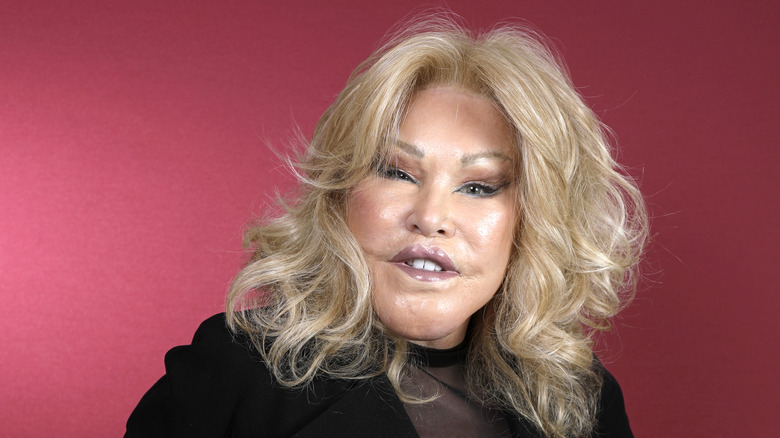
Jocelyn Wildenstein had an unforgettable face that the public will likely recognize from the covers of various tabloid magazines. Her unique look came from years of cosmetic procedures that spurred some to nickname the Swiss-born socialite "Catwoman." Others know her best for the windfall of cash she received following her divorce from billionaire Alec Wildenstein, whom she married in 1978. The two remained married until Alec divorced Jocelyn in 1999.
The split led to a hefty payout for Jocelyn Wildenstein: $2.5 billion. She also reportedly received millions of dollars per year from her ex-husband for over a decade thereafter. While many would have viewed this money as more than enough to live on indefinitely, Wildenstein's extravagant lifestyle likely set her up for eventual poverty. During her marriage, the socialite once claimed to Vanity Fair that she and her husband casually spent $1 million per month. Wildenstein continued to spend and live lavishly, even reportedly paying tens of thousands of dollars in phone bills each year.
By 2018, Wilderstein joined the long list of public figures who filed for Chapter 11 bankruptcy protection. She listed her bank balance as $0, and claimed that the only reliable income she had left were her $900-per-month Social Security checks. Wildenstein passed away in late 2024 at age 84, by which time the years she spent as a billionaire were little more than a distant memory.
Aubrey McClendon
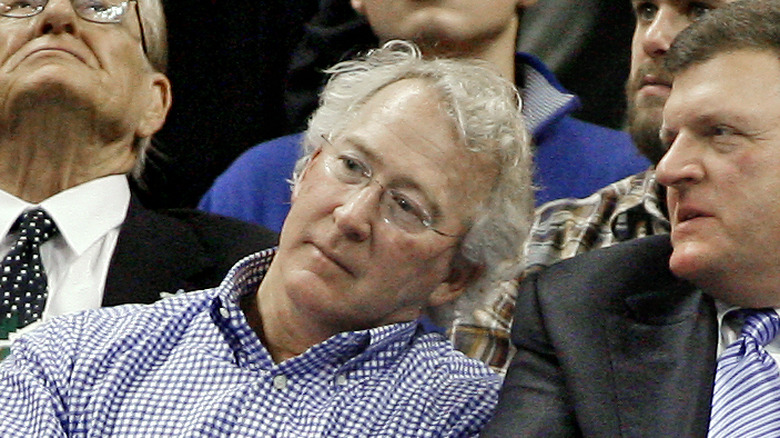
Aubrey McClendon's end was shrouded in mystery and tragedy, but before everything went wrong, he was considered a legend in the energy industry. McClendon founded Chesapeake Energy Corporation in the late '80s, and the company went public in 1993. His company managed to access previously untapped reservoirs of trapped natural gas, yielding hefty profits in the process. By around 2008, McClendon's personal net worth was reported at roughly $3 billion.
As his wealth increased, McClendon moved to expand his influence, donating thousands of dollars to the political campaigns of Democrats and Republicans alike. He also came to own a partial stake in the NBA's Oklahoma City Thunder. But like many on this list, McClendon's idyllic lifestyle got disrupted by the global economic collapse of the late 2000s. The price of gas and oil plummeted during the recession and with it, the stock value of Chesapeake Energy.
McClendon was among a class of billionaires that heavily leveraged their wealth, instead relying on margin loans, borrowing heavily against his company's stock value. When stock prices dropped, McClendon saw his billions evaporate and get replaced with a $500 million deficit. He ultimately left Chesapeake in 2013, only to be sued by his former business partners in 2015 for stealing trade secrets. Then in 2016, he was federally indicted for rigging bids for gas and oil leases. McClendon, only a day after his federal indictment, passed away in a fatal car crash. He died owing hundreds of millions of dollars to various creditors.
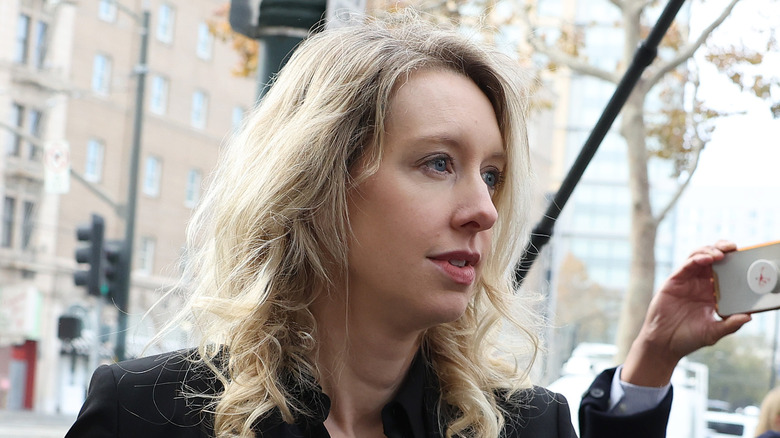
Elizabeth Holmes
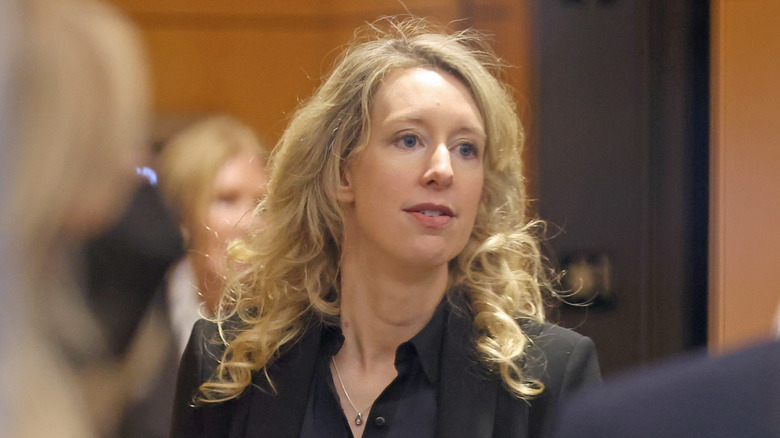
Prior to her criminal scandal and photos of Elizabeth Holmes leaving court, perhaps the most famous image of the former Theranos CEO was her black-and-white Forbes cover photo depicting her holding a tiny medical device next to her face. What it represented was an incredible promise: An advancement in medical technology allowing for speedy but effective tests to be run using just a tiny drop of blood. Theranos, which Holmes first founded in 2003, claimed its machines would make it easy for those with medical ailments ranging from diabetes to cancer to get the answers they needed without having to draw over and over.
The potential thrilled investors, and Theranos hit a peak valuation of around $9 billion. By some estimates, Holmes herself hit a personal peak net worth of $4.5 billion. Were Theranos actually able to deliver on its claims, there's no telling how much more could have been thrown at the brand. However, as suspicions were raised and damning details revealed, Holmes' carefully curated blood testing empire came crumbling down.
In October 2015, the Wall Street Journal published an article that revealed that the Edison, the blood testing machine at the heart of the Theranos brand, could not perform as advertised. By 2018, Holmes was out as Theranos CEO and charged with wire fraud. She was eventually sentenced to over 11 years in prison.
Adolf Merckle

If you truly want to understand the global ramifications of the Great Recession, the disastrous downfall and tragic end of German billionaire Adolf Merckle is a sobering case study. Merckle started his career as a lawyer, but took over his family's business in 1967. In 2008, Merckle was ranked No. 94 on Forbes' list of the world's richest people, having built his wealth on a range of business ventures and investments spanning the drug, machinery, and cement industries. His peak net worth was about $9.2 billion.
Things first took a turn for the worse in 2008, when Merckle's bet on Volkswagen stock didn't pay off — a risk that ultimately cost him the better part of $1 billion in losses. The weakened 2008 global economy also contributed to a significant drop in stock prices for HeidelbergCement, a company in which he owned a large stake. As his personal wealth spiraled, he also found it hard — and soon impossible — to pay off billions of dollars in mounting debt. In November 2008, Merckle tried to appeal to his local government for a bail out, but was denied.
In January 2009, Adolf Merckle took his own life at the age of 74. In the aftermath of his death, his genetics firm, Ratiopharm, was sold off as part of the continued effort to pay down his various debts. As for VEM Vermögensverwaltung GmbH, Merckle's holding company, it managed to weather the Great Recession era, and still exists in 2026.
The Hunt Brothers
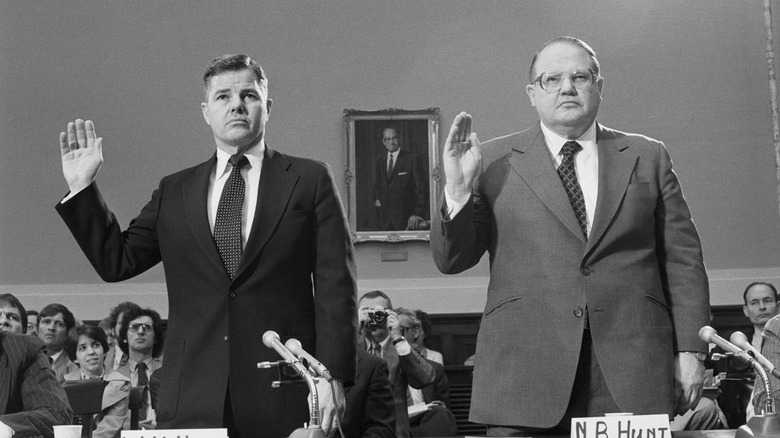
Brothers Nelson Bunker Hunt and William Herbert Hunt owed their initial wealth to their father, Haroldson Lafayette "H.L." Hunt Jr., an oil tycoon and self-made billionaire. After his death in 1974, his heirs inherited a fortune worth upwards of $5 billion, which served as the initial foundation for the Hunt brothers' wealth. Their scheme was straightforward and ambitious: Across the 1970s, the brothers purchased silver for less than $2 per ounce, ultimately buying up a sizable portion of the world's silver. The price of silver skyrocketed to a peak of $48.70 per ounce in January 1980. Exact estimates vary, but the Hunt brothers' silver empire reportedly peaked between $4.5 billion and $10 billion in value.
The Hunts' market manipulation tactics eventually caught up with them: Regulators enforced strict changes to the way silver could be purchased on margin, causing silver prices to undergo a steep decline. On March 27, 1980, now known as "Silver Thursday," the price of silver fell by over 50%. The pair saw their net worth spiral into $1.7 billion in debt. On top of this, Nelson Bunker Hunt and William Herbert Hunt (alongside brother Lamar) were forced by the federal government to pay over $130 million in fines to a Peruvian mining company.
The Hunts never hit the heights of their '70s wealth again, though the Hunt family as a whole remains supremely wealthy. Nelson Bunker ultimately passed away in 2014, and William Herbert died 10 years later at the age of 95.
Sam Bankman-Fried
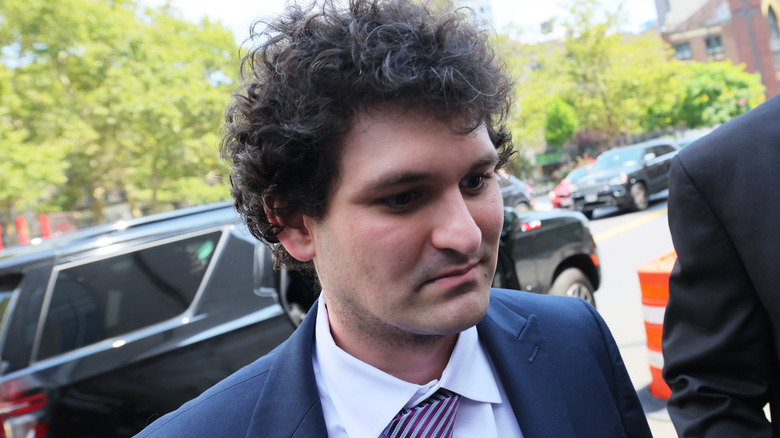
Former "King of Crypto" Sam Bankman-Fried had one of the quickest rises and sharpest falls of any CEO in American history. His story was something akin to a modern fairy tale. While plenty of people have lost fortunes to the fluctuating cryptocurrency market, Bankman-Fried's eventual bankruptcy was largely self-inflicted. Bankman-Fried, sometimes known as "SBF," was the co-founder and CEO of FTX Trading Ltd., a once prominent cryptocurrency exchange. Per Bloomberg, Bankman-Fried enjoyed a maximum net worth of around $26 billion.
While SBF largely came across to investors and the media as a fairly normal, nonchalant person, the goings on behind the scenes of FTX and sister trading company Alameda Research was anything but. According to Department of Justice (DOJ) records, Bankman-Fried and a small circle of co-conspirators defrauded investors of roughly $8 billion worth of funds by illegally taking money from FTX accounts and funneling it into Alameda. Lying to investors as he went, he used his clients' funds to spend on everything from political campaign donations to real estate purchases. Once the conspiracy was revealed, SBF was forced to forfeit $11 billion in wealth. As of 2026, the former FTX CEO has a personal net worth of $0.
Bankman-Fried was convicted on several accounts of fraud, conspiracy to commit fraud, and money laundering. In March 2024, he was sentenced to 25 years in prison.