

14 Mistakes People Make When Renting A Car

We may receive a commission on purchases made from links.
The United States rental car market is growing steadily, reaching a market size of $51.13 billion in 2026, up from $48.48 billion in 2025, according to Mordor Intelligence. Furthermore, that figure is expected to reach $66.72 billion by 2031, growing at an annual rate of nearly 5.5% between 2026 and 2031. Renters are seeing an increase in rental costs alongside this market expansion. The U.S. Bureau of Labor Statistics reports that consumer rental prices for vehicles rose by 9.1% between September 2025 and September 2026. Excessive market concentration helps to explain these rising costs: Auto Rental News suggests that Enterprise Mobility, Avis Budget Group, and Hertz account for 94% of the American rental car market together, leaving only 6% to other competitors (Via Travel Weekly).
In addition to the steeply rising premiums, drivers also face potentially costly mistakes when renting a car. Whether you've been renting cars for decades or you're preparing for your first time, pitfalls like overpaying for a rental booking, overlooking hidden charges, misunderstanding coverage limitations, and triggering avoidable fees can catch you and your wallet off guard. We've compiled 14 of the most severe and expensive mistakes people make when renting a car to hopefully save you some money and trouble ahead of your next booking.
1. Renting at the airport without comparing satellite locations
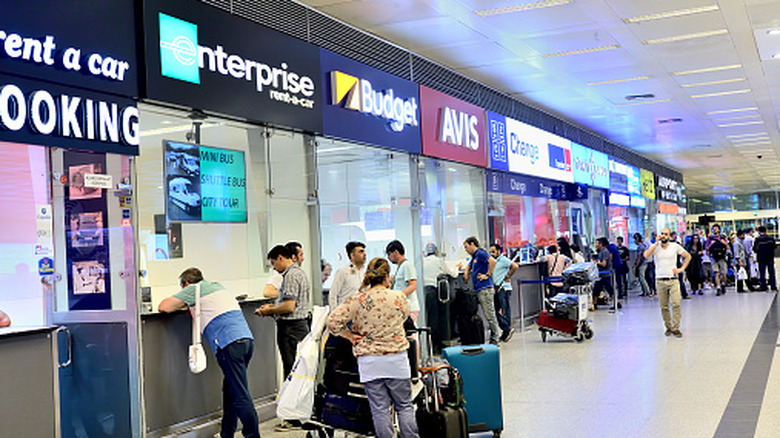
Many people understand that some locations offer cheaper car rentals than others, but even different rental locations within a relatively tight geographical area can make a difference in how much you're charged. Many American adults wind up renting a car as a means to get around while on vacation. If you've just arrived via plane to a destination, the airport itself may be the most convenient place to pick up a rental, but this practical choice can come with a premium compared to other nearby locations.
An October 2026 NerdWallet report determined that car rentals from neighborhood pickup locations were almost always more affordable than the prices found at the nearest airport. When booking 91 days out, these remote options saved drivers an average of $96.47 per week. This discount jumped to $195.38 over the same time period when booking a week in advance at a neighborhood location. The report also showed that satellite rental locations offered a lower price than airports in 86% of cases when booked a week out. So, it's at least worth glancing at non-airport rental car options ahead of your next trip. Even if you need to pay for a ride to get to the rental car, you could still wind up saving money.
2. Buying or declining insurance without checking existing coverage

One of the most confusing and frustrating parts of renting a car is figuring out the right insurance coverage. Generally, renters have a choice between purchasing coverage directly from the rental company, using a third-party provider, or relying on their credit card or personal car insurance to protect their rental. As no singular option is inherently the better financial choice, drivers need to dig into the details of each insurance plan to avoid the risk of being blindsided with hefty claims from an accident or theft. For reference, the Insurance Information Institute reports that the average claim for automotive collision, property damage, and bodily injury reached $5,489, $6,770, and $28,278, respectively, in 2024.
Drivers may assume that their credit card or personal car insurance policy provides sufficient coverage. However, if you don't verify exactly what your existing protection will cover for rentals beforehand, this assumption can leave potentially costly gaps in coverage. Many credit cards and auto policies have restrictions based on the type of car, the location of the rental, and the duration of the booking. If you're going to skip the rental car insurance, be sure you understand exactly what protections your other means of coverage will offer.
3. Ignoring the rental company's toll program
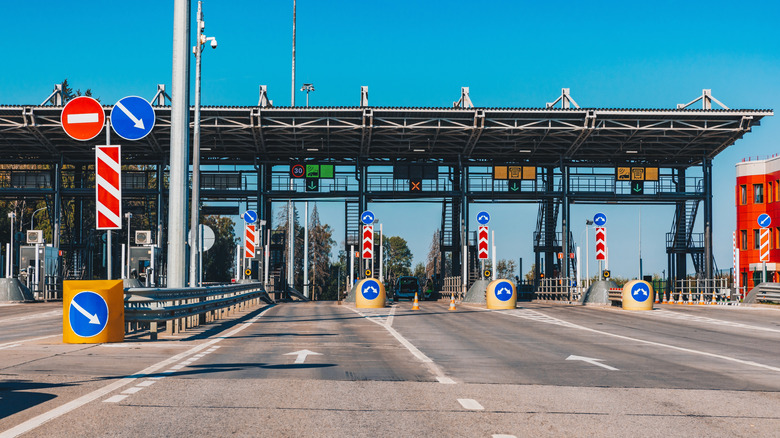
Another potentially hidden cost of renting a car involves toll programs. If you're taking toll roads, you may have a choice between enrolling in a rental company's toll program, bringing your own transponder, or paying cash at operated booths. Providers often equip their fleet with transponders, allowing renters to pass through automated tolls without having to stop to pay manually. However, this convenience can come at a cost: Rental companies often charge a flat fee on top of the toll price.
For example, Avis' e-Toll program charges $6.95 per diem, plus toll costs, on days when tolls are used. Though these fees are capped at $34.95 for each rental period with a limit of 30 days, that added expense is worth considering ahead of booking if you anticipate passing through toll booths. On top of base toll programs, companies sometimes offer extended packages. In Avis' e-Toll Unlimited option, drivers pay a daily fee between $10.99 and $25.99. Notably, toll costs and convenience expenses still apply. While these flat fees may not change, you'll still need to factor in the costs of the toll roads you'll drive. The most expensive toll roads in America can certainly drive up those rental car expenses.
4. Booking a rental car without comparing options or optimizing flexibility
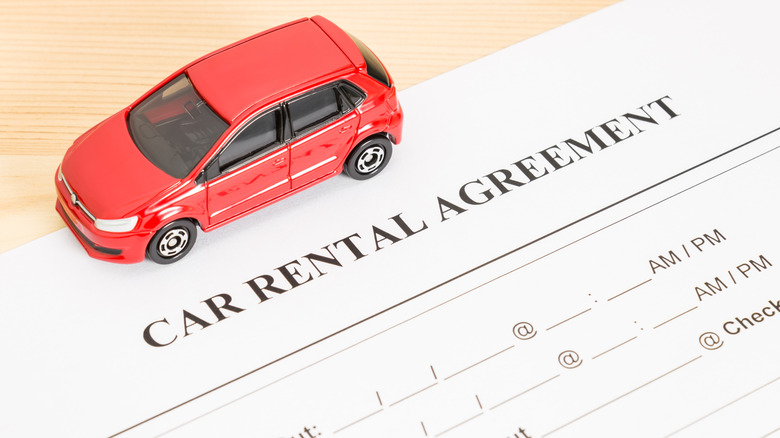
Renters can miss out on significant savings by failing to compare their options. Comparison sites such as Booking.com, Kayak, or Skyscanner can make it easy to compare costs between various providers for the same rental period and pickup location. For example, Kayak claims that drivers can save up to 40% by using its comparison tool, and even the cost of renting a car through Costco can offer significant savings compared to what you'd spend through major providers. But regardless of the platform you use, taking the time to compare various providers can often be a better financial decision than taking the first option you see.
If you're planning a trip well in advance, opting for rental agreements with free cancellation could also result in some significant savings. NerdWallet found that average weekly rates fell from $508.65 to $436.03 when booked seven days ahead instead of 52. That doesn't necessarily mean you have to wait to secure a rental car until one week before your trip. However, it does indicate that a flexible booking option allows you to continue comparing different offers, making it easy to lock in the cheapest option when it arises. This way, you don't have to rely on booking at the best time to rent a car to save a ton of money.
5. Looking at base rates instead of totals

Whether you're looking at a rental company's own website or comparison models, it's essential to pay close attention to your rental car's pricing throughout each step of the booking process. The initial rates companies show sometimes exclude add-ons, premiums, taxes, and other fees. Specifics vary by provider or comparison site, but all these factors could cause you to pay a lot more than you anticipated if you don't look closely. The Tax Foundation's extensive analysis found that the median rental car tax exceeded 11% across the U.S. in 2025. Renters in Colorado, Minnesota, and New York were hit the hardest, with the average tax crossing 20%. When looking only at rental fees and local taxes, the Tax Foundation concluded that a rental car's final cost can eclipse the base rate by 25% in major cities, adding over 50% in a handful of areas.
Skyscanner similarly reports that the total cost of a rental car can outstrip the advertised rate by upwards of 25%. While many of these additional fees are unavoidable, some renters may see their final bill creep even higher with optional add-ons. For example, Booking.com estimates that GPS systems can cost between $10 and $15 per day. Meanwhile, satellite radio could add another $5 to $10 per day. Infant car seats and booster seats may add upwards of $10 to $15 and $8 to $12 per day, respectively. So, be sure to keep a close eye on any potential additions to your rental you may be able to select in your booking portal.
6. Overlooking the under-25 premium

Young drivers are often charged a substantial premium over the advertised rental price due to their presumed higher liability. While a headache for younger renters, this widespread policy is backed up by revealing data that also informs why adding a young driver to your policy can cause your car insurance rates to rise. A 2024 report from the National Safety Council revealed higher rates of involvement in crashes for drivers under 25: Drivers between ages 16 and 19 were reported to be involved in 22 accidents for every 100 drivers, and those between 20 and 24 were involved in 16 for every 100 drivers. This rate dropped to just 12 crashes per 100 drivers aged 25 to 34, and continued steadily declining through every age bracket.
Since young drivers demographically represent a higher chance of collision, rental car companies often apply a daily flat rate. The specific prices and age limitations can vary by provider and location. Enterprise projects its average young renter fee comes out to roughly $25 per day for renters under 25. Over a week, this can drive up the total cost of a rental car by $175. Many Budget locations levy a slightly higher daily fee of $27, representing a seven-day add-on cost of $189.
7. Forgetting to budget for the account or credit hold

An often-overlooked mistake when renting a car is forgetting to budget for a potential security deposit. Just because you have enough to cover the full cost of the rental doesn't automatically mean you have sufficient funds to drive away with the car. Many rental companies block a certain amount of money on a debit account or credit card to protect themselves from potential damages and other costs. While these security deposits are only temporary holds, their return is contingent upon the car being returned in the time, condition, and place agreed upon. These temporary charges can block a renter's spending capacity if their balance is low or their credit limit is thin.
As with most rental car costs, these refundable security deposits can vary based on the provider, type of vehicle, rental duration, and payment type. For perspective, Hertz charges a hold of between $200 and $900 on credit cards and $500 for debit cards. At Enterprise, renters face a security deposit of $200 to $850 for credit cards. Avis charges a minimum authorization hold of $250 for both debit and credit cards. If you are charged for one of these deposits, make sure to hold onto your credit card statement, as these holds can take some time to be released.
8. Picking the wrong fuel option
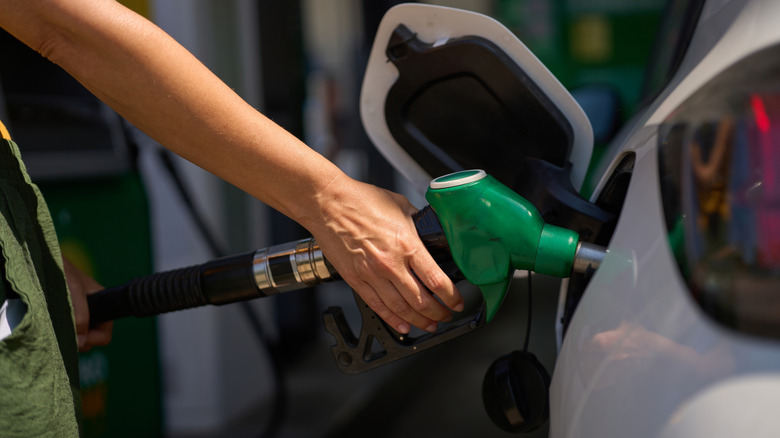
Misunderstanding refueling requirements can add an additional layer of surprise financial pain to renters. When renting a vehicle, you may have the choice between returning the car with a full tank, accepting the provider's refueling fee, or prepaying for a full tank so you can bring the car back on empty. This is another situation where, depending on your needs, there might not be an overtly correct option — but it's worth doing some research before you make a final decision. As convenient as returning a car without needing to stop to fill up the tank may be, it could wind up costing you more than you'd pay otherwise.
The cost of filling up the tank yourself depends on the vehicle's fuel tank, how much fuel you need, and where you're buying gas. Edmunds reports the typical passenger car's tank holds between 12 and 16 gallons. As of early November, AAA reports the nationwide gas price is $4.17 per gallon, placing the average cost of filling up a passenger rental car somewhere between $50.04 and $66.72. There's always the possibility that the rent-a-car service you use will charge more per gallon for fuel than a nearby gas station. So, even if spending the time and money to refuel the car ahead of bringing it back to the agency sounds unappealing, that may often be the cheapest way to avoid penalties.
9. Viewing the return time as an approximation

When booking a rental car, you're often asked to select a return time. Presuming this time is a suggestion rather than a fixed agreement can incur some unforeseen and costly penalties. Some rental car companies charge hourly, partial-day, or even full-day costs for late returns, on top of general late fees. Some rental agencies offer a 30-minute grace period, with no charges applying. But even if you return a car within this short window, you may still be on the hook for optional add-ons at a full day's cost, such as liability coverage.
Hertz notes that rentals from official locations will get hit with a $12-per-day late fee, capped at five days, in addition to the base charges you'd pay for the extended rental period. Similarly, Avis charges drivers a late surcharge of up to $15 per day. Barring extenuating circumstances, avoiding these rental car charges boils down to choosing a realistic return time before confirming your booking. Allowing for a buffer of an hour or so can help account for traffic, refueling stops, and other potential delays. Calling ahead of time to notify a dealership of a possible late return may also help reduce these fees.
10. Letting other people drive who aren't on the rental contract

Whether you're taking an extended road trip or have an enthusiastic passenger, you may be tempted to allow someone other than the renter to drive. Although some providers have carveouts for partners or spouses, an unpermitted driver can lead to additional costs and gaps in insurance coverage. Hertz charges $13.50 per day for an additional driver, with a cap of $189 per rental agreement. Similarly, Avis tacks on $13 per day to authorize another operator, although renting in some states results in lower or higher daily rates. Renters face a daily flat rate of $15 to add another driver when booking with Enterprise.
Typically, an authorized driver must go through the same procedures as the primary operator. This includes being present for pickup, showing a valid driver's license, offering a debit or credit card, and signing the agreement personally. Allowing unauthorized drivers to operate a rental car can void elements of your rental agreement and leave you financially liable for previously covered damages to the vehicle. To minimize your financial risk, always check beforehand to see if your spouse or partner qualifies as an authorized driver automatically, and add additional drivers to your rental before driving off with the car.
11. Not factoring in the costs of different return locations
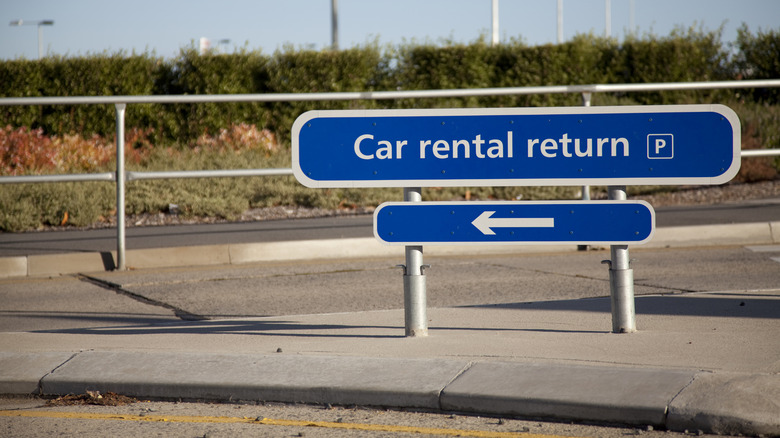
Not every vacation or business trip will end in the same place it started. However, returning a car to a different location than its original pickup point can result in additional fees, even when arranged beforehand in the agreement. For example, if you pick up a car in New York City and return it in Washington, D.C., you may incur a one-way return fee. These charges vary by provider, but represent a common industry surcharge. While usually levied as a flat charge, some companies increase the price based on the distance between pickup and dropoff.
For Hertz's basic car class, a one-way return within 100 miles doesn't incur any fees. However, anything beyond that can result in a charge between $50 and $750, depending on the distance. These rates increase for higher vehicle classes. Enterprise doesn't publish general rates, but confirms that one-way rentals are charged a single drop fee or an additional per-mile charge. Overall, Booking.com estimates that these one-way expenses can cost renters anywhere between $100 and $300, although some drivers have reported charges reaching $1,000.
12. Thinking every rental includes unlimited mileage
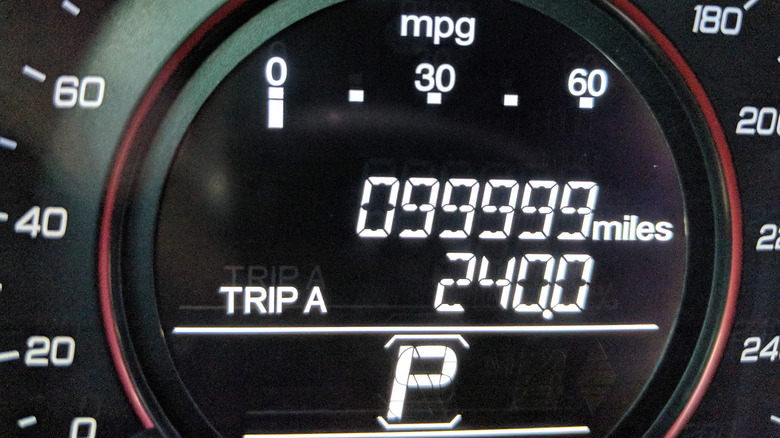
Another common mistake people make when renting a vehicle is automatically assuming that unlimited mileage is included in their total booking costs. Although many providers don't place a cap on how far customers drive during their rental period, some do enforce mileage limits. Instead of applying a flat rate, such as a smoking fee or gas charge, mileage penalties are commonly charged on a per-mile basis. In other words, the further you drive over a mileage limit, the higher the bill. Checking the agreement beforehand can save you from these surprise costs at the end of the rental period.
Typically, these distance limitations are placed on certain classes of vehicles, such as sizable SUVs, large passenger vans, and luxury models. For example, Enterprise levies a charge of between 10 to 25 cents per mile for every mile over the limit for certain classes of vehicles it rents out. So, if you rented something like a cargo van with only 1,000 miles included in the agreement, you could be charged between $50 and $125 on top of your booking's base costs if you wound up driving 1,500 miles. Paying attention to these mileage restrictions and their accompanying rates saves you from surprise costs, but it also gives you time to calculate potentially cheaper options if a given rental service's requirements don't suit your needs.
13. Smoking or vaping in the rental car

Tobacco use has declined dramatically over the past few decades, but a significant number of Americans still smoke. According to the Centers for Disease Control and Prevention (CDC), around 19.8% of American adults engaged with tobacco products as of 2022. Another 6.5% of American adults used electronic cigarettes as of 2023, per the CDC, and that figure has been rising over the years. If you're smoking or vaping when renting a car, you could see a hefty penalty upon returning the vehicle.
All major car rental companies have strict non-smoking policies, which explicitly include vapes and other forms of electronic cigarettes. Ignoring these written rules can lead to expensive surcharges. For example, Avis warns of a cleaning fee of up to $450, added on top of the original rental fee. Hertz applies a slightly lower smoking penalty of $400, but presents it as a flat fee rather than a maximum. Similarly, Budget applies a strict smoking ban across its entire fleet, and warns renters that its cleaning fees can reach up to $750 regardless of the cause.
14. Accepting an upgrade at the counter without question

Sometimes, car rental companies will offer drivers vehicle upgrades at the counter, even after a completed booking or successful payment. Even if you're interested in modifying your vehicle class, it's important to assume these changes come with additional costs. These recommended upgrades are common practice in the rental market to improve margins, and associates may even receive commission payments or other rewards for convincing customers to take them. However, they might not always make it clear upfront whether an upgrade comes with an additional charge, so it's essential to clarify if upgrading your rental booking will cost you extra before you commit to doing so.
While these optional upgrades can be presented in any situation, some renters may find their reserved vehicle class unavailable upon pickup. In the J.D. Power 2026 North America Rental Car Satisfaction Study, about 10% of renters discovered their reserved car type wasn't available at the counter. Momondo, a popular travel cost aggregator, shows the clear gap in pricing between different vehicle classes: For example, renting a small car costs an average of $34 per day, while the typical SUV or truck costs $60 per day. Luxury models are even pricier, averaging $81 per day to rent. If you're paying for a rental car membership, you may consider whether the subscription perks are actually worth it.