

The Type Of Car Retirees Shouldn't Buy New In 2026

There are plenty of great cars for retirees to consider. Some of the best-selling cars that meet retirees' needs tend to offer good gas mileage and reasonable purchase prices. Trucks, particularly brand new models, tend to make for a substantial departure from those fiscally responsible traits. Regardless of brand preference, new trucks deliver a decidedly negative value proposal for retirees, specifically. The average full-size truck sells for $67,573, according to September 2026 data from Cox Automotive. That's notably higher than the outlet's reported $50,562 average sale price across all new vehicles, meaning the upfront cost will immediately strain your drawdown strategy more than the average new car.
Almost everything about the pickup truck runs counter to what a retiree will likely need in an automobile. Trucks are generally taller and wider than other cars, which can make them a dangerous challenge for older drivers facing mobility or vision issues. Many of these risk factors can also make trucks significantly more expensive to insure than smaller vehicles.
Additionally, as they're specially designed with power and heavy hauling capacity in mind, they're historically prone to poor fuel economy. FuelEconomy.gov reports an average gas mileage of 28 miles per gallon across all 2026 model year vehicles used for combined city and highway driving, while many 2026 pickup trucks get around 20 miles per gallon at best. Assuming Fall 2026 fuel prices and 15,000 annual miles, the outlet estimates that truck owners can expect to spend around $5,000 extra — and considerably more, in some cases — in fuel costs over five years compared to an average vehicle.
Used trucks offer better valuer retention with similar utility
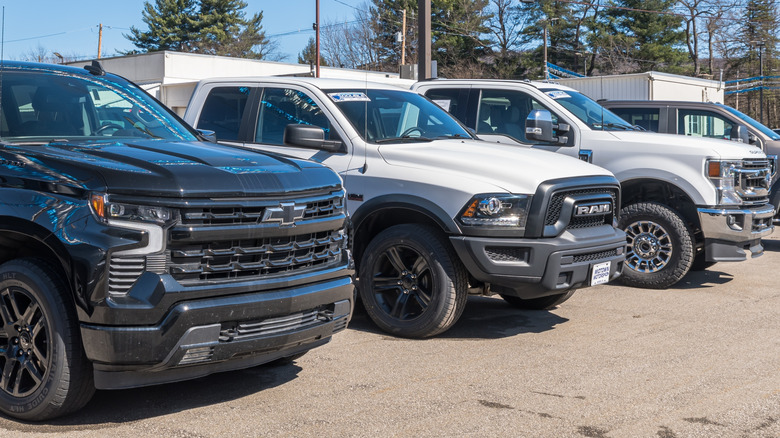
A retiree seeking to remain active with household projects or haul a travel trailer might find a truck's utility to be worth the increased ownership expenses, but older models can provide that versatility while remaining sound investments. Virtually every new vehicle sheds around 10% of its value the moment you buy it. However, trucks exhibit an unique trend regarding long-term depreciation: According to CarEdge data, at six years old, pickups emerge as the highest value-retaining option compared to sedans, hatchbacks, and SUVs. Even after 12 years, the average pickup retains 6.3% more value than the industry average. Cars are among the things you should almost never buy brand new due to how immediately their resale value evaporates, but buying a truck that's been on the market for several years could give you many of the same ownership perks offered by new models while allowing you to avoid that initial value drop.
Finn also reports that average vehicle dimensions have long been increasing, with the average 2023 model coming in 6 inches longer than the average 2020 vehicle and almost 1 foot longer than the average 2018 car. The Toyota Tundra, a popular and reliable truck, illustrates this phenomenon well: The 2020 model year is 228.9 inches long and features a 5.5-foot bed, while the 2026 model year measures 233.6 inches long, and features a 6.5-foot bed. However, the Tundra's towing capacity has seen little increase across these years — a trend present in other popular trucks as well. This suggests buying secondhand allows the early depreciation shock to run its course without sacrificing performance or safety.