

10 Reasons Retirees Regret Moving To The South

For many Americans, retirement means relocating to a warm, sunny state in the southern part of the United States. Many Southern states offer warm weather, sunny skies, and, in coastal areas, beautiful beaches that appeal to retirees. Florida, in particular, has maintained a decades-long reputation as a popular retirement destination. According to AARP, Florida remains a popular destination for older Americans, with 45,696 people ages 65 and older reportedly moving to the state in 2025.
While relocating to the South can work for many retirees, others may discover financial and lifestyle drawbacks they hadn't anticipated. Unexpected expenses, limited services, and distance from loved ones can make a seemingly ideal retirement destination less appealing. Several financial considerations, from insurance premiums to transportation costs, can complicate retirement in parts of the South.
It's true that states like Mississippi and Alabama have remarkably low costs of living. Yet, there are hidden costs that are either ignored or remain unidentified until it's too late. If you're a retired American weighing a move to the South, there are crucial factors to be aware of before relocating. Here are some crucial reasons why retirees regret moving to the South.
Very high homeowner's insurance rates

One major regret for retirees who move to the South is getting hit with remarkably high homeowner's insurance rates. Part of the reason this cost is so hard hitting is often, retirees move south with the hopes of finding affordable homes. States such as Mississippi, Arkansas, and Louisiana have relatively low median home values compared with many other parts of the country. Yet, some retirees may struggle to see the savings they anticipated, especially if they relocate to areas feeling the impact of ever-increasing insurance rates.
Some retirees who are especially remorseful about relocating likely bought property in states without realizing some parts of the South are really feeling the impact of worsening climate change. As Harvard Business School noted, climate-related catastrophes bring about a steady increase in home insurance rates. According to Insurance.com Florida's average annual homeowners insurance premium is $8,471, although actual costs vary considerably by location, coverage, and property characteristics. Things have gotten so drastic that, as Newsweek reported, Floridians express greater worry over insurance rates even compared to property taxes.
Another problem that could impact retirees who do pay out these high premiums is what comes next should the worst occur and they file their claims. There is, unfortunately, a very real possibility that insurers may reject their claims. This happened in 2025 when 14 Florida insurers found themselves criticized for allegedly refusing to pay half the claims filed by their customers. Retirees who move south may come to regret it if left holding the bag even after paying pricey home insurance premiums.
Greater car dependency and related transportation costs

According to the AAA Foundation for Traffic Safety (FTS), one in six drivers on the road is 65 or older. While driving helps many older Americans maintain their independence, some may eventually prefer to limit their time behind the wheel. Especially as drivers ages 65 to 69 are twice as likely to report having a medical condition than drivers ages 24 to 64. As senior drivers are at higher risk of car accidents relative to drivers in younger age groups, some choose to limit their driving to familiar routes, daylight hours, or favorable weather conditions.
For retirees that genuinely want to limit their driving or stop driving altogether, they may find themselves regretting their move to the South. If they aren't careful, they could instead find themselves living in heavily car-dependent towns. As it turns out, some southern cities like Houston, Nashville, and Atlanta have strong reputations as car-dependent cities. It's an unfortunate reality that southern cities are often car-dependent due to regressive zoning laws. These laws separate shopping, residential, and other areas so completely that a car is the only pragmatic way to get from one part of the city to the other.
An unfortunate side effect of heavy car dependency is the costs that come with fueling and maintaining a vehicle. Forbes reported that in 2026, the average cost of gas exceeded $4 per gallon. On top of coping with hefty fuel costs, being forced to drive everywhere may cause some retirees to strongly reconsider life in the southern United States.
Increased difficulty accessing reliable healthcare

According to an annual cost estimate released by Fidelity Investments in July 2026, a 65-year-old should expect to spend an average of $185,500 on healthcare and medical expenses throughout their retirement. Whether it's treatment for chronic health conditions or getting medications refilled, retirees will want to move to cities that provide excellent access to healthcare services. Retirees who settle near major cities or regional medical centers may have more healthcare options than those in remote communities.
The issue arises for retirees who relocate to the South and find themselves in small towns that lack reliable healthcare access. According to Beckers Hospital Review, over 700 rural hospitals are at risk of closing as of 2026, with 100 such hospitals already having shut down within the last ten years. A map shared by Newsweek revealed a troubling pattern: much of the danger is concentrated in the South. Rural communities in states such as Texas, Mississippi, Alabama, and Oklahoma face concerns about hospital access and financial sustainability. Even if a facility has yet to close its doors, a lot of hospitals across the region remain underfunded.
Retirees who relocate to affordable but remote Southern communities may face longer trips for specialist appointments, emergency treatment, and other essential medical services. It's an unfortunate balancing act where retired Americans may find themselves having to choose between an affordable home in a lovely town and poor access to healthcare services.
Strict HOA rules and hefty annual fees

Imagine you're a retiree with a quirky decorative style. In your previous state, you never lived in a community governed by a homeowners association (HOA). If you did, the rules were lax enough that you were allowed to live in a bright pink house, with unusual decorations taking up your yard. For such retirees, moving into a community with strict HOA rules can bring an unwelcome surprise.
As S.H. June & Associates shared in a blog post on the matter, southern HOAs are an entirely different ball game from what new residents are used to. Some Southern HOAs enforce strict rules concerning landscaping, exterior paint colors, and even mailbox designs. Likewise, there are also rules for what and how you park. For instance, some HOAs dictate that you're not allowed to park an RV in your driveway. Even when retirees abide by HOA rules, life in these communities can be annoying purely for financial reasons.
HOA members typically pay monthly, quarterly, or annual fees that cover expenses ranging from routine landscaping to shared amenities such as fitness centers. Though some HOA members appreciate the amenities that come with living in an HOA community, some homeowners complain that fees are way too high. One condominium association in Miami-Dade County reportedly charges owners $1,900 per month in association fees. For retirees that have to pay hefty fees and face restrictive southern HOA rules, it might be enough to make them wish they'd moved elsewhere.
Paying higher property taxes
One major selling point that motivates retirees to head south to states like Texas, Florida, and Tennessee is the lack of income taxes. Relocating to a tax-friendly state can help retirees preserve more of their retirement income. Texas, Florida, and Tennessee don't impose individual state income taxes, which means they don't tax Social Security benefits or distributions from traditional IRAs and 401(k)s at the state level. Mississippi is one of a few states that completely exempts retirement income for qualifying filers. As great as this sounds, some states without individual income taxes rely more heavily on other revenue sources, including property and sales taxes.
According to the Tax Foundation, Florida earns 34.8% of its revenue by collecting property taxes. Meanwhile in Texas, government data showed that in 2023, the state earned 46.05% of revenue through property taxation. For retirees who relocate there, it means that property taxes could be high enough to eat away at their retirement income. Florida retirees who own homes may also need to budget for property taxes, HOA fees, and insurance premiums, depending on where they live. What seemed affordable before the move could result in a personal cost of living crisis.
It may still be possible for budget-conscious retirees to find a budget-friendly retirement destination in the South. However, they'll want to keep an eye out on property tax rates. Otherwise, it could result in an unhappy move and a serious blow to their retirement income.
Sharp increase in energy bill payments
In recent years, Americans may have come to recognize a startling trend regarding states touted as the most affordable. Relocating to these states can sometimes mean experiencing a sharp increase in one's energy bill payments. For example, LendingTree released a report in 2024 that found 34.3% of Americans had cut back on or skipped necessities to ensure they covered energy bills. LendingTree's findings also highlighted substantial difficulties paying energy bills among residents of several Southern states. States that earned a specific mention from LendingTree were Mississippi (44.5%), Alabama (44.3%), and Oklahoma (42.1%).
For retirees who move South, a sharp increase in utilities, especially related to energy or electricity costs, could come down to cooling costs. It's no secret that it gets very hot in southern U.S. states. n some parts of Texas, average summer high temperatures can reach the mid-to-upper 90s. Even as retirees move to warm states to escape ice and snow, extreme heat can represent its own severe threat. As such, retirees will crank up the air conditioning for weeks at a time during excessive heat waves, if only to avoid illness.
Even though this step is necessary to maintain their health, the consequence will show up on electric bill payments. To avoid experiencing such a sharp increase, it may be necessary to check which areas of the South are most prone to heat waves. If already in the process of relocating, retirees should strongly consider working with an energy broker to find the lowest rates possible.
Added costs to visit family and friends

Retirees who move far from their existing social circles may miss the friends and family members they no longer see regularly. One seemingly obvious solution would be to plan to visit them periodically. However, thanks to rising travel costs, this is easier said than done. According to a CNBC, airfare prices rose 23.4% between August 2025 and August 2026, potentially making visits to distant relatives more expensive. Meanwhile, Moneywise determined airline fare costs for domestic flights are rising twice as quickly as international flights.
Even if you budget ahead of time for a family reunion or holiday travel, there's no guarantee of how much ticket prices could increase. That's without considering the cost of renting a vehicle, paying for a hotel, food, and other expenses. Even if retirees have enough income to travel, that doesn't mean that the same is true for family members and friends. Retirees may find themselves regretting a move South if only because their loved ones aren't able to afford to visit them very often.
Increased chances of expensive property damage
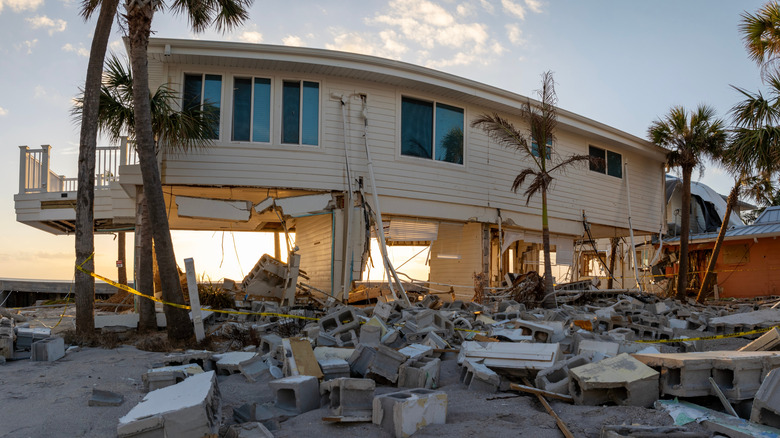
A report by Oxfam America looked at the ways the southeastern United States is vulnerable to weather and environment-related disasters. The report identifies several major climate-related threats affecting parts of the Southeast, including hurricanes, sea-level rise, drought, and flooding. Alongside many of these common disasters is the risk of experiencing severe and expensive property damage.
Hurricane-force winds tear the roofs off of houses. Rising sea levels and coastal erosion can threaten beachfront properties. Flooding ruins homes, damages furniture, and can even carry away vehicles. Constantly having to cope with one of these potential issues is stressful enough. Yet, retirees who moved South will find multiple weather or climate issues that could lead to expensive property damage. Moreover, it isn't a one-time issue, but instead becomes a yearly concern. With this bleak reality comes the constant worry about whether they have enough money in their retirement savings to recover following a devastating hurricane.
As of 2025, some estimate the cost to completely rebuild a home lost to disaster to range between 135,000 to $525,000. For retirees without adequate insurance coverage or emergency savings, substantial rebuilding expenses could place serious pressure on their finances. Even if retired homeowners are lucky enough to avoid severe damage, they may still find themselves having to pay hundreds of extra dollars per year thanks to climate-related disasters.
Paying higher sales taxes

Retirees moving from states with relatively low sales taxes may encounter higher rates in some Southern communities. Per USA Today, Mississippi and North Carolina are among nearly a dozen states that chose to slash personal and corporate income taxes while significantly increasing sales taxation. According to the Tax Foundation's July 2026 figures, several Southern states have relatively high sales tax rates, although rankings differ depending on whether state-only or combined state and local taxes are measured.
The thing about sales taxes is that they can impact day-to-day expenses in ways that retirees aren't expecting. For instance, certain streaming services are subject to sales tax in Texas. Retirees who move there and pay for Hulu, Netflix, or another qualifying streaming service will find an additional sales tax added to their monthly bill. Excise taxes on certain purchases, such as gasoline or alcohol, can also affect a household's budget.
Sales and excise taxes can add up over time, chipping away at a retiree's savings. As time passes, retirees may find themselves feeling annoyed at "overspending" based on budgets that worked in their original state, but not in their home in the South.
Getting caught up in a post-disaster scam

As previously mentioned, retirees who move to the South may have to contend with expenses directly tied to environmental and natural disasters. They may also face the risk of scams targeting homeowners in the aftermath of major disasters. The Florida Department of Agriculture and Consumer Services warns that fly-by-night contractors may go door to door in disaster-affected neighborhoods offering repair services. They often request a deposit to start work, claiming victims can make a final payment after the repairs are made. Retirees may hand over money, only for the fake contractor to disappear.
The Government Accountability Office (GAO), has highlighted the prevalence of attempted scams following disasters, including fraudulent contractors, government impersonators, and other schemes targeting survivors. Aside from fraudulent contractors, retirees could find themselves vulnerable to insurance scams, fake rentals, government impersonators, and identity theft attempts.
It's an unfortunate reality that, as GAO points out, in the immediate aftermath of a serious natural disaster, there's a lot of confusion on the ground. There are going to be real agencies and charities doing their best to help. However, this is also a perfectly chaotic environment in which scammers are able to slide in and take advantage of flustered and trusting residents. Residents should verify contractors' licenses, insurance, and business credentials rather than relying on uniforms, logos, or identification badges alone. Retirees unfamiliar with local contractors and emergency services may benefit from taking additional precautions before hiring anyone for repairs.