

Canada's Latest Interest Rate Decision Comes With A Warning About The US
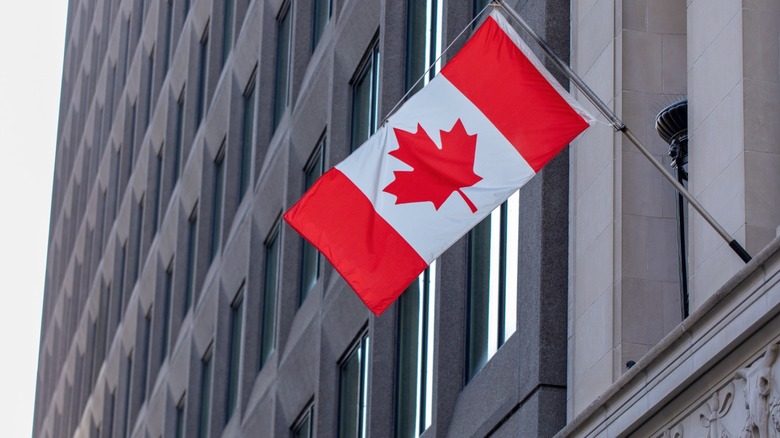
The Bank of Canada — Canada's equivalent of the U.S. Federal Reserve — announced on September 2, 2026 that it would be keeping the county's interest rates the same, holding its targets at 2.25% for the overnight rate, 2.20% for the deposit rate, and 2.5% for the Bank Rate. The decision amounts to a wait and see approach while the country weathers global uncertainty surrounding its neighbor to the south, and it comes with a warning that Americans should be paying attention to. As Bank of Canada Governor Tiff Macklem said in a press conference on the matter, "The added uncertainty about the future of Canada-US trade relations may lead businesses more broadly to delay investment and hiring decisions."
These deferred investments, and jobs, would affect both sides of the border. One of the Bank of Canada's main concerns is tariffs, and how the ongoing trade war with the U.S. is driving a social and economic wedge between the two nations. Despite the fact President Trump's tariffs have been controversial since their inception — with some even causing Republicans to break with the president earlier in 2026 – he implemented an additional round of 50% levies against Canadian goods in September 2026. This lead Canada to respond with its own dollar-for-dollar counter tariffs.
However, not only is the U.S. Canada's largest trading partner but Canada is the U.S.'s second-largest trading partner. As such, in addition to delaying economic stability for both countries, ongoing tariffs also increase costs for consumers, disrupt supply chains, and discourage business interests.
How the Iran War is also contributing to the strain
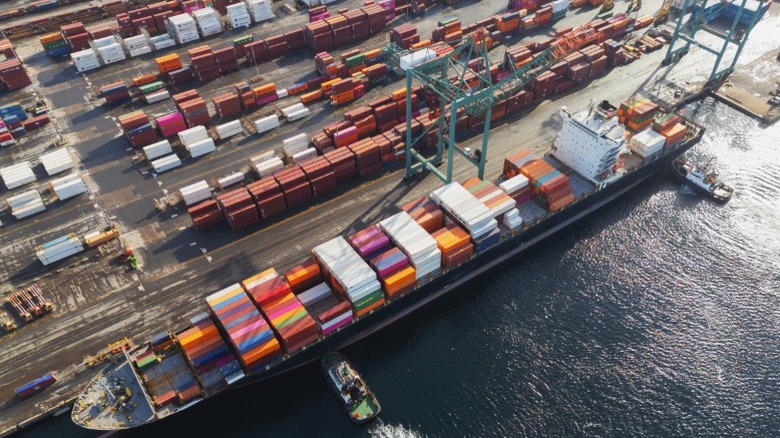
The Bank of Canada described the U.S. war with Iran as a factor in its rate decision, and this should also be an alert for Americans. It's no secret that the Iran war has triggered an oil supply crisis, driving up prices in Canada, the U.S., and much of the world as a whole. This is fueled by the fact that the Strait of Hormuz has been heavily restricted, or outright closed to, commercial shipping traffic since February 2026, when the U.S. and Israel first launched strikes against Iran. This has instilled deep distrust in the U.S.' ability to handle the conflict, and the Bank of Canada even called out a lack of American progress in reopening the Strait of Hormuz in its rate announcement, noting that the ongoing conflict risks driving inflation up even more.
The Iran war being mentioned as part of Canada's rate decision shows a weakening faith in the U.S.' ability to prioritize global economic wellbeing. Perhaps even more concerning than delayed investments and jobs, Canada's decision could also be a warning that the U.S. has lost its status as a trusted global leader. In fact, the Canadian government has already begun strengthening its foreign partnerships, outside of North America. Canadian Prime Minister Mark Carney has been courting Asian and Middle Eastern business partners while actively working on strengthening alliances in Europe. If the U.S. continues to strain its foreign relationships while Canada focuses on strengthening them, it's the U.S. that's likely to be left behind economically.