

Rick Steves' Top Money Tips For Retirees Traveling In Europe
Exploring Europe is a dream for many retirees. With a new level of free time and, in many cases, the cash reserve built up to support longer trips, exploring Europe in detail is far more attainable for many travelers at this stage in life. However, that doesn't mean you shouldn't leave for your trip without a clear financial plan. Per his website, Rick Steves has been establishing himself as "America's most respected authority on European travel" since the 1970s. Unsurprisingly, he has lots of excellent tips for people looking to put together just about any sort of European vacation.
Steves helps people make the most of their time in Europe without breaking the bank. Even for those who exhibit the financial signs of being upper-class retirees, who may have plenty of available capital to support luxurious travel, keeping things within a budget is crucially important. Your savings balance isn't an unlimited fountain of financial support, after all. Retirees of all stripes will need to consider the most appropriate drawdown strategy for their resources and needs, sticking to the contours of that cash flow reality in the process. These are some of Steves' most useful financial tips for stretching your dollar as far as it will go while in Europe. By adhering to these strategies, retirees can maximize their enjoyment without overcomplicating drawdown efforts, disrupting their retirement income tax liability management, and more.
Use bank-owned ATMs to take out cash, not exchanges or your home bank

In the modern banking ecosystem, many ATMs with a bank's name printed on the side — as opposed to independent ATMs — will provide fee-free withdrawals. This is often advertised on the ATM directly, helping you to identify the lowest cost option with ease. If you happen to find one that does charge a fee though, it will ask to confirm that you're happy to pay the fee before completing the transaction. Profee projects that going through an ATM that does charge fees can cost you as much as €10 — or around $11.56 — per transaction, so this is an important thing to get right.
These tools also tend to deliver better exchange rates than just about any alternative resource for securing cash. I've lived in Europe for the better part of the last decade, and as far as I can tell this is because the transaction is treated like a basic payment, whereas ordering cash from your home bank or heading to an exchange desk will see you subjected to exchange-specific conversion rates in addition to the outlet's markup. Rick Steves says that by using this method, "[you'll] get your cash cheaper and faster." Similarly, he estimates that travelers could lose around 5% of any cash they try to exchange for foreign currency at a cash desk. The markup can be extreme, leaving you with notably less funding available when the alternative might not require any extra legwork at all.
Plan multiple, smaller cash withdrawals if possible
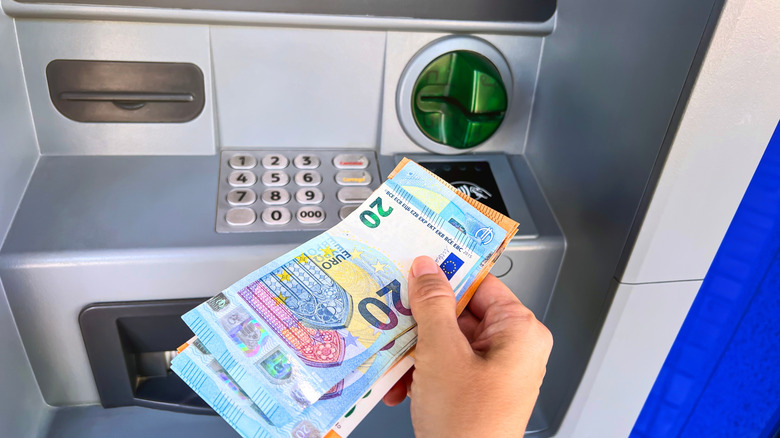
A retiree thinking about streamlining the errands involved in their trip might consider taking out one large, lump sum of cash right away. This will undoubtedly make sourcing cash simpler, but it comes with some serious question marks. For one thing, it's impossible to accurately predict how much cash you'll actually need, so withdrawing bills in bulk could leave you with far too much leftover at the end of your trip. On the other hand, you may find that you need more, defeating the purpose of the approach entirely. There's also the threat of a lost or stolen wallet. Rick Steves notes that pickpockets are fairly active in many hotspots of European tourism. He writes that newly arrived travelers "stick out like jeweled thumbs," though he also advises that even basic vigilance can help minimize the risk of being a target for bad actors. Still, if your entire supply of cash for the trip ends up in the hands of a thief, that can be pretty catastrophic for your travel plans.
Smaller cash withdrawals help manage your travel budget a little better, too. By spreading out your withdrawals, you'll be able to judge how quickly you're spending money. This will allow you to make adjustments as necessary while ensuring you won't be at the mercy of the exchange desk to transfer any leftover currency into dollars at the end of the trip. Similarly, Steves also warns that "exporting a pocketful of change can be an expensive mistake," since coins tend to carry larger denominations.
Travel during the off-season or shoulder season for the best rates
Traveling during the peak tourism season in Europe comes with some major disadvantages. You'll get the best weather, of course, but with that comes larger crowds, a higher risk of issues like pickpocketing, more expensive reservation prices, and a harder time booking tickets for the major sights and activities you want to experience. Steves suggests traveling during the off-season — roughly October to April — whenever you can. He writes, "You'll get cheaper airfare, find more budget rooms, spend less time in lines, and meet more Europeans than tourists."
Basic flight searches play out exactly as Steves reports. As of September 2026, flying from New York's John F. Kennedy International Airport to Paris' Charles De Gaulle Airport in May or June 2027 features a price range from $550 to $954 for a six-day, roundtrip booking. February and March showcase a range from $459 to $780, with many days in the $400s. A flight from New York to Athens International Airport features similar price divergence: Those looking to travel in July or August 2027 will see a price range from $732 to $1,066, while February and March price ranges sit within a band ranging from around $600 to $774. Hotel expenses and many other costs that fluctuate with the seasons are much more approachable outside of the peak travel season. Additionally, you may be able to find an ideal balance between opportune weather and reasonable prices by traveling during the "shoulders," or the month or so on either end of a destination's peak travel window.
Don't get the hotel breakfast

The hotel breakfast is a constant source of soreness. Whether domestic or foreign travel is on your itinerary, anyone who has moseyed down to the lobby in a hotel before to grab a bite in the morning will know that these spreads are usually underwhelming. In many European cities, you'll get a selection of cheese and meat slices, alongside the usual suspects like eggs, bacon, and sausages. Some hotels offer access to these items as optional paid add-ons to your booking, while others include them in the basic room fee. However, Steves notes that "while convenient, these are rarely a good value."
In 2022, a study by Lighthouse Intelligence found that European hotel breakfasts averaged £11.20 per person (via Caterer Licensee Hotelier News). That comes out to about $15 — or €13 — per person. Rick Steves' Travel Forum appears to largely agree with the travel expert, with many people noting that breakfast in the hotel is at least as expensive as similar nearby alternatives and often comes at a lower overall standard than local cafés and restaurants. Leaving the hotel serves a few purposes: Getting out for breakfast means you have to get dressed, and may by extension be ready to tackle the day earlier, giving you more time to explore. You'll also be able to better control the size and scope of your breakfast. Some days might warrant a sit-down meal, while others are best served by a quick croissant and a coffee. You also get to enjoy more of the local atmosphere by eating with people from the community.
Invest in a guidebook
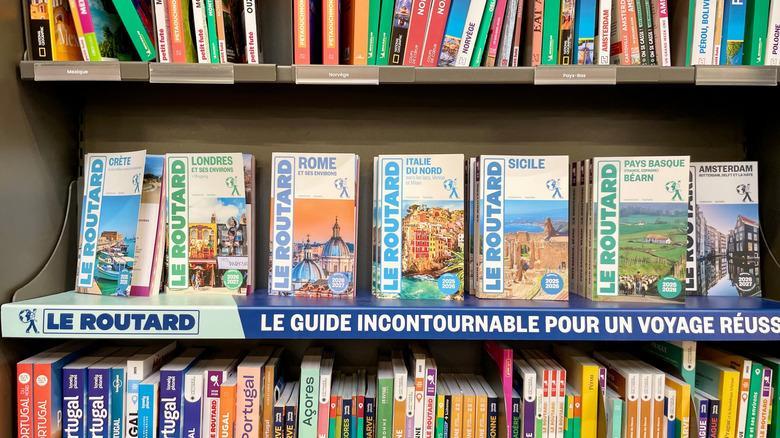
Steves writes, "Guidebooks are $20 tools for $3,000 experiences. Saving money by not buying one is penny-wise and pound-foolish." Seeing as he organizes tours and sells guidebooks, he undoubtedly has a dog in this fight. However, that doesn't take away from the impact this decision can make.
A contemporary guidebook will have a huge wealth of information on the destination you're exploring, including shortcuts, under-appreciated (and less-crowded) attractions, and important details on local cuisine and money-saving tips. This tool can also help you avoid the money-wasting tourist traps that lead to an underwhelming travel experience.
For instance, locals will know the best method for securing public transit at reduced rates, but visitors will often gloss over these finer details. In many European cities, buying a travel card that covers multiple journeys or provides comprehensive travel for one or more days will be more cost-effective than purchasing a new ticket each time you get on a bus or train. There are also shared taxi arrangements and other, similar hacks to lower your costs — all things that a guidebook could share but may otherwise end up being missed in your research.
Look into overnight trains if you're traveling between cities
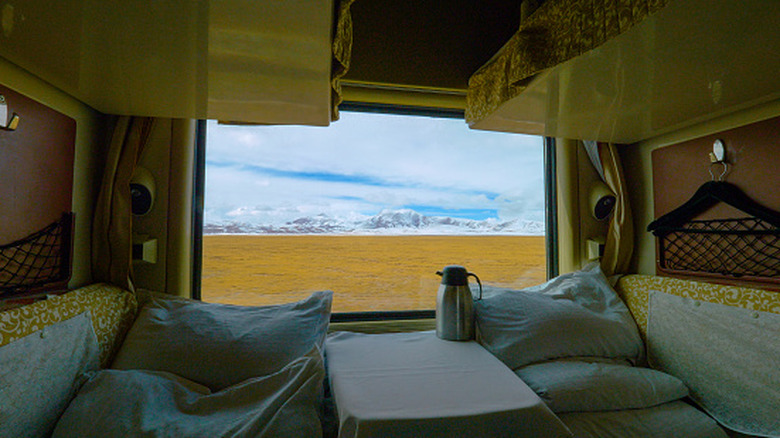
Booking overnight train tickets is a travel trick Rick Steves uses to save time and money. An overnight train can often be less expensive than a hotel room — though that can depend on the demand, time of year, and distance you'll be covering. However, even if the price is similar, booking an evening train can still add great value to your trip. Steves writes, "The economy of night-train travel is tremendous. ... For every night you spend on the train, you gain a day for sightseeing and avoid the cost of a hotel."
An overnight train from Berlin to Paris in April 2027 starts at around $162 in a comfort cabin (or as little as $92 for a budget seat). A standard day train between the two cities could run you around $55 at a minimum, while claiming the day and adding the cost of at least one night in a hotel into the mix. Another option he highlights is the budget airline. If speed is necessary for certain legs, leaning on the low-cost carriers throughout Europe can be a major benefit — I have legitimately flown for €5 on Ryanair before, for context. However, Steves does warn that "cheap airlines often use small airports located far from town," which can come with its own complications. So, it's helpful to research where exactly you'll land and how hard it is to get to your desired destination before committing to this option.
Book open-jaw airline tickets if you're planning a longer trip
An open-jaw flight itinerary is one of Rick Steves' key money-saving hacks. This isn't going to work for every traveler and all vacation plans. However, if you intend on exploring more than just one city or country during your stay in Europe, an open-jaw ticket gives you more flexibility. The practice involves flying into one city and leaving from a different one. As an example, a roundtrip itinerary from Chicago (ORD) to Amsterdam (AMS) in April 2027 will run you $840 at a minimum with a workable flight route, as of September 2026. Returning from Paris instead could bring this down to $735, and as low as $737 from Barcelona. Other routes will yield even steeper discounts, with Business Insider finding a rate cut of up to $600 when comparing multi-city deals to round-trips to and from the same place in 2024.
Flying home from a different airport also allows you more time to explore if you plan to move around. This arrangement means you won't have to double back to return to your arrival city, and can instead move as far afield as you like. As Steves puts it, "Save time and money by avoiding a needless costly return to your starting point." However, finances shouldn't be your only consideration if you choose to travel this way: Steves also suggests that, if you're planning a longer path, it's a good idea to start in a place with the lowest risk of culture shock and move further out of your comfort zone as you go.
Grab lunch in department store cafés

Probably one of the best-kept pieces of local knowledge that all too easily escapes visitors is the department store café. As Steves writes, "Local shoppers eat cheaply at department store cafeterias and restaurants. Savvy travelers can too." These eateries are tucked away in stores that much resemble places like Walmart, Publix, or Sears — at least before it went bankrupt — and they frequently offer incredible value. Conveniently, Steves also notes that European department stores are generally great resources for "cheap folk art, souvenirs, and post cards." Ikea is an obvious name here, but numerous others like Marks & Spencer (U.K.), Dunnes Stores (Ireland), Bazaar de L'Hotel de Ville (France), and Galeria (Germany) are all notable in this regard.
These outlets frequently provide solid meals, sometimes at a truly ludicrous bargain. For instance, breakfast or lunch at a Dunnes café can often run you less than €5 per person, in my experience. Large department stores are often found in central locations, too. This makes them an easy stop while you're out and about exploring a big city. Dipping in for lunch and a leisurely look around gives you access to some local fashion and goods, great food at an excellent price, and an authentic experience that many more conventional restaurants can't match.
Avoid using your credit card for cash unless it's an emergency
Your credit card can serve as a cash retrieval option, but it should really only perform this role as a last resort. Steves warns, "If you lose your debit card, you can use your credit card at an ATM to get a cash advance — but you need to know your PIN, and you'll pay a sizeable cash-advance fee." That's the major difference between debit and credit withdrawals: Your credit card will charge this expense as a different purchasing category, usually arriving with a direct fee for use and often a higher interest rate.
This is also one of the expensive travel mistakes that Steves warns against, advising travelers to bring a backup debit card instead. However, for those that only have a credit card as a backup, it's important to know what to expect if you wind up needing to use it at an ATM. Chase reports that a typical cash advance fee comes as a 5% markup on the amount you're withdrawing. In 2024, the Consumer Finance Protection Bureau warned that sports betting legalization had played a key role in increased cash advance fees. Analyzing 2022 data, the organization reported the average cost of cash-advance fees came out to roughly $1 for every $19 spent. The result is a trend line of higher fees on this type of use for everyone, and retirees who frequently target minimal revolving debt obligations will want to use this as a last resort.
Don't hold onto your rental car if you're staying in a big city
Renting a car can be a valuable addition to your trip. When traveling in a slightly larger group, this allows you to cut down on transportation costs by sharing the load and avoiding train, bus, or flight reservations altogether when moving between cities. However, Steves suggests that cars can be a double-edged sword. "Cars are worthless and costly headaches in big cities," he warns. Parking charges can be extortionate — the Paris Tourism Office estimates it can cost as much as $58 per day in the city, for example — and you may also encounter restrictions regarding how long you can keep a car in one place. Many city hotels won't have onsite parking options, either, so you may wind up walking potentially lengthy distances even if you pay for parking. Instead, Steves suggests holding off on renting a car until you're ready to leave whatever major city you arrive in, and ditching the rental when you make it to the next one.
The hassle of managing a car while away is challenging enough on its own. You'll want to make sure to take care to park it in ways that protect the vehicle from dings and dents, for one thing. As well, many retirees exploring European cities won't be looking to drive long distances away from the hub on a regular basis. The bulk of the adventure is often contained in the city itself, making the rental car a terrible investment for the time spent in a central location.
Try to always eat in 'authentic' restaurants
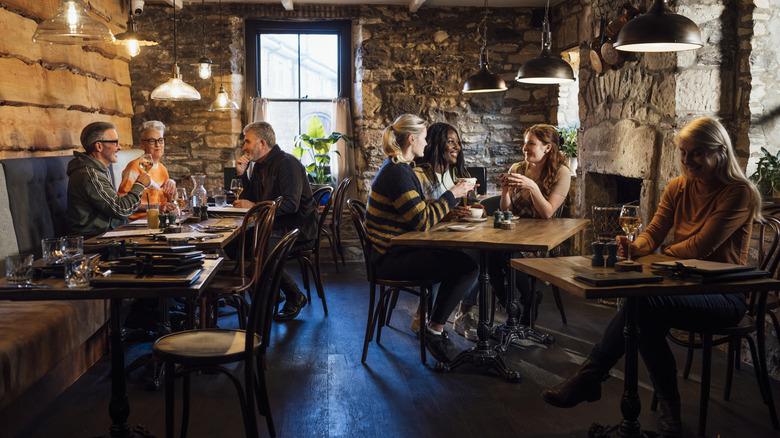
Steves writes, "One of the great joys of European travel is eating." However, where you eat can make a big difference financially and experientially. Steves suggests avoiding "touristy restaurants" — and anyone who has traveled in Europe is probably familiar with the type. These are the establishments with multilingual menus and signs outside letting you know that the staff speaks English. "Those that are filled with locals serve better food for less money," Steves advises. He notes that daily specials in these kinds of restaurants are always a good choice, and he prioritizes places that dole out handwritten menus whenever possible.
While there are certainly some good tourist-focused places to eat, the likelihood you'll get a good meal over an average or outright bad one is notably higher. Restaurants that aren't screaming out for your business and instead cater to locals will trend toward a better experience, and they generally won't overcharge you in the same way that touristy spots often do.
Steves also highlights that the food itself is only part of the appeal of these places — slowing down and enjoying the ride is just as important. He writes, "Adapt to the culture you're visiting. In most European restaurants, dining is not rushed and the table is yours for the entire evening." Get this part of the experience right and your wallet will be in much better shape alongside fantastic memories of decadent meals in phenomenal local gems.