

Honda's Largest Recall In Recent History Cost Millions
Automotive recalls are a fact of life, even though they can cost companies a ton of money. While unfortunate, sometimes these warnings can protect drivers and even save lives. In fact, a life-saving component was the source of one of Honda's largest and most expensive recalls in recent memory. The fault became headline news in 2015 when six deaths in Honda vehicles were positively linked to airbags made by a third-part contractor, Takata. At the time, around 34 million cars were recalled for having affected airbags — and not just Honda models but also cars from GM, BMW, Ford, and Ferrari.
This number grew to approximately 67 million cars being recalled, just in the U.S. alone, making it the largest of its kind in American history. It also proved costly. Per Honda's earnings reports, via The Motley Fool, the company posted a one-year net loss of roughly $860 million on recall-related costs as of the end of fiscal year 2016. To make matters worse, the National Highway Traffic Safety Administration (NHTSA) put out another notice involving Takata airbags in 2023, noting that the devices could explode during a crash.
Per a Honda press report, updated as of August 2026, approximately 12.9 million Honda (and Acura) vehicles have been affected, resulting in 20 deaths and more than 200 injuries in the U.S. alone. However, while Honda did implement a multi-million dollar public information campaign regarding the issue, this campaign did not began until March 2015 when the airbag recall became headline news. However, the trouble appears to extend much further back.
Honda's costs have been substantial
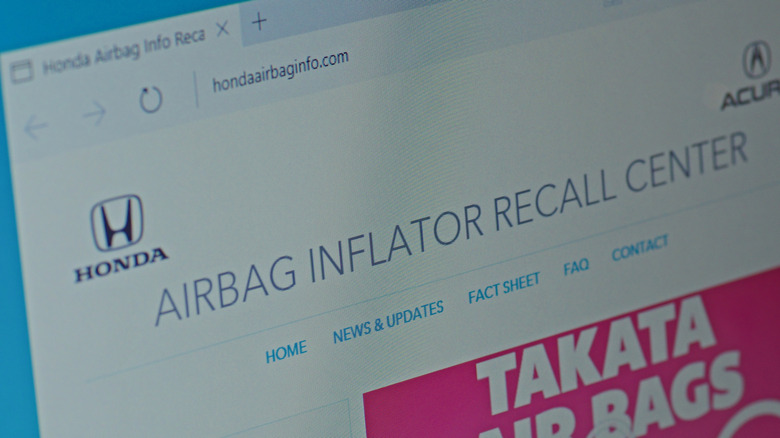
For starters. this wasn't the first time Takata's components had been at the center of a recall issue — its seatbelts impacted Honda, Nissan, and other brands to the tune of 8.3 million vehicles during a 1995 recall. That said, the airbag issue specifically seems to go back several years. In 2008 Honda recalled around 4,000 vehicles to repair an airbag pressure issue found in 2001 model Accords and Civics. The following year two drivers died from crashes in affected vehicles, leading to significant settlements — one of which involved a $3 million and an allegation that Honda had known about the issue since at least 2004 (via Automotive News).
Honda was ultimately weighed down by the allegations that a Honda engineer saw an airbag inflator rupture in a 1999 test, widening the timeline of potential failures. In 2020, Honda agreed to pay $96.5 million in a multistate settlement after the brand had been accused of failing to disclose the airbag rupture risk to investigators or the public. This penalty came after a separate $605 million settlement in 2017 with owners of affected Honda vehicles. Even so, the brand's total losses still might not add up to the $3 billion Ford set aside in 2001 to address a tire recall or the string of GM recalls that added up to billions in expenses.