

5 Advantages And 5 Disadvantages Of Not Having A Credit Score
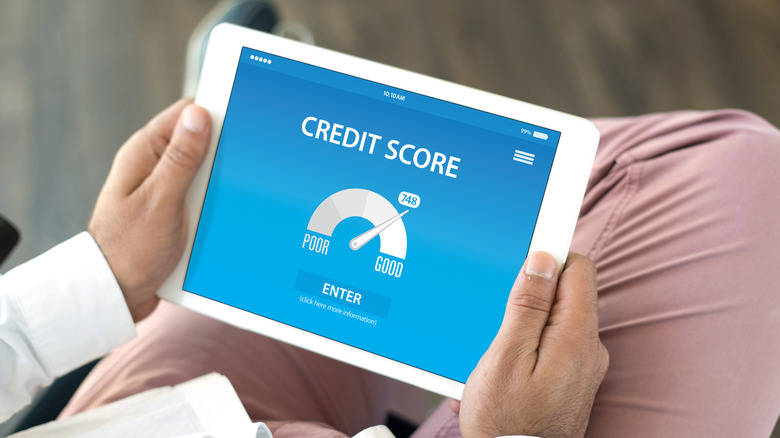
Credit scores can be thought of as a financial fingerprint. This number gets tied to a range of goals, whether it's buying a new car or qualifying to rent an apartment. Often, it forms a picture of your history with money, and how good or bad that history may be. As of 2026, a sizable portion of the United States population has some credit history. Still, there are Americans that have yet to establish credit, leading them to lack any type of credit score. These people are considered "credit invisible" or "thin-file," as they lack enough of a credit history to earn a score.
Credit Karma reported in May 2026 that around 17 million Americans were technically without a credit score. However, not everyone who lacks a credit score genuinely wants one. In fact, some people do not have a credit score because they have deliberately avoided taking any steps to build credit. After all, credit history comes from borrowing money and then paying down the resulting debt. If someone was wary of going into debt, it's understandable that they wouldn't seek to establish credit and lack a score as a result. For those who are unsure whether they'd like to take that particular step in their financial development, we've identified five advantages of not having a credit score, as well as five potential drawbacks that come as a result of remaining credit-score-free.
Advantage: No credit score often helps maintain your privacy

It's extremely hard to maintain your privacy in the digital era. One common reason for that is the efforts of questionable third parties, such as data brokers. These are individuals and companies that collect your personal information. They then, often without your knowledge or permission, share and sell this information to practically anyone willing to buy it. This is an annoying loss of privacy that impacts millions of people. But what some may not realize is that one tool that is often used to find out and disseminate your financial information is your credit history.
Credit usage has a massive privacy gap built into some of its most basic applications. For example, when someone uses a credit card for a transaction, it gives the business they're patronizing access to personal data like their first and last name — and possibly even other information such as their zip code. By having a credit score, data brokers and others can more easily glean your payment history, income level, and more.
When you decide to avoid establishing any form of credit-related history, that's one major avenue that you've closed off to third parties seeking information about you. When it comes to protecting your privacy, not having a credit score offers an advantage.
Advantage: You're less vulnerable to scams and identity theft

As we've established, having a credit score means having a financial history that people can access and even sell to others. As annoying as it might be to know that data brokers are contributing to the rise of spam in your inbox, there are still more worrying consequences to consider: According to the Federal Trade Commission (FTC), nearly 9 million Americans become the victims of identity theft every year. One of the ways that so many people get their identities stolen is when criminals access and abuse their financial records.
Getting into the habit of keeping close track of your financial accounts and monitoring your credit report can be extremely helpful in avoiding the consequences of this practice, because discrepancies in those records are often the first major clue that you've become a victim of identity theft or some other type of crime. Criminals who steal your financial information typically don't stop at mere impersonation: According to Javelin's 2026 Identity Fraud Study, around 18 million people lost a combined $27.3 billion to identity fraud in 2025 alone.
Not only do these scammers contribute to lost money, but they can also misrepresent themselves as you, borrowing money under your name and causing your credit score to drop. But by having no credit score and being largely credit invisible, you may stay off the radar of many potential bad actors.
Advantage: Without taking on debt, it's easier to build savings

Establishing credit involves borrowing funds that must be paid back. For instance, a major credit card purchase can mean taking on debt that takes awhile to pay down. Ultimately, the money you must pay towards your debt represents cash that you're not adding to your savings. Some might argue that paying down a credit card bill is beneficial, as doing so successfully can improve your credit score. However, while a great score might allow you to borrow larger amounts of money, that freedom is not the same thing as putting money away as it comes in.
If you're someone with a strong savings strategy, one advantage of not having a credit score is that achieving your savings goals could be more straightforward. Once debt enters the picture, it can take up financial resources you otherwise would have put towards your savings account. Consider the fact that Pandemic-era Americans collectively held an incredible amount of savings, with NPR pointing out that debt reached near-record lows around the same time. But as Americans leaned on credit to cope with post-COVID inflation, rising costs forced U.S. households to shoulder a record-breaking amount of debt. Those who lack a credit score may enjoy the advantage of not being part of this cycle, allowing them the ability to go all in on savings.
Advantage: You aren't defined by past financial mistakes

Everyone makes mistakes, but sometimes a financial mishap can lead to years of struggle. In the eyes of some institutions, a credit score is a numerical means of measuring just how badly you may have messed up. According to Experian, a "good" credit score starts in the high 600s, with scores in the high 700s or 800s considered "excellent." But once your credit score dips below 670, you fall out of the good credit score territory. That not only means you may find it tougher to get approved for loans, but you could also face low credit limits and high interest rates.
But what can sometimes get overlooked is that once your credit score gets so low, there are some surprising consequences that reach far beyond how you shop. Some studies suggest a poor credit score negatively impacts an individual's career prospects, and can even increase their car insurance premiums. A bad credit score can also prove a hindrance socially or romantically: Someone with too low of a credit score might experience difficulty in the dating pool.
Ultimately, a significant advantage of not having a credit score is that you're somewhat of a blank slate. There's no poor credit history, no missed card payments, nothing to allow others to form opinions about you as a person. While not having a credit score can cause a few financial headaches, it may help you avoid having to cope with score-related biases.
Advantage: Not having a credit score means less financial stress

According to Bureau of Labor Statistics (BLS) data, the average American household spent $6,545 per month to cover expenses in 2024. Housing alone accounted for over 33% of monthly bills. That aside, people must also pay money to cover transportation, food, insurance, education, healthcare, and other expenses. As Americans continue to cope with rising costs, many can no longer afford to pay their credit card bills. When people find themselves drowning in debt, it contributes to a severe level of financial stress.
Research suggests debt contributes negatively to your overall health. Major liabilities like student loan debt can contribute to severe money anxiety in borrowers, and financial anxiety can impact an individual in all kinds of debilitating ways: It can negatively affect their sleep, familial relationships, and even their gambling habits. Serious debt can also raise your likelihood of suffering from severe depression.
The thing about debt-related stress is that, depending on your financial priorities and needs, it can be optional. If you don't have a credit score, and you avoid needing credit or having to make related payments, that is one less contributor to financial stress. Past research published by the National Institutes of Health (NIH) showed that reducing debt can correlate with lower psychological stress. By not having a credit score or bothering with credit, you may inadvertently be protecting your mental health.
Disadvantage: You must fund major purchases yourself

Maintaining a positive credit score can be a stressful prospect, but coming up with thousands of dollars to purchase a car or fund your education or a medical need can be as well. These are situations where one can seriously benefit from having a credit score. Even if you have bad credit, there is usually an option to get some form of funding to help with major purchases.
Lenders consider a range of financial factors when deciding whether you qualify for a loan, and your credit score and history are among the first things they look at when deciding how much to lend you, if anything, and at what interest rate. As of 2022, the Federal Reserve's Survey of Consumer Finances reports the median American household has about $8,000 in its transaction accounts, while Bankrate reports about 46% of Americans lack a proper emergency fund. Seeing as Kelley Blue Book reported the average new-car transaction price was over $50,000 in August 2026 and the Education Data Initiative reports the average year of college costs $39,406 per student, there's a significant gap between the cash many Americans have on hand and what they'd need to make common major purchases.
It's not impossible to build savings toward a big expense, the problem is how much time is often needed to make it happen. If you can only afford to save a few thousand dollars per month, raising funds for even a $10,000 or $20,000 down payment can take months or years.
Disadvantage: It's challenging to buy or rent a home

Finding the right house or apartment can be a complex process for a lot of reasons, even if you've already saved up enough money to cover a down payment or deposit. Unfortunately, not having a credit score can draw this process out even more, as many lenders and landlords may be hesitant to work with someone without one.
A credit score often plays a big role in getting housing. For many mortgages, Bankrate reported that for a conventional mortgage loan, you should have a credit score of at least 620. Federal Housing Administration (FHA) loans, meanwhile, are available to people with scores as low as 500, but require a 10% down-payment. Even on the rental market, landlords will often use a credit score as part of their research before deciding if they want you as a tenant. Zillow found that a credit score of 600 or better is usually enough.
Not having a credit score doesn't make it impossible to buy or rent a home, but it may throw in some additional roadblocks that you must be creative about getting around. Without a credit score of your own, you may need to get someone you know to act as a co-signer or provide other evidence that you're financially stable. In addition to being inconvenient, any delays that arise from undergoing this process could result in someone else getting approved for your dream home while you're still assembling the necessary documents.
Disadvantage: Lenders are often hesitant to work with you
By having a credit score, you offer a financial snapshot to banks, landlords, and others about your payment history. Without a score, lenders may hesitate to work with you, and this can limit your funding options. It's not that a lack of a credit score causes lenders to view you badly, but it's hard for others to gauge the potential risk of lending to you without one.
As such, should you decide to get started on your credit journey, you may find yourself in something of a bind. As Joonhyuk Yang, an assistant professor of marketing at the University of Notre Dame, observed, "It's the classic catch-22 in lending. You need a credit history to get a loan, but you need a loan to build a credit history." While there are potentially viable alternatives for measuring financial dependability — Yang and a team of other researchers have found tracking retail purchasing habits can be indicative of an individual's credit card default risk, for instance — these can come with their own sets of problems and may not be widely accepted by lending institutions.
Disadvantage: Your credit card options will be limited

Not having a credit score doesn't completely disqualify you from getting a new credit card. The issue is that your lack of credit history makes it difficult to qualify for as wide a range of credit cards as you might prefer, and there are already plenty of red flags you should avoid when choosing one. Per Experian, premium travel reward credit cards are typically preserved for those with credit scores of 670 or better. While there are some cards, like the Capital One Platinum Card that are specifically recommended for those hoping to establish a credit score, someone who is credit invisible will likely have to put in work to have access to higher limits or rewards.
Aside from facing limited card options, the cards that are offered may require an initial payment on your part. Secured cards are credit cards for which you may qualify, but require an initial deposit to use. You may be able to pay the deposit through your bank account or by mailing a check to the lending institution. This is different from unsecured cards where, if approved, you often get near immediate access to your credit line once the card is active.
Once you get a card, it's important to keep up with payments and use it responsibly. After enough time passes, you could build up a solid credit history, and may even gain access to better cards with more attractive rewards.
Disadvantage: You could find it harder to fund your small business

While many people consider credit scores in the context of personal loans, aspiring small business owners run into similar issues. When launching a very new company, getting a startup business loan can get tricky if your brand has no established reputation or relevant business credit history. For that reason, it's common for lenders to refer to your personal credit score and finances. If you have a good credit score and lengthy credit history, that may boost your viability as a low-risk borrower in the eyes of business lenders.
When you don't have a credit score, you'll have to look for other ways to fund your business. For instance, some business owners focus on applying for small business grants. Others rely on loans that consider factors like their business' existing financial performance, as opposed to their personal credit history. However, those can be extremely hard to come by for a young business. Others still may have to take an approach similar to buying a new car or home without a credit score by building personal savings intended to financially power their business. While possible, amassing that level of capital could require more time and effort than using your credit score to get business loans.
It's true that small companies don't need a lot of money, and it can be possible to start a business without spending anything. But even if you go that route, there may come a point where a loan could help you buy equipment or pay employees, and having a credit score could still be helpful in that instance.