

McDonald's Once Owned 90% Of A Popular Restaurant Chain. Selling It Left Billions On The Table
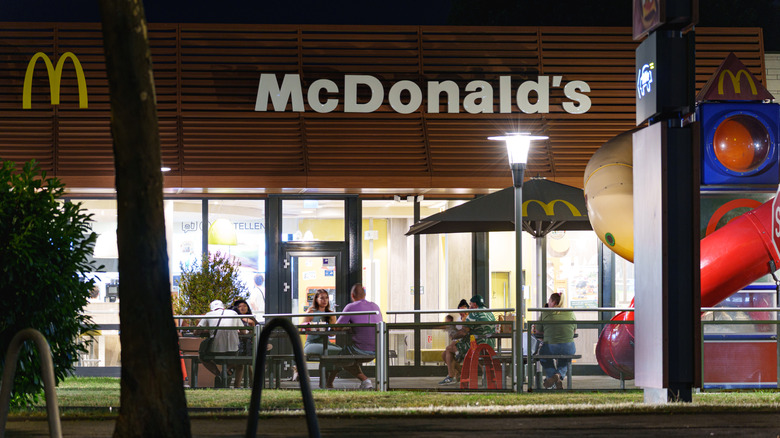
McDonald's may be the most culturally impactful name in fast food, but throughout the 2020s, several chains have started to encroach on the company's physical and financial dominance in both the U.S. and internationally. That said, the company has made strategic efforts to maintain its footing in the fast food industry over the years. One of the brand's biggest plays occurred in 1998: At the time, McDonald's was pursuing an initiative to invest in several smaller chains, and decided to take a chance on the then-tiny fast casual Mexican restaurant Chipotle.
Up until that point, Chipotle had succeeded with independent funding from founder Steve Ells' father and family friends. In 1998, McDonald's invested $50 million into Chipotle, and worked closely with the company for eight years — with McDonald's spending $340 million during that time, per Bloomberg. It is estimated that McDonald's owned roughly 90% of the chain at one point.
Chipotle went public in January 2006. After a staggeringly successful initial public offering, the company was valued at over $700 million. However, by that time, McDonald's was already in the process of selling its shares in Chipotle, and was fully divested by October of the same year. Unfortunately for McDonald's the decision to sell meant that — just like its failed menu items over the years — the company lost out on a fortune: As of August 27, 2026, Chipotle's market capitalization is valued at over $47 billion.
Why McDonald's sold its shares despite Chipotle's success
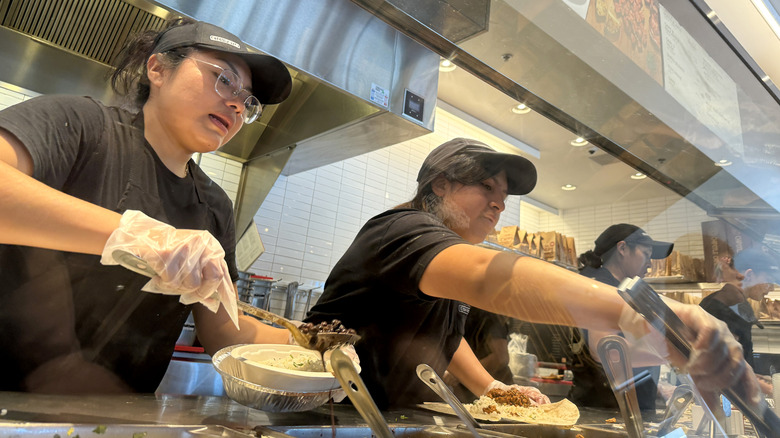
After first opening in 1993, Chipotle grew from a single location to more than a dozen stores before McDonald's stepped in and grew the store count to around 500. And, much like Chipotle's market cap, the company only continued to grow after going public: At the end of Q2 2026, Chipotle reported it had over 4,200 locations worldwide and brought in roughly $3.3 billion in revenue in the previous year. For comparison, McDonald's also bought Boston Market not long after investing in Chipotle, but that chain has gone on to close the vast majority of its restaurants.
Ultimately, a lot of factors informed the McDonald's and Chipotle split, with much of it boiling down to the fact that each brand's leadership had fundamentally different philosophies when it came to doing business. As Chipotle's communications director Chris Arnold put it to Bloomberg, "I would think of it in terms of McDonald's being the rich uncle and Chipotle as the petulant nephew where we take the money and are grateful but are stubborn and strong-willed enough that we're going to do what we want with it anyway."
These disagreements extended to everything from franchising to offering drive-through service to serving breakfast — none of which Chipotle wanted to do. And it seems that the team's inclination to trust its instincts continued to pay off, especially as McDonald's struggles with lower profits and big changes.