

Not Nurses Or Medical Assistants: This Is America's Most Common Healthcare Job And It's Growing Fast

If you're interested in a medical career, or know someone who is, it might help to know where the demand for jobs is. While nurses, doctors, and even technicians often dominate the conversation, there's actually a healthcare profession that's beating them all in terms of prevalence. Home health and personal care aides make up the largest occupation in the country, with some assessments predicting this industry will continue to surge over the next decade.
According to U.S. Bureau of Labor Statistics (BLS) data from May 2025, home health aides — people who help patients at home with everyday tasks while also monitoring vitals and chronic conditions — made up over 4 million of the nation's workforce whereas registered nurses made up less than 3.5 million workers. The number of home health aides also beat out the country's other most common occupations including retail, fast food service workers, operations managers, and customer service representatives.
BLS projections from 2024 likewise predicted that the home health and personal care aide occupation would rise 17% through 2034, while a 2025 assessment (of 2023 data) from the Health Resources and Services Administration predicted that home health aides would grow by a whopping 36% by 2038, while personal care aides would grow by 38%. For context, according to BLS historical data, there were just 814,300 home health aides in the U.S. in May 2016.
An aging population and rising healthcare costs are driving the field's growth
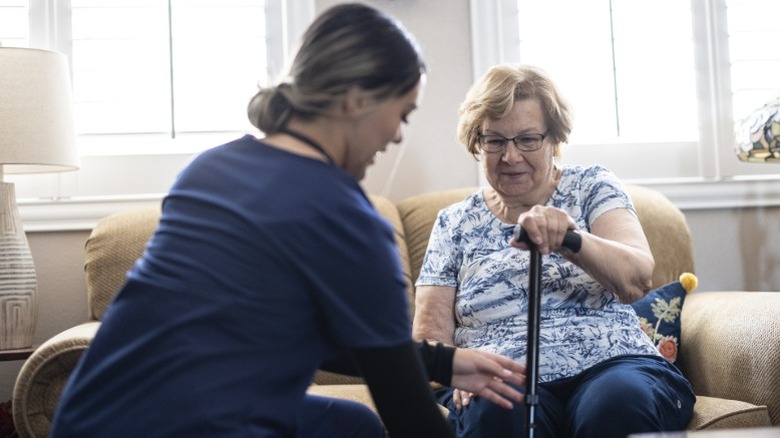
The driving force behind the explosion of home health aides is widely agreed to be due to the growing aging population in the U.S. As baby boomers increasingly enter their golden years, the Bureau of Labor Statistics predicts that the U.S. will need 739,800 additional home health and personal care aides by 2034. This exceeds any other occupation, and by a lot, with the next closest occupation in this job growth prediction being software developers — with an estimated 267,700 new workers needed by 2034.
It's also worth noting that demand for home health and personal care aides could continue to grow well beyond 2034. For starters, baby boomers are a famously large generation, and a 2026 Brookings Institution analysis of Census data projects that the over-80 population in the U.S. will double by 2045. Additionally, thanks to rising living and medical costs, many baby boomers likely won't be able to afford traditional healthcare services in the future — which could push them to consider home health aide options instead. Although the cost of a home health or personal care aide can vary depending on the level of care needed, they can be more affordable than full-time nursing homes or assisted living facilities – especially if only part-time assistance is needed.
Home health aides make a lot less than other medical professions

It's worth realizing that there is relatively little education required to become a home health aide, with only a GED or high school diploma being typical. This can make it a more accessible healthcare occupation for those who might be wary of college due to the financial implications of student loan debt. However, this lower barrier to entry also comes with lower wages.
While the exact pay varies — and is often dependent on location, training, and specific tasks performed — BLS data shows that the median pay was $34,900 per year or $16.78 per hour in May 2024. This is a far cry from the highest-earning job in America, and is actually several thousand dollars less than the average salary of a U.S. worker in their 20s (which, per BLS data, was around $42,000 annually in 2025). In fact, the salary for home health aides was one of the lowest median pay rates on the BLS' list of most-common occupations in America, with only cashiers and fast food workers making less.