

10 Shady Things Amazon Doesn't Want You To Know
Titans of industry have historically centered on massive operations that deliver crucial productivity enhancements to other businesses: your railroads, steel producers, and oil outfits. In the modern marketplace, those classic examples have given way to chip producers, airlines, and mega-retailers. Sitting at the crossroads between all these disparate threads is Amazon. The ecommerce juggernaut is the fifth-largest company in America by market capitalization at $2.92 trillion, with a gap of more than $1 trillion between it and the next-largest company, Broadcom, at $1.85 trillion. Amazon is a long-established power player in online retail, and while it offers a convenient way to shop for just about anything you might need, some of its business practices have drawn significant criticism.
From longstanding criticism of working conditions to allegations of anticompetitive behavior aimed at weakening rival brands, Amazon has faced scrutiny over whether some of its practices ultimately benefit consumers. It's difficult to avoid the digital seller at all times, but these features of the Amazon experience that lurk in the background may just make you rethink your relationship with the monopolistic corporation bent on constant, rapid growth at the cost of employee, competitor, and consumer benefits.
Amazon has faced years of criticism over working conditions
A Time Magazine headline sums it up perfectly: "I Worked at an Amazon Fulfillment Center. They Treat Workers Like Robots." The author, Emily Guendelsberger, secured a job at an Indiana fulfillment center as part of an exploration of working conditions in low-wage jobs. She reported walking 15 miles per day while being permitted no more than 18 minutes of "Time Off Task" per shift. This included bathroom breaks, while walking too slowly during "tasked" work also counted toward this razor-thin productivity standard.
She reported that exceeding this limit would alert the floor manager and created "a constant buzz of low-grade panic." This might not immediately translate into issues for end users, but the state of things for the people that grease the skids for those fast delivery times should raise red flags in the minds of even mildly concerned consumers.
Another article from 2020 in The Guardian reported that sorters at the JFK8 facility in New York were required to scan packages at a rate of 30 per minute as they prepare for delivery sorting and scheduling. Most people will remember reports of delivery drivers peeing in bottles to stay on pace with mandated delivery targets, and it seems that these kinds of corporate behaviors haven't ceased in the years since. According to A Better Balance, an April 2026 EEOC determination found that Amazon had engaged in systemic, nationwide violations of disabled warehouse workers' rights for more than six years.
Sellers can exploit merged listings to carry reviews over to products
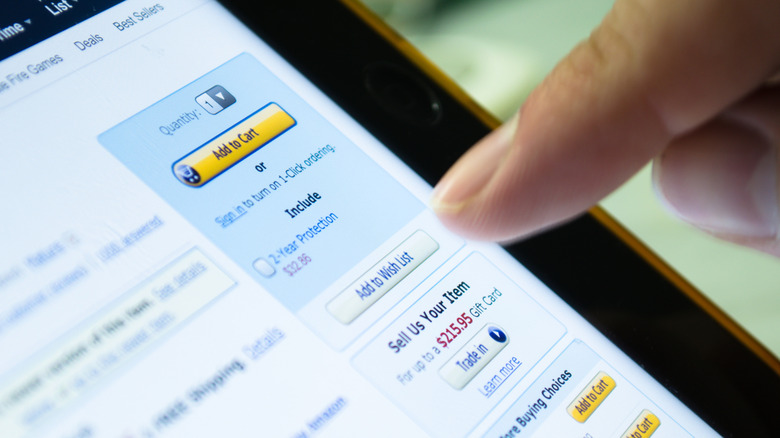
A common strategy among Amazon sellers is the practice of merging listings. While there are some brands to always shy away from buying on Amazon for specific reasons, there are plenty to be wary of for their odd treatment of product pages. Sellers have the ability to take their products off the brand's digital shelves, naturally, but they can also combine listings of products that are essentially variations on one another (or an identical copy put up on the site for this express purpose). If a product has lots of negative reviews, it's possible to bury that poor feedback by merging two products together, essentially laundering the bad scores by bleeding them into another product's better rating. Similarly, products with very few reviews can piggyback off of another listing's higher volume of ratings from previous buyers, giving it a higher level of anticipated trustworthiness without actually earning that status.
This feature of the seller landscape runs seamlessly into another issue that customers have in front of them. Amazon reviews aren't always trustworthy, either. A 2019 Which? Investigation found that unscrupulous sellers may list hundreds of variations of the same product to build up significant volumes of positive reviews, sometimes organically but also through fake ratings from bots or paid review writers. The investigation also found that old products with high ratings had been repackaged in new, merged listings, creating an unfounded sense of trustworthiness for unrelated products. Amazon has renewed its efforts to minimize fake reviews, specifically as recently as mid-2025, but many of the strategies in this nexus remain largely viable.
Amazon's anticompetitive tactics
Amazon's true origin story may be a new revelation for those believing in the garage legend. For starters, Jeff Bezos seeded the brand financially with a roughly $250,000 investment from his parents. That 1995 kickstart was worth a little more than the median purchase price of two houses in the prevailing market ($114,600 apiece, according to the National Association of Realtors). On another note, investors who sank even $1,000 into the brand at its 1997 IPO shortly after would have a roughly $2 million stake today. That massive cash infusion was essential for the company to grow its fledgling eCommerce platform. By the time the calendars rolled over into the new millennium, Amazon was leveraging that foundation to build new partnerships.
Amazon soon opted to bring in third-party sellers who would pay fees to list their products. One notable example is Toys 'R' Us. The brand became an exclusive toy seller on Amazon in 2000, and Amazon quickly began illicitly leveraging data from the company to hike up its variable fee structure and ultimately grow its reach with other vendors.
Amazon has also faced accusations of predatory pricing. In 2010, Amazon aggressively discounted diapers while pursuing an acquisition of Diapers.com, with internal documents indicating that executives were willing to sustain $200 million in losses in a single month. Moreover, when the site's parent company received a competing offer from Walmart, Diapers.com executives said Amazon threatened to drive diaper prices to zero if they rejected its acquisition offer. All this was done in service of a future price hike, losing money today on sales to eliminate competition and drive profits higher when there's only one game in town.
Alexa devices have raised privacy concerns
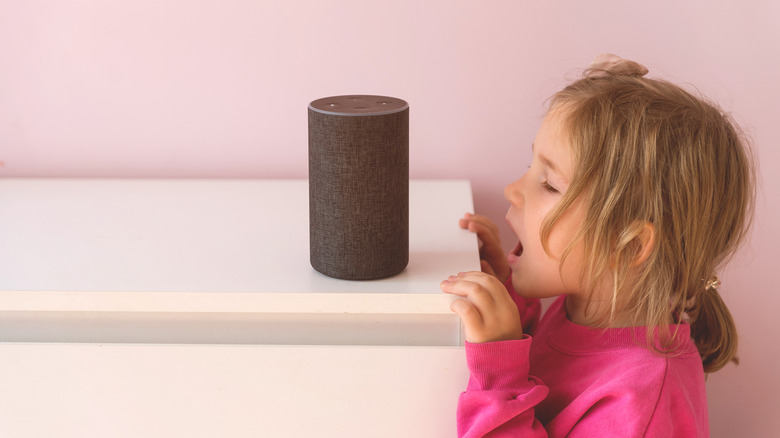
The Amazon Alexa tool is a great way to simplify lots of small tasks around the house. The Echo devices that run the assistant respond to the callsign "Alexa," giving it a cue to start listening for an instruction (although you can change this wake word to something else on Amazon's list of options). Echo devices frequently wake when hearing words similar to "Alexa," and most people with one or more of these speaker tools in their home will have experienced the device suddenly chiming in during a conversation with friends or family without warning. Behind the scenes, the device continuously processes short snippets of audio in its memory to detect its wake word and begin operating.
The tool's constant surveillance, even if built as a result of functional necessity, has not been without issue. This feature was at the center of a 2019 lawsuit alleging that Alexa illegally recorded and stored children's voices without parental consent. In 2018, one Echo device recorded a conversation and sent it to the owner's colleague without their knowledge. Researchers also demonstrated that certain early Echo models could be physically modified through their internal debug pads, allowing an attacker to listen to conversations within the device's range. This approach could also be used to access an owner's Amazon account, potentially allowing for illicit purchases to be made or simplifying the theft of payment card details. This is a serious vulnerability that can ultimately impact countless Echo device owners.
Amazon's sales tactics and account cancellation hurdles
Subscriptions of all sorts have become rampant in the contemporary consumer experience. From email blasts that never seem to stop to automated repeat deliveries and streamlined digital services, the subscription model has taken over our lives in real and meaningful ways. This payment model is a financial habit that many Americans are rethinking in order to beat the affordability crisis, considering that the average American spends $252 on unused subscriptions annually.
Amazon Prime is among the subscriptions some consumers have reconsidered. Prime is worth the subscription cost to many, but with roughly 180 million U.S. subscribers and a household penetration rate of about 80%, even a small percentage of customers who don't use its benefits would represent millions of wasted memberships. Good luck canceling your service, however! In late 2025 the Federal Trade Commission announced a $2.5 billion settlement with Amazon over its enrollment and cancellation procedures for Prime. The settlement includes a $1.5 billion refund to customers who were deceived into signing up for Prime memberships as well as those who tried to cancel but were given the runaround with confusing prompts or delayed cancelations that continued charging them.
Interfering with unionization efforts
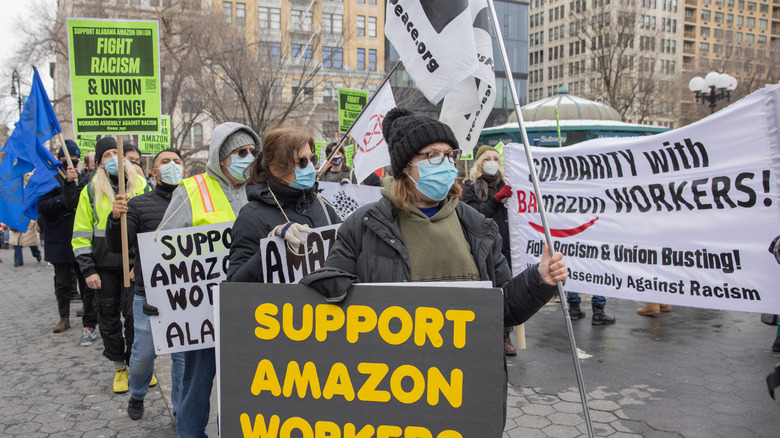
It should come as no surprise that Amazon, a company with a roughly $3 trillion market cap, is staunchly anti-union. What may be less obvious is the level of aggression the brand has shown when confronted by labor organizing efforts. Amazon has fired multiple union organizers in an attempt to instill fear in others and remove leading voices in union drives within its facilities. Economic Policy Institute reported in 2025 that Amazon, alongside Starbucks and Trader Joe's, had engaged in retaliatory actions to stifle organizing efforts. Across the three companies, the report documented tactics such as reducing workers' hours until they became ineligible for health care coverage and other benefits, closing or threatening to close unionizing locations, and providing raises or other benefits to nonunion employees while denying them to workers who had organized.
These and other tactics are designed to defeat labor organizing efforts by grinding down the opposition and meaningfully harming workers who are seeking fair treatment by their employer and a better life for their families. Much of the union activity within Amazon warehouses and other facilities gained momentum in response to conditions workers endured during the pandemic. Crushing labor movements is good for business, and the practices that Amazon union efforts are seeking to eliminate or minimize (like low pay and extreme quotas on package preparation) help support the fast delivery schedules and low prices that Amazon offers to consumers, but these benefits to the end user come at a steep cost for other, real people.
Amazon's unfair search results
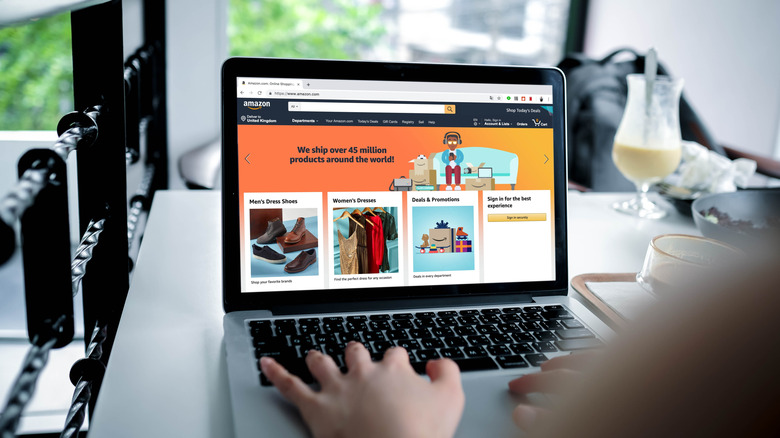
The Amazon product ecosystem is truly saturated with options. Search for just about anything and you'll find hundreds of products to consider even when looking for niche or highly specialized purchases. At the time of writing, the search query "hair dryer" returns over 50,000 results, while "kitchen pan" yields 80,000-plus, and "drill" brings back over 100,000. Clearly, there's an immensely deep catalog to peruse across a great many product categories, but the organization of these search results is performing a unique function for the online marketplace.
Shoppers tend to assume that search results will be sorted based on relevancy to the search terms automatically. This is the default for many online storefronts, and there's typically a prominent sorting tool to change this, perhaps to prioritize customer ratings, price, or other parameters. Amazon's sorting tool is not exactly large, and it defaults to "featured" results, which include a substantial number of sponsored placements. Rather than showing purely organic results first, the modern Amazon experience often makes shoppers wade through a dense fog of advertisements.
A 2023 study by researchers at Harvard and Boston University found that Amazon-branded products are "ranked higher than observably similar products," although the study also notes that this "doesn't necessarily imply that consumers are hurt" by this trend. Similarly, according to a 2021 study by Jungle Scout, roughly half of all Amazon sellers said they had to compete directly with an in-house Amazon brand. A 2024 study by Consumers' Checkbook also found that sponsored listings made up an average of 54% of the first 25 results across 50 product searches.
Price fluctuations create confusing discounts
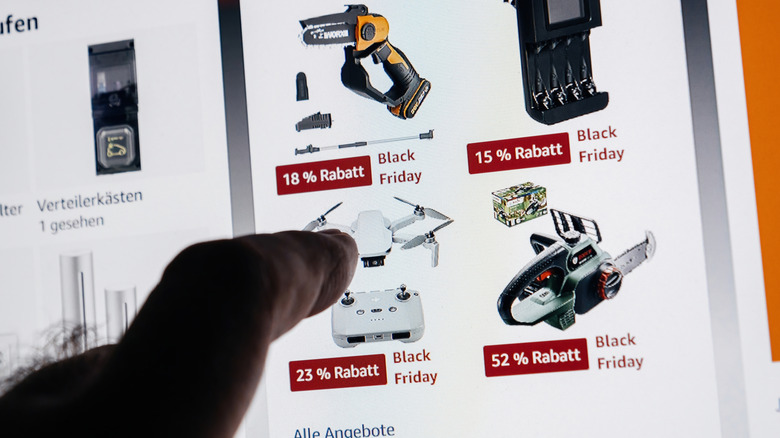
Amazon famously alters its pricing at a ludicrously fast pace. According to retail analytics estimates, the average price of an Amazon-sold product changes about once every 10 minutes, although this doesn't apply to products sold by third-party sellers. With so many price fluctuations happening throughout the day, buyers are often forced to contend with a fear of overpaying. It's impossible to know where an item's price might move if you leave the purchase for another hour or day, and this ecosystem of uncertainty allows Amazon to employ other sales tactics to boost its revenue. Steep discount offers frequently accompany Amazon listings, and they're often noted prominently to grab your attention.
Because prices shift so dramatically on the platform, it's hard to determine how much money a deal price actually saves you. In fact, on numerous occasions deal pricing is actually the result of a reset after gradual rate hikes, masked as a bargain in an attempt to garner more attention. For both Amazon-sold products and third-party listings, frequent price changes can obscure historical prices and make buyers feel like they're getting a bargain even when the item was previously available for less. Historical pricing lookup tools like CamelCamelCamel can help keep the retailer honest and protect you from overpaying for something falsely marketed as a bargain.
Free shipping offers can encourage customers to spend more
Free shipping is a promise at the heart of the Amazon experience. Prime membership unlocks free, fast shipping on just about anything you might buy on the platform, but you'll also gain access to free shipping offers by spending over a minimum amount. This is a common e-commerce tactic, and it's a selling point that continues to rack up additional sales for businesses across the spectrum. Amazon isn't unique in its efforts to dangle free shipping offers as a way to entice customers to overspend. But this sales tactic as a whole is largely attributed to Amazon as its progenitor as a result of the platform's widespread peddling of free shipping as a prominent possibility.
Free shipping wasn't always part of the Amazon experience. Initially, shipping costs were $3 plus 95 cents per book, and the online storefront offered fast access to over 1 million titles. Bezos noted in 1996 while speaking to The Wall Street Journal that 60% of the site's orders came from repeat buyers, suggesting that customers liked the online experience enough to return.
Today, you'll need to spend $35 on eligible items to take advantage of the platform's free shipping or pay $14.99 per month for Prime, or $139 for an annual membership. Spending thresholds act as a psychological impetus to continue piling things into your cart. Consumers feel like they're getting something for nothing by adding a few more items that cost more in total but eliminate the seemingly frivolous shipping costs.
Amazon's purchase-without-ownership model
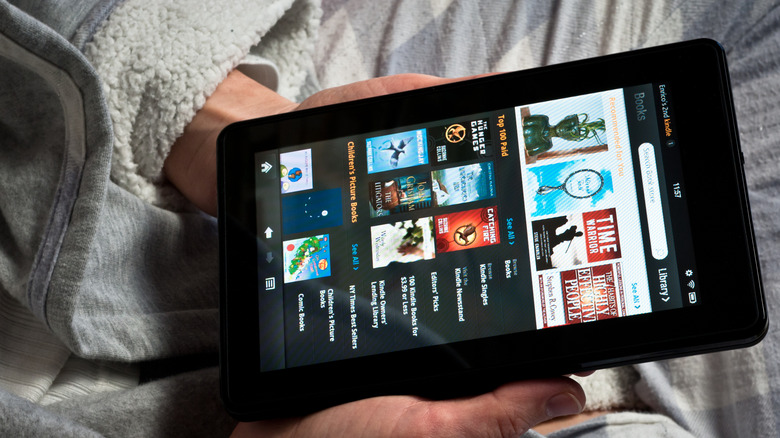
Amazon has faced extensive criticism over its treatment of employees and years of allegations that it uses aggressive tactics to cement its dominance in the digital retail space (a position that can be a scourge in the consumer landscape but sometimes beneficial elsewhere). Yet, perhaps its most egregious slight against the consumers who patronize the retail giant comes in the form of how it treats its digital products. A great many of the digital items Amazon sells are eBooks. As a company that got its start as an online bookstore, it's only natural that Amazon's Kindle ebooks would become a prominent and frequently cost-effective option for readers. Instead of waiting for a book to arrive at your doorstep, downloading the material allows you to read on a portable device right away and carry nearly as many books as you'd like along for the ride.
Yet, when making an eBook purchase, you're not actually buying the book. The physical media that arrives in the mail is yours in the most tangible sense. You own the book and can largely do what you like with it, including lending it to a friend or even reselling the item. The same ownership rights do not come along with the digital download alternative. John Deere has come under fire recently for exploiting farmers through a similar "ownership" model, while Amazon has faced criticism over the restrictions placed on Kindle purchases. In the present marketplace, it's mostly clear that buying an eBook is really just the purchase of a license to read the material, but for a long time even this basic distinction wasn't obvious on product pages.