

A 1999 State Quarter With A Golden Hue Is Worth A Ton Of Money
United States quarters have been made with copper and nickel since 1965, though they may still look silver on the outside. Despite this, every now and then a special coin defies all standards. If you've ever come across a golden-hued Delaware quarter (and still have it jingling around in your pocket) you could be in luck. While not the rarest U.S. coin, it could still be worth thousands. However, not all golden-hued Delaware quarters are truly valuable, with the most value belonging to those that were struck on an experimental planchet.
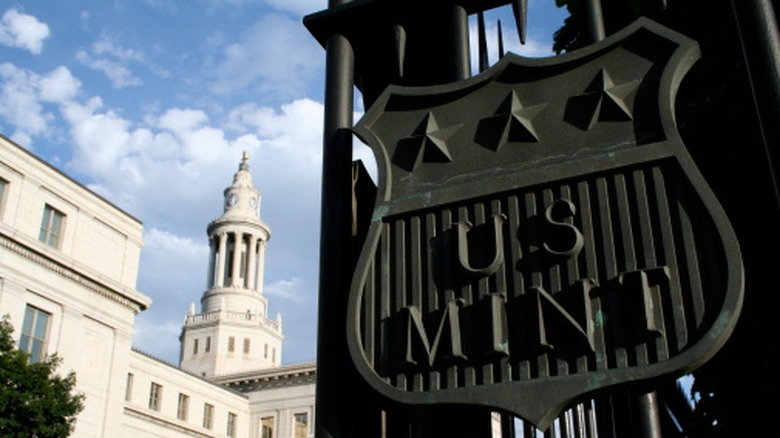
The U.S. Mint first launched its 50 State Quarters program in 1999. At the same time, the U.S. Mint was preparing for the launch of the Sacagawea dollar the following year. The story goes that the agency sent a small number of state quarters through the new coin's manganese and brass alloy settings as part of internal testing. Delaware, being one of the first state quarters produced – since it was the first state to ratify the U.S. Constitution – was therefore sent through this testing. As a result, a tiny amount of rare, golden-hued 1999-P Delaware quarters made their way into the world. While this particular type of quarter previously sold for around $3,000 at auction in 2021, per Heritage Auctions, other experimental planchet coin types have sold for upwards of $7,000 and even over $10,000. However, like any valuable coins you might have lying around, there are specific things you need to look for in order to identify one.
How to tell if you have a genuine experimental planchet quarter
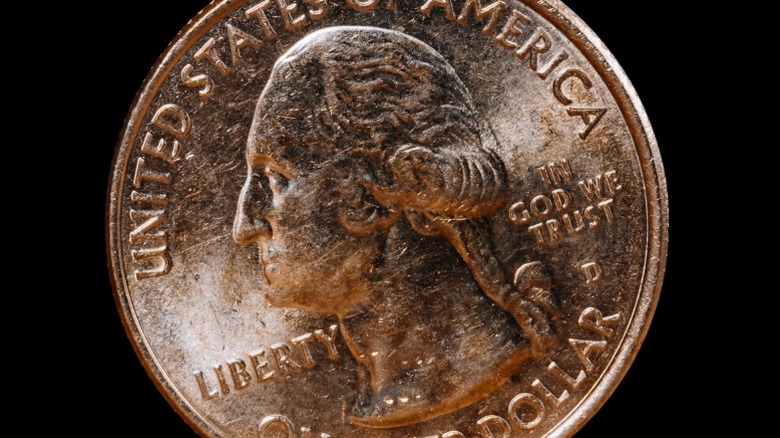
As rare as they may seem, gold-plated state quarters are actually pretty common. That's because they're commonly coated in a thin layer of gold by private companies as novelty items — rather than being made that way by the U.S. Mint. However, due to the very thin layer of gold used, as well as their prevalence, these coins aren't worth much more than face value. Much like a certain 2005 Minnesota state quarter accidentally released with an error in its design, a genuine Delaware experimental planchet quarter has a few key details to look for.
In color, it'll be brassy or golden due to the manganese and brass alloy used. Some coins may be more brassy than gold, while others may appear more green due to different metal cores being used. That said, color isn't the only thing to look for. These quarters may also weigh slightly more and are a touch thicker than regular quarters, and they can may have irregular rims with different edges or coloring. However, it's worth noting that some sources say that only four Delaware experimental planchet quarters actually exist, so if you suspect you have one, it could be worth talking to an expert appraiser.